Will the Conservatives agree to a pact with Reform ahead of the next general election? Absolutely not, insisted Kemi Badenoch, saying after Reform’s poor showing in this month’s parliamentary byelections: “The results have left the idea of the Conservatives doing a deal with Reform stone-dead.”
But that has not stopped a number of her MPs working behind the scenes on some sort of agreement with Nigel Farage’s mob. At the weekend, the Sunday Telegraph reported that a growing chorus of Conservative politicians hoped to “unite the right”, an electoral strategy in which Reform or Tory candidates would stand aside in certain seats.
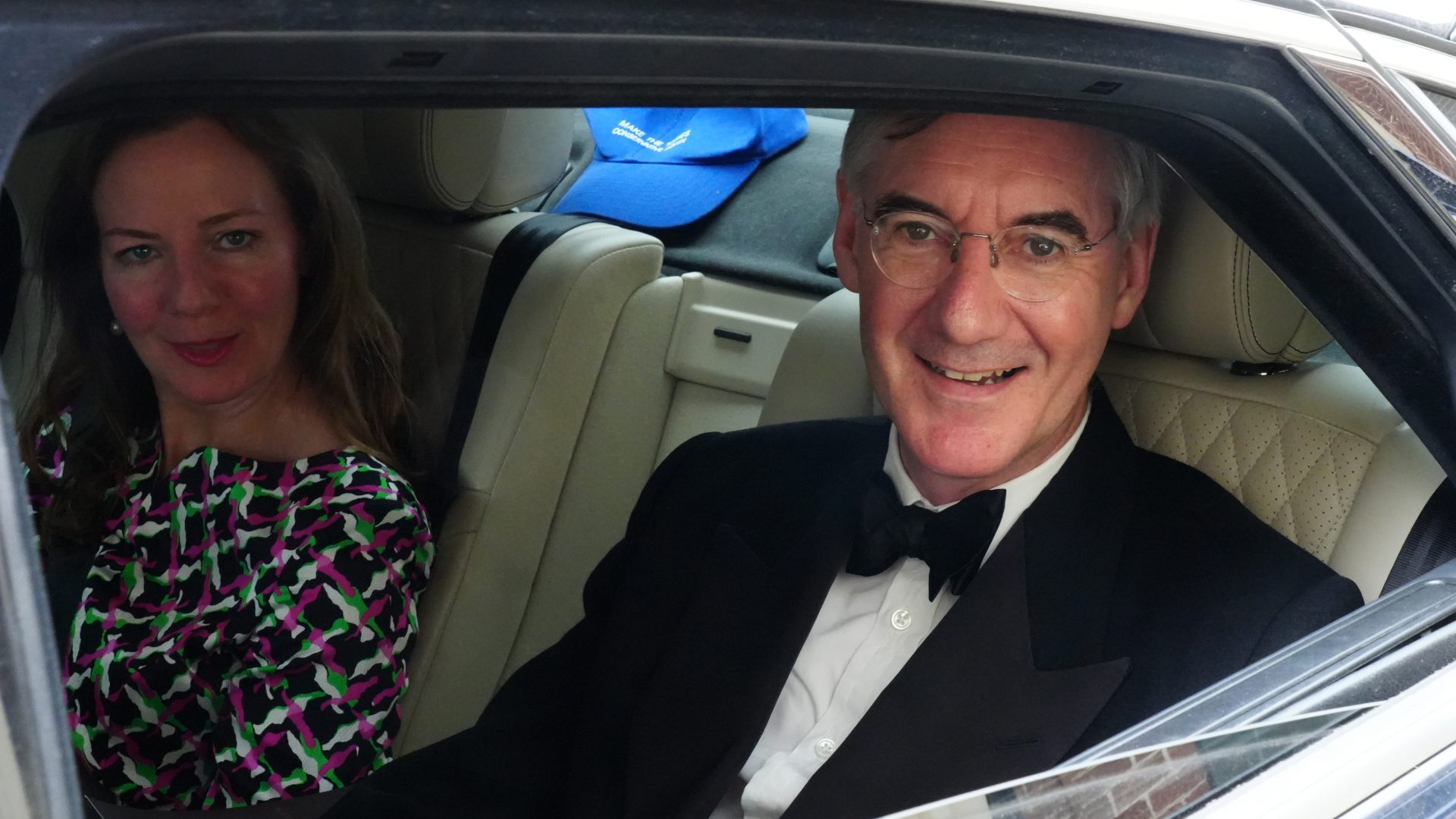
And now Jacob Rees-Mogg, the former Cabinet minister who appears to be dipping his toes back into frontline politics after establishing a new think tank, 878 Research, has formally called for the two parties to fight a “coupon” election similar to 1918 in which certain candidates were offered the support of the leaders of two parties.
“The pre-election coalition would need to establish which one of the two leaders would be the prime ministerial candidate,” Rees-Mogg told visitors to his Substack account in a video.
Suggested Reading

Why won’t Nigel Farage let poor Zia run for a seat?
“This was a problem for the SDP-Liberal alliance in the 1987 general election and it led to lots of criticism during the campaign. You would have to go into a campaign with one figure as your prime minister and you would need to broadly establish a shadow cabinet across the two parties. People would need to know what they were getting.
“How would you do it? Well, I’ve suggested a coupon election where you would go constituency by constituency and say, in this area, in this region, Reform is more likely to do better and in this region the Conservatives are more likely to do better, therefore we will have a Reform or Conservative candidate accordingly.
“I think you would want to give the coupon to incumbents because it would be very hard to get anyone to agree if you did not do that, even those who have defected from the Conservative Party, even those within the Conservative Party who are not as right wing as some people might like, and you would fight a unified election campaign on that basis.”
The leader of the other party would be formally the candidate for chancellor, he said.
“The alternative is a post-election coalition, such as the one we had with the Liberal Democrats in 2010. There you would decide the prime minister on whichever party leader had the most seats. The number two would once again probably want to be Chancellor of the Exchequer, although I could see conceivably that either party leader might prefer another role… the post of deputy prime minister is a non-post, that’s probably why David Lammy’s got it.
Suggested Reading
Does Robert Jenrick already have his eye on Reform’s top job?
“It’s too early to say who would have which role. It’s too early to name the people because they will change within the next three years, but I think coming to some sort of agreement is essential.
“I’m not saying it’s what will happen, I’m saying it’s what could happen.”
It currently seems unlikely, not least as Badenoch’s personal distaste for Nigel Farage is said to be very real. But perhaps some Tories have been wooed by a recent Saturday Night Live UK sketch portraying a Britain in 2046 in which Badenoch is serving as deputy prime minister to Peter Serafinowicz’s Farage.
“We make quite a team, you and I,” says Farage. “We disagree on everything very, very, very slightly.”
 Most popular

The problem is they just don’t care about us any more

The New World at 500: Independence isn’t our marketing slogan. It’s our business model

Churchill, the Beatles, St George: All the English heroes who aren’t actually English

Sorry Nigel, but the polls show you’ve had it