On May 20, 1997, Lord Campbell of Croy, a second world war veteran, rose in parliament’s second chamber to face a new enemy. He had heard of a forthcoming video game that featured “thefts of cars, joyriding, hit-and-run accidents, and being chased by the police”, and feared there would be “nothing to stop children from buying it”. What, he demanded, would the new Labour administration do?
Lord Williams of Mostyn, fielding his very first question as a Home Office minister, responded sympathetically, observing that the game had not yet been submitted to the British Board of Film Classification for an age rating, while adding that the government was “very concerned about violent computer games”. Outside the chamber, newspapers joined in: the Daily Mail warned against a “criminal computer game that glorifies hit-and-run thugs”.
What their lordships did not know was that the outrage had been ordered in. BMG Interactive, the publisher of this scrappy, top-down driving game from DMA Design, a studio in Dundee, had hired Max Clifford – then Britain’s most notorious publicist, later a convicted sex offender – to sell it to the world. Clifford’s plan was simple: leak the nastiest parts to the right politicians and papers, then put the kettle on.
“He told us how he would play it, who he would target, what those people targeted would say,” the game’s co-creator, David Jones, later told the Sunday Times. “Every word he said came true.” Grand Theft Auto came out that November with an 18 certificate and in a blaze of free publicity. It sold by the million.
Nor could Lord Campbell, a former Scottish secretary, have known that Grand Theft Auto would become one of the most lucrative cultural products ever made north of the border. Its eighth main instalment (confusingly titled Grand Theft Auto VI) arrives on November 19, and will almost certainly be the year’s biggest entertainment release, in any medium.
Rockstar Games, as its makers are now known, is rumoured to have spent upwards of $1bn making and marketing it. If the performance of its predecessor, 2013’s GTA V, is anything to go by, it will make back that money many times over.
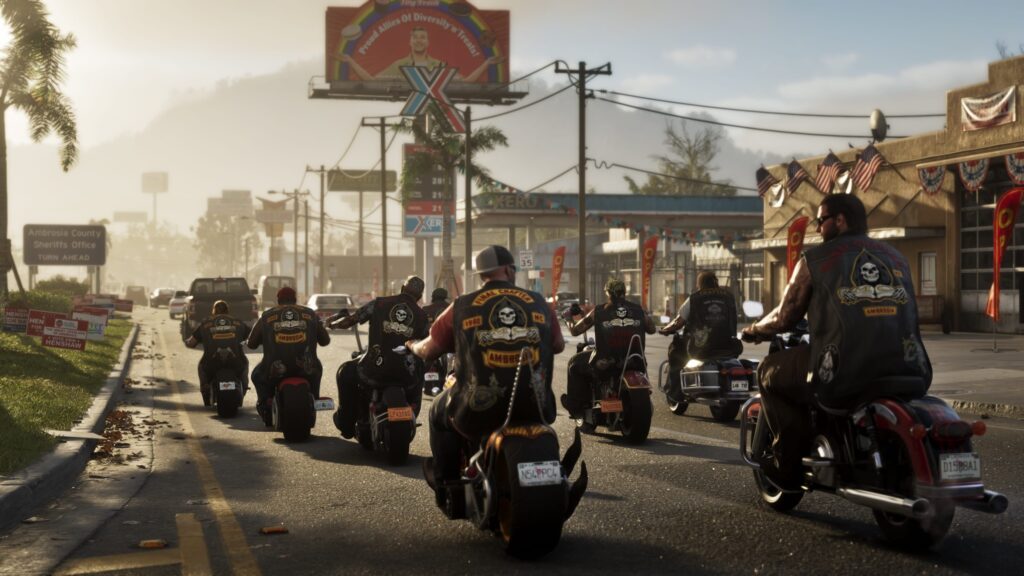
Yet something is different this time. On October 15, Rockstar released the launch trailer for GTA VI. It features guns, heists and a sex scene between Lucia and Jason, a pair of lovers on the lam in Vice City, GTA’s lurid facsimile of Miami.
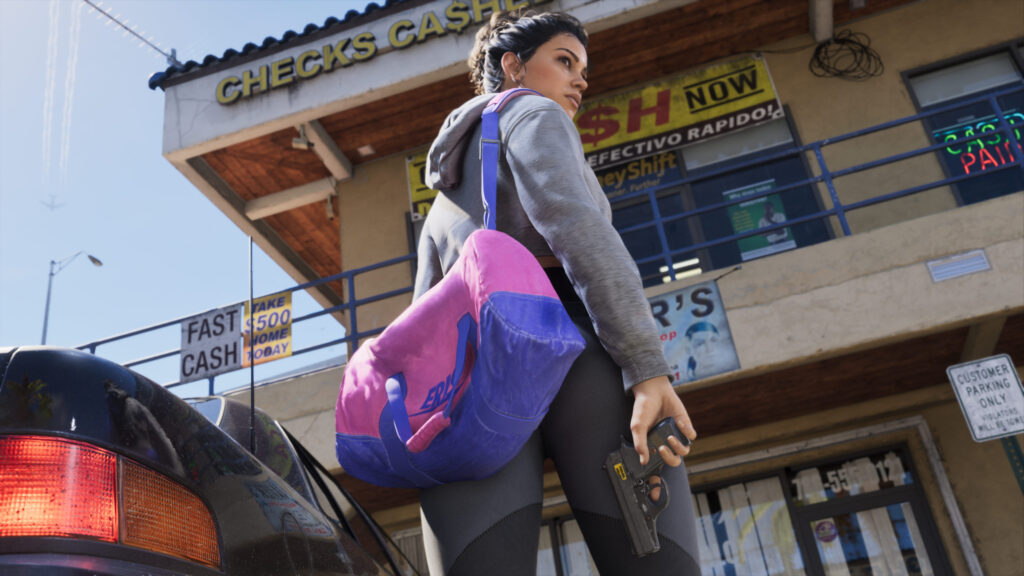
The response came from players, not peers. Fans complained that the footage looked blurry and accused Rockstar of quietly downgrading the graphics. Over the summer, the same group had fumed that an extended preview was briefly exclusive to Netflix, and that boxed copies would contain no disc, just a download code.
So we have had an aesthetic panic, a paywall panic and a physical-media panic – but no moral one. No 21st-century Lord Campbell has risen to demand a ban.
Perhaps this is down to maturity – though the fan complaints sometimes make that hard to credit. The teenagers who played the first GTA in their bedrooms are now in their 40s, and video games long ago won their legal and cultural arguments. Indeed, the Lords exchange that has aged best came on January 13, 1998, when Lord Avebury reported that demos of GTA were being given away with magazines – “but that my 12-year-old son, who has played the demonstration copy, assures me that he is not motivated to go out and steal cars”.
Nor, it seems, was anyone else. In England and Wales, police recorded almost 600,000 vehicle thefts in 1993; three decades later, it was around 130,000.
But there is a darker explanation, too. GTA has stopped shocking anyone because the things it depicts have moved off the street and on to two other stages: American politics and the phone in your pocket. A game that once relied on controversy to market itself now looks almost quaint beside Trump and TikTok.
Grand Theft Auto has always been a British view of the United States. Two of Rockstar’s founders, the brothers Sam and Dan Houser, are Londoners who decamped to New York in 1998 – and steered the series from there.
Dan, the long-time lead writer who left the company in 2020, told the podcaster Lex Fridman last year that the series was about America “possibly from an outsider’s perspective”. As he put it, “You needed guns.”
The first two games sold well, but the cultural tipping point came with Grand Theft Auto III in October 2001, the first in three dimensions. It was set in Liberty City, a garish, noirish New York, and was delayed for a few weeks while Rockstar – atypically – tried to avoid controversy, cutting material that suddenly seemed tasteless after the September 11 attacks.
What remained became the template for open-world games: a city to roam as Claude, a mute, low-level thug; a criminal career to pursue or ignore; and radio stations pumping out pop and sharp-edged satire. Vice City followed in 2002, a pastel homage to Scarface and Miami Vice. It drew protests from Haitian-American groups, and Rockstar excised offending lines of dialogue.
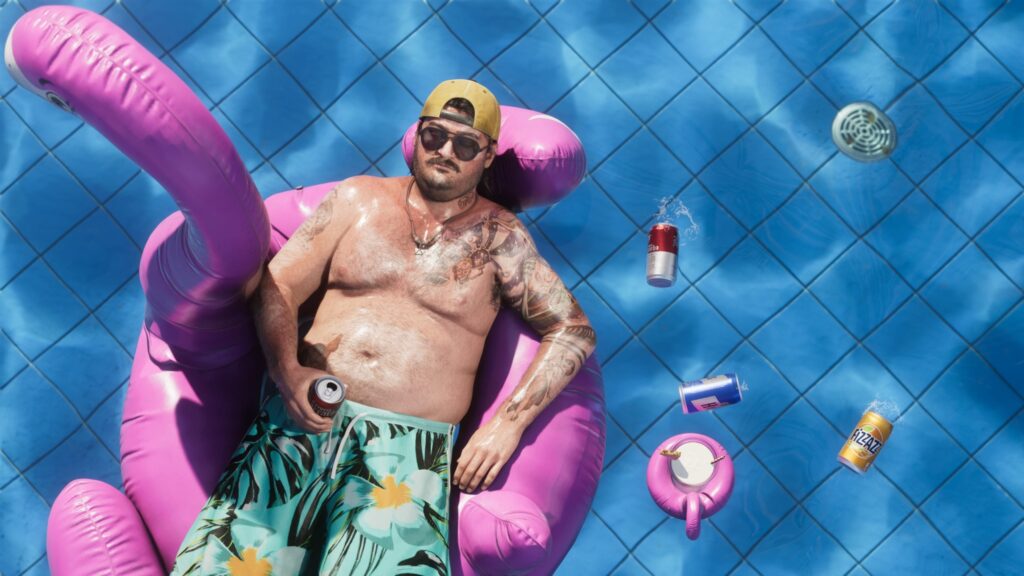
In America, things soon turned litigious. In 2003, an 18-year-old named Devin Moore killed two police officers and a dispatcher in Alabama. His lawyers attempted to claim diminished responsibility on the grounds that he had been grossly influenced by playing GTA; the jury was unmoved, and he was sentenced to death. Still, the victims’ families sued, naming the game’s publisher, Take-Two Interactive, along with Sony and a pair of retailers.
The outrage had its own impetus now, rather than being manufactured. But it took the same shape as in 1997: the authorities on one side, the game on the other, and every row sold more copies.
The irony is that what came closest to destroying Rockstar was not violence but sex. In 2005, a Dutch programming nerd uncovered an abandoned minigame buried in the code of GTA: San Andreas, in which the hero has crudely rendered intercourse with his girlfriend. America’s ratings board reclassified the game as Adults Only; shops pulled it; Hillary Clinton demanded an inquiry and the Federal Trade Commission duly obliged.
Dan Houser told Fridman that the company feared being shut down midway through its next game. Players had been mowing down virtual policemen by the thousand for years; it took a few seconds of polygonal sex to turn the political mainstream against GTA.
By the time GTA IV arrived in April 2008, the British establishment was arguing with itself. In his Mail on Sunday column, Peter Hitchens denounced the game as “squalid mind poison” that “assumes that wickedness, callousness and violence are cool”.
Within a week, my one and only predecessor as the Daily Mail’s games critic, the LBC presenter James O’Brien, had awarded it five stars and called it “a phenomenal technological and creative achievement”. Mind poison, it turned out, sold rather well: the game made around $500m in its first week.
Then, in 2011, the US Supreme Court settled the legal question in Brown v Entertainment Merchants Association, ruling by seven votes to two that video games are protected speech, like books and films. Justice Antonin Scalia, for the majority, observed that children’s literature had never been squeamish: “Grimms’ Fairy Tales, for example, are grim indeed.” In America, at least, the war seemed over.
Though there was room for one last great row. GTA V, released in September 2013 and set in Los Santos, a sun-bleached take on Los Angeles, contained a mission in which the player, as the psychopathic Trevor, tortures a suspect with pliers, electrodes and water. Human-rights groups condemned it, as did various British MPs. While Hitchens, in his column, delivered yet again: “If the Devil had his own bible, it would probably take the form of a computer game.”
This particular satanic scripture took $800m on its first day and has since sold more than 230m copies. But the telling detail is in the torture scene itself. Afterwards, Trevor lectures his victim on how torture serves the torturer rather than producing reliable intelligence – a comment on the conduct of a real government after 9/11. Rockstar’s best material was already coming from the news.
‘GTA’s defining pleasure was always spectacle: the chance to watch chaos unfold at a safe distance, then do it again. That spectacle now arrives unbidden, every day, on your phone, somewhere between holiday snaps and adverts for air fryers’
Consider what Grand Theft Auto has offered its players for three decades: violence without consequence; larceny without shame; spectacle for its own sake. Now look at the United States in 2026.
Begin with violence. According to the University of Maryland’s START consortium, terrorism and targeted violence rose by 34.5% in the first eight months of 2025 – and the attacks fit no single ideology.
Donald Trump survived two assassination attempts in 2024. In June 2025, Melissa Hortman, a Democratic state legislator, was shot dead at home with her husband. That September, Charlie Kirk was assassinated while speaking at Utah Valley University. In April, shots outside the White House Correspondents’ Dinner sounded the third direct threat to the president’s life in under two years.
Then larceny. In GTA, crime pays and the law can be bought. In the first year of Trump’s second term, according to an NBC News analysis, more than half of the 88 pardons he issued were for white-collar crimes such as fraud and money laundering.
Beneficiaries included electric-truck firm Nikola’s founder, Trevor Milton, who with his wife had given more than $1.8m to Trump’s campaign, and crypto exchange Binance’s founder, Changpeng Zhao. Democrats call it pay-to-play and have opened an inquiry; the White House says the pardons followed a rigorous review.
The president himself is a convicted felon. Whichever side you take, the plot would not look out of place in Los Santos.
The people who write the satire have noticed. In a 2018 interview with GQ, Dan Houser said that lampooning the age of Trump would be pointless: “It would be out of date within two minutes.”
Besides, the series had been there already. Donald Love, a property tycoon who appears in three earlier games, runs for mayor of Liberty City – and is a cannibal to boot. In April, Jay Klaitz, who voiced the hacker Lester in GTA V, said what many players feel: “What seemed so far-fetched and insane just a short while ago now feels like just another day.”
Then there is the phone. GTA’s defining pleasure was always spectacle: the chance to watch chaos unfold at a safe distance, then do it again. That spectacle now arrives unbidden, every day, somewhere between holiday snaps and adverts for air fryers.
Kirk’s killing was livestreamed and filmed by an audience holding phones. Within minutes, the footage had millions of views, often autoplaying for people who had not gone looking.
“This took place where everyone could see it,” Emerson Brooking of the Atlantic Council told NPR, “and it was intended that everyone would see it.” Critics of video games had worried that teenagers might choose to simulate a killing. Instead, the algorithm chose to show them a real one.
The British evidence is starker still. In 2024, the Youth Endowment Fund surveyed 10,000 teenagers: 70% had seen real-life violence online in the past year, and a quarter of those said the platforms’ own recommendations had served it to them.
This month, Ofcom reported that the Online Safety Act has so far made “no significant change” to how many children encounter harmful content – and cited footage of Kirk’s murder as just one grim example. Lord Campbell worried in 1997 that nothing would stop children buying an 18-rated game. A generation later, nothing stops them being shown real fights, knives and shootings for free.
Rockstar has responded in the only way it can: by turning the game into the feed. The first GTA VI trailer, released in December 2023, was watched more than 90m times on YouTube in a day, and much of it restaged real viral clips from Florida: a woman twerking on the roof of a speeding car; an alligator ambling into a shop; a man with the Joker’s face tattooed on to his own. The satirists no longer need to invent. They need only curate.
None of which is to say that controversy has vanished. It has moved. The most serious row around GTA VI is not about what is in the game but about who made it.
In October 2025, Rockstar sacked 31 developers in the UK, most of them at Rockstar North in Edinburgh. The Independent Workers’ Union of Great Britain calls it union-busting; Rockstar says the staff leaked confidential information.
Our former prime minister Keir Starmer even called it a “deeply concerning case”. The employment tribunal in Glasgow has now been extended: closing submissions will be heard on November 17 and 18, the eve of the game’s release.
The old moral panic, meanwhile, has run out of proof as well as energy. In 2020, the American Psychological Association found “insufficient scientific evidence” of a causal link between violent games and violent behaviour. And it is hard to campaign against a game for glorifying violence when the Department of Homeland Security recruits immigration officers with Halo memes.
So feel free to run amok with Lucia and Jason in Vice City this November. Steal, shoot and – gasp! – even have sex. And know that retribution is never far away in Grand Theft Auto. Take one bullet too many and the screen drains to grey as a single word appears: “Wasted.”
When you see it, spare a thought for all the years America has given to Trump, and all the attention spans it has surrendered to the algorithm. They’ve been wasted, too.
 Most popular

Emily Maitlis’s diary: The Democrat who’d rather see Trump win if it means El-Sayed losing

It might not look like it, but a motoring miracle has now happened

What happens to Trump if he loses the midterms?

How Abdul El-Sayed became the man who can break Trump