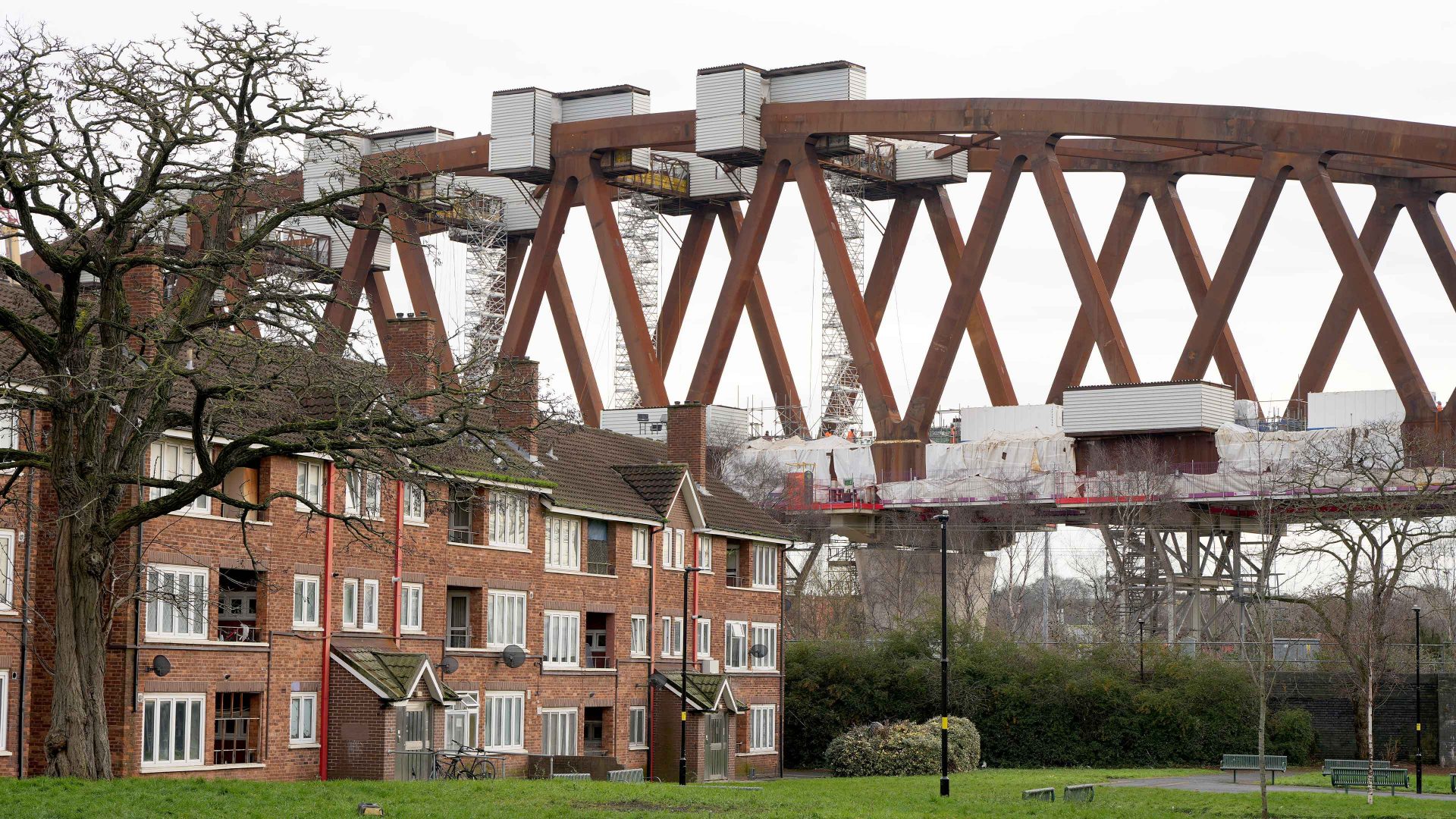
How can one railway line become such a mammoth disaster before it is even complete, or has even carried a passenger? But that is what has happened. If it weren’t for the political frenzy over Starmer’s leadership, the saga of HS2 would be suffusing the country in a shroud of national embarrassment.
This single scheme could be a metaphor for Britain: a grandiose project, with ideas far above its station, misguided from the start, ill-thought through, and managed with staggering ineptitude.
Even measured against Britain’s traditionally poor performance in government procurement, HS2 is outstanding. With the bill now estimated at around £103bn for just 140 miles, this is by far the most expensive high-speed rail line ever built, almost twice the cost per kilometre of the runner-up from Taiwan.
Suggested Reading

The Westminster media’s fatal addiction to crisis is breaking politics
Despite that, having been launched in 2009 and construction having got under way in 2020, it will not be functioning for years. The first stage is not expected before May 2036, and could be as late as October 2039. And it is not even going to be as high-speed as was originally cited in its sales pitch: a vaunted, record-breaking target of 360km/h has now decelerated to 320km/h.
Whether it be buying aircraft carriers or confectionery, offices or PPE, the government is a dreadful purchaser – but from the sellers’ point of view, that makes them a wonderful customer. The chief executive of a leading property company once told me that his favourite client was the government because it regularly changed the specifications of what it wanted and the price went up every time.
The former owner of Topshop, Philip Green, in the days when he was still regarded as a high-street hero, was summoned by the government to look at its procurement methods, to see where savings might be made. He was bemused by its crazy lack of coordination.
Every so often, governments make a token gesture of asking an outsider to improve the way its purchasing operates but, if their advice has any impact, the effect is at best fleeting.
When the House of Lords Economic Affairs Committee took a look at HS2 as long ago as 2015, the problems with the project were already glaringly apparent.
“The cost-benefit analysis for HS2 relies on evidence that is out-of-date and unconvincing,” it concluded in a damning report. Having been a member of that committee, it is dispiriting to see that, more than a decade later, those warnings have been borne out.
Efficient transport links are crucial, but this vainglorious project was driven by politics, not economics, and what were until recently Britain’s three main political parties all carry some blame.
Launched by a Labour prime minister, HS2 was taken on by the Conservative-Lib Dem coalition. No governing party wanted to be seen as opposed to the creation of “the Northern Powerhouse”.
With the country’s prosperity heavily concentrated in London and the south-east, the need to boost the north has become a political imperative. No matter that the UK has areas of deprivation scattered from Wales to deepest Cornwall that would love to be as prosperous as Leeds and Manchester.
The near-deification of Andy Burnham, once merely the mayor of Manchester but now the front-runner to succeed the prime minister and not, necessarily, at a time of Keir Starmer’s choosing, has increased attention on what miracles might have been worked there.
Suggested Reading
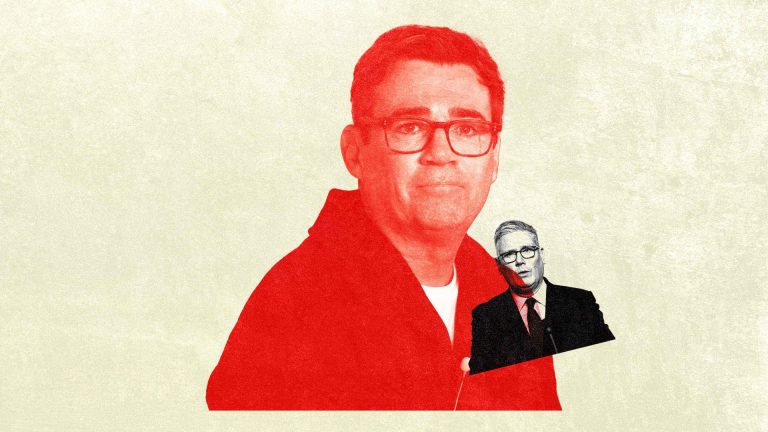

There is no more room for failures. Andy Burnham, you’ve been warned
They did not start with Burnham. The businessman turned radical Tory politician Michael Heseltine was behind Manchester getting its first development corporation, and others have followed. Burnham has had the good sense to embrace the concept which in effect means politicians and civil servants keeping out of the way and letting business people direct what happens.
The politicians are merely enablers, on land acquisition and planning restrictions. Even Manchester’s buses, now painted a startling yellow and providing a price-capped service the locals love, are run by the private sector.
If he were to move into Downing Street and bring just that approach to government, there could be real benefits.
As the nonagenarian Bill (Lord) Bradshaw, who spent his working life in railways before becoming a Lib Dem politician, told the Lords last week: “Running railways is a job for railway professionals, not civil servants, regulators, armies of lawyers, financial manipulators and consultants… producing poor standards of punctuality, and poor financial management, as we saw in the case of HS2, which was not designed or built by railway professionals.”
As ministers and civil servants demonstrate continually in the UK, he is absolutely right.