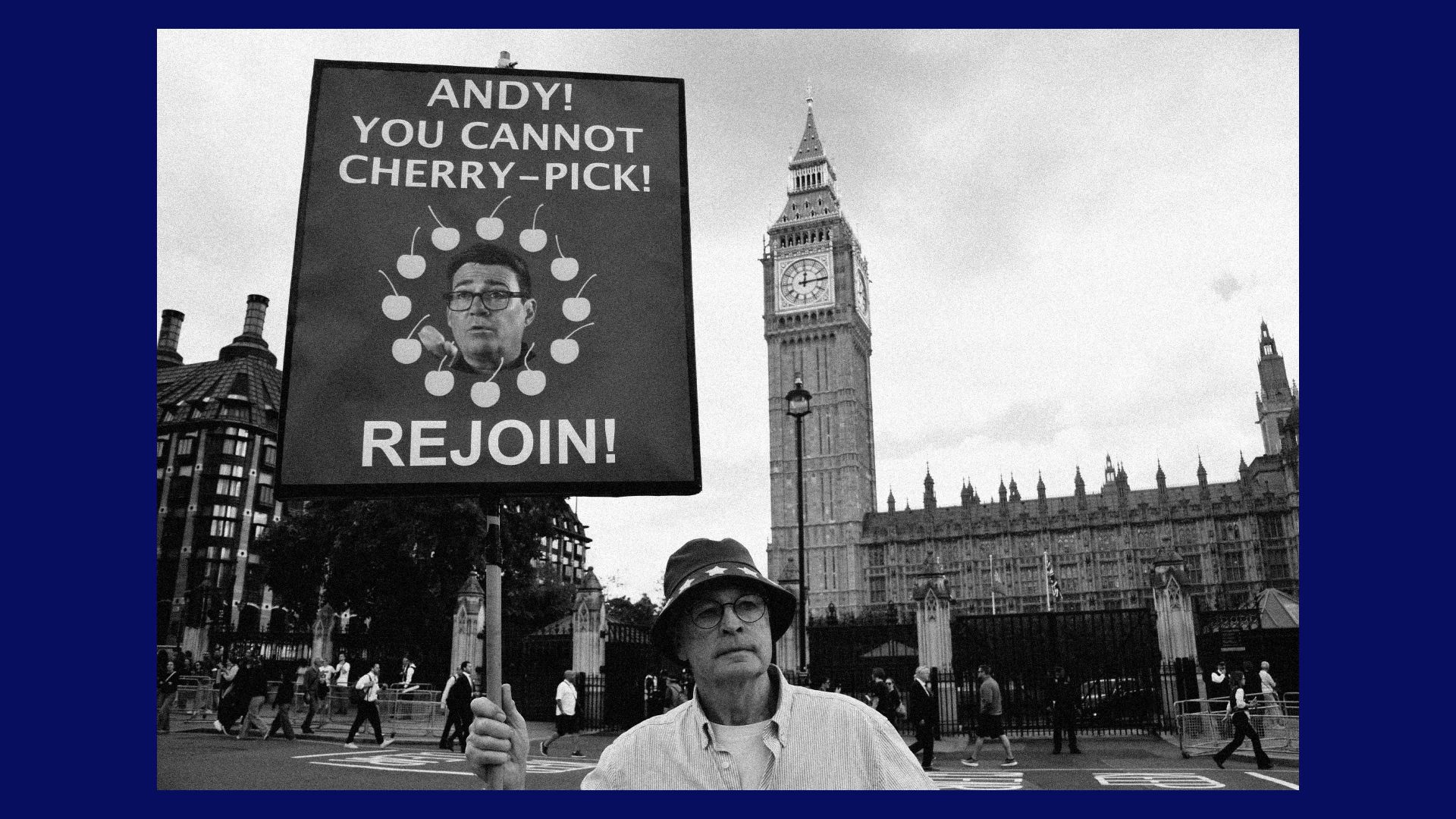
In November, Andy Burnham will set out the options for a closer relationship between the UK and Europe. He has said these options will include forming a customs union (like Turkey), joining the single market (like Switzerland or Norway) and “going the whole way” by rejoining the European Union as a full member. But are these the only options? Or the best?
Last month, during her State of the Union address to the European parliament, Commission president Ursula von der Leyen astonished the European establishment by proposing an entirely new arrangement for Canada: associate membership of the EU. She did not give many details but mentioned manufacturing, technology, AI, defence, energy, critical materials and economic security as areas it might cover. This kind of association might also work for the UK.
I sketched out another arrangement short of full membership in Beyond Brexit: a new deal for Britain, Ukraine and Europe, recently published by Demos. Its centrepiece is an idea first floated by François Mitterrand: a European confederation that would function as Europe’s “outer ring” and would complement and support the “inner ring” of the EU.
A confederation would allow countries currently outside the EU to work together with the EU and its member states. For some this would be a staging post to full membership (Ukraine, Albania and others in the western Balkans.) For others it might be a permanent home (countries like Iceland which recently rejected joining Europe’s political union, and countries outside Europe like Turkey and Canada.) The UK might join it as a halfway house and leave open the possibility of moving on later to full membership of the EU.
Suggested Reading
Brexit promised farmers freedom – it gave them a six-hour lottery
In my conception, members of the European confederation who were not also members of the EU would participate in the single market for goods on the basis of dynamic alignment with single market rules. They would agree to an ambitious youth opportunities scheme, enabling young people from Europe to live, study and work for a few years in any other European country. Crucially, they would also agree to a mutual defence pact that would kick in if a European country was attacked and Nato failed to come to its aid.
Some seasoned observers of European realpolitik have pooh-poohed my proposal. They point out that, in 2018, Theresa May tried to secure continued participation in the single market for goods and that her Chequers plan was rejected as cherry-picking by the EU. For eurocrats of a certain age, the indivisibility of the “four freedoms’ – the free movement of people, goods, services and capital – is tantamount to a religious text.
But they are ignoring the fact that in the six years since Brexit the world has changed utterly. Vladimir Putin has waged the largest land war in Europe since 1945 and openly threatens the security of EU member states in the Baltics. Donald Trump has questioned America’s commitment to Nato and challenged the territorial integrity of a long standing member of both Nato and the EU.
Xi Jinping is waging a relentless economic war against Europe’s most important industries and is supporting Russia in its military assault on Ukraine. And Europe is relegated to the sidelines, while China and America battle for supremacy in a new technology with the potential to transform swathes of economic activity and that threatens both our security and social stability. As 2026 draws to a close, almost all of the assumptions that underpinned decision-making in Europe since the end of the Cold War have been swept away.
These new circumstances pose new challenges to European leaders. The first challenge is security. How will Europe defend itself against Russia if American commitment to the defence of Europe can no longer be relied on? Which European countries have the potential to provide the different military capabilities that the continent will require, including a credible nuclear deterrent?
The second challenge is economic. How will Europe build sufficient resilience in key sectors so it is not at the mercy of either China or the US? How will it produce the talent, originate the ideas, and finance the development of the businesses that will supply plentiful well paid jobs and maintain the prosperity of Europe’s ageing populations?
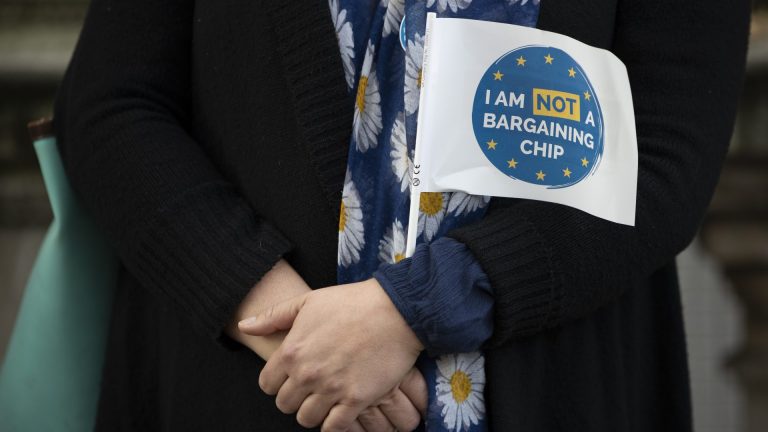

Describing these challenges is much easier than answering them. But it is obvious that it will be much harder for Europe to meet them, if it excludes the UK. Despite the shortfalls that have consumed recent debate about our armed forces, it is still true that the UK is one of Europe’s leading military powers and one of only two to have its own nuclear deterrent. It is also true that the UK boasts Europe’s leading financial centre, its best universities and strongest tech sector.
This is the new reality within which the prime minister’s negotiation of a new relationship between the UK and Europe will take place. Between now and the next election, there is an opportunity for him to start a conversation with European leaders about the possibility of an entirely new form of association between Britain, Ukraine and countries in the EU. When he sets out the options at the end of November, he should make clear that is one of the possibilities he wants to explore.
Nick Boles is a former MP and minister and author of “Beyond Brexit: a new deal for Britain, Ukraine and Europe”
 Most popular

I was at Eton with Charles Spencer – this is how it explains his battle with the royals


Emily Maitlis’s diary: My deep dive into Jeffrey Epstein’s hidden empire – and the network that let him get away with it


The linguistic logic behind dropped syllables
Putin’s wartime economy is heading for catastrophe