
Much has been written in the past couple of days about Andy Burnham raising the prospect of a manifesto promise to hold a second Brexit referendum, or an outright pledge to rejoin the European Union.
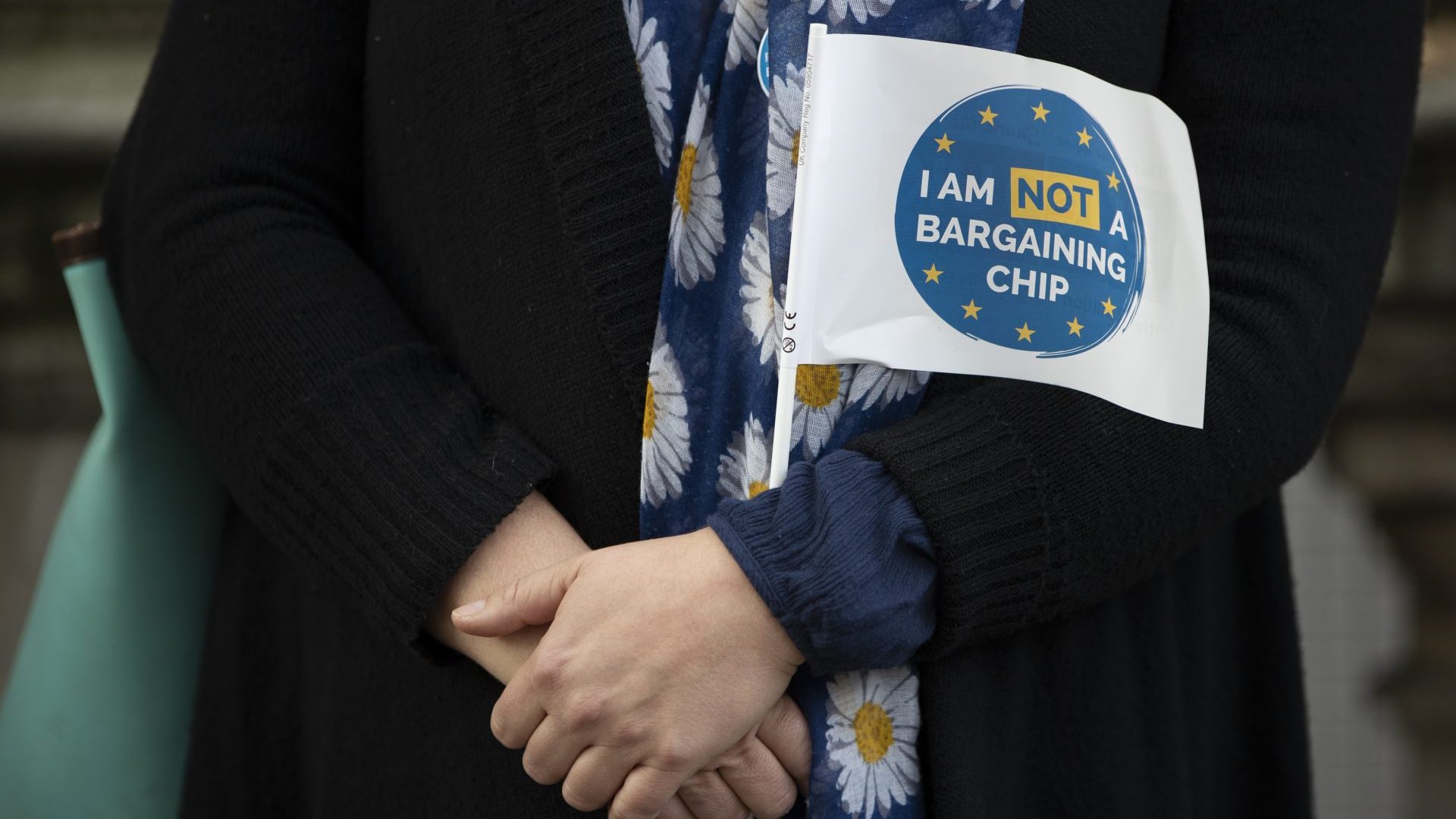
Your correspondent, as you might expect, welcomes a move that Keir Starmer viewed as about as enticing as a 1,500m dash over hot coals while wearing a Spurs shirt. But given this column has been writing about such a move for… well, a very long time now, and politics has finally caught up with it, let’s this week pose a different question: would it help our cause if we kept the post-Brexit vows we made to European citizens in the first place?
Because Burnham’s thinking out loud, welcome as it is, came just days after a Home Office minister admitted that it had contacted 1,473 citizens with post-Brexit residency rights to tell them the original decision to grant them had been made in error. And this was sneaked out via a written answer in the House of Lords – if, as they say, you want to keep something secret you could put it in speech in the House of Commons, you could safely hide the identity of the Celebrity Traitors winner in the Lords.
Mike German, a former leader of the Welsh Liberal Democrats, now in the upper house, wrote to the Home Office asking “how many individuals have been informed that their EU Settlement Scheme status was granted in error since the introduction of the scheme; and how many of those individuals have subsequently lost, or are at risk of losing, their right to reside in the United Kingdom”.
Two weeks later David Hanson, a little-known Home Office minister in the Lords, wrote back to say that “from the introduction of the EUSS [EU Settlement Scheme] in 2018 to 30 June 2026, 1,473 individuals have been notified that their pre-settled status was granted in error”. Now it has emerged that the Home Office could face legal action over its about-turn.
Suggested Reading

The problem is they just don’t care about us any more
The New World wrote nearly two months ago of how, after years of building lives in the UK, potentially thousands of EU citizens could be told they have no right to remain, despite having initially been told they could. The Home Office had at that point told at least 100 people that they had been given residency rights “in error” just as they were coming to the end of the five-year “pre-settled status” and preparing to upgrade to the permanent “settled status”. Now the full figure is known.
A grassroots organisation of EU citizens in the UK named the3million has launched a crowdfunder to seek a judicial review of the policy, which was enacted in late 2025 but has only recently come to light.
As it says on Crowd Justice: “The3million is ready to take the government to court over a Home Office practice: deciding there was a mistake in the initial grant of status, then simply allowing the status and rights of EU citizens and their family members to fall off a cliff – with no decision, no proportionality assessment and no right of appeal.
“In many cases the Home Office is actually wrong to say there was a mistake! So people whose status was properly granted are now fighting not to lose it – this is a clear breach of the Withdrawal Agreement.”
So it is. In August we wrote about a Portuguese woman given the name Gabriela (not her real one) who was granted pre-settled status under the EU settlement scheme like 1.3 million others who had been in the country for less than five years before Brexit.
She had told the Guardian how, having worked in the NHS and researched a PhD in Britain, her entire life had now been thrown into turmoil after being told by the Home Office she was granted post-Brexit rights to live in the country “in error”.
Suggested Reading

The terrifying evolution of fascism
Gabriela’s case was slightly complicated by the fact that she is Brazilian-Portuguese and did not have a Portuguese passport at the time of her application (she said she had been open with the Home Office and had “not excluded anything”, including the fact that her father was Portuguese, making her an EU citizen by birth).
But she is not alone. And, as the3million say: “In this new practice we are seeing, there is no decision, nobody weighing up your circumstances, and there is nothing to appeal. Your status stays valid until the day it expires – and then it is gone, and you are considered to be in the UK unlawfully.
“Now here is the really worrying bit – this policy is being applied to people where there was no mistake when the original status was granted. The person met the requirements, and they were properly granted status under the EU Settlement Scheme. Many years later the Home Office is now saying the grant was by mistake, even in cases where it was not.”
It’s true, and extremely worrying. If Burnham wants to make progress when he sits down for the EU-UK summit – tipped to take place on November 20 – wouldn’t it make sense to show that Britain had not reneged on the promises it made as part of the original Withdrawal Agreement? Lifting this considerable stress from the heads of European citizens who have contributed so much to the country they considered home might be a good start.
“Wouldn’t it?”, as Burnham would undoubtedly say.
 Most popular

Churchill, the Beatles, St George: All the English heroes who aren’t actually English


The New World at 500: Independence isn’t our marketing slogan. It’s our business model
The problem is they just don’t care about us any more

Sorry Nigel, but the polls show you’ve had it