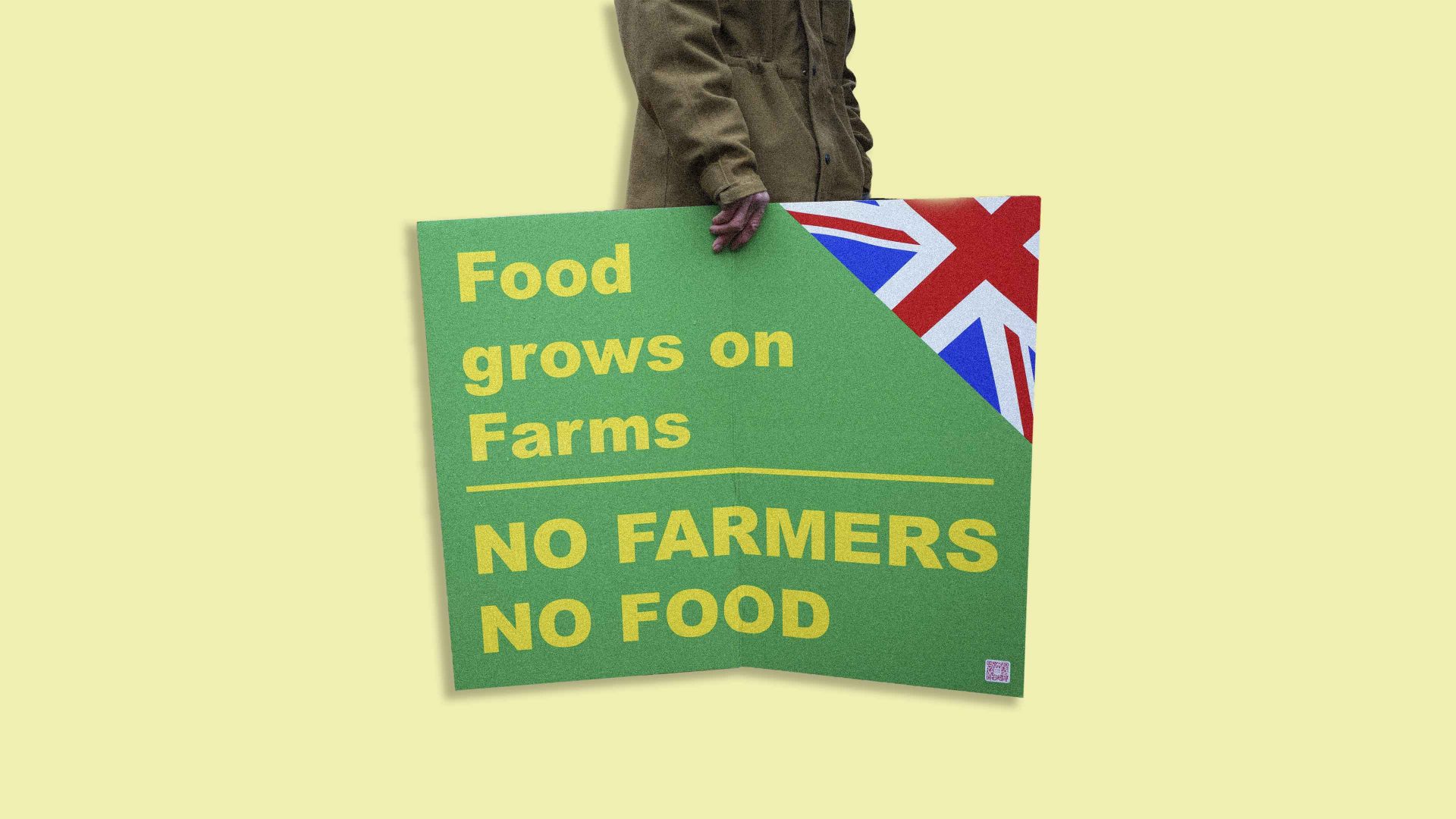
At 10am on Tuesday September 22, farmers across England logged on to a government website to get their share of £233m in environmental funding. You’d think such a huge sum of money would be distributed in a carefully thought-out, orderly way, especially as farmers have just endured one of the most brutal summers in living memory and need all the help they can get.
But no. This enormous sum was distributed online, on a first-come, first-served basis. Farmers simply had to get their application in before the money ran out. And it ran out very quickly.
What followed was like a scramble for Glastonbury tickets. Farmers frantically refreshed web pages that wouldn’t load and joined helpline queues in an attempt to get their applications accepted. They had to move very fast – because by 3.48pm, all the money was gone. Thousands of farmers got nothing.
This is what England’s post-Brexit agricultural policy looks like. As EU-era farm payments were phased out, the government introduced the Sustainable Farming Incentive (SFI) to pay farmers to improve soils, reduce pesticide use and create wildlife habitats. It was also key to helping the government meet environmental targets.
But it has been a mess. A pilot scheme began in 2021, after which it was relaunched, rewritten and then abruptly closed again in 2025 after demand threatened to exhaust its budget. It returned this June, and was restricted to small farms and those without existing environmental agreements.
The second window, in September, was open to every eligible farm, including thousands whose current agreements were nearly over. Many had waited 18 months to apply for their money. They were given five hours and 48 minutes.

The rush was driven by fear as much as demand. EU-era payments have all but gone, while two consecutive poor harvests have battered farm finances. The National Farmers’ Union said environmental agreements worth more than £520m are expiring, but only about £310m was available in total from the SFI scheme, leaving a £210m financial hole in England’s farm businesses.
Before applications opened, the Rural Payments Agency (RPA), which administers the scheme, promised “clear guidance, predictable processes and the confidence [for farmers] to apply when they are ready”. In practice, it came down to who could press “submit” the fastest.
Even those who got on to the website found incorrect land records, conflicts with existing agreements and pages that wouldn’t load. Some spent hours waiting on the agency’s helpline as the money disappeared. Backbenchers have been “absolutely scathing” in private messages to NFU insiders. “How can we not organise a piss-up in a brewery?” asked one MP.
England’s post-Brexit farm policy was developed by then-Defra secretary Michael Gove, who decided public money would no longer support farmers simply for producing food, but would pay for environmental benefits the market didn’t reward. Food production was treated as a commercial activity rather than a public good, on the assumption that imports could fill gaps on supermarket shelves.
Gove’s confidence looks increasingly complacent after rising costs and disrupted supply chains thanks to the war in Ukraine, extreme weather and two terrible harvests.
The policy could now undermine its environmental purpose, too. One farmer in the south-west of England whose expiring agreements had supported £150,000 of environmental work said he plans to plough his land and return it to production because he can’t afford to manage it for nature unpaid.
Suggested Reading

Yet more Brexit baggage we’re left with
At the Allerton Project, a research farm in Leicestershire involved in environmental schemes for three decades, staff spent weeks designing proposals to reduce soil erosion and create bee-friendly habitats.
“We were online at 10am to submit the scheme only to find that ‘computer said no’,” said Joe Stanley, the project’s head of sustainable farming. After hours on hold, technical issues meant the application never went through.
Elsewhere, farm advisers submitted whatever the portal would accept, knowing they would have to repair applications later. One estimated that half of the applications handled by his firm would need amendments.
Farming minister Stephen Morgan has acknowledged that unsuccessful farmers are disappointed, and has said Defra will consider alternatives to the system for next year. By then, farm businesses may have gone months without expected income and habitats under expiring agreements may have been ploughed up.
Farmers were promised Brexit would mean less bureaucracy. What it’s delivered is a crashing website, a six-hour queue and another year of uncertainty.