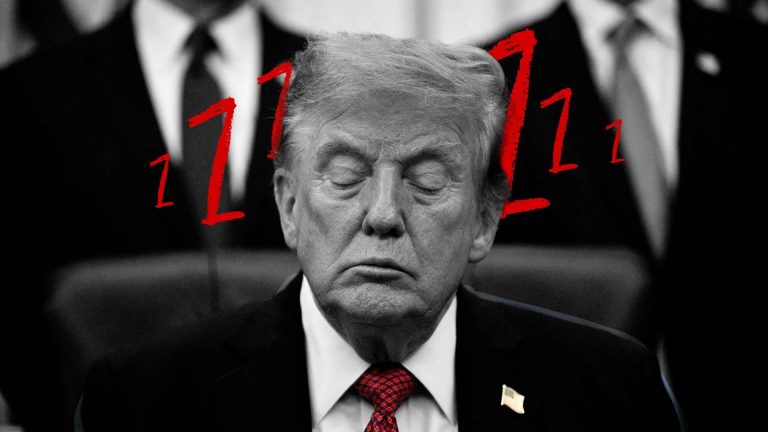
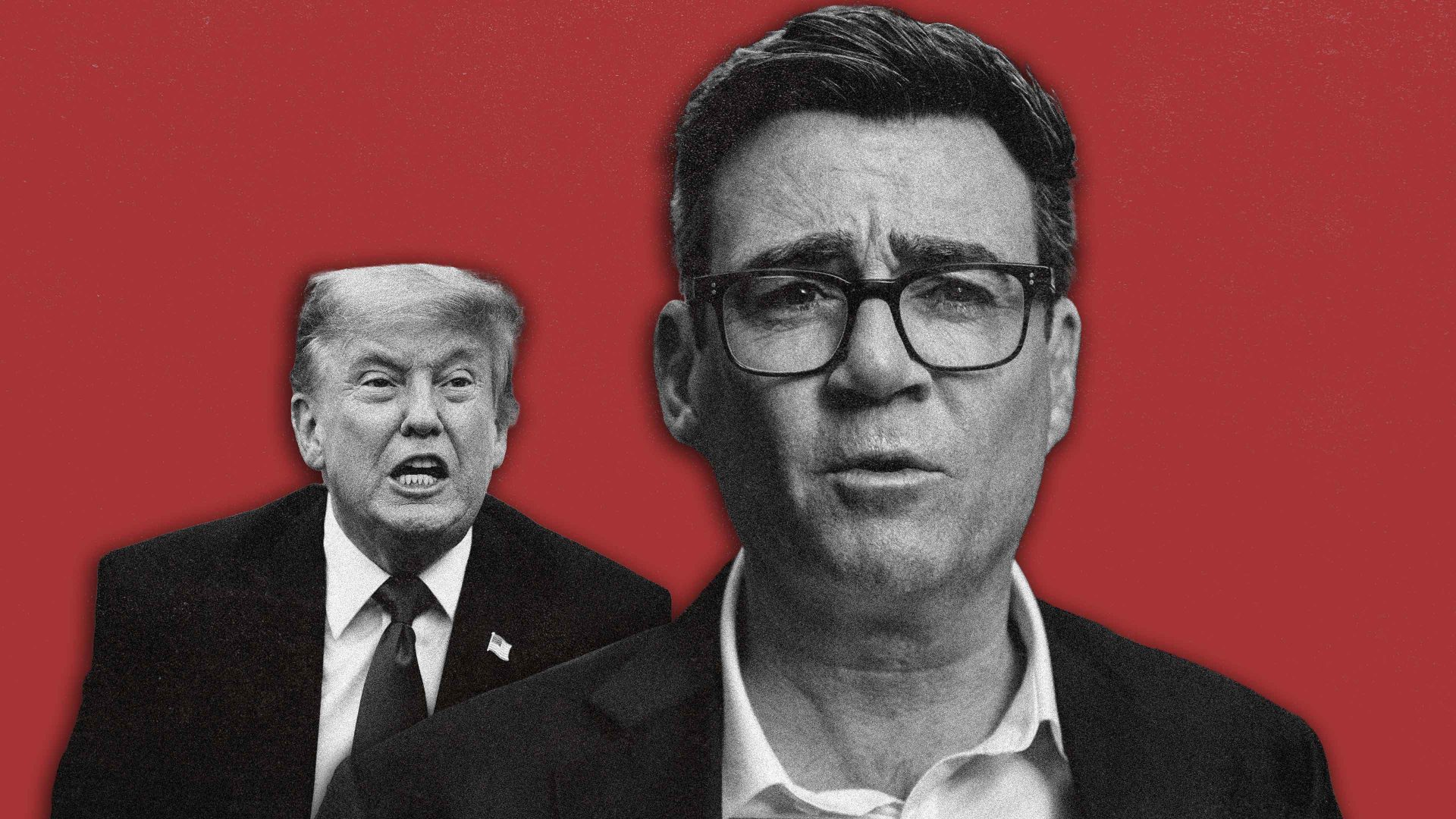
Of the many questions keeping Andy Burnham awake at night, there is surely one that induces a particular kind of cold sweat: how exactly do you deal with Donald Trump?
Do you flatter him, hoping an extravagant appreciation of his genius, patriotism and golf swing will buy Britain a few months of peace? Do you stand up to him and risk waking to tariffs on your cornflakes? Or do you simply grit your teeth, keep your head down and pray either the Democrats rediscover their nerve or biology finds a way?
Between all the nightmarish scenarios of his first run-in with the unpredictable White House, Burnham must not lose sight of the central facts: the challenge for whoever leads this country next is not about placating Trump, but defining Britain outside of him.
Burnham’s predecessor offers an instructive lesson. Keir Starmer governed according to conventional diplomatic wisdom. Respect the office, speak his language and cultivate a working relationship wherever possible. Peter Mandelson’s appointment as US ambassador – perhaps the most fatal decision of the thousand self-inflicted cuts – was borne from that same belief that lying down and getting fleas was the price we pay to secure Britain’s interests.
Instead, we discovered the hard way that Trump rewards neither loyalty nor deference. Tariffs were continuously threatened, public humiliations followed. And their relationship ended with an entirely predictable outcome: Trump gloating about Starmer’s resignation, mere hours before the PM was able to announce it to his own country.
Suggested Reading
How Burnham can lead a revolt of the people against the populists
In Starmer’s defence, his approach would have been entirely reasonable, but unfortunately, Trump is anything but. He does not operate within the normal incentives of a statesman, preferring instead displays of macho dominance, personal grievance and ideological obsession.
With the Atlantic keeping us a safe distance, Trump is often reduced to a figure of ridicule here in the UK. But distance should not be mistaken for safety. Burnham’s instinct should not be to swing to the opposite extreme; trying to out-shout Trump merely concedes to his framing that politics is ultimately theatre.
Burnham’s advantage lies elsewhere. Unlike many contemporary politicians, he appears unusually comfortable in his own skin. He gives the sense that he is speaking because he believes something, not because he has focus-grouped the wording.
That authenticity matters in contrast to Trump, whose greatest political talent is a kind of psychological coercion where everyone must react to him and bend to his will. The strongest response is refusing to join the performance.
Suggested Reading

Andy Burnham v London
That means treating Trump seriously in private, but with a degree of cool, calm detachment in public. Diplomatic work remains essential, but that also means extending far beyond the US, deepening cooperation with Europe, strengthening our NATO partnerships, and reducing strategic dependency on Washington wherever possible.
Publicly, Burnham need not imitate the solemnity that has characterised much European diplomacy over the past decade. There is room for something more recognisably British: dry humour, understatement and the quiet confidence to signal that Britain can survive the weekly eruptions from the White House.
Burnham was criticised for giving little attention to foreign policy in his most recent speech. But perhaps that misses the point. His focus was overwhelmingly domestic because many of Britain’s greatest vulnerabilities are home-grown. Over-centralisation, weak local government, sluggish growth and a political system that has become disconnected from the people it serves are not problems created by Trump, nor will they disappear when he leaves office.
This may be where Burnham’s instincts prove most valuable. His informal style and northern political identity are not merely aesthetic, but expressions of his politics. Burnham’s worldview is shaped by geography; of Manchester, the north, and the lived realities of regional inequalities. That framing produces a far more grounded sense of what the country actually is, and where its pressures lie, rather than the UK as some battered unit in a turbulent world. The answer to Trump is perhaps not to become a more polished version of the US president, nor an anti-Trump whose politics is defined by America, but to stay focused on Britain itself: who we are, and what actually improves life here.
The greatest mistake Burnham could make is allowing Trump’s political gravity to distort his own. We do not need to respond to every provocation, nor waste precious political energy chasing every American culture war when it washes up on our shores. Of course, any future prime minister must be prepared for a more volatile world, and that includes understanding America’s changing role within it. But enough of letting Donald Trump be the main character in Britain’s story. The task for our new leader is to build Britain for a world where American stability can no longer be assumed. That begins, and ends, with getting our own house in order.
That is how the King in the North should treat this episodic disruption: seriously in private, calmly in public, and never with the illusion that our future depends upon him.
Zoë Grünewald is Westminster editor at the Lead UK
 Most popular
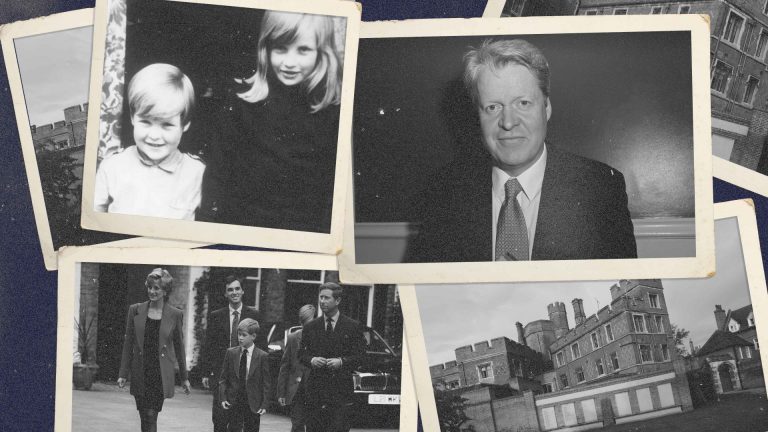
I was at Eton with Charles Spencer – this is how it explains his battle with the royals
Emily Maitlis’s diary: My deep dive into Jeffrey Epstein’s hidden empire – and the network that let him get away with it
The door that leads back to the EU is finally open. Now let's walk through it

A new film about Elon Musk reveals him as so awful it’s almost tragic. Almost