This time last summer, Nigel Farage was riding high. Reform were comfortably ahead in the polls and had been since April, its leader was the bookmakers’ favourite to be the next PM, and just a few weeks earlier, Sarah Pochin had triumphed in the Runcorn and Helsby by-election – a seat Labour took with a majority of 14,696 less than a year earlier.
Farage exploited that momentum over the summer recess, a period during which politicians generally take their holidays. Reform held weekly press conferences while their opponents were away, setting the political agenda and ruthlessly focusing the media on the issues of small boats and immigration. They began to look unstoppable.
This summer, Farage is battling to hold his Clacton seat against a menagerie of 33 would-be rivals, led by a man wearing a bin on his head. Clearly, things have not gone to plan.
Reform is beset by many of the regular problems that afflict challenger political parties. There is infighting over its direction and among its high command. Its poll numbers are dropping against a more popular new prime minister, and it hasn’t racked up a Westminster by-election win since May 2025. Its sense of momentum was lost long ago.
But its deeper problems are inexorably tied up with Farage’s increasingly confusing tangle of financial scandals. In the last days of an embarrassing by-election fiasco of his own making, it is worth the time to step back and look at each in turn – because for both Farage and Reform, the worst could very much be yet to come.
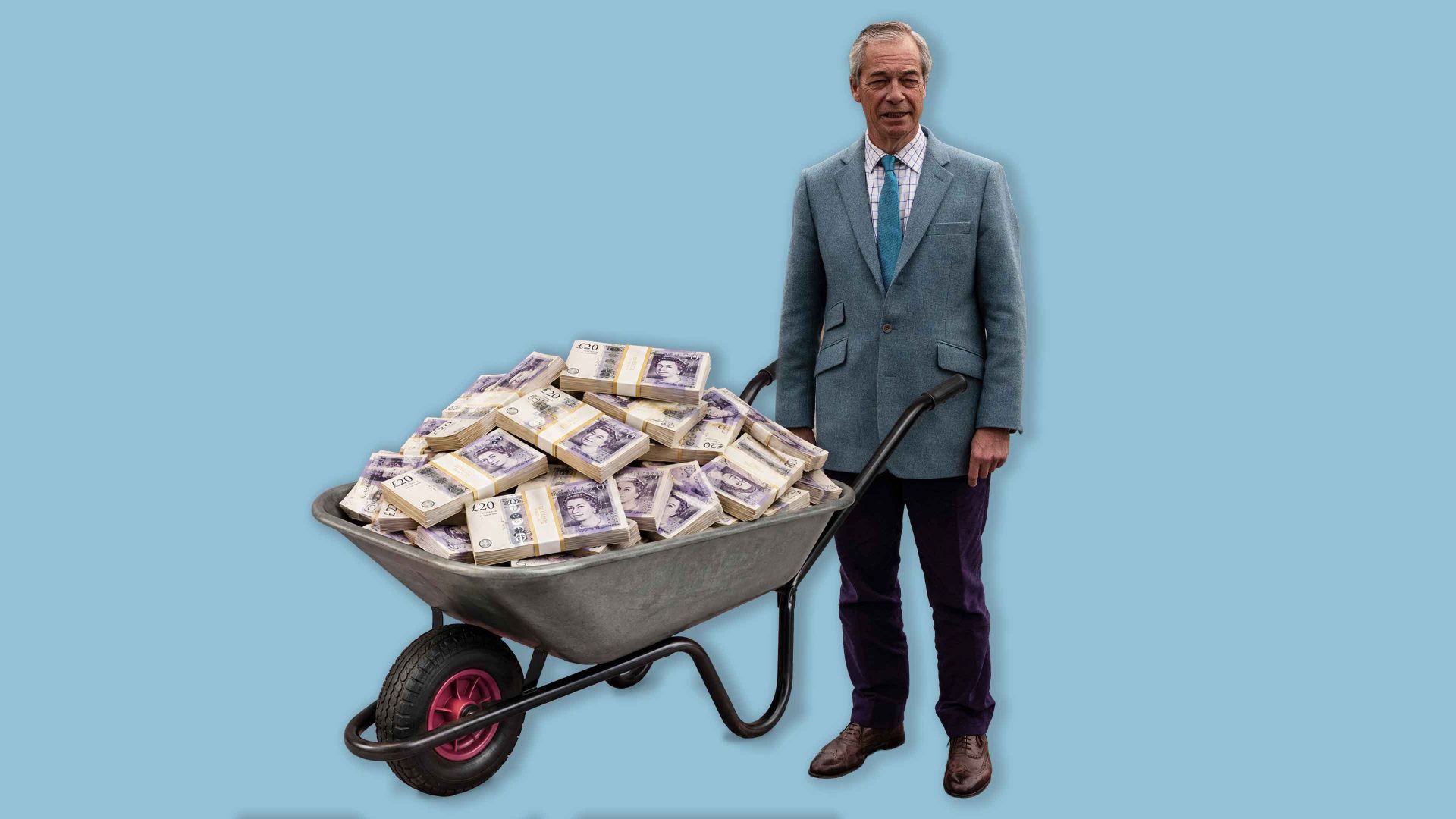
The most conspicuous of Farage’s financial scandals is his decision to accept a gift of £5m from the crypto billionaire Christopher Harborne – who is also one of Reform’s largest donors – which he also chose not to disclose to the public.
When the gift was finally revealed by the Guardian, Farage tried a range of explanations. His defences have included that the gift was “literally none of your business”, that it was to cover the cost of providing security for the rest of his life, that it was a thank you for delivering Brexit, and that it was compensation for earnings he would miss out on by returning to frontline politics.
Farage has a big problem with this gift that has nothing to do with the details of parliamentary rules or UK laws – which is, simply, that the public does not like politicians receiving presents.
The public hated Boris Johnson having his luxury refurbishment of No 10 paid for by donors, they hated Keir Starmer not paying for his own suits – and they certainly hate the idea of a politician receiving a £5m “gift” and telling them it’s none of their business.

As Farage tacitly acknowledged when he likened the money to “a lottery win”, regular people do not get gifts of this sort. As a result, it raises suspicions: we are routinely told that there’s no such thing as a free lunch, never mind a free £5m.
Critically, the basic facts of this scandal are easy to understand – it is the simple scandals, rather than the worst, that really cut through with the public, and however hard Reform tries to dismiss it, this one has lodged firmly in the public imagination.
After Farage’s expected triumph in Clacton on August 13, there may be material consequences over his decision to accept this gift. There are clear parliamentary rules concerning MPs receiving gifts, though they are permissive: Farage was definitely allowed to accept the £5m – it’s just he was almost certainly also obliged to tell the public about it, because it was received in the 12 months before he entered the Commons.
Farage’s defence relies upon arguing that this gift did not need to be registered, because it was made in a purely personal capacity. That explanation –already a difficult one given Harborne’s status as Reform’s largest donor – is now under even greater pressure thanks to new reporting from the Sunday Times, which revealed Farage was actively negotiating the terms of a return to politics with Richard Tice in March and April of 2024. Crucially, this is before Harborne’s gift was given, undermining his main defence.
The parliamentary investigation into Harborne’s donation was paused by his resignation, but will restart again when Farage wins. If things go against him, he could easily be banned from the Commons for long enough to trigger a second by-election in his constituency – one in which the big parties, and the vengeful Rupert Lowe’s Restore, would take part.
Simultaneously, Farage and Reform may face an investigation from HMRC. Based on reporting suggesting that the gift was conditional on Farage returning to politics – which Reform and Farage still deny – independent tax expert Dan Neidle argues that it may qualify as “disguised remuneration” under the UK’s tax rules – which would land Reform with a £3m tax bill, which in theory it in turn should seek to recoup from Farage.
Even as Farage contests a by-election over the Harborne scandal – which, embarrassingly, required Reform to withdraw all its campaigners from the Greater Manchester mayoral by-election to fight in Clacton – a potentially bigger headache was brewing for him and his party. Farage has had a long association with “Posh” George Cottrell, a minor aristocrat and convicted criminal, who has no formal role with Reform, but who has given out business cards in Farage’s name, and who reportedly refers to the Reform leader as “Daddy”.
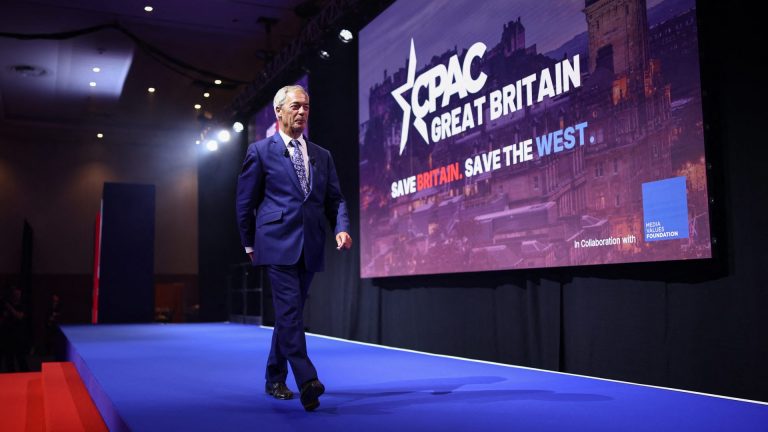

Cottrell has, in a manner similar to Harborne, reportedly furnished Farage with gifts and assistance that Farage has then allegedly not declared to the public. These include use of staff to produce social media, security staff, and the use of a luxury townhouse in central London.
But behind the scenes, several major donations to Reform that may be connected to Cottrell are attracting scrutiny. Cottrell’s mother made multiple large donations to Reform, either directly or via Britain Means Business, a company controlled by Reform’s deputy leader, Richard Tice.
There are significant questions over whether Cottrell’s mother had the financial means to make these large donations – her gift to Britain Means Business was £1m – in her own name. The Guardian reports that Cottrell transferred $2m to his mother in the 72 hours before these donations were made, via US crypto exchanges.
In turn, there are questions over $8.8m in deposits made to an account controlled by George Cottrell on Polymarket, a US betting platform, in 2024. The origin of those deposits is unclear, as is the destination of the funds once they were withdrawn. All involved deny any wrongdoing, but UK police are reportedly investigating several of the transactions, some of which generated suspicious activity reports, and which may have been connected to a brief freeze of Reform’s UK bank accounts during the 2024 election.
Experts in UK financial regulation rules suggest that these donations could prove to be far more serious for all concerned than the Harborne scandal, even if the impact on public opinion is smaller. The reason for this is threefold.
First, banks have a responsibility to show that they investigated the source of funds for any large transactions, to make sure that all proper rules were followed – meaning that each bank will have its own paper trail to make available to any investigators.


Significantly, the Guardian reports that Cottrell’s mother told banks that her son was the source of the funds. This causes trouble for Reform directly on the second front: political parties have a legal duty in turn to establish the source of funds for all major donations, and to ensure that none of their donors are acting as proxies for anyone who is not eligible to give to a UK political party.
Cottrell’s lawyers insist that he would be eligible to donate in his own right, but independent experts believe that to be in doubt. The fact that banks knew he was his mother’s source of funds, though, means Reform would be unable to blame the banks – the information on where the money came from was available to them, if they asked.
The third issue comes from the complex network of transactions behind the donations, which seem to involve US crypto exchanges, Cottrell, his mother and entities controlled by Richard Tice. This may all be found to be legitimate and necessary, but if investigators believed it to be an effort to disguise the source of a donation, it could invite further questions. “It makes my friends who work in banking shudder,” one expert noted.
It all leaves Farage and Reform in a tricky position, even if they are able to eventually prove everything about the donations was entirely above board. Farage needs to win his seat, beat the investigations, and then try to get the political momentum behind him again.
Meanwhile, behind the scenes, Reform could find itself handling inquiries from parliamentary authorities, HMRC, the Electoral Commission and UK police forces, all at once – for a scandal that could drag in its leader, deputy leader, treasurer, other staff, and several top donors. That’s a lot for a relatively small party to handle.
Last summer, Nigel Farage was striding atop UK politics. This summer, he’s fighting for survival against a humanoid bin. Next summer, he may look back on these as the good times.