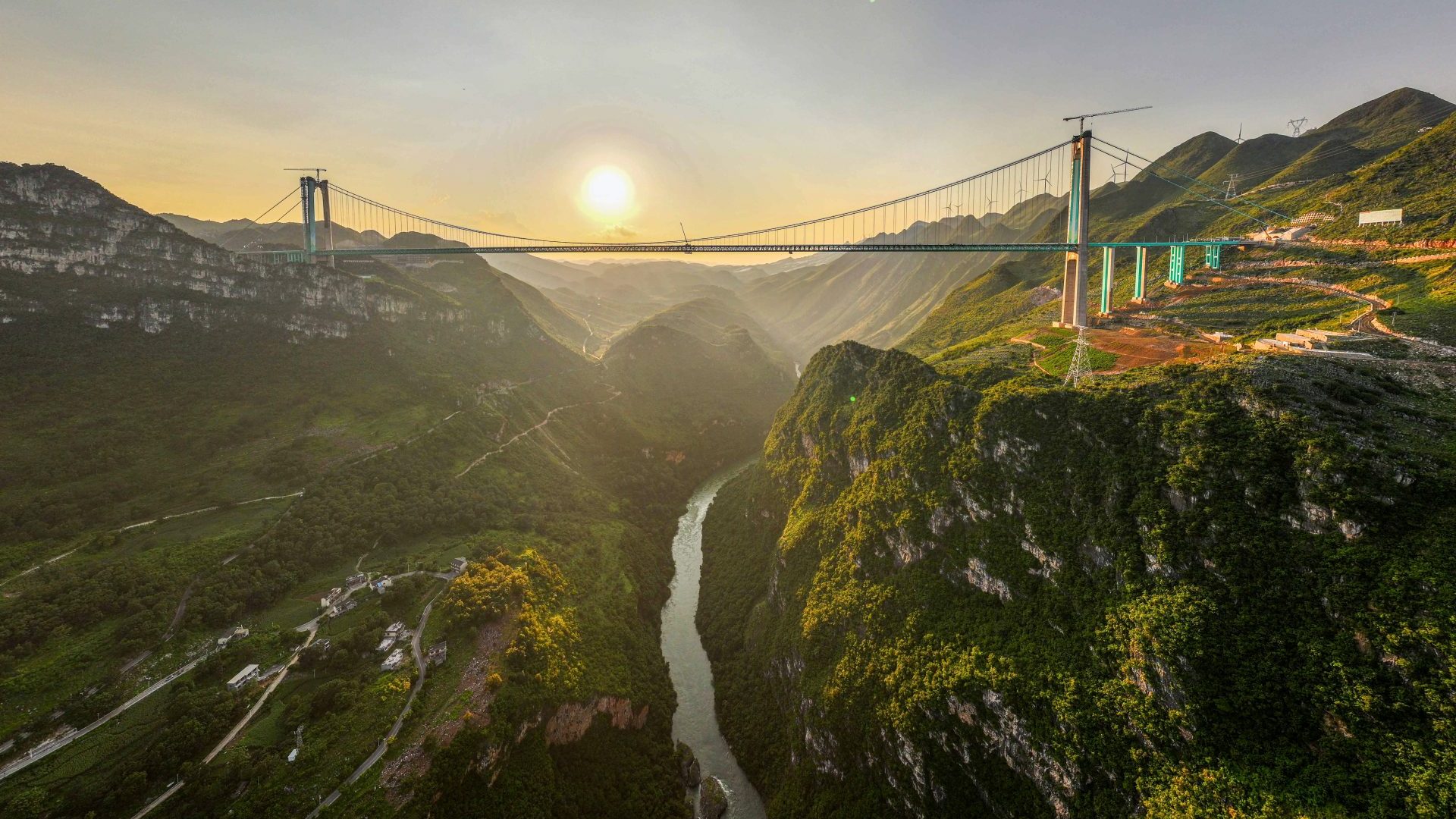
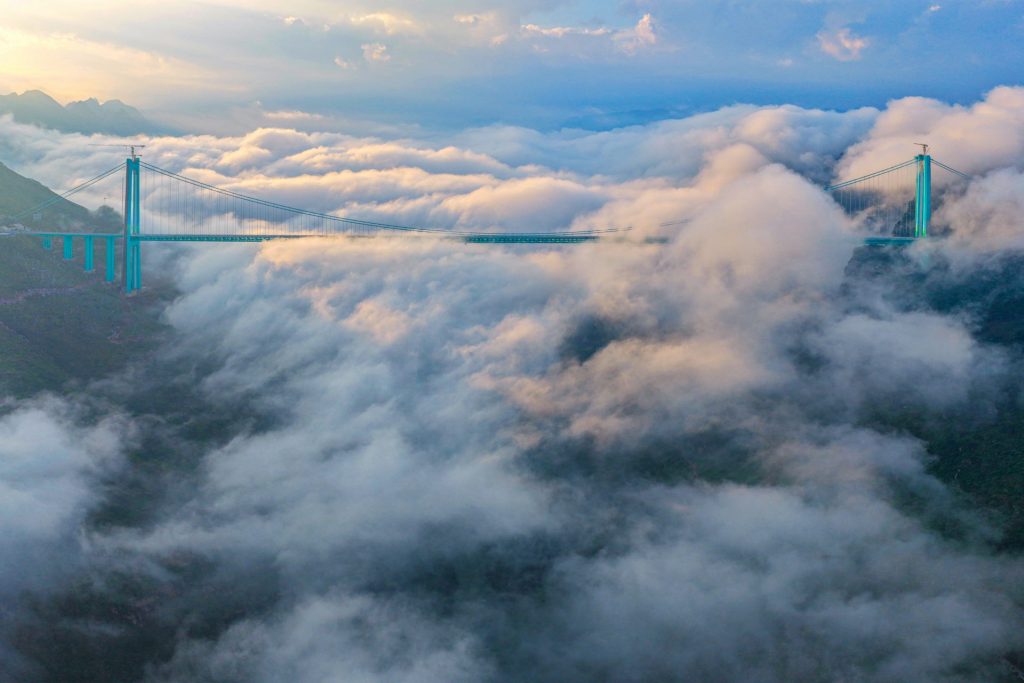
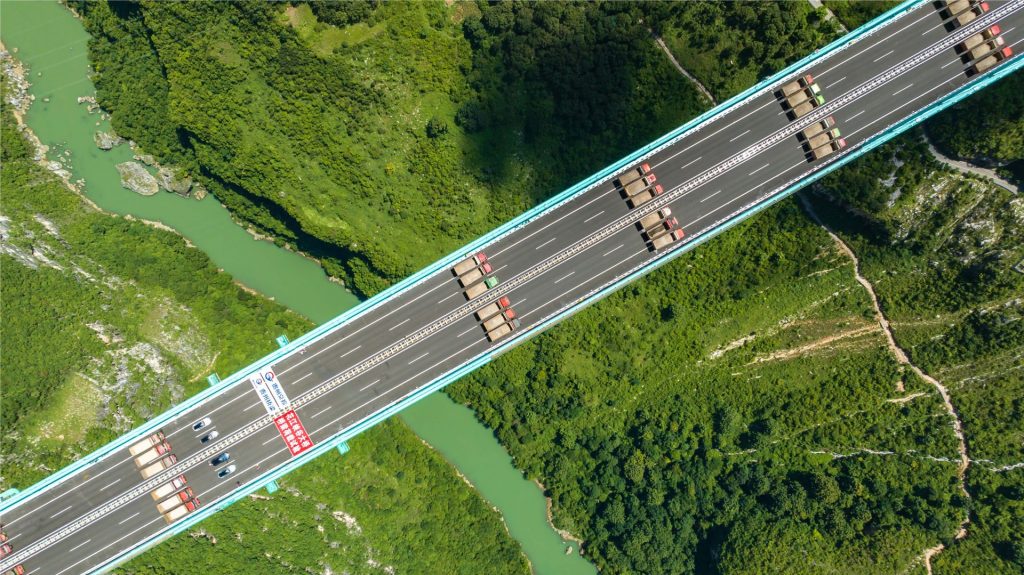
You can watch drone flybys of the Huajiang Canyon Bridge on Douyin, China’s TikTok, and see videos of tourists posing above the void. Imagine if you took the Golden Gate Bridge, painted it vivid turquoise, and then draped it over the Swiss Alps, all summer-green and enticing. Equally picturesque is the fine curtain of water that tumbles from the bridge like mist, catching rainbows in the sunlight. Apparently it’s a creative drainage solution, and also a canvas for projected light shows after dark.
From the bridge deck, the gorge plunges 625 metres to the river below – roughly the height of two Eiffel Towers stacked on top of each other. The river in question, the Beipan, flows through the karst mountain landscape of south-west Guizhou.

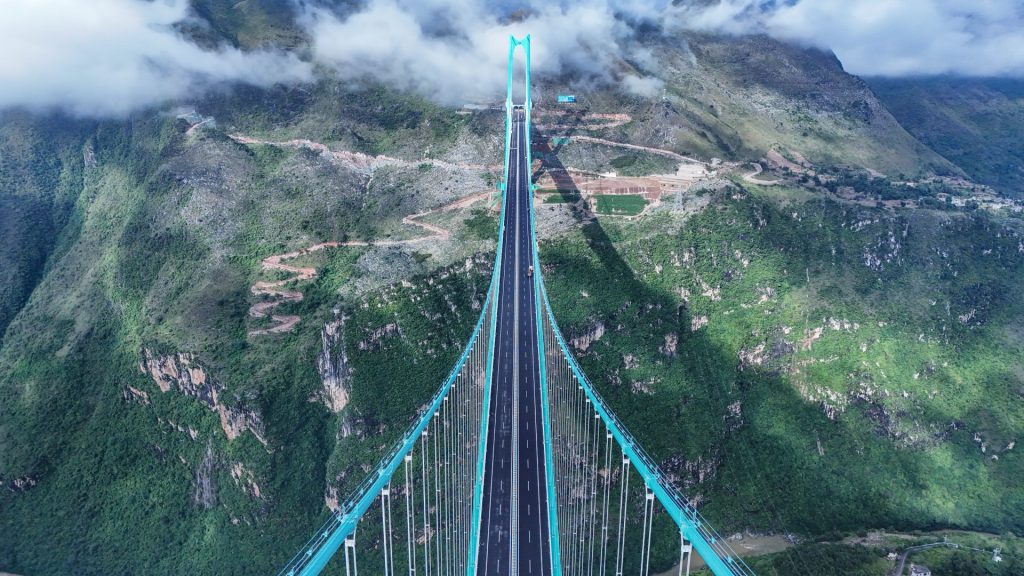
If you’re not familiar with Guizhou, it’s famous in China for being one of the poorest provinces. The name itself is a shorthand for poverty and remoteness, a place where the landscape of rugged mountains and deep ravines, sculpted rice terraces and teetering minority villages seems to conspire against prosperity. When I visited Guizhou in mid-2020, in the early days of Covid, not a single person was wearing a mask – the exact opposite of Beijing. So inaccessible, even viruses give it a miss.
Yet the Guizhou I encountered in 2020 was not a province defeated by geography. I’d been told I’d find the “real” China, but instead found a place being rapidly remade. We drove along arrow-straight freeways draped like ticker tape across the mountains. As I peered out of the car window at huddles of homes on nearby peaks, it didn’t feel so much like solving poverty as finding a faster way to bypass it.
Suggested Reading

Sorry America, but China makes better electric cars than you
Solving a problem is, as I understand it, what bridges are all about. Connecting two places that geography has kept apart. But that logic doesn’t quite apply to the Huajiang Canyon Bridge. For one thing, China didn’t set out to build a bridge; it set out to complete a road. And not even a very prestigious one. The S57 Liuzhi-Anlong Expressway is useful, but hardly transformative. It’s a regional motorway 100km from the nearest city.
The road itself looks much like the ones I used in 2020. A quarter of its 150km length is made up of bridges – more than 100 of them. At one point, the only way to keep that road moving in a straight line was to cross the Huajiang Canyon, creating the world’s highest bridge in the process. And get this: the previous world’s highest bridge, built in 2016, was another road bridge in south-western Guizhou, crossing the very same river system.
Chinese state media reports that Guizhou now has 32,000 bridges either built or being built, a number so huge it barely tells you anything. A better measure is that this one mountainous province contains nearly half of the world’s 100 highest bridges. If you widen the scope to all of China, the figure is closer to 80% or 90%. Huajiang is not some isolated engineering wonder, but part of a far larger churn of infrastructure building.
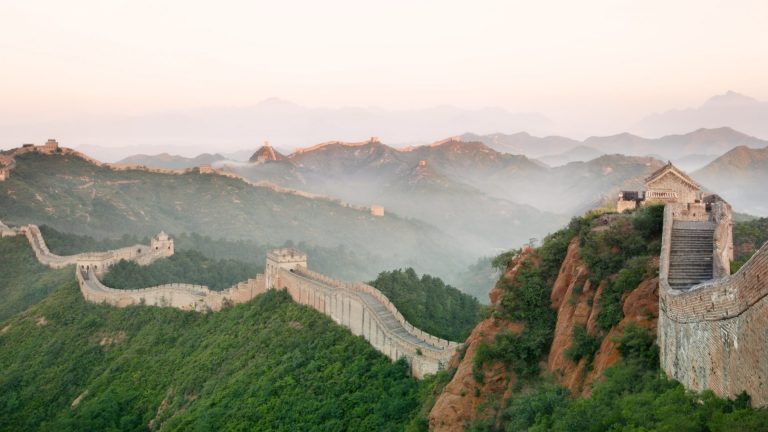

When I travel in China these days, I can’t help but notice how vastly over-engineered the country has become. Not just highways and high-rises but high-speed rail, which surpassed 50,000km of track last year. Meanwhile, back in Britain, HS2’s originally planned length was just over 500km. And there’s no sign of a let-up. Which does beg the question: why? Why does China keep doing this, turning routine infrastructure into world-record feats?
Well, because it’s so damn good at it. China has developed the perfect toolkit for building at mega-scale: state-owned construction giants, state-directed finance, land and planning powers, and a government able to see projects through at lightning speed. And when your greatest talent is building big things, building big things becomes the default answer. In 2024 I took the airport bus along the Hong Kong-Zhuhai-Macau Bridge, gliding for 55km over the South China Sea. I think we passed two cars. It felt mesmeric, surreal, and a little pointless.
But that toolkit has also created a powerful incentive to keep building. Infrastructure became more than a way of solving problems; it became one of the main engines of growth. Over decades, local governments, banks, construction companies and millions of workers became tied to the model, creating a system that needed an almost constant supply of new projects. China has built the world’s biggest hammer, and it is a mighty tool. The question is whether every problem is a nail.
As a result, in China, the extraordinary has a habit of becoming ordinary. Another record-breaker will be along soon enough.