
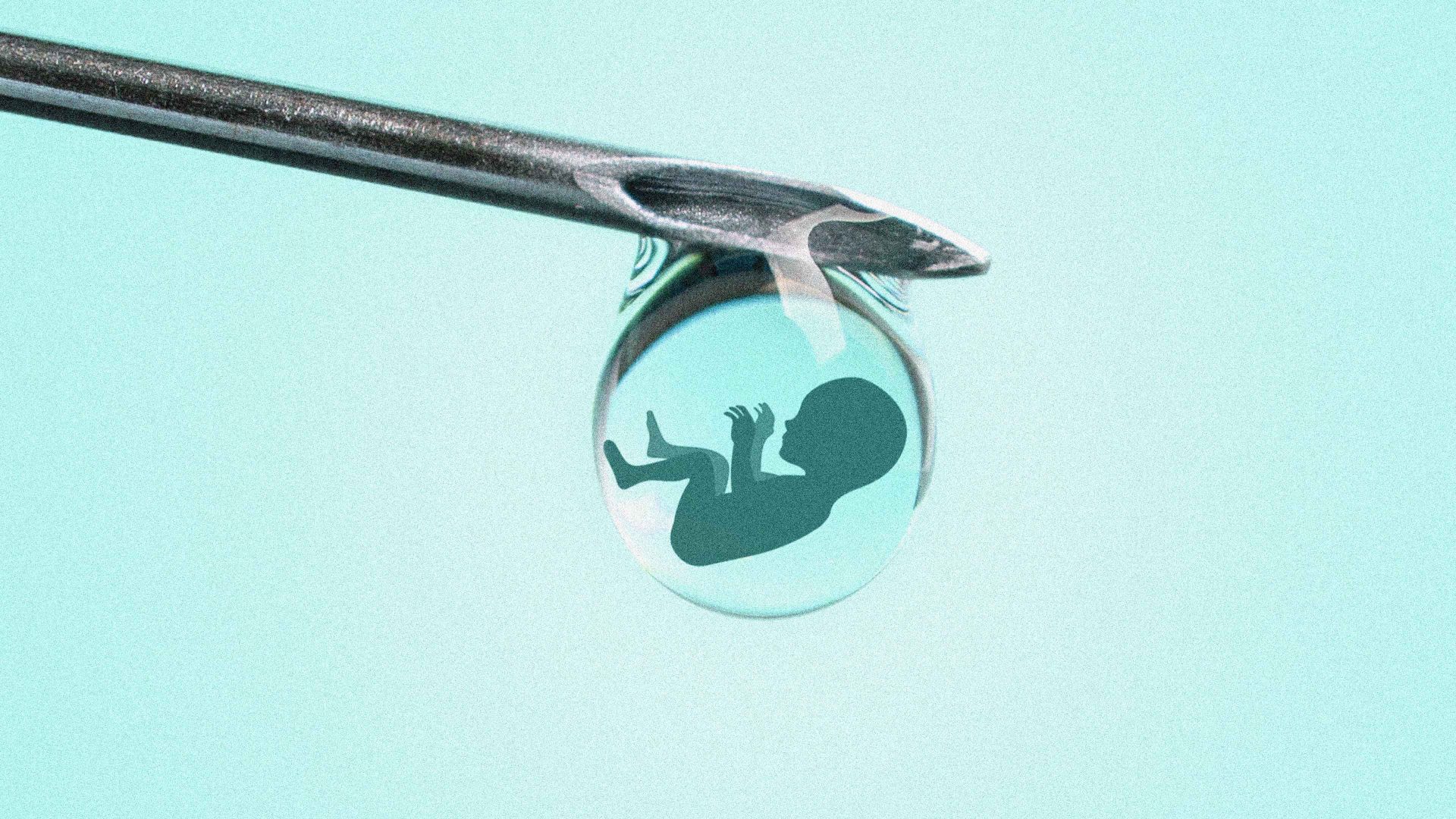
“Have your best baby”, the company Nucleus Genomics advises. And why would you not? Look at what Nucleus is offering: “The modern way to plan and have a baby, driven by science, guided by love.”
The company offers to screen the genomes of embryos used in IVF to make predictions about their susceptibility to diseases with a genetic component. This includes a wide range of rare (and often rather nasty) conditions linked to mutations of specific genes, but also supposed genetic predispositions to common conditions such as type 2 diabetes, coronary artery disease, arthritis, ADHD, and various cancers. With this information, prospective parents can select the embryo for implantation that has the most promising health profile.
Their service is right for you, the company says, if, “You don’t want to pass down a hereditary disease to your baby” and, “You want to understand any unknown health risks before trying to conceive”. And if you decline that opportunity? What in God’s name is wrong with you, to be so irresponsible with your child’s future wellbeing? You clearly don’t want your “best baby” after all.
This needn’t be just about health. Nucleus shows a sample profile for an embryo which indicates the likely adult height, body mass index, longevity, and IQ. You want the tall, blue-eyed, smart one, right?
If this sounds like eugenics, that’s because it is, in the literal sense of “good genes”. But we need to keep some perspective. Genetic screening of embryos is routinely offered by the NHS and IVF clinics for those who want a child but know they carry a gene variant linked to a particular disease (again, typically rare ones). It’s hard to see a problem with people who, through such screening and selection, might be able to avoid passing on a risk, or in some cases a certainty, of a debilitating or lethal condition to their child.
There are, though, several problems with some of the screening services offered by Nucleus and other companies. First, the science is unproven and the outcomes inherently uncertain. Many common diseases and traits are polygenic – influenced by several or even many genes – and may depend on the rest of the specific genome. So it’s not clear how meaningful the numerical estimates of risk or probability are – and in any event they are statistical. There can never be any guarantee of those extra two IQ points.
Second, there are huge social and ethical implications of (expensive) services that claim to identify non-medical traits like intelligence. Embryo selection for these traits is officially forbidden in the UK, but it is far from clear that the current rules would prevent parents from insisting on a choice after getting the screening done abroad.
Suggested Reading

Why have scientists created a mouse with a human brain?
A commentary just published in Nature Human Behaviour looks at another set of issues with this technology. The authors say that polygenic testing of embryos “presents a new source of stigma and pressure for parents and will widen reproductive inequalities, regardless of whether it can deliver the results that customers are seeking”.
The advent of these services, they say, “further shifts reproduction and parenthood from a social experience into an individualised commodity.” As the Nucleus marketing shows, use of genetic screening might be presented not as a choice but a moral obligation, with parents who refuse it seen as negligent. The option only exists anyway with IVF, which might then become used to conceive for no other reason. And, by the same token, children conceived against a set of probabilistic expectations that are not fulfilled might not be accepted on their own terms.
Some advocates say that it is not for the state to make such decisions, but for parents. But the authors argue that “leaving PGT-P to the market is not a neutral policy choice, but an active decision to allow commercial actors to shape the future of reproduction.” There’s currently no consensus about best practices of governance here. Meanwhile, the companies continue to advertise.