Before we are all engulfed by fevered speculation about the budget – what Saul Bellow called “crisis chatter” – let us draw breath and consider the idea that Andy Burnham has made the organising principle of his political offer: hope.
Don’t panic – this is not going to be an extended Thought for the Day. Quite the opposite, in fact. I want to suggest that hope has acquired an undeserved reputation as an attitude that is vague, woolly and (especially in times as perilous as these) inadequate. It is, in fact, a steely virtue, and one that makes great demands of those that aspire to its moral discipline.
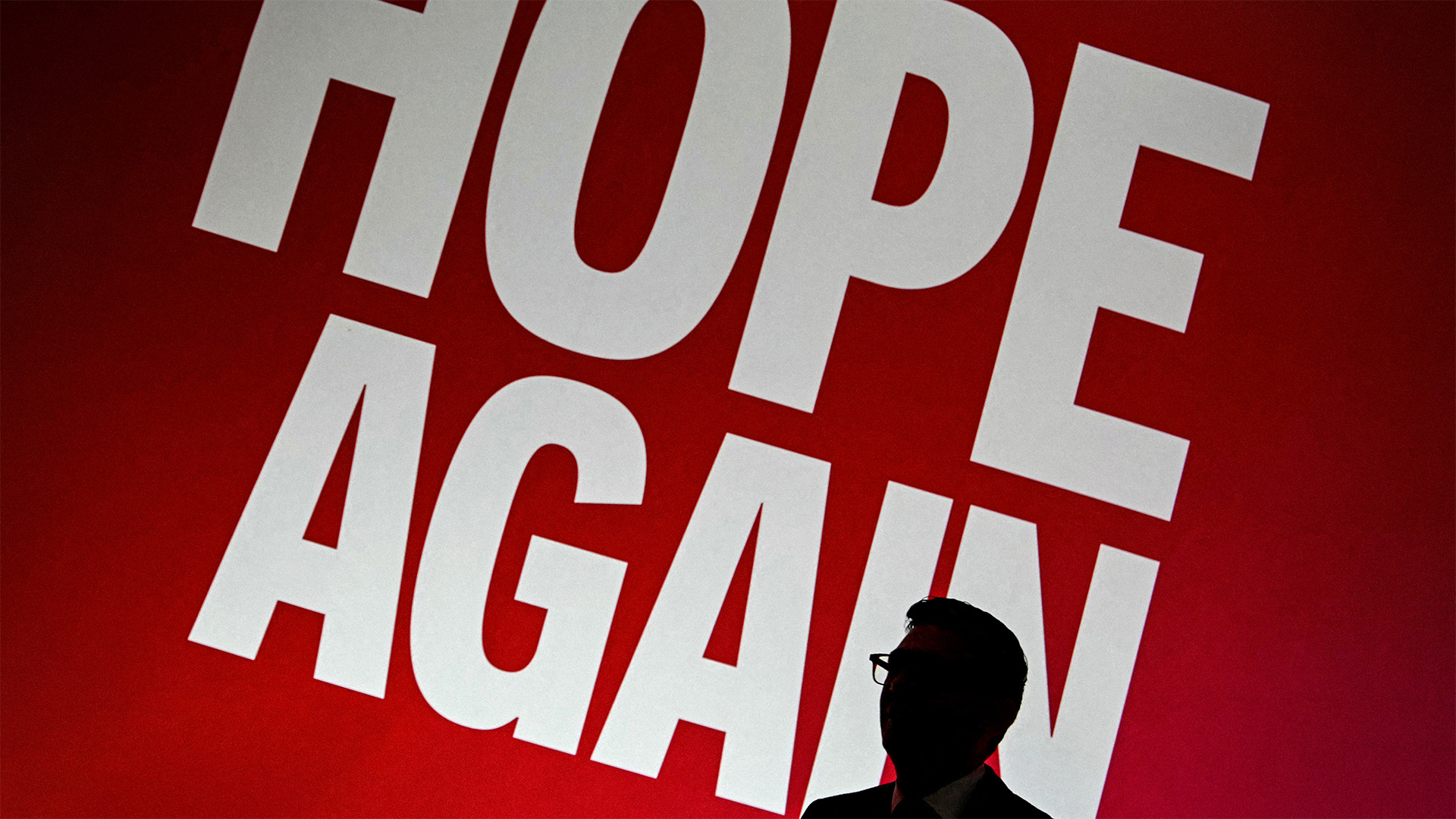
“Hope Again” was the slogan of Burnham’s first Labour conference as prime minister, at which he promised “hope in every heart”, “the hope you can have a home of your own”, and to give “young people hope again”.
All of which echoed the pledge he made in the early hours of June 19 after his by-election victory: “To ensure the name Makerfield is forever synonymous with bringing about the change this country needs, bringing back something we’ve lost – hope – hope for the future.”
Ten days later, at the People’s History Museum in Manchester, he was at it again: “People need to be able to look forward to a night out or a holiday with the kids. People need hope.” And there was more in Downing Street on July 20: “Let us make this the moment when Britain starts to believe again. The moment we bring back hope.”
Suggested Reading

Need to raise taxes? Tell them a new story, Andy
Such language tends to attract the cynicism – and not only from the right – that was captured in Sarah Palin’s famous remark at the Tea Party Convention in Nashville, Tennessee, in February 2010: “How’s that hopey, changey stuff working out for you?”
The former governor of Alaska and failed Republican vice-presidential candidate was, of course, sneering at Barack Obama, whose winning electoral formula was captured in the title of his 2006 book, The Audacity of Hope. Palin herself is mostly forgotten. But the dismissive tone of that particular line continues to resonate and was detectable in much of the media coverage of Labour’s conference in Liverpool.
On this basis, hope is no basis for clear-eyed government. It reflects only sentimentality, the Disneyfication of politics and the reduction of tough decision-making to tea-towel philosophy, fridge-magnet maxims and Clinton Cards mottos. Hope is, at best, a banal holding position until the grown-ups take charge.
Yet this caricature is both historically and philosophically illiterate. At the heart of the matter is a lazy conflation of three different ideas: hope, progress and optimism. In The True and Only Heaven: Progress and Its Critics (1991), the cultural conservative Christopher Lasch writes scathingly that the “expectation of indefinite, open-ended improvement… provides the solution to the puzzle that is otherwise so baffling – the resilience of progressive ideology in the face of discouraging events that have shattered the illusion of utopia.”
Hope, Lasch continues, is quite distinct: “[it] rests on confidence not so much in the future as in the past… Such experience leaves as its residue the unshakable conviction, not that the past was better than the present, but that trust is never completely misplaced, even though it is never completely justified either and therefore destined inevitably to disappointments.”
Suggested Reading

Jim O’Neill on Burnham, the US and the dangers of following the AI herd
This passage meshes uncannily well with Burnham’s framing of hope in his conference speech, rooted explicitly in his party’s historic achievements: “1945. 1964. 1997. Now. All moments of Labour governments. All moments which saw Britain rediscover a sense of hope.”
But he was no less insistent that credible change is conditional upon radical candour: “Hope comes from honesty and we will have hope again. But first, honesty. It comes from saying the things politicians usually avoid.”
In this respect, the PM was drawing upon a notion of hope that owes more to Judeo-Christian tradition than to the Enlightenment. In The Politics of Hope (1997), the late Rabbi Lord Jonathan Sacks, citing Lasch, made another essential distinction: “The belief in progress gives rise to optimism, and the loss of optimism all too easily shades into despair and the apocalyptic imagination. Hope leads to something different: to courage… Hope – not optimism – is what empowers us to take risks, to offer commitment, to give love, to bring new life into the world, to comfort the afflicted, to lift the fallen, to begin great undertakings, to live by our ideals.”
It is important to recognise that this moral understanding of hope is by no means confined to socially conservative thinkers. In Hope in the Dark: Untold Histories, Wild Possibilities (updated 2016), the great essayist Rebecca Solnit offers a powerful case from the left: “Though hope is about the future, grounds for hope lie in the records and recollections of the past. We can tell of a past that was nothing but defeats and cruelties and injustices, or of a past that was some lovely golden age now irretrievably lost, or we can tell a more complicated and accurate story, one that has room for the best and worst, for atrocities and liberations, for grief and jubilation… a memory that includes our power, produces that forward-directed energy called hope.”
Meanwhile, from the Catholic Marxist side of the street, Prof Terry Eagleton argues in Hope Without Optimism (2015) that “there may be many good reasons for believing that a situation will turn out well, but to expect that it will do so because you are an optimist is not one of them.”
Those who believe in “Progress”, Eagleton adds, tend to believe that “humanity [is] evolving under its own steam toward a higher, perhaps even utopian state.” Hope, in contrast, “is built into the structure of reality itself… Even if we forget about it, it will not forget about us.”
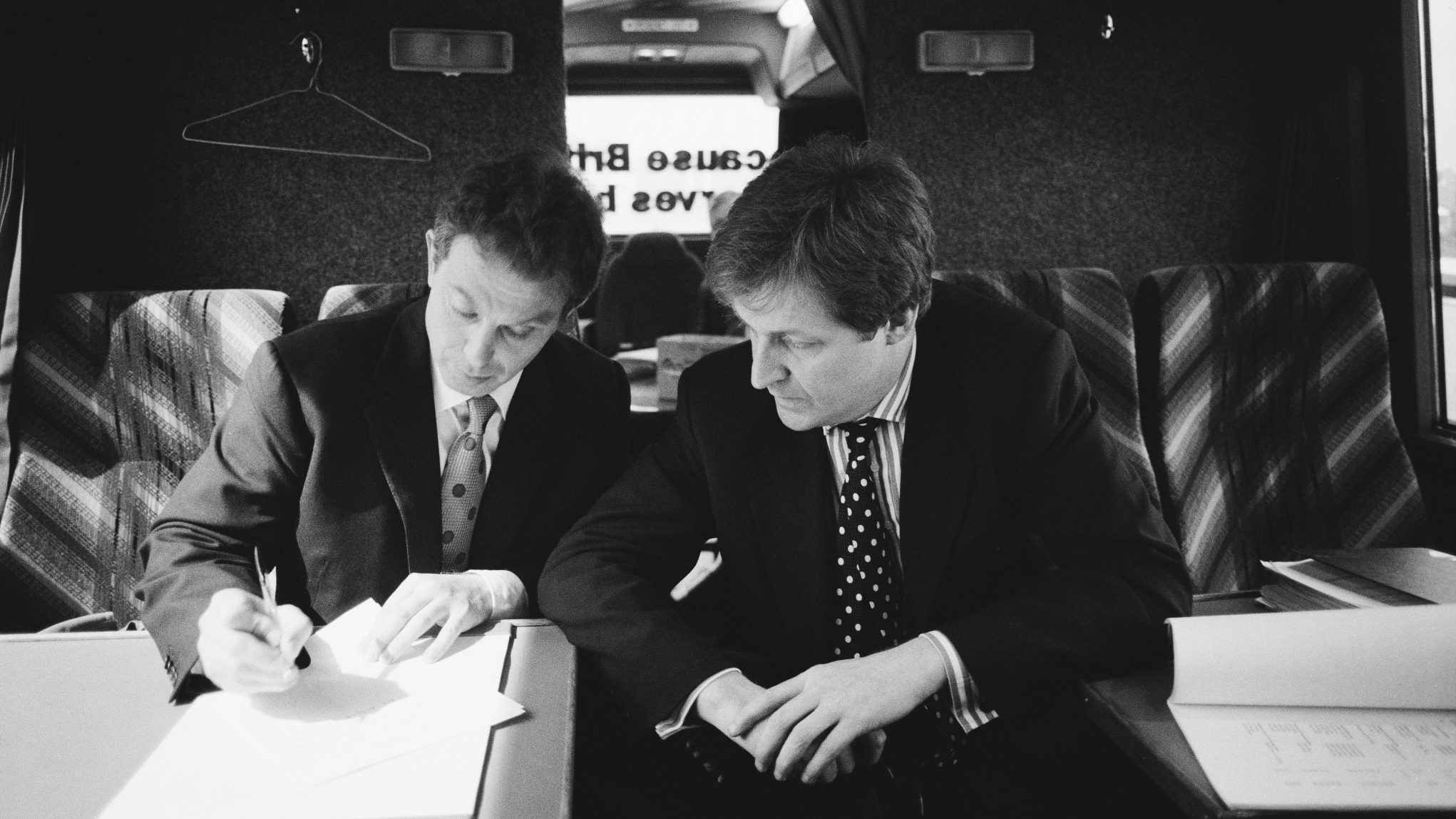
Take a step back and you can see how useful this philosophical tradition is in distinguishing between Tony Blair and Burnham. As the powerhouse of New Labour, Blair was an unabashed progressive, even a futurist. “New, new, new, everything is new,” he told the European Socialists’ Congress in Malmö in June 1997.
Suggested Reading
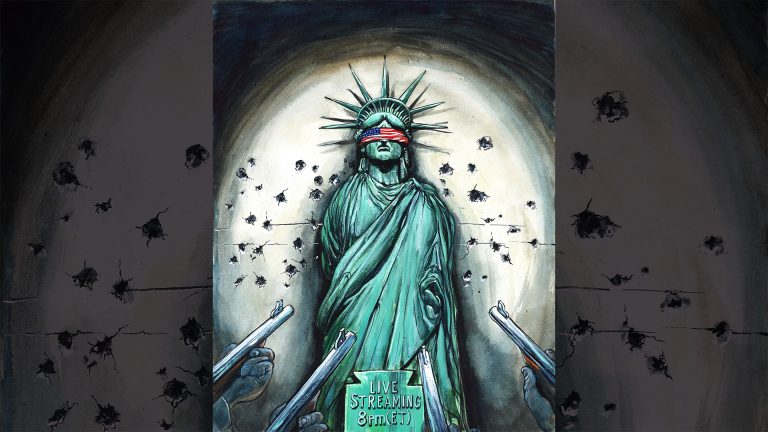
Trump’s snuff politics is a new low in American cruelty
At the 1999 Labour conference, he foretold that “the 21st century will not be about the battle between capitalism and socialism but between the forces of progress and the forces of conservatism.” At the same annual gathering three years later, he went further: “Now is the time to quicken the march of progress, not mark time.”
Underpinning this was the conviction that history did indeed have a direction: that Labour’s “Marx-shaped hole”, so to speak, would be filled by a social democratic navigation system that would land the plane safely and predictably. It was a secular version of Providence; a repurposing of divine teleology to liberal Enlightenment ends.
In Blair’s case, it manifested itself most clearly in his vision of the UK’s role in Europe. As he put it in 2002, “the euro is not just about our economy but our destiny.” Who, today, on the convulsed, neuralgic terrain of 2026 would dare to speak of anything as certain as “destiny”?
To be fair to Blair, he was surfing the wave of post-cold war optimism, as Bill Clinton had before him in 1992. Remember Clinton’s chief strategist, James Carville, in the classic political documentary The War Room (1993) tearing into president George Bush Sr? “He reeks of yesterday… He has the stench of yesterday… Whenever I think of an old calendar, I think of George Bush’s face!”
That was the authentic spirit of the age, voiced by the “Ragin’ Cajun”. It was the spirit of the “End of History”, the idea bowdlerised from Francis Fukuyama’s eponymous and much-misunderstood book.
Such was the progressive hubris of that particular historical moment. And nemesis followed swiftly, in successive planetary shocks: with 9/11, the rise of China and Putin’s imperialism, the financial crash, the surge of the populist right and Brexit, Covid and the decidedly ambiguous consequences of the digital revolution.
So for Burnham the swagger of New Labour is simply not an option. “I hear people say we have to stop and debate globalisation,” Blair told the party’s conference in September 2005. “You might as well debate whether autumn should follow summer.”
Less than two years later, the Bank of England was forced to provide emergency support to Northern Rock. In September 2008, Lehman Brothers filed for bankruptcy. Between the first quarter of 2008 and the second of 2009, the UK economy contracted by 6%. By the end of 2011, unemployment had risen to 2.7 million, its highest level in 17 years.
Ever since that terrible convulsion, autumn has continued to follow summer. But the faultlines in globalisation have been – quite rightly – at the centre of political discourse. When Burnham questions “40 years of neoliberalism” he is not committing some kind of heresy against a sacred centrist creed, but showing himself capable of the honesty that, as he says, is the foundation stone of hope.
In this sense, it now makes more sense to see New Labour as an end rather than a beginning. If the last quarter century has made one thing clear, it is that nothing – nothing at all – is certain. In 2024, Kamala Harris declared that “We’re not going back”. To which more than 77 million Americans replied: “Oh, yes we are.”
On November 3, Donald Trump is set to take his own electoral kicking in the midterms. The sun may indeed be setting on the MAGA era, and perhaps on the ascendancy of Reform UK, too.
But mark this well, before the group hugs begin: it does not follow, as if by some Newtonian law, that the rest of the world will follow suit. Look at Marine Le Pen exploiting the violence that has torn through France; the rise of the AfD in Germany; the significant gains made by Vox in the opinion polls and the far right party’s prospects in the snap Spanish elections on November 29.
History has shown itself to be more of an anarchist than obedient to any law. Everything is volatile, everything is contingent, everything requires constant vigilance. “All that is solid melts into air”: about this, at least, Marx and Engels seem to have been right.
So Burnham is wise to appeal to hope rather than progress; to a hard-won virtue and moral inclination rather than a shiny faith that it will all be all right in the end. That conviction has been shown, comprehensively, to have been part of modernity’s adolescence.
None of which means that the PM will prevail, or meet the high expectations he has set, or that what he himself recognises is “a last chance to change” will be seized rather than squandered.
So judge the first budget of the Burnham era not by the interest groups it appeases or how it polls instantly, but by the strategic demands it makes of the public and the depth of its challenge to us all to be citizens rather than impatient consumers and indignant observers.
That’s the great thing – and the hard thing – about hope. You have to make it happen.