Adolescence aside – and note how singular that felt – when was the last time you fell in love with a Netflix series, binged ten episodes in a day and ended up with the slightly punch-drunk feeling of televisual overdose? What was the last big streaming hit that got you excited?
Chances are you can’t remember. While Netflix remains the industry leader among subscription-streaming services, its share of TV viewership, per Nielsen, fell to 7.8% in April, the lowest level since May 2025. Shows are struggling to retain viewers between seasons, with drop-offs of up to 70% for critically-lauded series such as Beef. As the shine starts to come off the previously-untouchable streaming behemoth, the real winner is YouTube, which increasingly looks like the future (or even the present) of television.
YouTube’s numbers absolutely batter the streaming market’s; according to market analysts Ampere, roughly 1.8 billion people had global paid streaming subscriptions in 2024, projected to top 2 billion by 2029. YouTube has 2.7bn users per month, beating Netflix, Disney, Amazon, Warner, Paramount, Apple and everyone else combined.
In 2024 YouTube overtook ITV to become the UK’s second most-watched service by share of total viewing, just 1% behind the BBC’s linear channels; it was the most-watched service outright for children and 16-34s. One in five UK children aged 4-15 go straight to YouTube the moment they turn on the TV; as a nation, we averaged 39 minutes of YouTube a day in 2024, 16 of them on the TV set.
Suggested Reading

We regret to inform you that Tommy Robinson has a new podcast
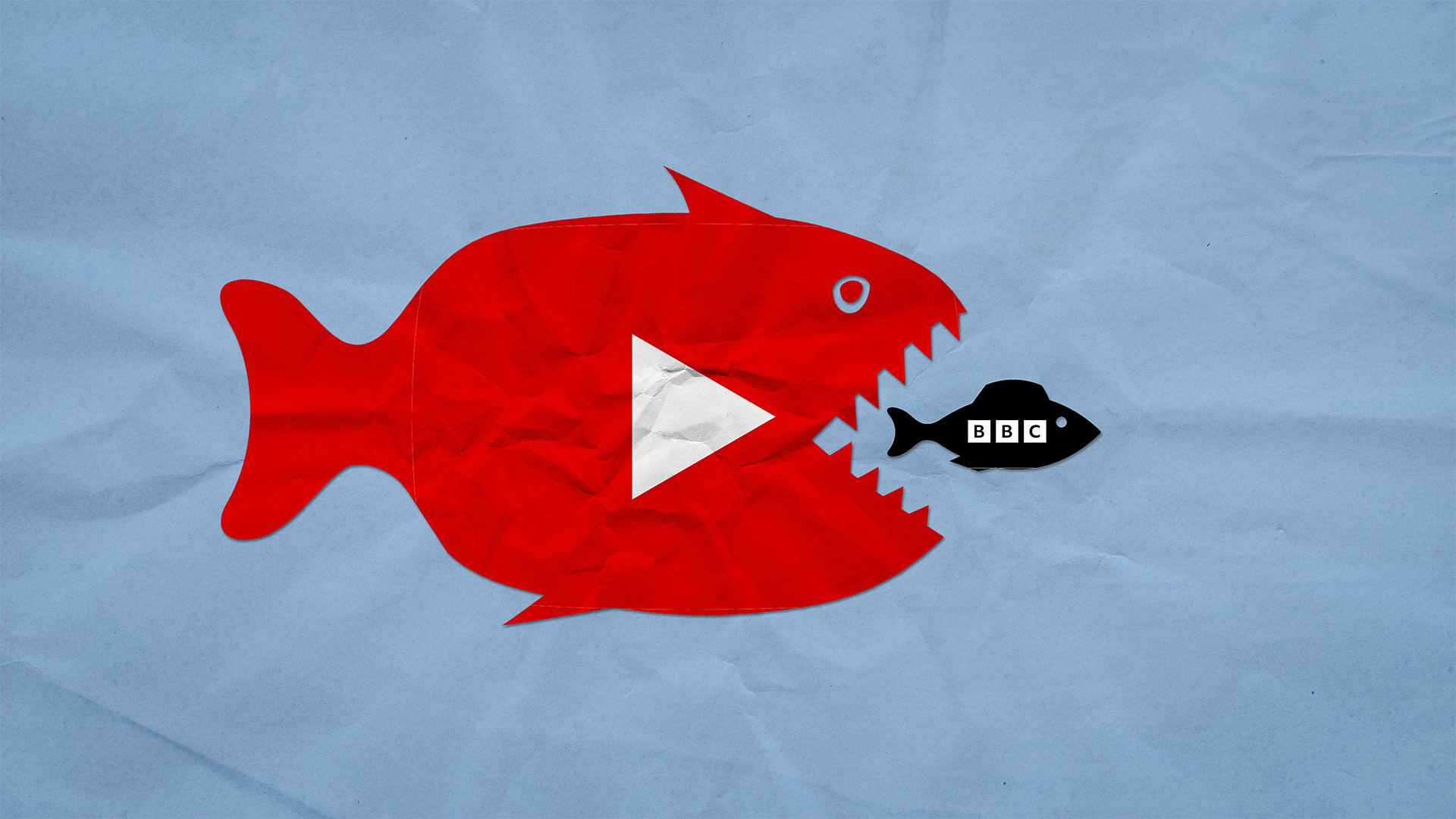
As far as young people are concerned, it’s pretty much the only game in town – just 19% of 16-24s’ in-home viewing goes to broadcaster content, and, by some metrics at least, it’s starting to overtake the BBC. YouTube’s monthly reach hit 51.9m in December 2025, more than a million ahead of the BBC’s 50.8m. It’s hard to shake the feeling that Google’s video platform is eating the rest of the market whole.
It’s easy to see why. While the streamers can boast prestige entertainments – and lots of them – the fact is that quantity doesn’t always equate to quality. YouTube, meanwhile, hosts over 20bn videos about literally everything our species has ever done (for better or worse), and rather than shelling out a monthly sub you can get it all for free in exchange for ads (and there are “workarounds” for these).
It’s this depth and breadth of subject matter that’s proven the winning formula for the platform. One of its biggest evolutions has been the shift from “disposable” user-generated content (the “Charlie Bit My Finger” era, if you will) to a platform that hosts exactly the sort of in-depth investigations that used to be the preserve of public service broadcasters.
Time was you’d look to the BBC for a deep-dive into Homer’s use of dactylic hexameter; now you search on YouTube and find an actual Harvard Professor talking you through the nuances of ancient Greek metre. Why would you trouble Auntie at all?
You want films? YouTube. You want animation? YouTube. Sports highlights? Music videos? Videogames? Inexplicably-detailed explorations of what it’s like to go on a Disney cruise? Shortform brainrot video you can stare at for hours as your IQ slowly plummets and you lose any meaningful sense of time or indeed self? YouTube!
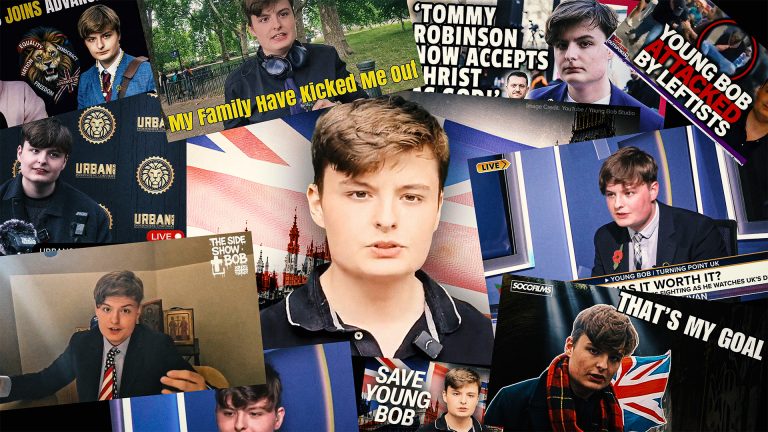
The platform’s greatest innovation was opening up the ability to create and share video to the whole world. It turns out that our endless human ability to be interested in everything, coupled with barriers to entry to making video becoming basically meaningless in the post-smartphone era, is a powerful flywheel to becoming the Everything Channel For Everyone.
It’s also true that YouTube’s rise has been facilitated by some less-than-stellar strategic thinking on the part of the traditional broadcasters and streamers. The BBC’s famously-inconsistent approach to rights management has left it with vast, gaping holes in its back catalogue, kneecapping its ability to mine its history and take advantage of the long tail of content it should have access to.
The failure of the Beeb to respond meaningfully to the very obvious threat posed by YouTube over the 21 years since it launched has been, in many respects, baffling. Just one example – it is maddening that the Corporation didn’t invest in developing parallel offerings around gaming aimed at young people with an imprimatur of BBC quality to reassure parents.
Meanwhile, streamers have become complacent; Netflix dominance throughout the 2010s saw it rest on its laurels in the 2020s when it came to the quality and consistency of its programming, while the fact that neither Amazon or Apple need their video offerings to actually make money mean that they can treat them as “nice to have” loss-leaders.
Now, Netflix is at least attempting to fight back by becoming more like YouTube. Come August 3rd, UK users will be able to watch shortform video (up to 20 minutes in length) on the platform. These have been sourced from brands like Condé Nast, who are bringing series such as Vanity Fair‘s “Lie Detector” and Harper’s Bazaar‘s “Burning Questions” to the streamer… all of which are currently YouTube series.
Whether this arrests the general decline remains to be seen, but, personally, I wouldn’t be rushing to Polymarket to bet “yes”.
Meanwhile, the latest BBC Annual Report painted a bleak picture. The number of households paying the licence fee dropped by more than 500,000 in just a year to the lowest number since 1999. An ever-falling number of under-34s now feel any sort of “brand affinity” with the corporation.
Suggested Reading

How Trump warped the minds of the world’s young men
It increasingly looks like, over time, YouTube will simply swallow it. “This is a moment of real jeopardy, not just for the BBC but for public service broadcasting and the UK as a whole,” said new BBC DG Matt Brittin, who, until last year, ran Google’s European operations.
At the same time, the government is currently consulting on proposals to compel social media platforms – including YouTube – to ensure that content from public service broadcasters is “prioritised” in users’ feeds, reflecting the reality of where people now get their news. Ian Murray, the culture minister, recently went even further, speculating that “It might be the case that YouTube becomes a PSM (Public Service Media) in terms of some of its content.”
If that does become the case, it raises the question of why the same government is set to ban under-16s from using a platform which it now accepts is the home of informational content no longer provided by public sector media.
In April 2005, when co-founder Jawed Karim uploaded the first ever YouTube video of him visiting the zoo, it would have been impossible to imagine a future in which it was the de facto viewing platform for our entire species. In 2026, it’s impossible to imagine a future without it. Google now owns television, for better or for worse.
 Most popular

My truly deranged encounter with Trump apologist Kellyanne Conway

Suella Braverman’s book has sold only 106 copies. This is why

The moral depravity of Robert Jenrick
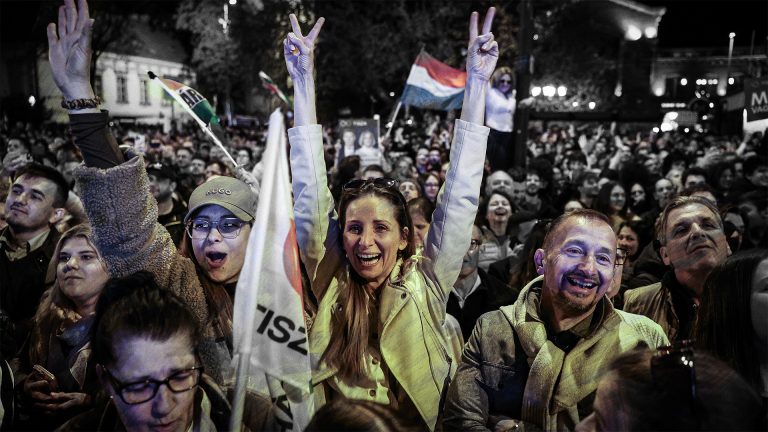

Hungary’s lesson to the world: Populism isn’t permanent