A decade ago, the United Kingdom served as a laboratory. With a single question put to a referendum, a handful of leaders from the British Conservative elite tested how well populism works, using all its signature tactics.
Dangling the illusion of a simple answer to a complicated problem. Insisting that “the people” are necessarily more virtuous than the “elites” (except themselves, of course) who have stolen power from them.
Inventing scapegoats – the EU, migrants – to blame for everything. Stoking nostalgia and the fantasy of a mighty nation able to stand alone against predatory empires. Feeding fears and resentments. Lying.
Brexit was a case of chemically pure populism. The lie wasn’t just a campaign trick. It was a political strategy in its own right. It gave ideas to Donald Trump, elected in the wake of the referendum that same year, 2016, and then to many others, from Marine Le Pen reaching the run-off of the French presidential election to Viktor Orbán’s re-election in Hungary, in what looked, back then, like a national-populist wave.
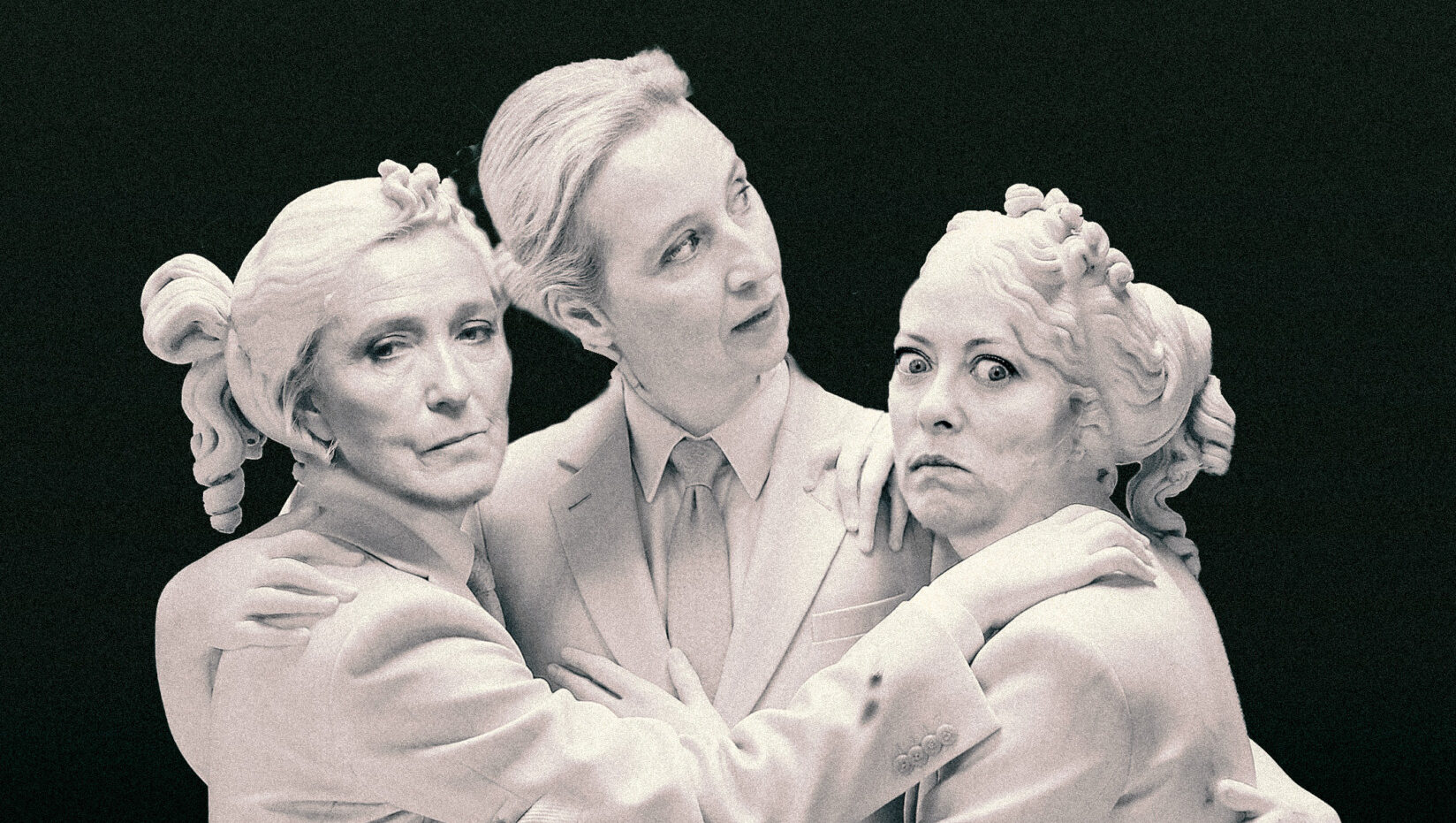
Ten years later, a new wave is forming. In the three most powerful countries of the EU – France, Italy, Germany – it isn’t virile males but three women who carry the banner of the big, macho, far right parties.
The leaders of Fratelli d’Italia in Italy, the Rassemblement National in France and the AfD (Alternative für Deutschland) in Germany are already in power or within reach of it, and they are the female face of national-populism. They are the subject of my latest book, Femmes extrêmes (just out in France).
Why women? Is it a coincidence? They didn’t come from nowhere. Marine Le Pen was born in 1968, Giorgia Meloni in 1977, Alice Weidel in 1979. They grew up in the world remade by 1968: a more liberal society, the decline of authority, the emancipation of women.
But they are also the product of the backlash those upheavals provoked: first the liberation of the 60s, then the globalisation that the fall of the Berlin Wall put into overdrive. From one to the next, you find frustrations, fears, lost bearings, a craving for order, a counter-revolution that was there in embryo from the start.
That’s the first of their paradoxes: women who reached power thanks to female emancipation have built their political fortunes on opposing it. The irony is hard to miss.
What feminist wouldn’t rejoice at the sight of three powerful women? They look like a victory for feminism, a banner for liberalism, progressivism, wokeness. And yet they are anti-liberal, anti-progressive, anti-woke, the opposite of what progressives would ever want as their standard-bearers.
Margaret Thatcher, held up as a model by Nigel Farage and the Brexiteers, didn’t claim feminism either; she explicitly distanced herself from it. Her arrival at Downing Street nonetheless proved that a woman could wield supreme power, while another woman, Queen Elizabeth, embodied it. The same goes for Angela Merkel, whose biographer I am and to whom I dedicated my book on extreme women, as much out of affection as out of irony.
In France, the champions of gender parity, those who fight for women to hold positions of power on the same footing as men, tend to forget Marine Le Pen. She isn’t seen as a woman, or as proof of women’s advance, but first and foremost as an heir: her father’s daughter, the daughter of Jean-Marie Le Pen, who founded the Front National in 1972, which she rebranded Rassemblement National as part of her detoxification strategy.
Another paradox is their private lives, which fit poorly with the models their parties preach. Meloni, a traditionalist conservative, raises her daughter alone, having dismissed the father by public statement on social media.
Le Pen, twice divorced, has made the fight against immigration her priority and began her career as a lawyer defending undocumented migrants, and she speaks in the name of “the people” after a life of upper-bourgeois comfort in the Montretout manor, in the wealthy western suburbs of Paris, which her father had inherited.
Suggested Reading
What the centre right must learn about the populists
Weidel, a conservative, ethno-nationalist, anti-globalist, is a cosmopolitan who worked at Goldman Sachs and at the Bank of China in Shanghai, speaks fluent English and Mandarin, lives not in her German homeland but in Switzerland, and is in a civil partnership with a woman of Sri Lankan origin, with whom she has two children carried by her wife. Nothing fits.
You could stop at Weidel’s psychological oddity: that she joined a party so opposed to everything she is – nationalist, anti-globalist, anti-immigration, anti-gay marriage, anti-woke – is the kind of case that might have interested Dr Freud. Better to read it another way: as a political fact, the normalisation of these far right parties.
These women also serve a strategic purpose inside their parties. They make them respectable, more attractive to female voters, open to ordinary people rather than to a fringe of radicals.
Weidel’s presence helps pull the AfD closer to the Volksparteien – the name Germans gave the Christian Democrats (CDU) and the Social Democrats (SPD), the big catch-all parties that dominated European politics for half a century. As for Meloni, one of her mentors, Fabio Rampelli, understood exactly what she was for in the “softening” of the neo-fascist MSI, which became Alleanza Nazionale in 1995.
He put it bluntly: “I chose her (to run in the Rome elections) because she was both cheeky and sweet. And because she was perfect for polishing the image of the hardcore right wing militant, the one with the square jaw and the shaved head.”
In Paris, Rome and Berlin, Marine Le Pen, Giorgia Meloni and Alice Weidel are the three faces of a single wave, and they tell the story of what has happened to our democracies since the British, first of all, ran the experiment. Yet they don’t resemble one another, don’t like one another, sit in three different groups in the European Parliament. They have as many differences as things in common. They share a nationalist grammar, but they don’t embody the same political project.
Weidel, who also invokes Thatcher as a model, is the most doctrinaire, defining the nation in ethno-cultural terms and dressing hard identity politics in the language of economic liberalism.
Meloni is the great normaliser: a national-conservative rooted in the post-fascist tradition, but careful to reassure the markets, Brussels and Washington. Unlike the other two, she is firmly committed to the Atlantic alliance in the face of the Russian threat, and to supporting Ukraine – which is the fundamental fracture between them.
Le Pen is the purest populist of the three. Unlike the others, she isn’t a conservative. She is, above all, less attached to any coherent doctrine than to the political aggregation of anger. She’s first “against”: immigrants, foreigners, Europe, judges, elites. One of her slogans is “On est chez nous” (“This is our home”). Who isn’t included in “nous”?
Suggested Reading

Trump was only the warm-up guy for America’s new right
Anger, resentment, a need for revenge: for all three, these are the key ingredients of their formation, their rise, their passions.
The first comes from the fact that these three women carry nationalism in the three great European countries whose ruling regimes were the losers of the second world war. They are the heirs, more or less direct, more or less willing, of French Pétainism, German Nazism and Italian fascism.
Jean-Marie Le Pen’s Front National was founded in part by former Pétainists, collaborators and Vichy nostalgics, and even former Waffen-SS men. When she took over the party from her father, Marine Le Pen paid tribute to its founder and insisted she embraced the whole inheritance – “all of it”, she emphasised.
Alice Weidel is careful not to call herself an heir of Nazism, but she, the AfD and its supporters pile up more or less subliminal references to Hitler, find redeeming features in the SS, and push a war over memory, relativising the Shoah and the crimes of the Third Reich the better to celebrate the greatness of German history.
As for Meloni, she entered politics by joining the MSI, the party born from the ashes of Mussolini’s fascism. At 19, in 1996, she blurted out on a French TV interview that Mussolini had been “a good politician”. It would take until the 2022 campaign for her to condemn racial laws and declare that the Italian right had “consigned fascism to history”.
All three carry, in varying degrees, the anger of the defeated. To understand where they come from and how their upbringings led them to defend the ideas of the hard right, I went to the places where they grew up. Each one tells a story of violence, of family ghosts, and of a sense of stigma and ostracism. Their biographies help explain their political styles.
In Femmes extrêmes, I trace the different formative violences behind them: a family shaped by political confrontation for Le Pen, an Italy traumatised by the Years of Lead for Meloni, and the protected but increasingly imagined world of the Heimat for Weidel. Their politics can’t be reduced to biography, but biography helps explain why the same nationalist wave takes such different forms.
Marine Le Pen, whose family’s Paris flat was bombed when she was eight, spent the rest of her youth and part of her adult life on the well-heeled hill of Saint-Cloud, in the Montretout manor left to her father by an admirer. I spent a few hours there in 2017, interviewing Jean-Marie Le Pen, founder of the Front National, in that grand bourgeois house set in a park of several hectares.
The champion of “the people” comes from the smart neighbourhoods of western Paris, and she learned in childhood to close ranks around a father whose far right political violence spilled on to his family, drawing either devotion or hatred. “Le Pen’s daughter” was mocked by her own teachers.
Meloni grew up in Garbatella, a working-class district of Rome and a left wing stronghold, communist, anti-fascist. She was abandoned by her father, himself a communist. At school, her classmates labelled her “the fascist of the class”.
Born into the violence of Italy’s Years of Lead, growing up with news bulletins announcing judges murdered by the mafia and political corruption, she chose at 15 to walk through the door of the Movimento Sociale Italiano, the heir to Mussolini’s party.
Weidel spent her youth in Harsewinkel, a prosperous little town in North Rhine-Westphalia set among fields and well-kept farms, proud of its Claas factory, the world leader in combine harvesters. Fifteen kilometres away lies Gütersloh, home to the HQs of appliance-maker Miele and media giant Bertelsmann.
Weidel was born in the heart of the Mittelstand, that constellation of small and medium-sized family firms, locally rooted and heavily export-driven, that forms the backbone of the German economic miracle. A perfect Germany, tidy and conservative. A perfect family that plays sport, walks the dog at the weekend talking finance, and worships performance.
Her perfect town had its comfort shaken at least twice by “outsiders”. These were first Turkish immigrants, and then East Germans after the fall of the Berlin Wall, which forced West Germans to pay a tax for the new eastern Länder and gave globalisation another push.
With Weidel there are two skeletons in the closet. A grandfather, Hans Weidel, whose past as an SS man and a judge in the Nazi military justice system was revealed by Welt am Sonntag in November 2024.
But above all the story of her father, born in Silesia, in those eastern territories Germany lost in 1945, from which 10 to 14 million Germans were driven out after the war. As a child, Alice would wake her father from his nightmares. This is one of Alice Weidel’s deepest springs, one of the hidden reasons that led her to a far right party that makes a war over memory a central theme, relativising the Shoah and the crimes of Nazism to stress the greatness of German history.
Coming from that people of expelled Germans, the Vertriebene, mistreated in indifference because they were the war’s losers and had no right to complain, forged in her the resentment of belonging to a suffering no one wanted to hear. In their memoirs, Marine Le Pen and Giorgia Meloni also dwell on their childhood pains, as if to justify their commitment.
By the time they were 20, all three already had a heavy past. It was in anger that they pushed open the door to politics, convinced they were being ostracised for their beliefs, full of resentment and driven by a need for revenge.
It is on this bedrock that the world’s crises built their politics. Part conviction, part opportunism.
Suggested Reading
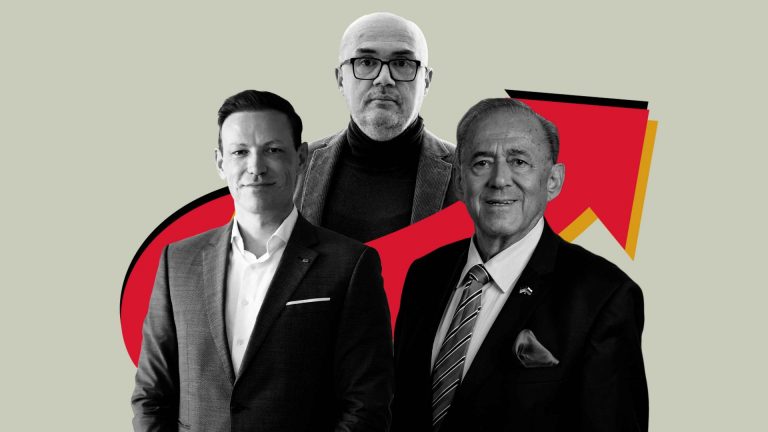
Pornstars, spies and Putin fanboys – meet the AfD
Events and crises did the work. There were those two surges of freedom that ended up breeding their opposite. 1968 and the loosening of morals, which triggered a backlash in part of society. 1989 and the liberation of peoples, democracy’s victory over communism, in which Francis Fukuyama wanted to read “the end of history”.
There was 1992 and the Maastricht Treaty, which founded the European Union. There was the euro, which in 2002 replaced the franc, the Deutschmark and the Italian lira.
There were crises in quick succession, cascading, accelerating, interlocking in an interconnected world where neither migrants, nor viruses, nor social media, nor foreign interference, nor national policies could be stopped at the border.
There were the September 11, 2001 attacks in New York, and Europe’s divisions over the Anglo-American war in Iraq – divisions already visible during Nato’s intervention in Yugoslavia, which strained international law. There was the financial crisis of 2008, the Greek debt crisis of 2010, the wave of Islamist attacks in Europe from 2014, the migrant crisis of 2015. And their consequences: the return of nationalism, of populism. Brexitism, Trumpism.
National-populism, on the right as on the left, flared up like a torch on this bonfire, with social media as a box of matches. With every tremor came new fears, social frustrations, cultural upheavals.
Marine Le Pen, Giorgia Meloni and Alice Weidel are the political daughters of all these crises. They thrived on the exhaustion of liberal societies, which favoured the consumer over the producer, freed individuals and dissolved what held them together.
Against those who gained from openness, the “anywheres” at ease in the new world, the “somewheres” were left by the roadside. In the global world, old bearings were lost; along came the feeling of no longer being anything at all. They have invented an ideal, imaginary nation that never existed.
“Take back control.” “The will of the people.” The phrases of Brexit found fame well beyond Britain.
In 2017, Marine Le Pen was the most exuberant of all. On Twitter she hailed “the victory of freedom!”, complete with an exclamation mark.
In the European Parliament, the MEP she then was hid neither her glee nor her sneering condescension towards colleagues naively attached to the institutions their nations had fought to build, and worried about the economic fallout of the vote: “Come on, dear colleagues, wipe off those sulky faces! Put away your bitter speeches! Rejoice, instead, in the liberation of peoples!” During her 2017 campaign she had hung a British flag in her HQ.
Then came Trump, and the laboratory changed scale. Between him and the women, the admiration is mutual, because the grammar is the same.
What unites them is the very nature of populism: a politics that feeds on genuine anxieties and fears, on real distress and misfortune, and that seeks to exploit problems rather than solve them; that claims to offer simple answers to complex questions by appealing to passion and “common sense” instead of reason and expertise; that promises a return to an imagined nation, sealed off from the challenges of the world; that needs enemies and scapegoats to exist; that sets the elites, necessarily corrupt, against the people, necessarily virtuous, and the failed “system” against the radiant “anti-system”; that pits the majority of “the people” against the judges’ decision.
On populism, the three women are as one. But this is where their paths diverge, and where the myth of a possible “Melonisation” of Le Pen and Weidel once in power dies.
Trumpism isn’t just a style, it’s a strategy: let Europe go, bargain with Vladimir Putin, point to the enemy within rather than in the east. On that line, Meloni has never given ground: she backs Ukraine and holds to the Atlantic alliance. Le Pen and Weidel, by contrast, are aligned with Moscow. This isn’t a nuance, it’s a fundamental fracture, and it puts the other two in front of their contradiction.
At a time when empires are re-forming and the great predators Trump, Putin, Xi Jinping want to carve up the world, a middle-sized power survives only through its alliances. Those who promise sovereignty while letting go of Europe and America in the face of the Russian threat are “Ninos”: nationalists in name only.
Femmes extrêmes by Marion Van Renterghem is published in French by Les Arènes.