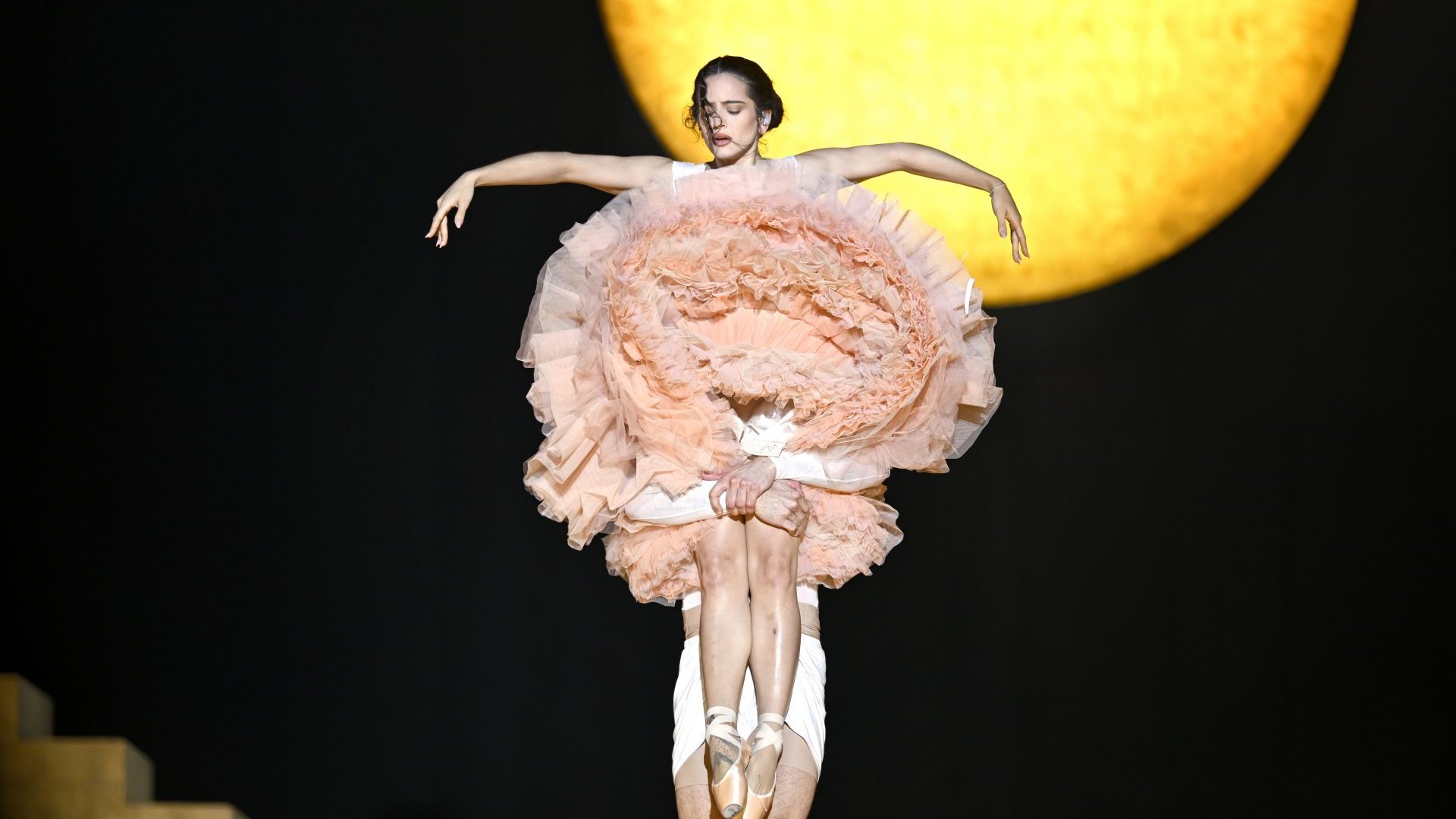
LUX felt impossible when it came out last year. Rosalía, the Spanish singer, had until then been known for her fun and original songs, blending pop, hip hop and the more traditional flamenco she’d got obsessed with as a kid. She disappeared for three years after her last album, the bouncy, sexy and intense Motomami, and reappeared at the end of 2025 with Berghain.
Even six months on, it remains hard to describe this first single. It’s pop and goth and opera and it’s sung in German and it involves the London Symphony Orchestra, Björk, a Catalan choir and an alt-rock singer reciting a famous Mike Tyson tirade that’s too uncouth to quote here. It sounded new and weird and unlike anything anyone had ever heard. Really, it was only the beginning.
LUX has 18 songs, all focusing on different female saints, and Rosalía sings about them in 13 different languages. There’s some classical music in there, some techno, some pop, some traditional influences both from Spain and from the Latin world at large, and there’s some rapping and operatic singing and what sometimes sounds like religious chanting. It’s deep and dense and hard to get at first; where to even start? How to begin thinking about it, trying to understand it?
2025 was the year the concept of “slop” became mainstream but there was this woman, in her early thirties, asking a lot of her listeners, and offering them so much in return. Could it all be brought out into the world, though? LUX felt impossible until it didn’t, and so did the very idea of touring the album. There was just too much of it: somehow, it didn’t feel like the sheer breadth of it could survive contact with reality.
Suggested Reading
Laibach and the year’s most subversive album
As it turned out, there was no need to worry. The tour began in March and finally reached London this week – its last destination before heading across the Atlantic – and there was something amusing and bleak about it taking place at the O2 Arena. Large music venues are rarely dainty but somehow the whole complex, down in Greenwich, feels especially devoid of charm.
Walking through it in order to reach a show about faith and love and mysticism felt wrong, on some fundamental level, but it was soon forgotten. “¿Quién pudiera vivir entre los dos?” she sang as she began the show. “Primero amar el mundo; y luego amar a Dios“.
“Who could live between the two?”, is what she was asking. Her first love was the world, and her second God. It’s what the album is about, deep down; a connection or reconnection with a faith she always had, hidden somewhere, but which suddenly became increasingly important to her. Again: it just isn’t what pop juggernauts are usually made of, but she makes it work.
Suggested Reading


Is it me, or is there nothing to watch anymore?
Over the following two hours, Rosalía ended up cycling through songs (mostly from LUX, sometimes from previous albums), through languages (12 by anyone’s count) and classical, musical and pop culture references. Watching it meant knowing that some of it was probably going over your head – was the set-up during La Perla a nod to Bertolucci’s The Dreamers? Was the music that welcomed the orchestra to their place inspired by Enrico Morricone? – and having too good a time to actually care.
A showgirl at heart, she managed to take a complicated piece of work and adapt it to the stage by cramming in some levity wherever there was a nook or cranny to be filled. During one outfit change, the screens showed a video of her dancers backstage trying to hit her vertiginously high notes in Mio Cristo Piange Diamanti. Around an hour later, another break turned into an audience game where every person singled out by the cameras had to imitate the pose of some classical painting, to everyone else’s delight.
Still, some of the best details were the more grandiose ones. Towards the end of the show, what looked like an amp dangling from some cables over the audience lit up; soon enough, it started emitting smoke and swinging slowly and heavily from one side to the next. Naturally, a show about Catholicism had to have its own huge, overbearing incense burner.
Suggested Reading

Robyn’s Sexistential is the mother of all albums
Not that any of those gimmicks would have meant anything without the sheer power of Rosalía’s voice and stage presence. LUX, as an album, travels across the world and goes from saint to saint, story to story, emotion to emotion, but she manages to hold it all together through sheer force of will, and thanks to the power of her vision. The show was no different.
Some reviewers decided to be bold and conclude, this week, barely five months into the year, that this would be remembered as the best arena show of 2026. That still felt like too small a prediction. Rosalía is only 33 and has already achieved so much; in a decade’s time, she may well be known as one of the best artists of the 21st century.