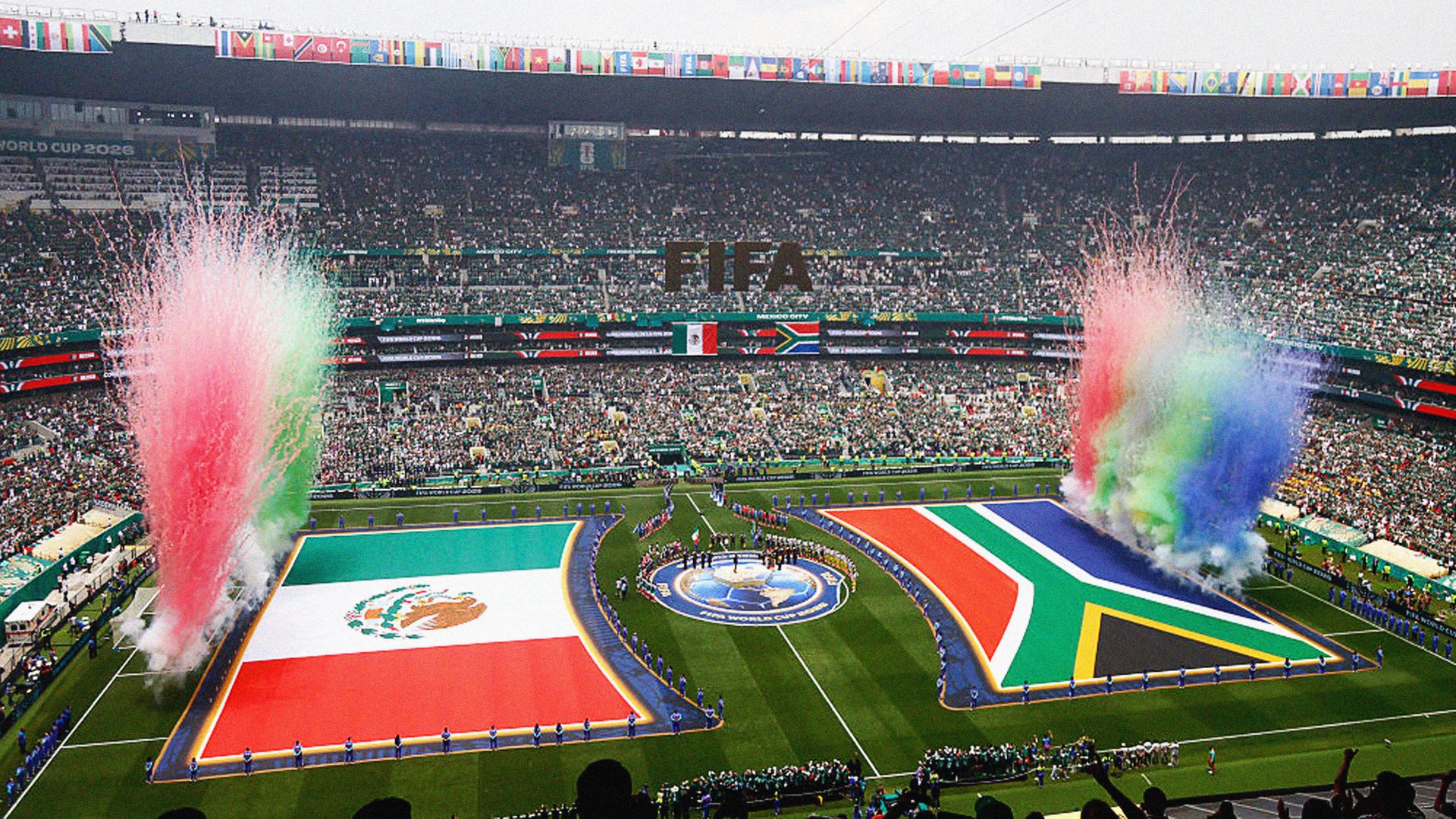
South Africans will brag that we hosted the best World Cup ever. It’s true that 2010 was a while ago. Whether it is true or not, my countrymen were incredibly excited to be back in the World Cup for the first time since we were the hosts. Screeching vuvuzelas at the ready, we cheered for our national team, Bafana Bafana, regardless of their chances. And those chances are now over. We are out.
But, a peek over the social media walls at the opinions currently circulating in neighbouring countries reveals something a bit sobering.
On video after video, African people were proudly cheering and looking forward to the opening game… and cheering for Mexico. There were Mexican flags being waved in the streets of Kenya and Nigeria. Some Ghanaians were even choosing Spanish names for themselves, to show their support. As one influencer put it: “If you do not welcome us, we cannot support you.”
“What is going on?” was the message in my inbox from a pal who happens to be Mexican. “Does the rest of Africa hate South Africa?” Her Instagram was flooded with posts of Africans across the continent siding against South Africa. I struggled to reply. I wanted to say “no”, but I know it’s not true. There are some good reasons why the rest of Africa doesn’t like us.
Suggested Reading

The most unwelcoming, expensive World Cup in history
The tensions between some South Africans and immigrants from elsewhere in Africa have been worsening for years. They are now more heated than ever. Anti-immigrant campaign groups have given illegal immigrants a deadline of 30 June to leave the country. These calls to “clean the streets” have included threats of violence.
The hostility spans a variety of structural and social problems with foreigners, but they can all be reduced to the claim: “they are stealing our jobs and women”.
There are real problems with South Africa’s migration system, with unemployment, and crime. As our president said in a recent national address, “These concerns are real. They deserve to be heard.”
And yet it is hard to focus on the public policy challenges and discussions when families are being threatened with machetes, and when – according to the World Health Organisation – at least ten foreign nationals have already been killed in anti-immigrant violence. (The South African government denies this.)
As a journalist who has spent many hours with migrants and refugees on the steps of court houses, and in informal emergency settlement camps, I know the reality of trying to “send people back”. I have seen it. It is hungry, confused babies. It is wives, scared for their husbands’ lives – and those of their children.
And so when I hear that other Africans are supporting South Africa’s opponents, it’s understandable. But I know it’s not out of a sense of friendly competition. It’s something else, and that makes me feel deep sadness.
It makes me think of a work trip I took a few years ago to Addis Ababa, with colleagues from over 15 African countries. As is often the case in these situations, some people make more noise than others. In this case, it was the South Africans who were particularly vocal and outspoken.
Suggested Reading
It’s football, but without the oligarchs
It is this reputation for being forthright that has earned us the nickname “the USA of Africa”, implying perhaps both our general sense of enthusiasm but also some kind of overbearing assumption of control. I can’t dispute either of those things. It’s true that South Africa assumes the role of the loud-mouthed older sibling of the continent. Though we live in similar circumstances, South Africa somehow gives the impression that it feels itself a tad special.
There was a moment on that trip when the pan-African camaraderie cracked. Amid mountains of hand-eaten injera at lunch, a quiet but tense discussion started about politics. The message that emerged was: “Sharing a table here doesn’t mean we are not fighting elsewhere”.
The line “I am not your friend” still echoes in my mind. In this case, the two men were separated before it could escalate. But, like anywhere, one cannot smooth over deep wounds with some multicultural workshops and uniting flags.
So I understand why some African people supported the teams we played against. Hatred and violence cannot be glazed over with sportsmanship.
Elna Schütz is a Johannesburg-based freelance journalist working in audio and writing