
There are few things Australians love more than a larrikin. National folk hero Ned Kelly was a gun-toting bank robber whose last words – “such is life” – have long since been absorbed into the national mythology. There are few things Australians dislike more than inequality dressed up as entitlement.
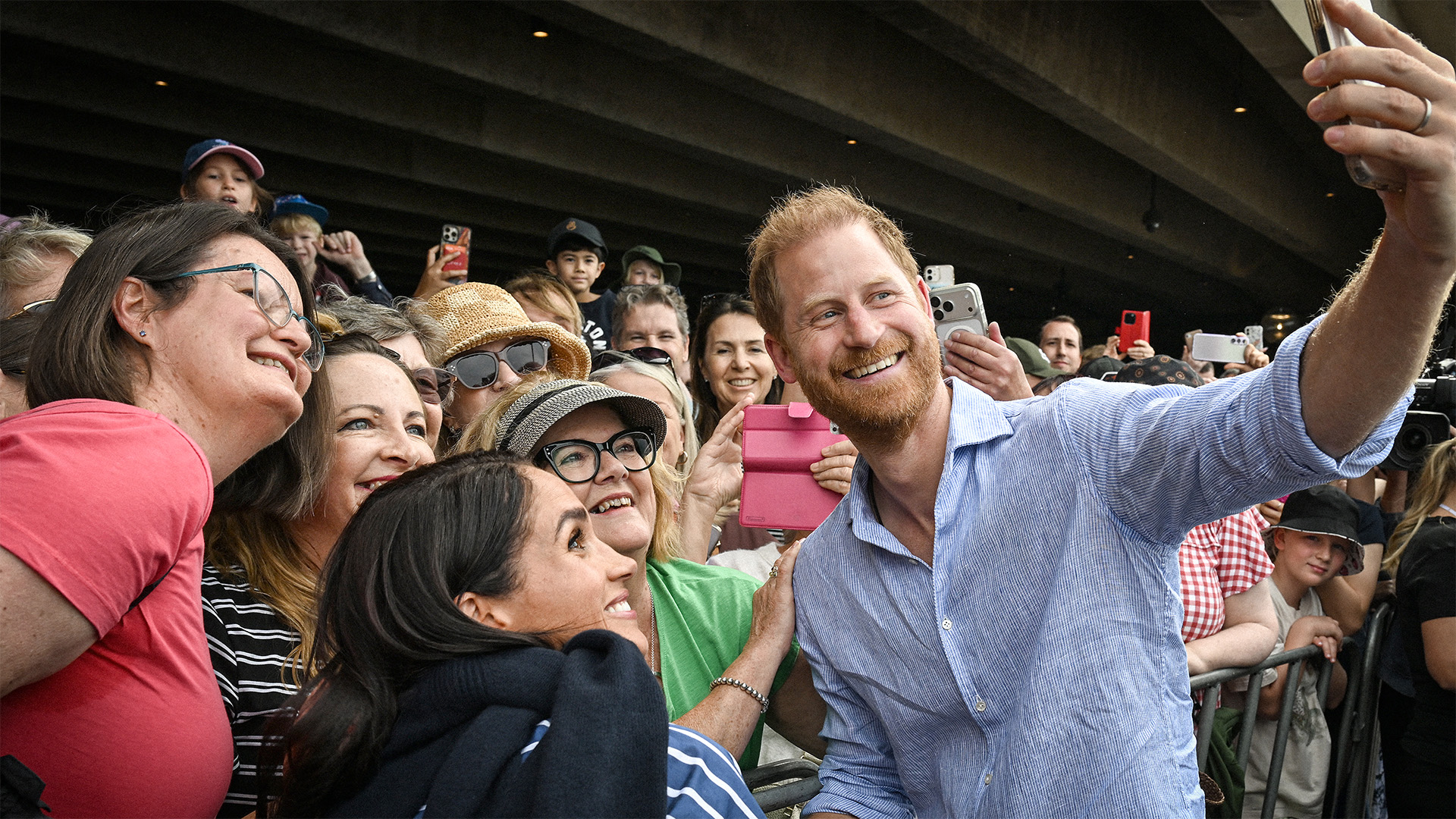
So, when Prince Harry and his wife, Meghan Markle arrived in Australia this week for a short, self-styled “non-royal” tour, much of the Murdoch-adjacent media found itself oddly out of step with the reception on the ground.
The press coverage leaned heavily on cost, relevance and grievance. But the crowds have responded to something else entirely: a couple who walked away from one of the most rigid and unaccountable hierarchies in public life and are trying to make their own way on their own terms.
That divergence carries a lot of baggage. For years, large sections of the British media have adopted an openly hostile line on the Duke and Duchess of Sussex, portraying them as grifters, undeserving even of police protection, and insisting, often contrary to evidence, that they are widely disliked.
The hostility has been sharpened by Harry’s decision to take on parts of the UK media in the courts. That fight has consequences. It has hardened coverage, narrowed the framing, and turned what might have been a conventional royal, or even celebrity, narrative into something closer to a running feud.
Some of that tone has bled from Britain into the Australian coverage of their four-day visit – but it sits more awkwardly here. The intensity of the British media’s fixation does not quite translate. At a distance, stripped of that institutional proximity, Australians see something simpler: a high-profile couple, carrying a complicated story, showing up in person.
In that sense, they’re just like any other global or homegrown celebrities who occasionally pass through – Kylie Minogue, Nicole Kidman, even George and Amal Clooney. Attention follows, causes are amplified, and the public engages on its own terms, without obligation.
It is a marked contrast to Harry and Meghan’s last visit, in 2018, when they toured as newlyweds, surrounded by the old language of monarchy – duty, conformity, continuity of the Crown. They were folded neatly into the institution and presented as its modern face.
But, back then, they represented a system that carries diminishing respect, as the notion of colonial forelock-tugging gives way to a much more robust sense of national identity.
The dynamic of the couple’s latest visit reflects that shift. They arrived not as representatives of an anachronistic institution, but as figures who have left it behind.
Suggested Reading

Why Virginia Giuffre is our Person of the Year
And so the interest in Harry and Meghan remains, but the terms have changed – deference and obligation have given way to curiosity.
Then there are the causes. Harry and Meghan have been careful to attach their visit to issues that resonate locally: mental health, childhood illness, women’s empowerment, veterans, fatherhood, indigenous engagement.
Their presence draws attention like few others can, and that visibility has currency. It is not incidental that Meghan, in particular, appears to connect with indigenous women, or that Harry’s veteran advocacy sits well in a country where military service still carries cultural weight.
It is not royal duty in the traditional sense – like the Queen interrupting the 1977 Centenary Test, which Australia won by 45 runs, to do a lap of the Melbourne Cricket Ground in a Rolls Royce. It is something more contemporary, and more relevant.
Harry and Meghan are deploying their celebrity selectively, aligning their influence with a personal narrative rather than with institutional expectations. That post-colonial recalibration is borne out in the numbers.
Support for the monarchy has been softening for years, particularly among younger Australians who want to be citizens, not subjects. Polling has consistently shown a country split, drifting, unsure whether the Crown still has a meaningful place in a modern and self-assured Australia. With that generational shift, instinctive loyalty to the crown is thinning, replaced by something more conditional – and, true to form, more sceptical.
Royal scandal has accelerated the shift. The disgrace of the former prince Andrew cut through in a way that few royal controversies have managed. The sordid details of his friendship with Epstein and his shifting accounts of that relationship; the car crash BBC interview; the enormous payment to settle a civil case brought by Virginia Guiffre who, it bears noting, moved to Australia where she committed suicide – all of it lands badly here.
Critically, the perception that the family initially closed ranks around Andrew fed a deeper backlash. It also stripped away much of what was left of the royal mystique.
The monarchy has relied on distance to sustain its authority here in Australia, helped on by a managed blend of ceremony, symbolism and discretion. But that distance is much harder to maintain with the scrutiny of modern media.
What seeps through is something messier: family dysfunction; internal rivalries; self-interest; and, too often, behaviour that contrasts sharply with the values the institution purports to embody.
For Australians, that matters. Not because of the details alone, but because of what they suggest about the system itself. It is no longer simply a question of whether the monarchy is relevant, but whether the crown has any place in Australian public life at all.
Set against this backdrop, the appeal of Harry and Meghan to Australians becomes easier to understand. They do not ask for the deference of an increasingly diminished institution. Instead, they have built a public identity on no longer being part of it.
That doesn’t mean everyone in Australia loves or admires them. But it does put them on firmer ground: as public figures to be judged on what they do, rather than what they inherit.
Lynne O’Donnell is The New World’s Associate Editor (Australia)
 Most popular

My truly deranged encounter with Trump apologist Kellyanne Conway

Suella Braverman’s book has sold only 106 copies. This is why

The moral depravity of Robert Jenrick

Hungary’s lesson to the world: Populism isn’t permanent