
What is it like to grow up in one of Britain’s oldest towns? And what would it be like if that town was home to one of the most deprived postcodes in the UK? And what if the leader of an insurgent far right party was your MP, currently using your hometown as part of a political ploy to sidestep corruption allegations?
Those were the questions I took with me on the train to Clacton-on-Sea
At London Liverpool Street, I actually bumped into two journalists I’d trained with — both on their way to Clacton to get content for their respective papers. It must be strange for a town like this to be thrust into the national spotlight every couple of years. Journalists descend in packs, shove microphones towards pensioners and ask them what they think of Nigel Farage before disappearing again.
In fact, several people I spoke to took one look at me and said, “I thought you were a journalist. You look like one.”
But I wasn’t here to doorstep pensioners until one of them gave me a quote outrageous enough to go viral. I wanted to speak to the people who barely feature in media coverage at all: young people. Despite the endless commentary about Farage’s popularity with younger voters, they’re hardly the target audience for his anti-immigration, pro-pensioner politics.
My first stop was UTurn 4 Support, an award-winning youth club in Clacton where Max Hughes, a supervisor at the centre, didn’t hesitate when I asked what growing up here was like.
“Young people not having enough to do is a massive obstacle for kids growing up in Clacton, and in Jaywick just down the road, which is a massive deprivation area.
“Antisocial behaviour starts at being bored, and then they’re just sort of looking for something to occupy their time, so that they’ve ended up here or they end up in trouble. We run 12-week programmes with kids that are at high risk of exclusion.
The top issue? “A lot of them haven’t got the means to get out. Whether it be family issues, where they’re growing up, or a lot of them just don’t have access to opportunities. So if they could actually get an opportunity to even leave or to do more here, then that would be great. There’s very limited on the type of job you can do in Clacton.”
“Kids just get narrowed into a pattern and then they don’t realise how big the world actually is. So it’s like once you’re stuck here, especially if you’ve had families that have been here for generations, it’s just like there is no outside world.”
It became a theme I’d hear again and again that day.
At the centre, I saw older kids playing pool, younger kids playing cards, colouring pencils and board games everywhere. I asked a few of the children what they liked doing around Clacton.


Their answers were depressingly consistent.
“The only stuff to do is quite dangerous in some areas to be able to do it, like down the pier and stuff.”
“There is not a single other kid in my street and my area. And it’s mainly people like 50 or older. If I want to hang out with people, there’s not really any.”
I thanked the staff, who were clearly adored by the kids they worked with, said goodbye to some of the most polite children I’d met in a long time, and set myself what I assumed would be a fairly simple task: find someone between the ages of 18 and 25.
It proved a near-impossible task.
On the bus from Clacton to Jaywick, semi-detached houses gave way to bungalows, which gave way to the ageing chalet homes Jaywick has become known for. Frequently described as one of the most deprived neighbourhoods in England, it’s the sort of place politicians invoke far more often than they visit.
It was 30 degrees on a Friday afternoon during the summer holidays. By every law of the British seaside, there should have been teenagers everywhere. But there weren’t.
The beachside arcade? Empty. The promenade? Empty. The pubs? I think I walked into at least ten over the course of the afternoon and lowered the average age of every room by about 30 years. That was, assuming I managed to navigate the fleet of mobility scooters parked outside each one.
Eventually, in an otherwise totally empty social club, I found someone born this century.
Behind the bar was Abhi, 25, a student living in Jaywick.
I asked him the question that had consumed most of my afternoon: where were all the young people?
“The pubs aren’t for young people. They stay at home and do drugs.”
Originally from India, Abhi told me he planned to return home after graduating to open his own business.
Did he think young people had more opportunities there than in the UK? “100%. Without a doubt. There is no hope here.”
After the morning I’d had, it was difficult to argue with him.
Eventually, after interrogating far more members of the public than I’d have liked about where young people “hang out”, and becoming increasingly aware of how suspicious that question sounded, like I was some kind of undercover cop trying to score some “grass”, someone finally pointed me towards a sports bar near the pier.
I headed back into Clacton convinced I’d spent an entire working day wandering around Essex with nothing to show for it, mentally preparing myself for the bollocking I’d get from my editors.

And then I met Lily and George.
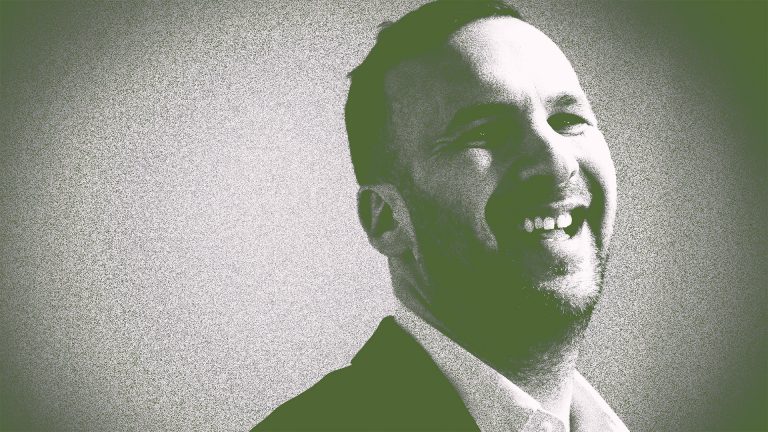
I hadn’t even introduced myself properly before George, a 24-year-old who works behind a bar, overheard me mention Nigel Farage.
“He’s a knobhead.” It wasn’t exactly a difficult interview after that.
“He doesn’t say anything that resonates with me,” George continued. “Immigration isn’t a problem, everyone here is white! I have to deal with the ASB issues at night, and look around — none of the people causing problems on this high street are immigrants.”
George wasn’t remotely surprised I’d spent most of the day struggling to find anyone his age. “We’re totally outnumbered. We get spoken over by old people who tell us we’re too young to understand politics, so most of us don’t give a shit anymore.
“This isn’t a thinking man’s town.
“Even 10 years ago there used to be multiple places for young people to go out, now there’s basically just a Wetherspoons.
“I’ve never seen Farage, but he should concentrate on fixing this town instead of making it so everyone with potential to make it better feels like they have to leave. Well, the buses are only once every half an hour, so you can’t leave even if you want to.”
Lily, 19, works in a primary school. She vigorously agreed with George, before telling me she often feels like older people simply don’t take her generation seriously.
“I’m not a racist at all. I care about homeless people and underfunded schools. But Farage doesn’t care about that. He just wants to wind people up about stuff that doesn’t matter.
“He uses this place for his stunts. As just another way to get his name out there. But he doesn’t care.”
Suggested Reading


Has-bin: This could be the end of Nigel Farage
She gestured towards the high street. “There is nothing here. Young girls don’t feel safe walking back to their cars at night. I see and hear some really shocking things at the school. I mean, you’re raising these kids right at the end of the line.”
I had one final question. Would either of you ever want to raise children in Clacton? “No”, they answered, almost before I’d finished asking.
There is plenty to criticise about Clacton. But there’s also plenty worth fighting for.
Before catching the train back to London, I had the best fish and chips I’d eaten in years. Families still crowded the seafront despite the heat.
The staff at UTurn were getting ready for another weekend giving local kids somewhere safe to spend their summer holidays. Lily would be back at her primary school on Monday morning. George would be pulling pints all night and having to listen to pensioners rant about small boats.
I’d spent the day speaking to youth workers, schoolchildren, and twenty-somethings. Not one of them had brought up immigration before I had. None of them were asking for miracles. They wanted buses that turned up and jobs worth staying for. Most of all, they wanted someone to notice that young people actually live here too.
The tragedy of Clacton isn’t that it lacks young people with ambition, compassion, or ideas, it’s that too many of them have already decided the only way to succeed and be happy is go somewhere else.
Reform moans constantly about birth rates and saving Britain’s future, yet their leader seems remarkably uninterested in the people who actually are its future.
A lot of things about Nigel Farage make me angry. That goes without saying. But leaving Clacton, I wasn’t thinking about him. I was thinking about Lily, George, Abit, Max and all the brilliant kids I met that day.
By insisting on being an absentee MP, Farage is robbing the young people of Clacton of the chance to have a representative who might actually fight for them. And after a day there, it’s hard to imagine a group of people who need one more.