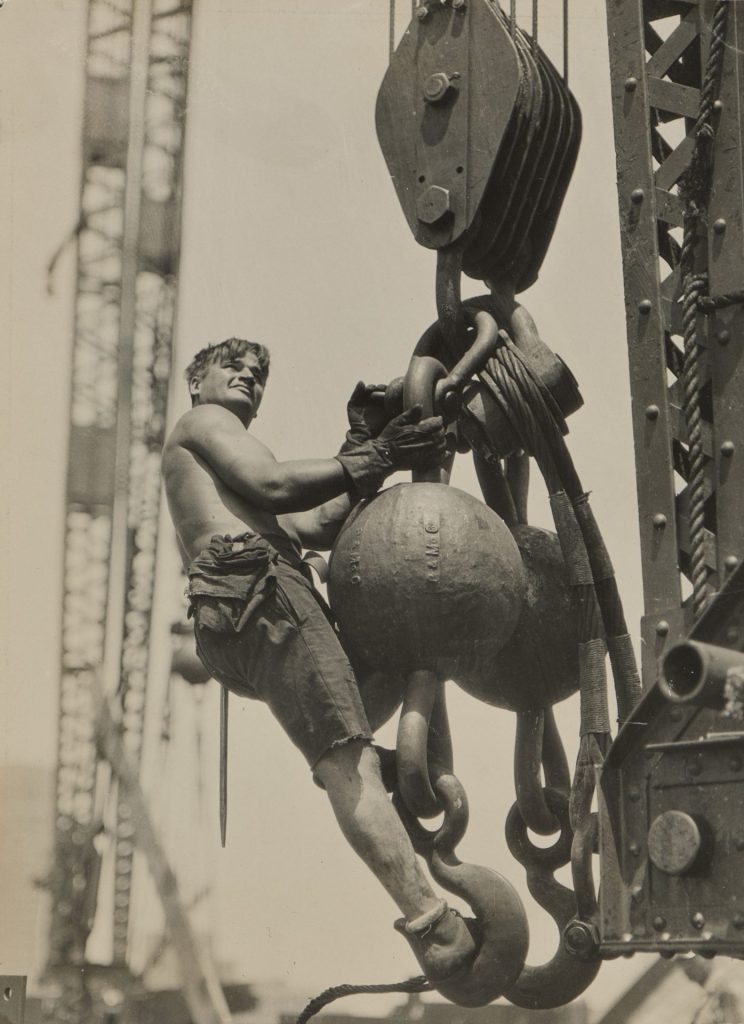
The American city was built by outsiders. Its rise was documented by them too: as newly arrived workers laboured on steel-framed, high-rise construction, migrant and first-generation photographers defined the image of the modern city, creating a new, 20th-century art form.
Portrait of a City, a new exhibition at Dulwich Picture Gallery, helps to illuminate some of their stories. Foundational figure Alfred Stieglitz (1864-1946), son of a wealthy German wool merchant, criss-crossed the Atlantic to learn techniques elevating photography’s status to that of art.
The gallerist and photographer completed his education at a Berlin polytechnic, and first exhibited his photographs in European salons. In 1902 he founded Photo Secession in New York, named after the Munich artists’ group.
After taking The Steerage in 1907, the first modernist photograph, Stieglitz opened 291 Gallery on Fifth Avenue. It was there that America saw Picasso’s work for the first time, in 1911.
Through 291 and his publications, Stieglitz supported the likes of Edward Steichen, celebrated for The Maypole (The Empire State Building), 1932, the work’s double exposure conveying the building’s appearance, and its dizzying feel. Georgia O’Keeffe, Stieglitz’s second wife, also exhibited at 291.
Prefiguring the Armory Show of 1913, Stieglitz displayed photography in dialogue with contemporary art. At his one-man show, in 1921, Stieglitz declared: “I was born in Hoboken. I am an American. Photography is my passion. The search for Truth my obsession.”
Suggested Reading
Photography in Vincent’s town
Portrait of a City highlights how the Old World responded to the astonishment of the New. “The urban photographers here took pictures that showed the negative side of the Depression, but my pictures show the almost bizarre, exotic qualities of the country… I was seeing America with an outsider’s eyes,” noted John Gutmann, who arrived in San Francisco in 1933, with a camera. It was a back-up plan for Gutmann, a Jewish art graduate banned by the Nazis from both teaching art and exhibiting his own work.
He came to a nation in flux. Southern and eastern Europe migrants increased the US population dramatically, with 1.3 million arriving in 1907 alone, and cities ballooned to accommodate them. Internally, the Great Migration (1910-1970) brought significant numbers of African Americans north, many settling in the vacant apartments of Harlem’s busted building boom.
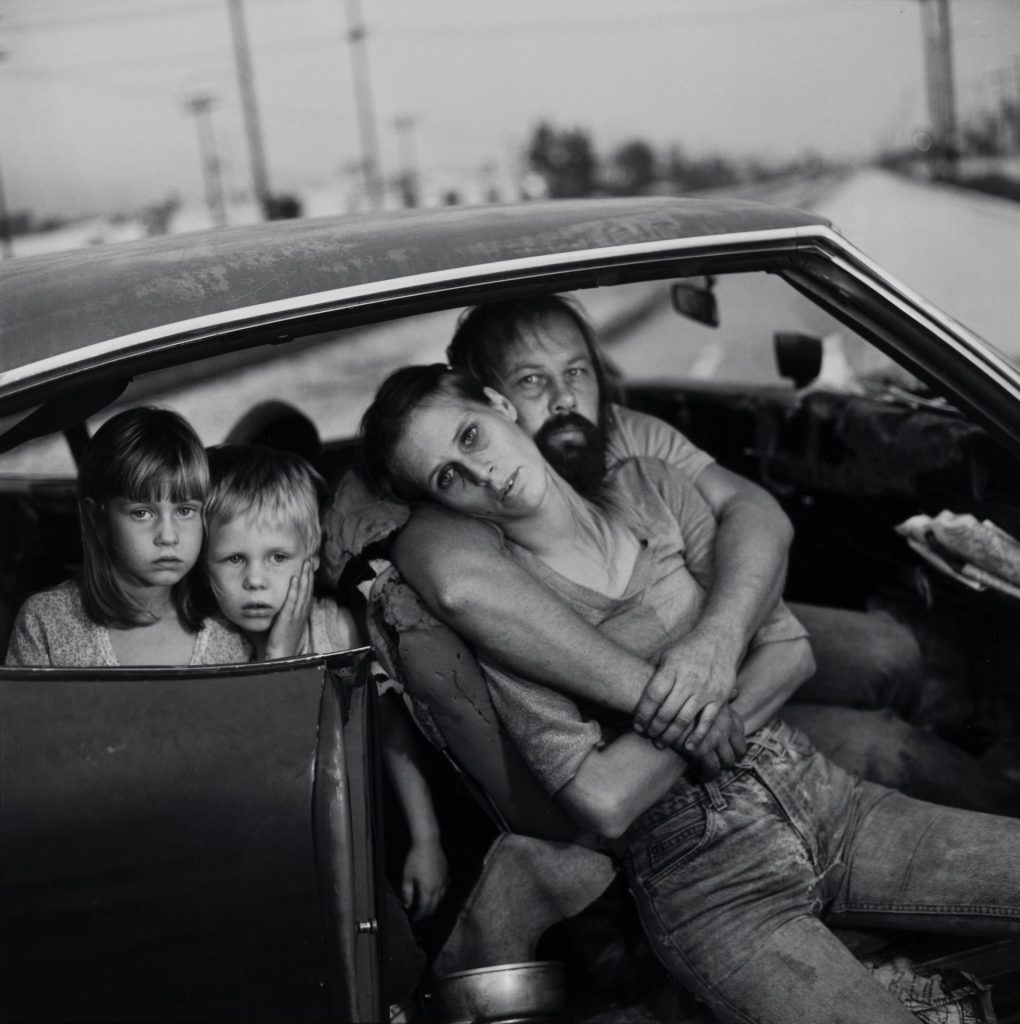
Inhabitants of the midwest Dust Bowl headed west to California, memorialised by Dorothea Lange’s Florence Owens Thompson, Migrant Mother, 1936. Lange was the daughter of second-generation German immigrants, educated at Lower East Side schools.
Emblematic urban photographs gave way to series and photobooks, as America’s preferred format for revealing itself to itself. Self-taught photographer Helen Levitt, from a Russian Jewish immigrant family, worked with writer James Agee to produce In the Street, 1948, showcasing scenes from New York.
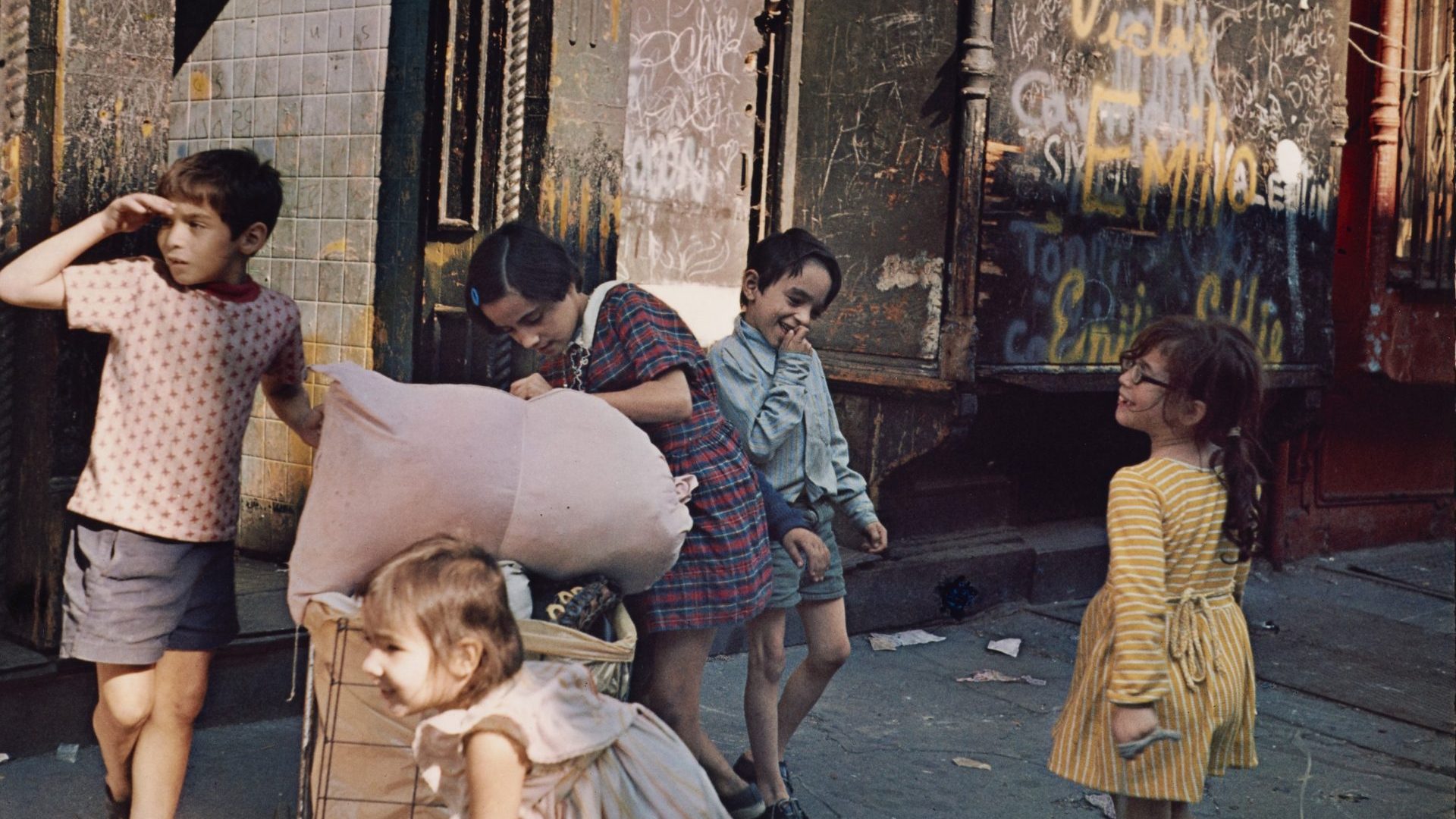
Celebrated for taking pictures of children playing, Levitt provided little overt commentary. Working in areas marked by poverty and urban change, her images invoke closeness, social connection, and the shared space of the street.
Towards the end of her 70-year career, she observed the erasure of poorer families from New York public spaces: “I go where there’s a lot of activity. Children used to be outside. Now the streets are empty. People are indoors looking at television or something.”
Institutions also migrated to America. In 1937 the New Bauhaus, now Chicago’s Institute of Design, was founded by László Maholy-Nagy. By the 1950s, Aaron Siskind, “the painters’ photographer” and friend of Jackson Pollock, Mark Rothko and Willem de Kooning, was on the faculty.
The child of Russian Jewish immigrants, between 1937 and 1940 Siskind worked with sociologist Michael Carter on Harlem Document, depicting street life, interiors, churches and dance halls. In the following decade Siskind turned away from documentary to a more abstract emphasis on fragment and forms, explaining: “For some reason or other there was in me the desire to see the world clean and fresh and alive.”
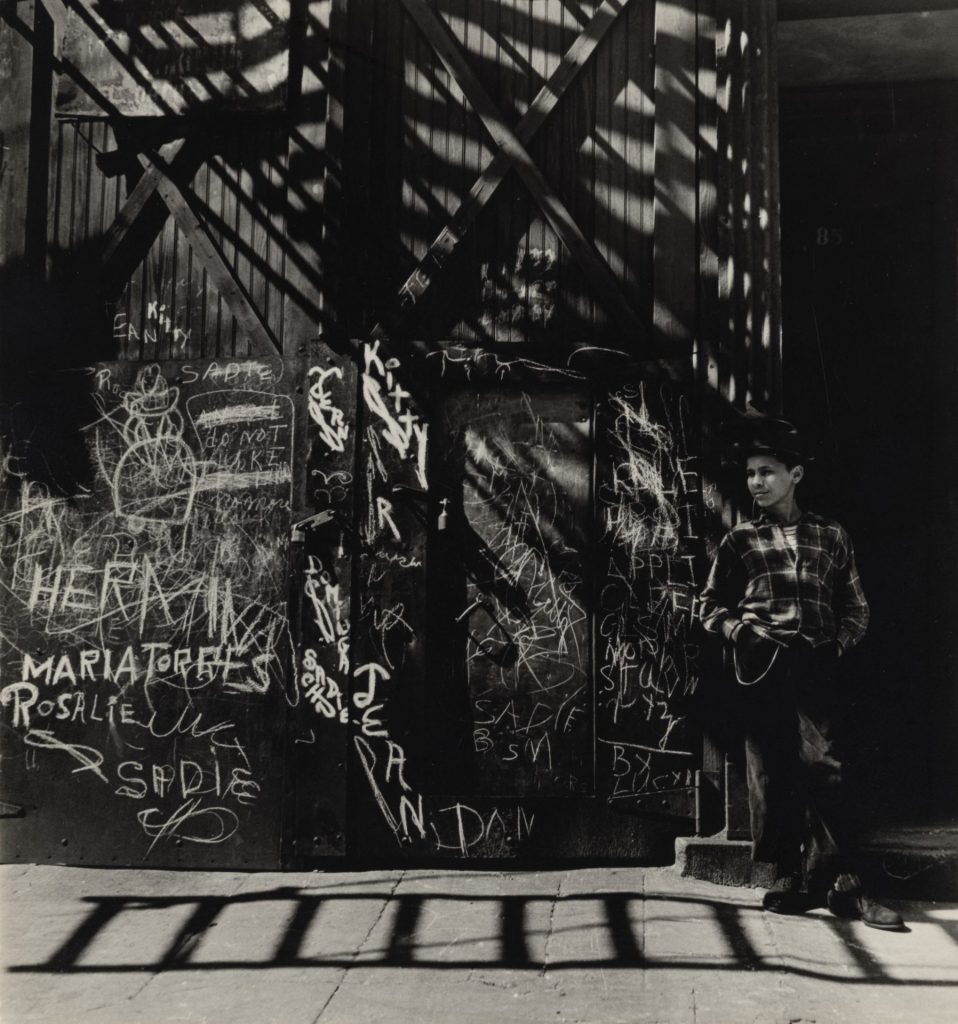
Frankfurt-trained Ilse Bing’s Penn Station (New York Bootblack Shining Shoes), 1936, infused Neue Sachlichkeit geometry to the shoe shiner’s wide-apart bent knees, enclosing the shape of his extended arms and customer’s flexed shin. And an expressionist cityscape of monochrome diagonals, shadows and reflections is evident in Rebecca Lepkoff’s New York, 1949. Lepkoff’s father, a tailor, had emigrated from Minsk.
Suggested Reading
Route 66 and the old promise of a new America
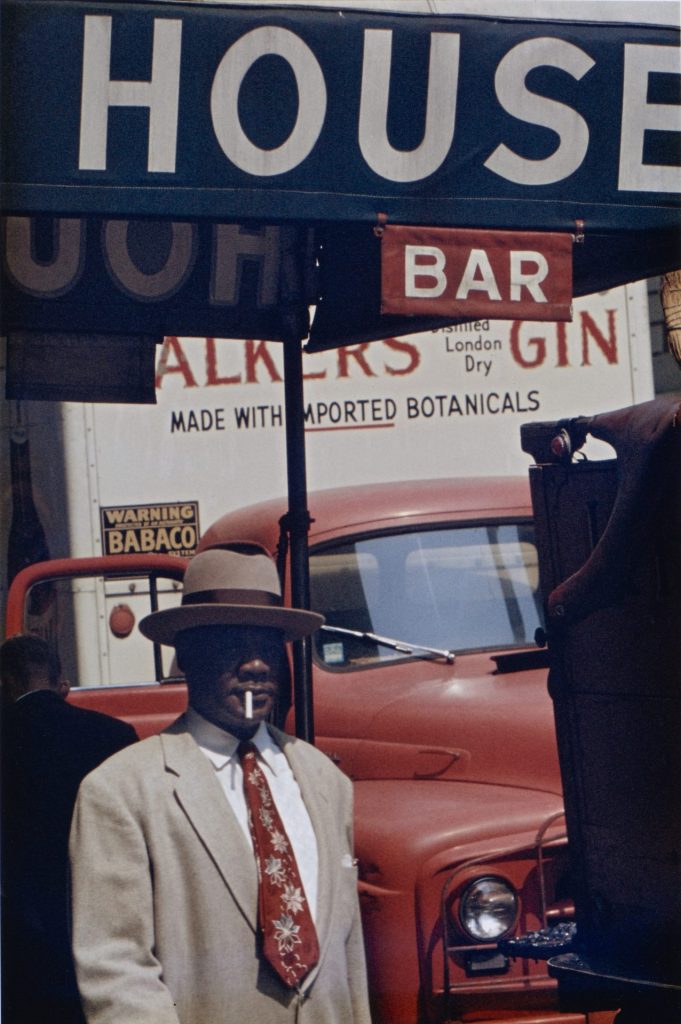
In the 1970s, colour saturates the city. Levitt’s children, clowning around a laundry cart, become super animated in the dye-transfer print New York, 1972. Talmudic scholar’s son Saul Leiter utilised colour’s force earlier in Man in Straw Hat, 1953, where the hatted figure battles to pull focus from the yellow taxi. The red vehicle, sign and tie show colour guiding the composition in Harlem, 1960.
Bronx-raised Garry Winogrand, with parents from Budapest and Warsaw, used West Coast sunlight like an electric palette in Los Angeles, 1969. Winogrand bridled against the term “street photographer”. One of three photographers featured in the landmark New Documents in 1967, the Museum of Modern Art stated “their aim has been not to reform life, but to know it.”
Portrait of a City is at Dulwich Picture Gallery until October 4