I fear I must assume that Nigel Farage will never be a guest on The Rest Is Politics. This is far from being the end of the world, given we have plenty of presidents, prime ministers, cabinet ministers – and Count Binface, our latest guest – willing to join me and Rory Stewart for a chat.
Nonetheless, when I think of the times I went on Farage’s LBC show, shared a Question Time panel with him, debated drinking in a Manchester pub for a documentary, almost came to blows on Good Morning Britain in Piers Morgan’s day and interviewed him for GQ in 2014, when he professed his admiration for Vladimir Putin, it is disappointing. Whatever one thinks of Farage, he is a consequential figure, and perfectly suited to our “disagree agreeably” motto.
The closest I came to getting him on – believe me, I have tried – was on the day of Trump’s re-election to the White House. Rory and I were in the US. So was Farage. I called and asked him to come on that day. He said he would think about it, but by the time he had, he was on a flight somewhere.
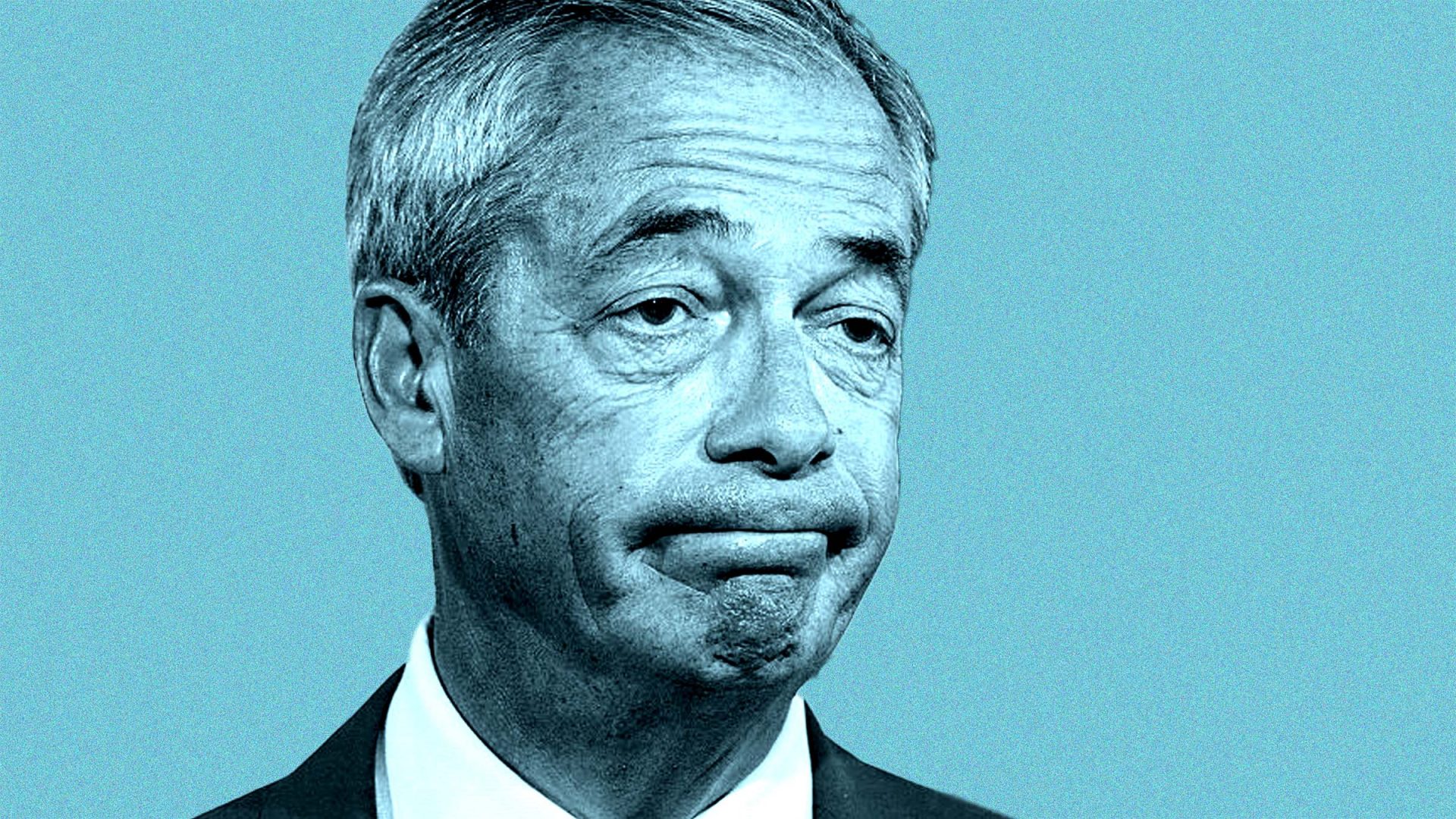
I think the old Farage would have jumped at being our guest. But there is a new version, who, for all the bravado, and the talk of one day being prime minister, is less confident, less up for the fight than he once was.
Weirdly, as to when the old became the new, I think it may have coincided with the point at which it was becoming a conventional wisdom that he was destined for Downing Street. Hubris is a terrible thing for a politician.
He started to be introduced at meetings as “Britain’s next prime minister”. He began to believe his own propaganda, another big mistake. He started to make smaller mistakes too. Appointing Matt Goodwin as candidate in the Gorton and Denton by-election was one; overexcitement at the defections of Robert Jenrick, Suella Braverman and Nadhim Zahawi was another.
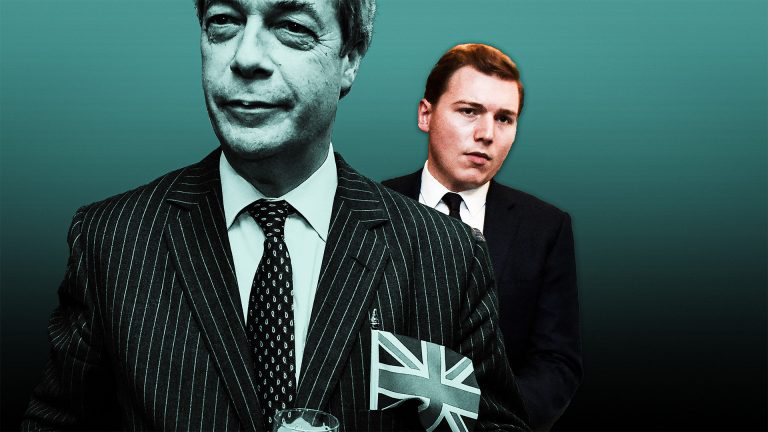
The biggest was not to understand that possible ascent to becoming prime minister would be accompanied by serious scrutiny. He and his wannabe cabinet ministers, such as Jenrick, Richard Tice and Zia Yusuf, appear to think that such scrutiny is the sign of a desperate attempt by “the establishment” (sic) to stop this gang of multimillionaires from being given the country to run and plunder.
It really isn’t. Such thinking is another mistake, born of the fact that Farage has in the main been given a very easy ride by the British media, which has treated him more as celebrity cheeky chappy commentator than top-flight politician.
He has ridden this wave superbly for many years, but now, with a little bit of turbulence in the water, he is not handling it well at all. The financial scandals had been hiding in plain sight for years, but Farage was handed a free pass. Once Downing Street loomed, that was taken away.
Calling the Clacton by-election was another sign of hubris. “I will take the world by surprise, announce I am standing down, create a ‘me against the establishment’ narrative for the fight ahead.” Or so ran the story in his mind.
But it has come down to him against a bin. Surely he realised, Binface told us, that the other parties would see it for the stunt it was, refuse to take part, and so create the circus that is making the Count the most famous dustbin in the world.
There was a time when Farage would be more likely to be sharing a platform with Donald Trump than an intergalactic trash can. Trump is part of Farage’s fall too.
What is happening – and we should rejoice at this – is that we are being reminded that the UK is not the US, and especially now has no desire to be. Farage saw how much Trump was able to get away with on the financial front and assumed it would be the same story here. Not so.
By Trumpian standards, Farage’s £5m donation from a crypto billionaire, and the money-shifting shenanigans of Tice and Posh George, are small beer. But most Brits are disgusted by Trump’s use of power for self-enrichment, and we have a much lower tolerance level for corruption than Americans.
We also have a better sense of humour, and Count Binface has become the right joke, in the right place, at the right time, to remind the world of that. Whatever the actual vote in Clacton, Farage has lost already.
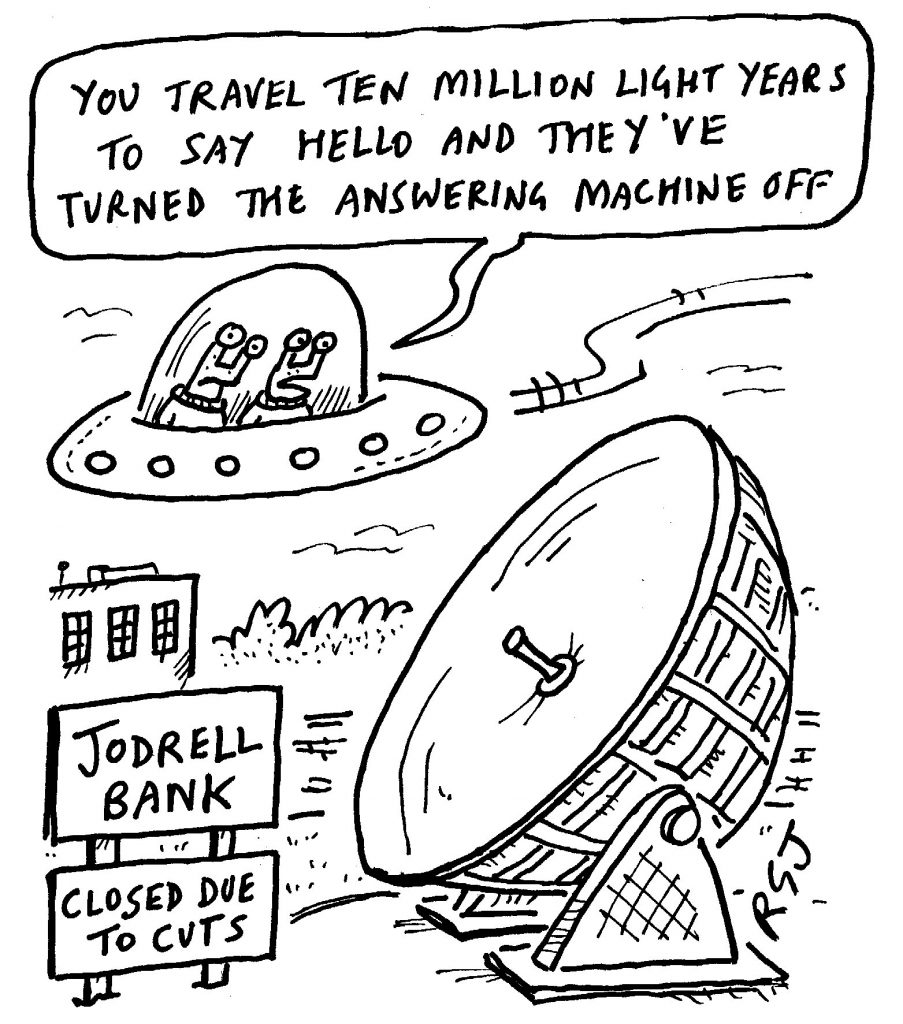
We interviewed Binface in the middle of the latest heatwave, and the air conditioning in the studio had broken down. As he stripped off at the end to get into his civvies, he looked like I do after a particularly tough workout, of which I am doing many right now, in preparation for a charity football match in Croatia later this month, when I will be captaining a team including Luka Modrić, Zlatan Ibrahimović, Luís Figo, Marcel Desailly and more. None of them are Maradona (RIP), but not a bad line-up.
Also in our team will be Uefa president Aleksander Čeferin, who will likely get a hero’s welcome, having helped kill off his Fifa counterpart Gianni Infantino’s attempt to flog the World Cup to Trump’s family and friends. Infantino is another one learning to his cost that if you get too close to Trump, you get burned.
As to why I am captaining a team of such huge football talents, it is because for some years I have been ambassador for the Youth Sports Games, an event that brings together children from all over the Balkans, whose parents and grandparents were all too often at war with one another. It has grown into Europe’s largest amateur youth sports event.
Infantino talks a good game when it comes to projecting football as a force for peace in the world. The Youth Sports Games actually does it.
Suggested Reading
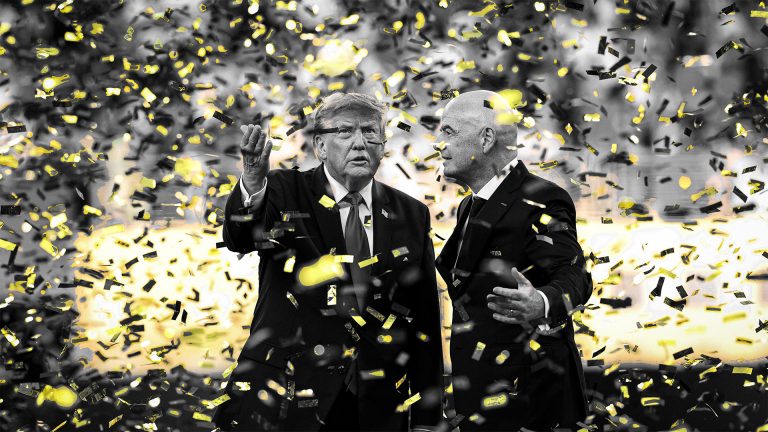

What will Trump and Infantino try to ruin next?
Infantino is probably one of just two people on the planet – Donald Trump being the other – who thinks the US president is a worthy winner of a peace prize. That he dreamed up the Fifa peace prize to soothe Trump’s fragile ego when he failed to land the big one, the Nobel, speaks not just to Trump’s narcissism but the scale of “Sycofantino”’s sycophancy.
Assuming he does not intend for the Fifa prize to go to Trump every year, I hereby nominate the Youth Sports Games next time, Gianni… assuming you’re still there.
I strongly recommend the David Bowie immersive multimedia experience at London’s Lightroom, if you happen to be in the King’s Cross area. You wander into a huge space and Bowie’s voice is telling his story, illustrated by an enormous volume of fast-flowing, ever-changing visual materials on the four 11-metre-tall walls around you.
That he is a cultural icon comes over strongly, but also that he is something of a cultural prophet. There were gasps in the audience at a Newsnight interview Bowie did with Jeremy Paxman in 1999, in which he said the internet was replacing music as a force of subversion and rebellion, that it was going to be a force of “unimaginable” change, both “good and bad”, and that we were “on the cusp of something exhilarating and terrifying”.
Paxman was somewhat dismissive of the hyperbole. Bowie was spot-on.