

Every Labour Budget brings a familiar media ritual: the hunt for whoever has been hardest hit, and the attempt to make the rest of us feel terribly sorry for them.
Right wing papers in particular love conjuring up images they think will horrify the public. Private school parents forced to skimp on their skiing holidays. Wind turbines blighting the Cotswolds. And now, apparently, the small landlord going under. Little do they know that people like me are reading these headlines while creepily rubbing our hands together and growling: yesssss.
Chancellor John Healey has announced a further 2% increase in income tax on rental profits, on top of the 2% increase Rachel Reeves announced last year. The National Residential Landlords Association has called this a potential “final nail in the coffin” for the private rental sector, while the Office for Budget Responsibility has warned that the measures could drive small landlords out of the market.
TV property guru Kirstie Allsopp, a former Tory housing advisor, has declared that “no one will stand up for small private landlords”, and headlines such as “The slow death of the amateur landlord is almost complete” abound.
Suggested Reading


Andy Burnham’s housing plans don’t add up. Here’s why
Believe me, I understand the concern that if the small private landlords disappear, we’ll be left with nothing but the big corporate ones. As someone with a passing interest in the health of the economy, I appreciate that this might be bad. But as someone who has actually had to rent from a small private landlord, however, I can tell you that I am positively counting down the days until they’re all thrown in prison. (I am being facetious. Mostly.)
Many on the left, particularly from my generation, despise the big corporate landlords. And for good reason: They are soulless institutions who buy up entire blocks of housing, accelerate gentrification, and push up rents. But when it comes to smaller, mom-and-pop landlords, there is a curious assumption that they are somehow more personable, more ethical.
If you’ve ever had to rent from one, you’ll know that this is a load of crap.
The big landlords might be faceless, profit-driven corporations, but at least they tend to have contractual obligations and reputations to protect. With a small landlord, you are entirely at the mercy of one person’s whims, prejudices, and incompetence.
I’ve lived and rented in London for going on five years now, and have encountered pretty much every type of landlord imaginable. Big corporations, landlords operating through lettings agents, and the seemingly most bare-bones operations of all: the small private landlord.
With the big corporate ones, yes, you pay more rent. Yes, they might own every single flat in a building of about 20. But my God, if I needed a shower fixing, it would be done by the end of the day. The communal areas were always spotless. Bills were included. There was an actual person whose entire job was to sit on the other end of a phone and sort out whatever you needed. What luxury!
Small landlords, by contrast, have a remarkable ability to make you feel that everything you ask of them is such a chore. You can practically hear them sighing down the phone, probably making lewd hand gestures at the sheer audacity of being asked to do what you pay them for.
In my years living under them, I’ve gone weeks without heating in the middle of winter, inherited curtains infested with mould (that still haven’t been changed!), and have been threatened with charges for things I didn’t break. All while having to navigate a revolving cast of people who have no professional means of contacting you.
Suggested Listening
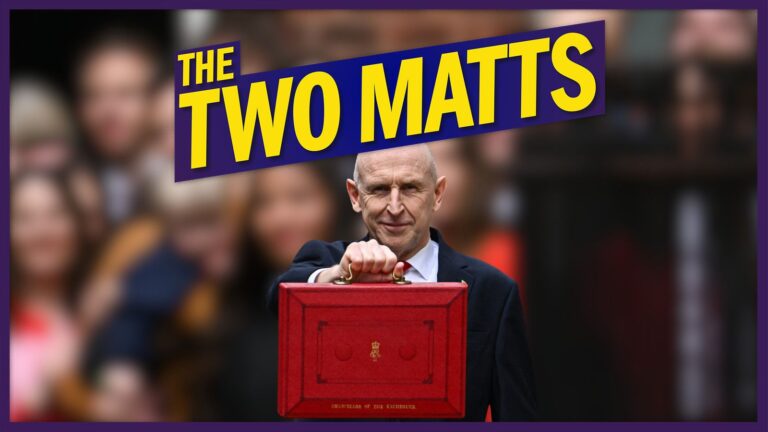
Two very different takes on what the Budget adds up to!
If your washing machine is leaking, for example, and you’ve been telling your landlord about it for two weeks, only to have your WhatsApps ignored because they’re on holiday, you can bet they’ll suddenly find time to screech at you when the leak threatens to damage the floor. But you can’t simply call a washing-machine repairman. No, you have to use your landlord’s personal friend, whose only apparent qualification is that he owns a hammer.
Of course, I know the arguments for keeping these landlords in the market. They provide housing. They keep properties available to rent. They are not all wealthy. I wouldn’t have somewhere to live without private landlords, and I don’t pretend that making it harder to be one is an uncomplicated solution to Britain’s housing crisis.
But part of me just doesn’t care. It might not be socially acceptable, or woke, or practical, but I have very little sympathy for them.
And perhaps that is because the conversation about the small landlord is so often conducted from the wrong end of the transaction. We hear about the poor retired couple who might have to sell their second property, the pitiful amateur investor whose returns are being squeezed, the ordinary person who has spent their savings on a buy-to-let.
We hear rather less about the ordinary person who has spent five years paying somebody else’s mortgage, while being expected to regard a working boiler as an act of extraordinary generosity.
I don’t think landlords are villains simply for owning property. But neither do I think they are public servants for letting someone else live in it. Kirstie Allsopp may be right that nobody is standing up for the small landlord. But before we launch a bleeding-heart crusade to save them, perhaps we should ask the tenants what they think.
 Most popular


What happens to Trump if he loses the midterms?

It might not look like it, but a motoring miracle has now happened


It’s time for Burnham to kill off old Labour


18 things that will absolutely, definitely happen if Trump gets whopped in the midterms