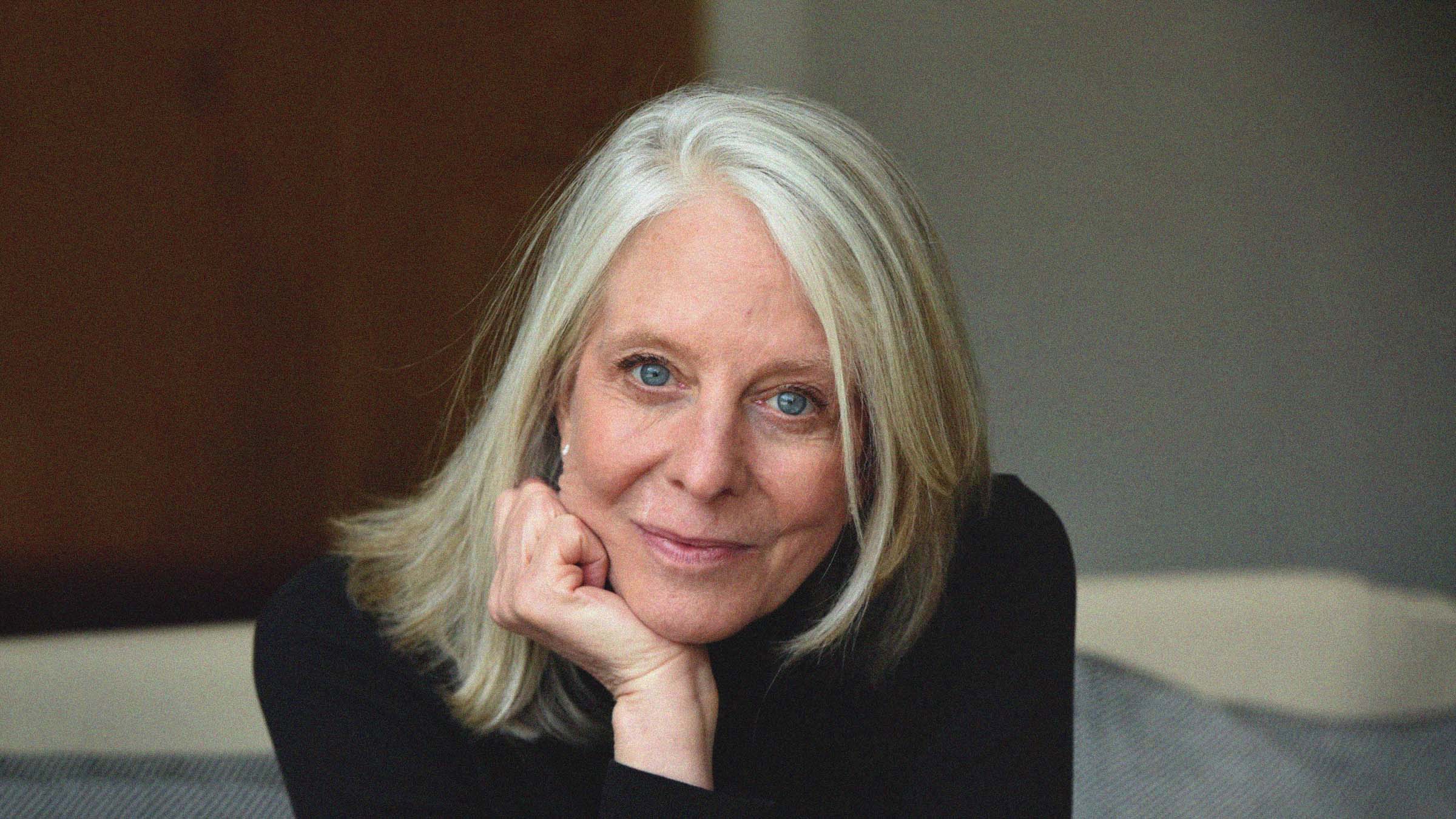
AI and its disciples have launched a war on creativity, and Bonnie Garmus is on a mission to save it. The author’s exquisite new book, Peck & Peck, is the literary antithesis of AI, with a narrative that protects the written word, honours ordinary people, and celebrates those who speak truth to power.
As we discuss it, one question becomes evident: what would Donald Trump think of her book?
“Oh, I don’t think Trump can read!” Garmus laughs. “Even if he could,” the author continues, “I don’t think he’d quite understand the messages in it. He wouldn’t get it at all.”
Last month, as part of an ongoing crusade to woo Americans over AI, Trump took it upon to rebrand the technology, blasting off on Truth Social that the word “artificial” makes it appear “fake”. Instead, Trump insisted it should be known as “super intelligence”, and that anyone who refused to adopt this change was “the enemy”.
Instances like this, for Garmus, are signifiers of the age of compliance we find ourselves living in. “AI is demanding that we all think, write and become alike, and we’re not. So, the overriding theme behind Peck & Peck is that not only is it hard to speak up, especially if you’re an average person. But also that if we don’t, we will be forced to conform,” Garmus says. Or, as Peck & Peck’s tagline declares: “Ordinary is the new extraordinary.”
Set in 1983, in New York City, Peck & Peck’s protagonist is Batter Gray, a recent college graduate with no tangible skills apart from an “ear” for poetry. His days are consumed by a gut-curdling fear for his future, until he is presented with an opportunity to work at Peck & Peck, the world’s most prestigious poetry quarterly and the novel’s namesake.
Quickly, Batter is thrown head-first into a literary war between the two editors-in-chief, twin brothers, Salton and Declonius. What follows is a love letter to poets, an ode to type designers and, above all, a razor-sharp warning to those who want to discount both groups in the name of technology.
Garmus first had the idea for her latest novel in 2009. As a highly experienced copywriter in the technology industry, she grew increasingly concerned about AI developments, especially when those around her didn’t stop to question the potential dangers that they might bring.
“It wasn’t innovative; it was amoral. And we thought social media was bad, you know?” Garmus sighs.
But when I ask her if there was a particular instant that caused this concern to evolve into plot, she laughs and nods before promptly offering a caveat. “Everyone in the world is going to think I only have bad days at work!”
Garmus’s bestselling debut novel, Lessons in Chemistry (2022), was born out of a tedious day at the office. In an interview with the Guardian, she recounted a story that has since become infamous, about the day she was tasked with giving a presentation to a room full of male colleagues.
When she finished, the room was silent. Eventually, one of the men announced what he thought they should do, rewording her ideas. He was greeted with resounding approval and pats on the back.
As they left the room, one of the men called back to remind Garmus about a piece of work that was due by five. So, Garmus returned to her desk and wrote the opening chapter of Lessons in Chemistry.
Now, Peck & Peck has a similar origin story, but instead of a rebellion against sexism, it is a rallying cry against the impending technological doom Garmus saw coming over a decade ago.
“I was driving home feeling this overwhelming sorrow that substance didn’t matter any more. What mattered was something cheap and easy they could sell to people and make a lot of money from. I was feeling some despair about that,” Garmus recalls. Amid her melancholy, she suddenly became aware of a poem being read on the radio station NPR.
It was Nikki Giovanni’s The Laws of Motion, and Garmus had an immediate gut reaction. She was transported back to her eighth-grade English classroom, where her teacher had read it aloud to her 14-year-old self and her fellow students.
“The teacher asked all of us to sign an oath that we would all continue to read one poem a day. He said that if we did this thing, we would keep our minds open and flexible,” Garmus says. Unfortunately, they were a room full of teenagers, and so when the summer period hit, they broke their promise. On that drive home from her office, Garmus’s pangs of guilt reignited her love of poetry.
During this newfound connection, Garmus became absorbed in the world of poets and type designers. After a while, she associated some designs with her characters and even herself. For example, Batter, her protagonist, would be New Century Schoolbook, a type that’s designed to increase reading speed by up to 20%. Garmus, meanwhile, had her eye on a typeface that’s “been around forever, delicate in some places, and bold in others”. “I aspire to be Bodoni!” she laughs.
Still, her love for poetry is far from comical. “The poets won’t let poetry die. We always, in our most vulnerable moments, turn to poetry. At funerals, weddings and graduations. We need poetry. For some reason, we know the poets are always going to say something that we really needed to hear.”
Perhaps this is why Trump would not warm to the idea of sitting down and pawing over lyrical verses. “Poets are very honest. They don’t have any reason to lie,” says Garmus. And so, it was decided: the author would write a book honouring poetry.
Not everyone Garmus worked with was eager to open the door to AI. Today, many of the author’s former colleagues are “fearful” over what its advancements have meant – and will mean – for their future as copywriters, and Garmus symbolises these anxieties in the building of her fictional editorial team at Peck & Peck.
Inside this grand and architecturally miraculous building, featuring topiary in the shape of letters and exotic birds, a total of 39 editors are hard at work; a stark difference for Garmus’s readers today, where newsrooms are set on shrinking, rather than growing.
“The only way you discover all the great voices around the world is to have more informed people looking for them. Machines can’t do that for you and you wouldn’t want it to, as it’s biased. It’s written by white men. It’s horribly biased against women, people of colour. It’s baked into the code,” Garmus says, remaining optimistically unconvinced that AI will fully replace people in the publishing, marketing and advertising realms, as “if you push creative people too far, they will revolt”.
Garmus does not shy away from the fact that Salton, her bombastic, rude and brash literary editor-in-chief, shares characteristics with Trump (“I don’t have any respect for him at all”). However, her villain was not solely inspired by the president, and she explains that when she worked in technology, she “ran into those kinds of people all the time”. Those with unlimited finances at their fingertips who dare to believe that they can decide how the future is written.
“Money at the billionaire level is so corrupting, and they’re winning. They’re in a race with each other, and they don’t really care what happens to the rest of us. They’re very intent on proving to us how smart they are, but they’re no smarter than any of the rest of us,” she says.
The majority of this cohort of the uber-wealthy Garmus is referring to are neither biologists nor neurologists, and yet their financial assets means they are designing the technology that has become ingrained in our society and will affect how we use our minds in it.
For example, last year, a study from MIT’s media lab found that ChatGPT may be eroding users’ critical thinking skills. Over the course of several months, test subjects between 18 and 35 who used the resource got lazier and, by the time the study was complete, often resorted to copy-and-pasting when writing.
“They have no idea how the brain works and yet they’re creating artificial intelligence. That’s bizarre to me. I’d feel a little better if the people who were working on these projects were neurologists,” Garmus says.
Garmus has gone from working in this industry these people are shaping to becoming a global literary sensation (Lessons in Chemistry has sold over eight million copies worldwide and was adapted into a hit series starring Brie Larson and Lewis Pullman) and with this new status, comes a platform. What would she say to those set on driving society towards the AI apocalypse in the name of ego? Turns out, she’d pose questions – of which she has many.
“Sometimes I just want to say: ‘Would your parents be proud of you? Would people who gave up their lives to protect others think what you’re doing is heroic or esteemed? Who is it that you want to feel good about who you are?’
“We all know that Elon Musk could solve world hunger tomorrow with all of his riches and he’d still have more than he can spend. We know that these people have the power to do good. My question is: when did they lose their morality?”
There’s a pause, and the silence speaks volumes. Both Garmus and I know that the tech bro overlords and politicians she wishes to hold to account would sidestep this question if asked. When I put this to her, she presents a knowing smile.
“I have a feeling I’m not going to be welcomed back in the old circles. But I don’t have a problem with that.”
Peck & Peck is published by Bonnier Books Ltd
 Most popular

My truly deranged encounter with Trump apologist Kellyanne Conway


Is this the real reason Trump keeps falling asleep in public?


Why are all AI posters so bad?

23 stupid reasons why Britain should never rejoin the European Union