As Andy Burnham heads for Downing Street, the conversation is turning towards devolution. But other nations have grappled with the question of how to make political power more distributed for much longer than Britain and they’re way ahead.
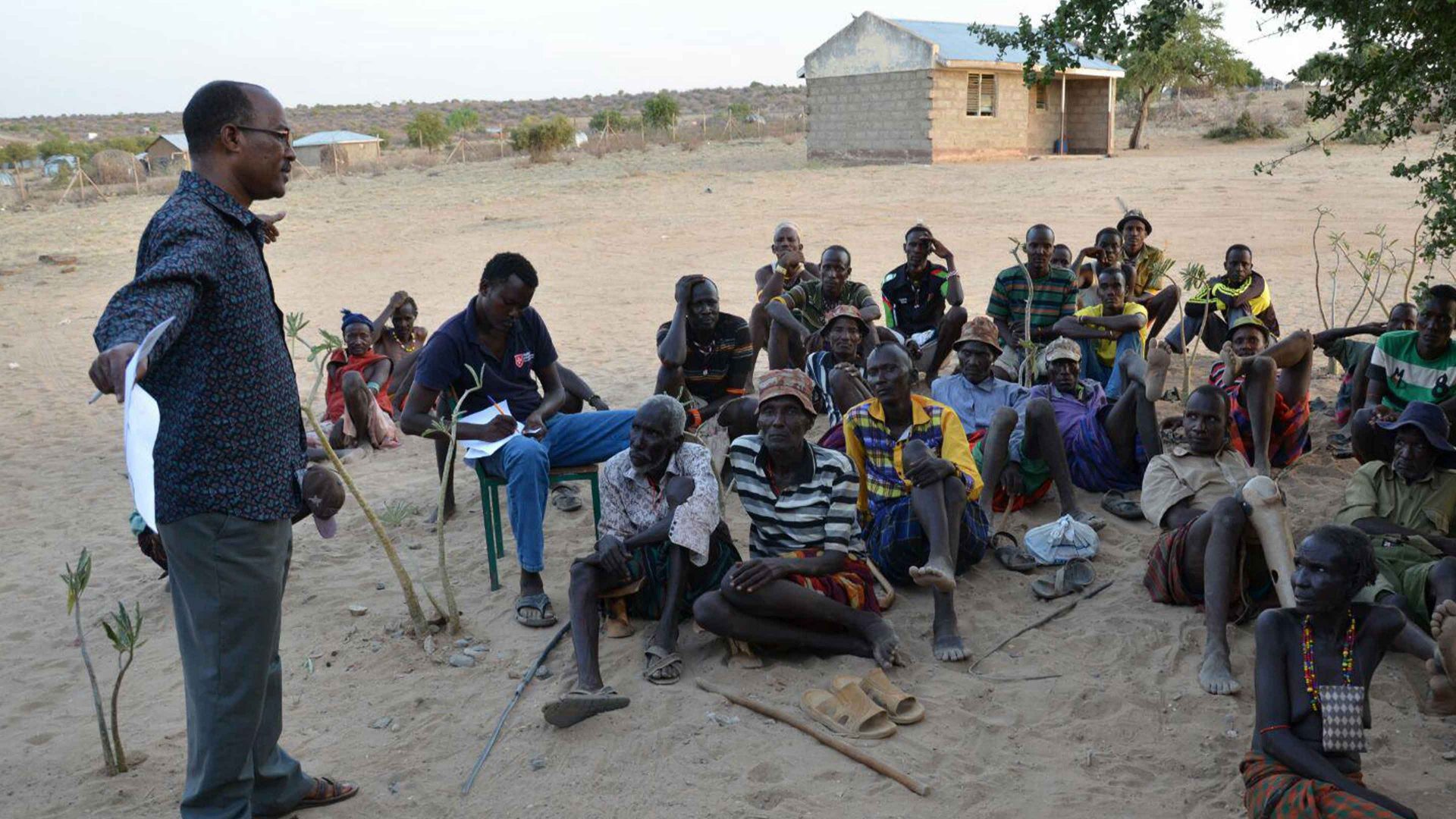
On the outskirts of Lodwar Town, under the relentless northern Kenyan sun that baked the sandy soil of Turkana Central, roughly 250 local residents sat hunched over copies of the proposed budget for the financial year 2026-27. The plastic chairs were arranged in dense semicircles beneath the massive, broad-leafed canopy of a giant tree. The place was completely packed.
There were no slideshows or online feedback forms to be filled in. Instead, treasury officials from the county authority sat directly in the dust with a cross-section of local people, including market traders, civil society advocates and representatives of youth groups, who had traveled in from wards including Kalokol and Lodwar Township.
The atmosphere was intensely focused as the residents set out their precise needs. Mathew Longor, from Kerio Ward, demanded that the county should prioritise the completion of the Nadoto Modern Market and Kerio Sale Yard. The project had become stalled, but it would revitalise local trade, he said. There was also the issue of water infrastructure, like the Lokakimat borehole system.
Suggested Reading

Andy Burnham’s devolution delusion is about to meet economic reality
Ekipetot Ekaran, representing people with disabilities in Kalokol Ward, argued for improved accessibility through better roads and pavements. Lopeto Michael, an elder from Kang’atotha Ward, said that this kind of community oversight was the only way to prevent public funds from being diverted from where it was really needed.
By the end of these sharp deliberations, the collective demands of these local citizens were shaped into formal reports. The overriding message: the county government was legally committed to completing its unfinished developments before launching new works – it should get on with them.
Kenya is a model of how the decentralised state can work, to the point where budget audits take place in the desert sand and are overseen by local citizens. And it makes sense that Kenyan governance and society should have gone this way. The reason is the deep-seated historical trauma that was inflicted by the rigidly centralised system it replaced.
When Kenya gained independence from Britain in 1963, the country’s administrative layout was the product of British colonial rule. Power was aggressively retained by a powerful executive office in Nairobi. Everyone else was subject to its decisions.
Under that old colonial system, Nairobi drew in all the investment, which meant it was the place where all jobs and opportunities were found. Meanwhile, vast rural areas like Turkana were written off and left to languish.
For fifty years, important local decisions such as whether to dig a borehole in the desert, build a village clinic, or pave a simple dirt road, were made by faceless officials in the distant ministries of Nairobi. This top-down approach stifled the provinces and in the years following independence, it turned every national election into a high-stakes, winner-takes-all scramble for control of the treasury.
The breaking point came with the 2007 election crisis, where it was unclear who had actually won the vote. When Mwai Kibaki was sworn in as president, the country erupted in violence so severe that it pushed Kenya to the edge of civil war.
The solution was the historic 2010 Constitution, which completely dismantled the old colonial state and split Kenya into 47 county governments. It was a total dissolution of the centralised state apparatus. Tax-raising and legislative powers, along with spending muscle, were taken out of Nairobi and given to the newly created counties.
At the heart of this overhaul was a new, legally binding obligation to make public participation a part of governance. But it went far beyond the usual box-ticking gestures towards a public “consultation” on already-finished plans. Public participation is a statutory demand. Before any local administration can do anything significant, it must hold public town halls and face-to-face village-level debates.
The legal protections for this system are strong: the Kenyan courts will strike down entire multi-billion-shilling municipal infrastructural projects or housing developments if the state hasn’t conducted a “meaningful public participation”. This has turned local planning into an arena of constant negotiation, forcing technocrats to justify their plans to the citizens who are most affected.
So places like Makueni County in eastern Kenya have a system of participatory budgeting. As with the budget audits in Turkana, Makueni’s residents hold hundreds of debates and votes on community priorities.
Suggested Reading

To bee, or not to bee? The African elephant question
It may sound like a tortured process of pointless negotiation – but the results suggest otherwise. A huge number of important advances have come from these sessions. Take, for example, the Makueni Fruit Processing Plant. Local smallholders, tired of seeing middlemen exploit their harvest by buying mangoes for pennies, used the budgeting process to force the county to fund a local processing facility. The plan went through and it worked.
Alongside this formal decentralisation, groups have also emerged to close the gap between community self-reliance and state services. This is most visible in the chamas, informal savings and investment groups that are run by ordinary citizens.
Long before digital mobile wallets became available, millions of Kenyans were pooling resources within these self-governing groups to pay school fees, buy land, or back local businesses. These cash pools rely entirely on localised social trust rather than traditional commercial banks or regulatory bodies.
When mobile money transfer networks such as the M-PESA payments system arrived in Kenya, they built upon this cultural habit of decentralised financial cooperation.
The state has integrated this form of local cooperation into its public services. In primary healthcare, the government has created a network of thousands of community health promoters. These are trusted local neighborhood residents equipped with basic digital toolkits who deliver preventative care, monitor maternal health, and offer basic treatment directly to families in their villages.
Similarly, the Nyumba Kumi initiative (literally “Ten Households” in Swahili) uses traditional neighbourhood elders to manage safety, keep an eye on the community, and resolve disputes.
Even where central coordination remains necessary, the experience has been radically transformed by the “Huduma Kenya” program, to expand government services across the country. Step into the bustling, brightly lit hall of the Huduma Centre at Nairobi’s General Post Office, and you discover that the old bureaucratic civil service nightmare has disappeared.
Historically, applying for a basic driver’s license, updating an identity card, or registering a small business name required trekking across the city to multiple, disorganised government ministries, enduring endless queues and systemic corruption.
The Huduma system collapsed this model by housing over forty services from separate government ministries under a single roof. Funded nationally but operated in partnership with local county administrations, these physical centers handle thousands of citizens daily, with all the efficiency of a modern bank.
Granted, Kenya’s devolution experiment is far from flawless. Local civil society groups have highlighted how the sudden rush of big money to the counties has sometimes simply decentralised corruption. It has created regional political barons who treat county budgets as their own personal fiefdoms. On top of that, irregular or delayed releases of funds from the national Treasury leave projects stalled and essential workers unpaid. Also, political standoffs between county governors and central legislative oversight bodies often flare up.
Suggested Reading

The Africans dying in Putin’s failing war
But for all its teething troubles, the domestic and international consensus is that Kenya’s decentralisation has worked. Prominent national figures, including the veteran political leader Raila Odinga, have consistently defended the system. “I believe in more, not less devolution,” said Odinga. “None should stand in the way of the other”.
Kenya is now seen as a model for reform across Africa. Neighbouring countries like Somalia, along with Mozambique and Liberia have been influenced by the obvious benefits of devolution for both the economy and governance.
What they have understood is that devolution works – and Kenya proves it. As one World Bank appraisal of Kenya’s decentralisation experience noted, its success has been based on giving power to citizens, in order to “empower them to participate and contribute to decision-making,” along with mechanisms to ensure that authorities “are held accountable.”
Those are the two crucial elements in any kind of meaningful political devolution. Andy Burnham may have gained valuable experience of how to use the devolved political powers granted to a single city – Manchester. But when it comes to applying those principles to an entire country, the real lessons are to be found in Kenya.
 Most popular

My truly deranged encounter with Trump apologist Kellyanne Conway


The moral depravity of Robert Jenrick


Is this the real reason Trump keeps falling asleep in public?


Suella Braverman’s book has sold only 106 copies. This is why