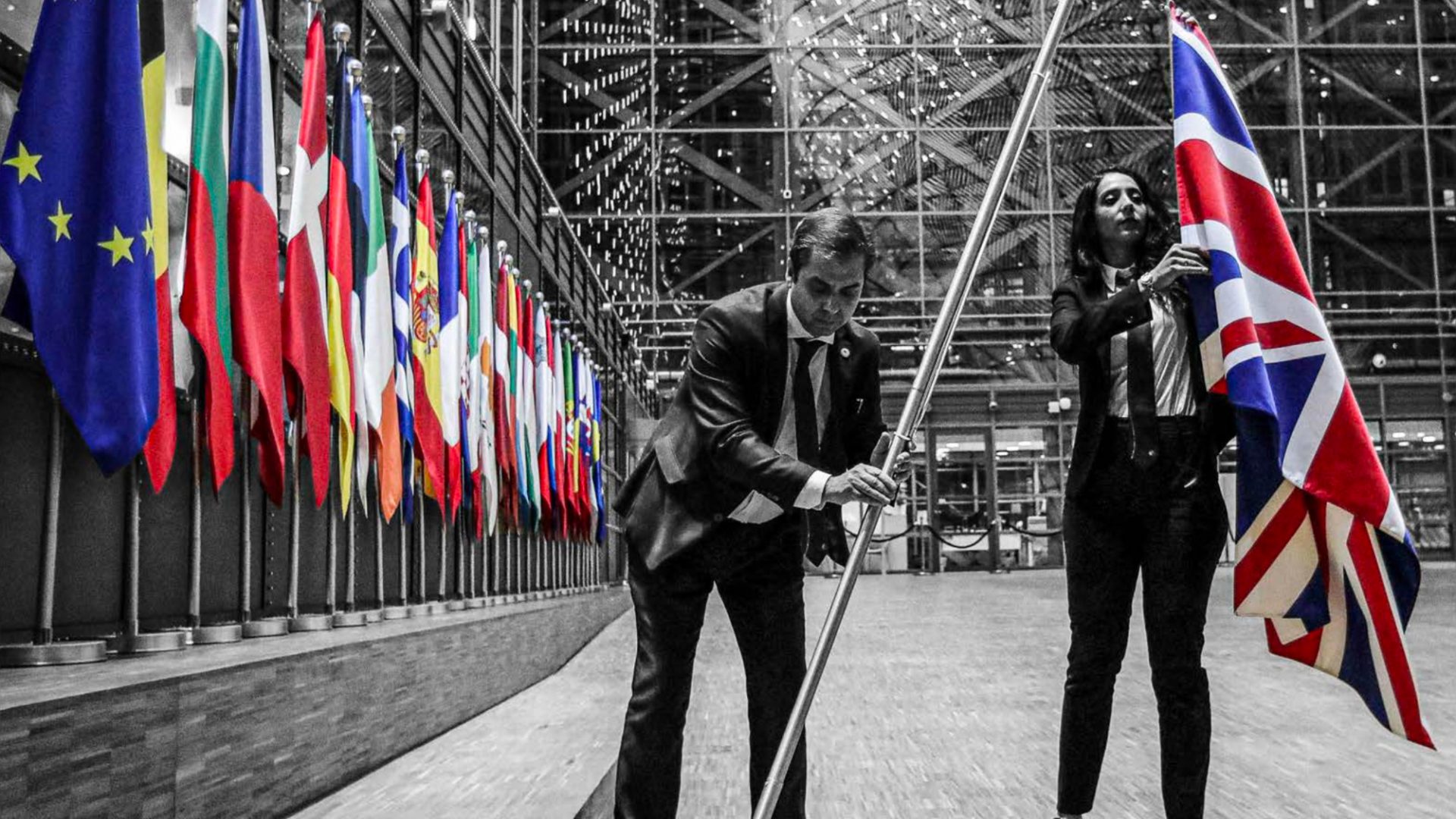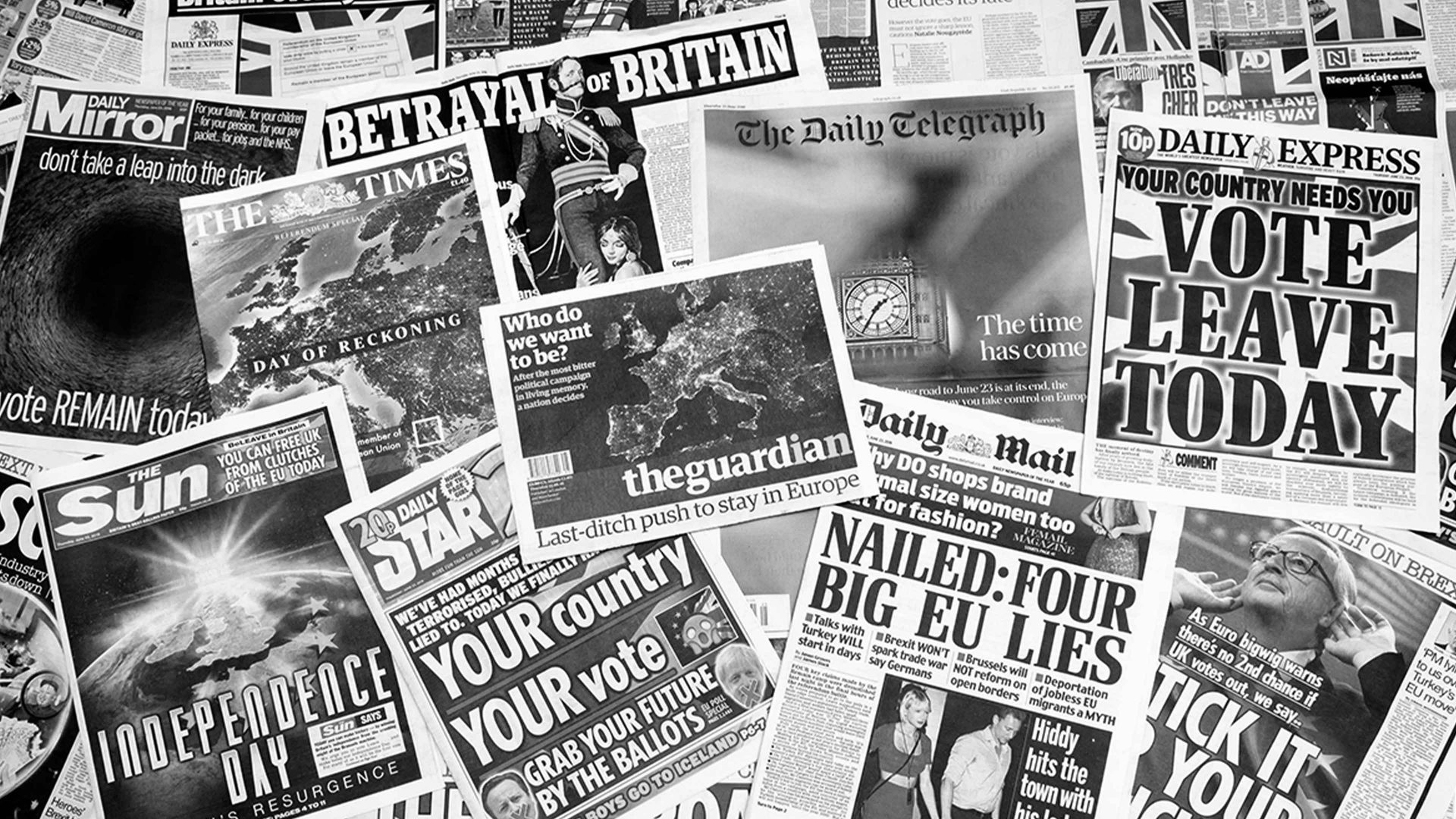
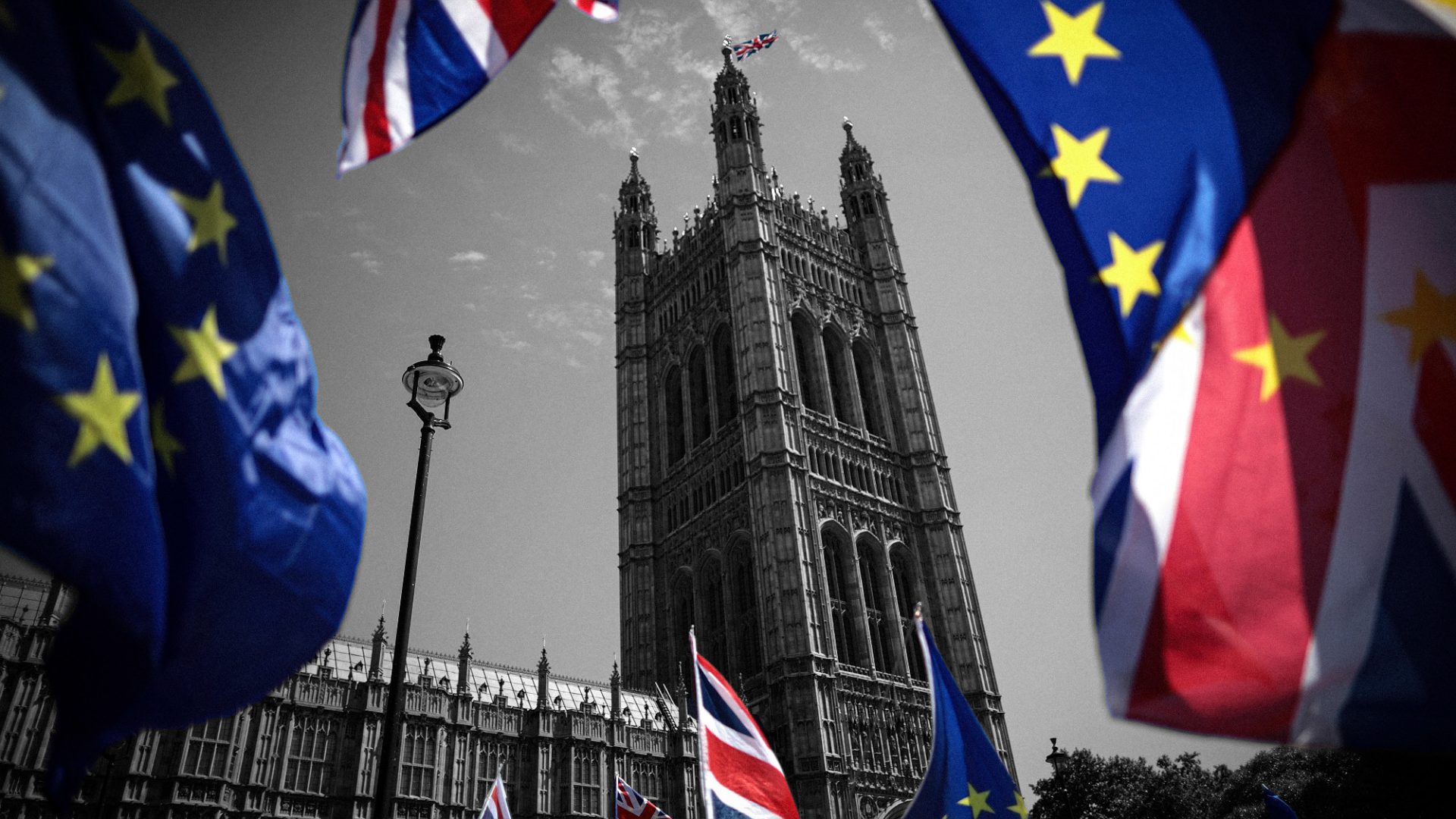
Ten years on from the disastrous decision to leave the European Union, we find ourselves in a moment of great opportunity, matched by looming peril. There is all to play for. Which, when you think about it, is both exhilarating and alarming.
On the anniversary of the referendum of June 23, 2016, the most pressing task is to compile, audit and reflect upon the terrible consequences of Brexit. But it’s also essential to ask: what have we learned? What should we have learned?
For a start, so much has been packed into what Auden would surely have called this “low, dishonest decade”. Six prime ministers, Covid, Ukraine, the return of Donald Trump, a terrible regional conflict in the Middle East, the abject failure of Keir Starmer’s technocratic government, alongside the surge of Nigel Farage’s Reform UK.
My point is that we should look upon the Britain of 2016 as we would the Britain of 1997 or of 1979: another country. As we rail against Brexit – and we should – we need to be bracingly candid about what went wrong and what is still going wrong. This is often uncomfortable, which, of course, is intrinsic to any honest reckoning.
So here are my takeaways. Everyone has their own, but these are mine.
Internationalism is in wretched shape
Why did it take the Pope’s encyclical on AI to ignite a truly resonant debate on the meaning for humanity of this runaway technology? Why are there not 150,000 blue-bereted UN peacekeepers already in Gaza overseeing warp-speed reconstruction?
Why did it require the blunt-force trauma of Trump to get Nato’s other members to start spending more on defence? Who can honestly say that COP summits are more than branded pageants? Why, as Mariana Mazzucato asks in her fine new book, The Common Good Economy, has the international community devoted so much time “to shared goals without there being a comprehensive framework to underpin them”? This global dysfunction is a lot worse than it was in 2016.
Don’t just focus on external factors
It is, I hope, self-evident that vigilant monitoring of the media is of the highest importance. Exhibit A is Alan Rusbridger’s brilliant dossier for TNW on GB News.
The end of the Labour-Conservative duopoly in political contests has strengthened the case for electoral reform at Westminster. Ofcom’s regulation of social media is pusillanimous, most conspicuously in its response to the use by freshly minted trillionaire Elon Musk of X as a platform to incite the civil war in the UK that he dementedly insists is “inevitable”.
These and other structural problems need to be in the spotlight, now more than ever. But – and it is a big but – it is a grievous error to concentrate exclusively on exogenous forces as a permission device not to scrutinise fearlessly one’s own mistakes.
In politics, as in life, it is pointless to insist that failure is entirely the consequence of unfavourable conditions. As CS Lewis warned in Learning in War-Time (1939): “Favourable conditions never come”. Pretending otherwise is not only absurd; it also betrays a reluctance to ask the harder questions about the things we ourselves have got wrong.
Join, not rejoin
As TNW founder and editor-in-chief Matt Kelly wrote in May, “the idea of returning, retreating… rejoining… is dangerous and delusional… Join, as a statement of intent, should be the launchpad for a forward-facing, progressive debate about the UK’s national interest.”
This really is the key premise. The battle for Britain’s future at the heart of whatever Europe becomes in the second quarter of the 21st century (in itself a huge question) is not about relitigating the grim political conflict of 2016-19, any more than it is about relitigating, say, the Great Reform Act of 1832 or the 1946 National Health Service Act.
Presenting the case for Britain-in-Europe as the recovery of an old order is political strychnine. In fact, the historical list of successful restorations is very short indeed: there is, of course, the return of the Stuart dynasty in 1660, after five years of the Protectorate, though that barely counts, given the radical constraints upon monarchy settled in the Glorious Revolution of 1688-9; the repeal of US prohibition in 1933; the revival of democracy to Spain after Franco; the reclamation of independence by the Baltic states between March 1990 and August 1991.
The examples soon run out, and even these involved significant changes to the status quo ante. You cannot step into the same river twice. And you cannot win a battle that was lost 10 years ago; only prepare yourself for the next one.
The 17,410,742 voters who backed Brexit (those that are still alive) are never going to assemble around Parliament Square, sing the Ode to Joy and say “sorry”. Unless you have a personal taste for heritage societies, stop calling yourself a Remainer. You may as well identify politically as a Morris dancer.
Scrutinise your own assumptions
Conviction and solidarity are essential to any political project. But unless they are leavened by curiosity and a measure of doubt they can easily harden into liabilities (see Yeats for details: “Too long a sacrifice/ Can make a stone of the heart”).
It is human nature to approach political argument as follows: I am totally reasonable; you are divisive; he is polarising and bigoted. The Yale law professor Dan Kahan has written persuasively that “identity-protective cognition” makes us reflexively defend beliefs that are tied to our group allegiances, because to do otherwise feels both treacherous and a depletion of the self.
In his ground-breaking 2012 book, The Righteous Mind, the social psychologist Jonathan Haidt also argues that “we can believe almost anything that supports our team”; and, crucially, can delude ourselves that we are doing so because of rational deduction rather than herd instinct.
“Intuitions come first,” Haidt writes, “strategic reasoning second.” With reference to behavioural studies, evolutionary psychology, anthropology and neuroscience, he deploys the now-famous metaphor of the rider and the elephant.
The rational mind is the rider, perched on top, convinced he or she is in charge. But the elephant – the emotional mind – is much stronger, responsive to whim, survival instinct, and appetite and (the crucial bit) almost always victorious in any struggle with the rider.
Kahan, Haidt and others who share this perspective are emphatically not suggesting that we all abandon our political, intellectual and philosophical commitments. They are suggesting that we ask ourselves why we rush quite so quickly to respond in a certain way to news stories, social media posts and the actions of those we support or oppose. They’re right.
Suggested Reading

‘Ungovernable Britain?’ Don’t be absurd
“Immigration” doesn’t always mean immigration
This has been and probably remains the hardest issue for those of us who opposed Brexit. As the son of a migrant and a Londoner, I have certainly struggled with it, and my hostility to the ugly nativism and xenophobia that have now entered the political mainstream remains implacable.
But what the past decade has also taught me is that when people complain about “immigration” they are often using the issue as a proxy for other grievances: social change about which they feel they were never consulted; the presumption of the London elite that it can simply dictate terms to the rest of country; the perception that communities that were once relatively homogeneous are now becoming cantonised.
This is why those who imagine that the issue will fall off the agenda when migration reaches “net zero” (or close enough) reveal only their inability to grasp that this was never really about statistics. When politicians talk about immigration, they are referring to future arrivals. But when voters use the word, they are, in many cases, perhaps mostly, referring to the migrants and their descendants who are already here.
In fact, they are as often as not talking about integration – or its absence. They are speaking of their own sense of belonging and identity and wondering why it feels so frayed.
In December 2016, Dame Louise Casey – now a life peer – showed why she is the greatest non-partisan truth-teller in public life of our era, with a courageous government-commissioned review into opportunity and integration. She devoted as much bandwidth to white extremism as to Islamism. Her reward was to watch her excellent study be officially welcomed – and then shelved.
Last week, a year after her review of the rape gang scandal, she expressed exasperation that the government had “failed” the survivors of the abuse and insisted that “the system can do an awful lot better, an awful lot more quickly”.
Remember: this is not Farage, Rupert Lowe or Tommy Robinson but the woman whose 2023 report on the Met uncovered entrenched racism, sexism and homophobia. Her frustrations cannot be dismissed as the ranting of a Daily Mail front page or of a hard right podcaster. When Casey speaks, we should pay heed.
For perspective: the Batley Grammar School teacher who was suspended in 2021 after showing pupils a cartoon of the Prophet Muhammad during a religious studies lesson has now lived in hiding for more than five years. Why is this not treated as a scandal by the progressives who – rightly – demand freedom of speech for those opposed to the Israeli government’s actions in Gaza? It is a shameful omission by craven liberals.
Coalitions are very hard to build – and absolutely essential
As I wrote last month, Péter Magyar’s defeat of Viktor Orbán after 16 years has brought into sharp focus the abject failure of the centre right in this country. Since 2019 – perhaps earlier – the burden of confronting populist nationalism has fallen almost exclusively upon the parties of the left. If anyone sees One Nation conservatism in the wild, please get it to call home.
Still, the task remains the same: which is nothing so glib as to “win back red wall voters”. Rather, it involves the construction of a big electoral tent not entirely composed of habitual Labour voters or those who have defected to Zack Polanski’s Green Party.
Starmer bungled this task with almost epic thoroughness. He confused listening and respecting with appeasement and phoney emulation. Every time he promised to “smash the gangs” or to prevent Britain becoming an “island of strangers” – language for which he was forced to apologise – he resembled a hapless Edwardian explorer approaching an indigenous people in British New Guinea and pretending he could speak their tribal dialect and participate knowledgeably in their shamanic rituals. He succeeded only in annoying everybody.
The hardest task in politics is to stretch out a hand to the other side with both understanding and dignity. But it can be done. The classic text is still Lincoln’s second inaugural address, delivered on March 4, 1865.
By the time the 16th president spoke, more than 300,000 Union soldiers had died in battle or from disease. Yet he mustered the strength to say the following: “With malice toward none, with charity for all, with firmness in the right, as God gives us to see the right, let us strive on to finish the work we are in, to bind up the nation’s wound, to care for him who shall have borne the battle, and for his widow and orphans.”
In another presidential inaugural speech, delivered 129 years later, Nelson Mandela channelled the same astonishing spirit of grace and civic repair. “The time for the healing of the wounds has come,” said the man who had been imprisoned by his apartheid oppressors for 27 years. “The moment to bridge the chasms that divide us has come. The time to build is upon us.”
A Lincoln or a Mandela comes along perhaps once a century. We cannot reasonably expect our own leaders to reach such heights ex officio. But we can expect of them – and of ourselves – the humility to aspire to the standards they set. It is a counsel of despair, an impermissible act of collective surrender, to declare that social media, smartphones and the challenges of hypermodernity have made those standards somehow obsolete. They have not.
Ten years on, the most pressing task is to prevent Farage completing the work he began when he first became leader of Ukip in 2006 by becoming prime minister. He is very capable – much more so than I first thought – but he is far from invincible. He has a thin skin. The far right is fragmenting. He has been defeated in contests he was expected to win.
Not to stop him would be shameful, especially for the generation that fought and lost in 2016.
In which context: the words “I told you so” are not a strategy. The warm glow of vindication is not in itself a political virtue. Work of the sort that lies ahead demands stoicism, anti-fragility and the strength to admit sometimes that you aren’t right about everything just because Bluesky says you are.
The future is indeed unwritten – but we need the guts, wisdom and strategic agility to write it. To borrow the words attributed to Talleyrand, speaking of the Bourbon dynasty: “They have learned nothing and forgotten nothing.”
We’re not like that. Are we?