Here’s a pub quiz question for you. What were the first four languages spoken in space?
Russian was first, with the cosmonaut Yuri Gagarin and then the Americans astronauts spoke English. The next nationality to conquer space were the Chinese and they spoke Mandarin and the fourth?
Pashto.
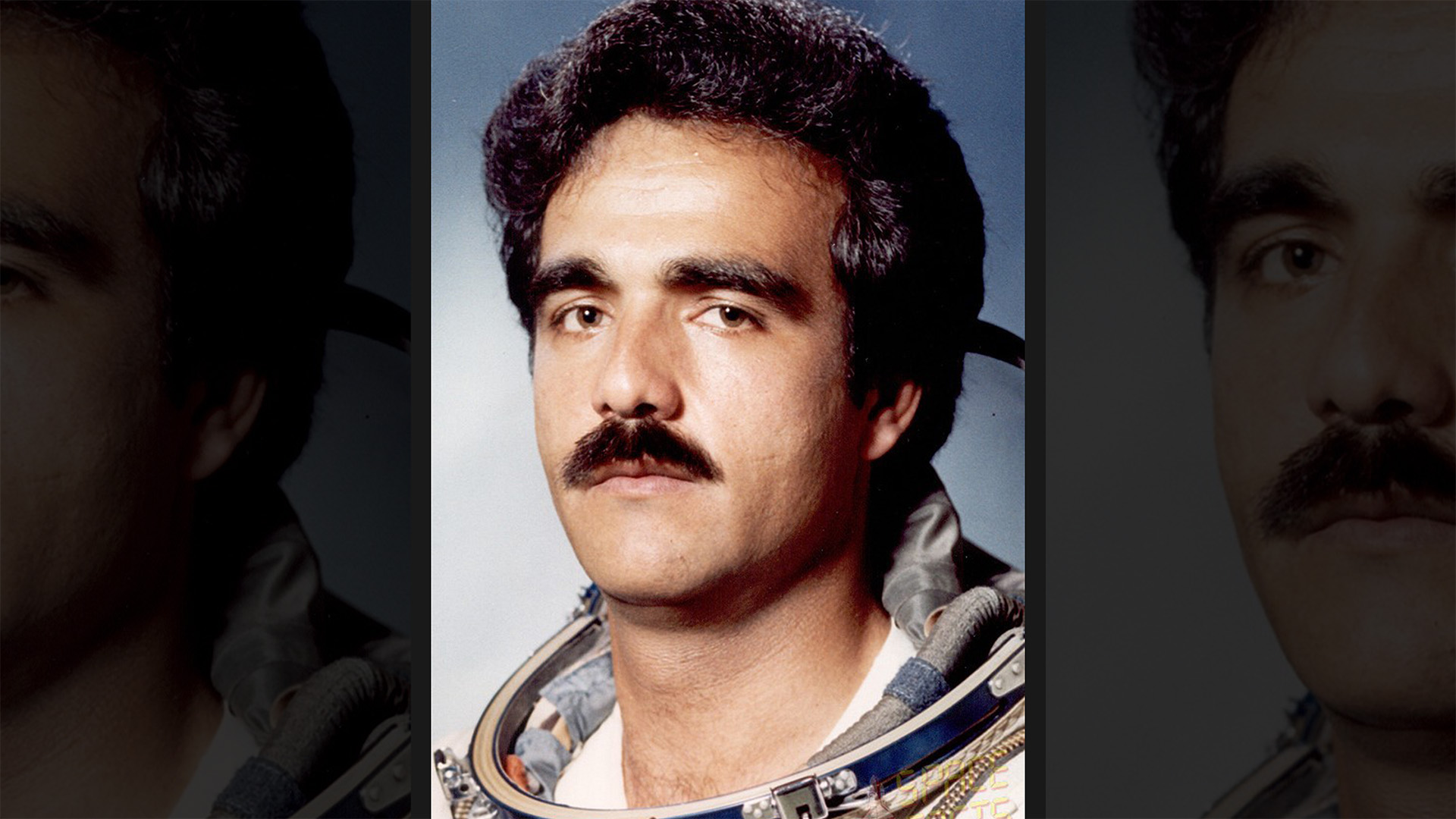
The story of how this came to be is the subject of a short film by filmmaker Elham Ehsas. Ehsas was born in Kabul and moved to London with his parents when he was nine years old. He talked to me at the Locarno International Film Festival: “I was actually researching another film and I came across this guy called Abdul Ahad Mohmand, and I was like, man, like we had an Afghan go to space?”
His cousins and friends of his own generation knew nothing about Mohmand but his parents did. “I spoke to my parents about it, and they’re like, ‘Oh yeah, that guy, yeah, yeah, he went to space, and I became completely obsessed. I was like, ‘Oh my God, this is insane! How does no one know about a man from Afghanistan who went to space?; And that’s how it started.”
The year was 1988 and the Soviet occupation of Afghanistan was reaching its closing stages. Militarily, they were bleeding out and politically, the cost was getting higher and higher, especially as Mikhail Gorbachev tried to promote glasnost and perestroika with the West.
“The Soviets had the Intercosmos Space Program, where they trained fighter pilots from every country in the USSR to send them out to Mir, and in 1988. They said, ‘Okay, who do we have in the pipeline that we’re training as a cosmonaut from Afghanistan? Because we need to show the country where they are with us, because they don’t want to stay.’ So they fast-tracked the Afghans through the process as a way of getting one into space.”
Suggested Reading
Why Netanyahu hates the most powerful film of the year
There were two possible candidates, and when the lead candidate’s appendix burst, Abdul Ahad Momand was the next in line. As far as the Soviets were concerned, though, Momand wasn’t treated equally. He was a package to be taken up and down again.
He was told not to touch anything. From the Mir space station, he got to phone his mother and when he spoke to her, he did so in Pashto, his mother tongue.
Elham narrates the film in Pashto as well. “So I’d never actually spoken in my mother tongue in a film that I’ve done. I usually speak Dari, which is my father’s language. And I thought, Wow, this is actually the perfect time, because Mohan speaks Pashto. It is literally my mother tongue because my mum speaks it. And this was the fourth language which humans spoke in space. Maybe I should speak in Pashto.”
Despite his treatment by the Soviet authorities, when the capsule carrying him and other cosmonauts on the return journey to Earth malfunctioned, it was Momand who solved the problem and saved them from certain death. In Afghanistan, he was hailed as a hero even as rockets rained down on Kabul from approaching rebel forces.
“It was very politically charged,” Elham says. “Here is this guy who represents the Soviets which is making Afghanistan a satellite state of Russia at the time. And yet he did this amazing thing. So it was a very textured historical event.”
A further surprise came when Elham’s father intervened: “I was shooting material for about three, four months, and then one day my dad gave me a photo. Very casually. It was of him and Momand. I asked him why he didn’t tell me this before? And he’s, like, ‘I didn’t think it was important.’ That picture changed the whole film because I had to throw everything away and start again.”
Suggested Reading
Ronnie Scott’s v the Blue Note: London’s jazz wars are about to begin
His father’s reticence is typical of the diaspora. “We don’t often speak to our parents about their lives, about their experiences, and as a filmmaker, I’m always looking for compelling stories and stories that move me. I’ve always been looking for it outside. But then you realise that well, actually, if you look within, there might be something in this story.
“It’s interesting because I’m the only person in the world that can tell this story in this specific thing that I started to realize because of my own connection with this spaceman, and it kind of helped me connect with my dad as well and speak to him about his story and about his life. He was younger than I am now when he had to leave Kabul, like maybe 32 or something.”
Elham found out that Abdul Momand was alive and working in Germany as an accountant. He contacted him hoping to get his participation in the film: “I phoned him in June 2025. He said, ‘that’s amazing, thank you, but also not interested. You go and do your thing’. And then on June 21, 2026, exactly a year after my phone call with him, he passed away. I realise now that when I had called him, he was going through chemo and that’s why he couldn’t see me.”
Momand’s body was flown back to Afghanistan and he was again welcomed as a hero. “Two and a half years ago, I went back to Afghanistan for research. It’s really interesting the nuances you see in that country because obviously now the Taliban are running the country, and you walk around and roads are being built, bridges are being built. There’s a functioning government that’s doing things and taking care of the country and rebuilding. But all my female cousins are sitting at home.
“Afghan people are so talented and they have so many different skills that they can give to the world if only they’re allowed to,” Elhan tells me. “If only they weren’t restricted by conflict, … It’s coming up to five decades of war. And this film is a testament to that.
“But also, this is a country where it’s literally gender apartheid. Women can’t go to school, they can’t go to university, they can’t work. Half of the population, and if you look through history, some of the greatest achievements, especially in space, especially what’s happening in America and NASA, are female-led, women-led, and it just begs the question: how great would the country be if our women were allowed to exercise their skills and their will and their freedom? What could they achieve?”
The Forgotten Spaceman is being showing at festivals around the world prior to a commercial release.
 Most popular

Emily Maitlis’s diary: Trump doesn’t fear the AI apocalypse – but he’s terrified about the midterms
The decline of the Daily Mail
If Shabana Mahmood is tough, why is she so slow to crack down on Danny Tommo and the far right?
What the rich and powerful are really saying about AI