For 67 years, the first name in London’s jazz scene has been that of Ronnie Scott – the saxophonist who opened a club in Soho in 1959 and saw it become Britain’s undisputed premier venue for the musical genre. Now, the status of what is known to jazz fans simply as “Ronnie’s” is about to be challenged for the first time.
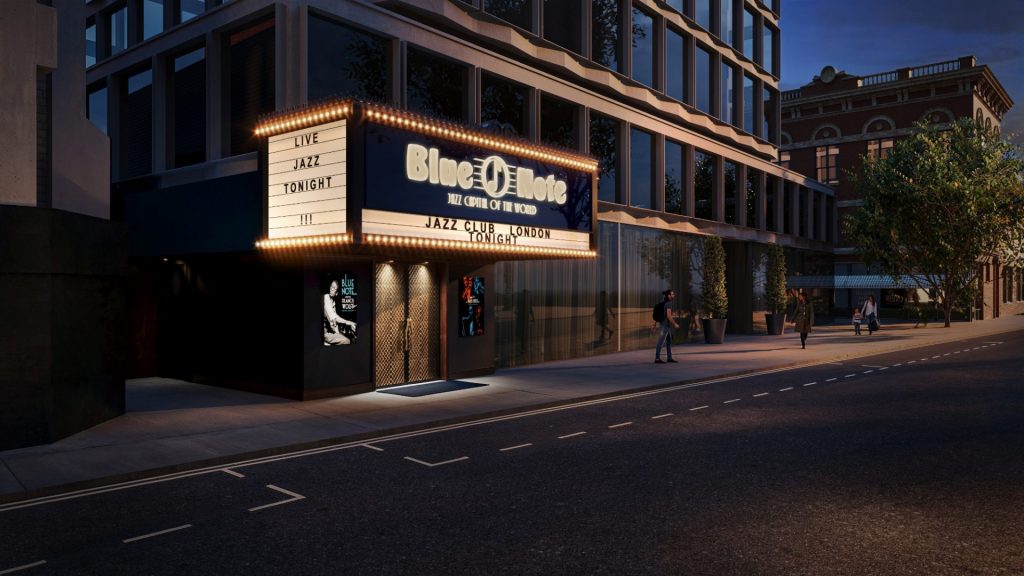
Enter the Blue Note club, a mere stone’s throw away and built on a remarkably similar model. Both venues will offer an array of top British and American jazz talent in two separate performance spaces, every night of the week.
Backed with New York money, and brandishing a global portfolio, Blue Note has snagged eye-catching acts for its London debut in late September, including pianist Robert Glasper and singer Erykah Badu. Ronnie’s is keeping pace with gigs from singer/saxophonist Curtis Stigers and bassist Christian McBride over the same period.
Both venues insist they can coexist as part of a resurgence of interest in jazz. The question is: can both survive in a climate where, for many, the cost of an evening out in Soho or Covent Garden practically requires a second mortgage?
As the new Blue Note venue was being built in St Martin’s Lane, Ronnie’s got its retaliation in first, recently pumping millions into a complete reconstruction of its Upstairs club, having previously spruced up the main downstairs room. Gone is the comfortable but slightly shabby Upstairs of yore, where you could get in for a few quid and watch excellent bands and singers whose names were less well-known than those who played in the main club. Now it’s all sexy low lighting, deep red paint and an ornate raised ceiling, and costs up to £45 a ticket.
Originally launched in 1959 in a narrow, dingy basement in what is now Chinatown, Ronnie Scott’s made its name by bringing the era’s big American stars to London. Old hands still speak fondly of watching Rahsaan Roland Kirk, Bill Evans, Sonny Rollins and Stan Getz perform in this sweaty, overcrowded dungeon, previously a hangout for London taxi drivers.
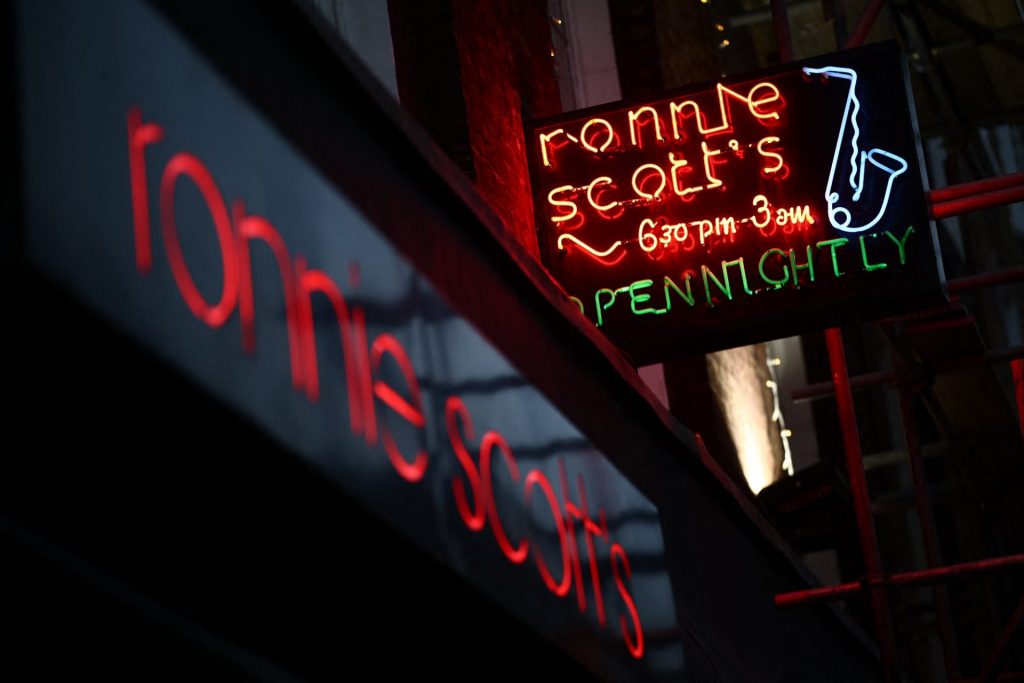
Six years later, in search of larger premises, Scott and his business partner Pete King – a fellow saxophonist – moved the club a few hundred yards up the road to Frith Street, where it’s been ever since. Ronnie died in 1996, while Pete soldiered on alone, finally selling the club in 2005.
The buyers were Sally Greene, producer of Billy Elliot the Musical and proprietor of the Old Vic Theatre, and impresario-cum-philanthropist Michael Watt. Between them they shovelled enough money into the club to banish forever its famous sticky carpets and dodgy electrical wiring, turning it into the glittering club of today.
Ronnie’s partner, Mary Scott, who now lives in New York, loves the new version of the club, telling me that Greene somehow channelled Ronnie’s original vision for the place, despite never having discussed it with him. “That was his dream,” she said. “When we put the black vinyl on the seats, the main reason was because of people smoking and burning holes and things and spilling drinks all over the place. And he said, ‘I could never afford to refurbish… but what I would love is for it to have been red velvet and brass.’ He loved brass.”
These days the club is run by Fred Nash, who took over after the Covid shutdown. He’s relaxed about the imminent opening of a rival club, despite the likely competition for top acts.
“There will inevitably be some crossover,” he says. “But we really see its opening as a positive thing for the jazz community and for the whole ecosystem around live music. Ronnie’s has always had to compete with other promoters for artists.” He points out the club’s peaceful coexistence with several other long-standing London jazz venues – the Jazz Café, the Vortex, Chelsea’s 606 Club and the nearby Pizza Express.
Founded by Danny Bensusan, the Blue Note started out as a single venue in New York’s Greenwich Village in 1981. It has since expanded into an international business, with clubs all around the world, from Tokyo to Milan. Bensusan’s son, Steven, now runs the empire.
Intriguingly, Blue Note London’s new musical director is the personable Nick Lewis, a man who once worked with Fred Nash at Ronnie’s, where he rose through the ranks to become head of music and promotions. In 2020 he defected to the much larger Koko in Camden.
Suggested Reading

Miles Davis is 100 – and this is why he still matters
Like Nash, he doesn’t see the new club as posing a threat to Ronnie Scott’s. For him, it’s a positive addition to the burgeoning London jazz scene – “A rising tide lifts all boats”, as he puts it, quoting JFK.
“I started my career there, so I’ve got nothing but love for Ronnie’s and the institution, and it’s a very magical room, I think. I don’t think we’re going head-to-head at all, to be honest.
“They will look similar. It’s a seated jazz club, after all. But in terms of the programming, I think we’re going to be in two fairly distinct lanes that don’t overlap too much with each other.
“There’ll be the occasional moment where we’re bidding for the same act, but in general, I think the Blue Note programme is in more of a contemporary lane, but perhaps a bit broader and less sticking to traditional jazz.”
Looking to cast his net over “the whole diaspora of Black music” – including Afrobeat, reggae and hip-hop – Lewis adds that he will happily book certain pop crossover acts – as long as their music contains what he calls “jazz DNA”. However, Ronnie’s music bookers these days are also attuned to contemporary jazz, with its broad, genre-busting mix of “jazz-adjacent” musical styles. Both Nash and Lewis are strongly supportive of the new wave of British talent.
Lewis plans to put young British bands on in the Blue Note’s second room – which isn’t quite ready yet. “I don’t know when it’s going to be ready or indeed when we’re going to open that space,” he says. “All efforts are focused on the main room, of course, at the moment, but when we do get that open, that’s definitely going to be a platform and a breeding ground for us to really champion the emerging scene.”
It sounds for now like mellow coexistence. But will it turn into something infinitely more noisy?