There is no film festival quite like Cannes. Venice is older, and Toronto is bigger – it seems to show more films than are actually made in a year – but Cannes is Cannes.
There is the sun, the sand, the south of France. Movie stars brave the red carpet, producers and directors hang out in hotel lobbies, and film critics from across the globe meet in dark rooms and collectively shout “OK, what have you got to show us?” at the screens.
In truth the Cannes International Film Festival is actually three distinct festivals that only occasionally overlap. First, there is the competition of top-class films made by the leading cineastes, the newbies and the in-between, with sidebars and special sections and enough to make your head twirl if it wasn’t already twirling from all the wine.
The vin rosé is the second festival. The one of parties on the beach, in villas, on terraces. There are people who come to the festival and spend all their time at these parties, who would be genuinely surprised to find out there are films being shown somewhere in town.
Journalists are as avid about getting their invites to cocktail receptions as they are about hitting their deadlines. More so. The words “free bar” are like chum to the sharks of the press.
One veteran journalist (no longer with us) had a Keyser Söze-style reputation of legendary excess, which included sleeping during a screening (nothing surprising there, you might say) horizontally across a row of seats (oh, OK) and hiring a luxury yacht and putting it on his newspaper’s expenses.
And finally, there’s the Marché du Film, which is in the basement of the Palais. This is the commercial engine room of cinema, furnaces are stoked by sweaty oil-smeared business types, and anything from Sharknado 11 to a deal for the next Greta Gerwig can be done. Each country has a pavilion outside, also promoting their own tax breaks and whatnot to entice film productions to come and spend their budget within their borders.
Which brings me to the first question of the festival: where are the British films? Looking at the line-up, I spotted only one UK documentary, called Cantona – and that’s about a Frenchman.
I don’t want to come over all Nigel Farage. But it seems as if Cannes, featuring the crème de la crème of world cinema, doesn’t rate the Brits. Or is it that we have so little to offer?
It’s true that most regions of France invest more on film production than the whole of Britain, but we had all that Harry Potter money: surely that was invested into the industry sensibly? By contrast, there are a lot of French films here. So many, in fact, that even films from other countries are French films.
Only four of the 22 films in competition have no French money in them. Half of the films in the Un Certain Regard section, which promotes more experimental work, are French co-productions. France is the powerhouse of European cinema.
But what about the actual films?
What strikes me is the range of French cinema. Look at Too Many Beasts, a whip-smart French comedy with a character all its own. On one level, Sarah Arnold’s debut feature is an agrarian whodunnit; on the other it’s a punkish farce, but such comparisons and boxes are what it manages to wriggle out of.
Corsican cop Orsino (played with his own porcine grace by Alexis Manenti) arrives, apparently exiled to the countryside of mainland France because of a breakdown, the details of which will only slowly emerge under the less than careful prodding of police psychiatrist Stéphane (Ella Rumpf, who broke out in Julia Ducournau’s Raw). “I’m as incompetent as any man,” she offers when he objects to being analysed by a woman. There are boars, hunters, farmers and a murder, and Orsino becomes a Colombo out of boredom.
The Golden Age, directed by Bérenger Thouin, stars Souheila Yacoub, as a butcher’s daughter forced to make her own way in the world in inter-war France after having her reputation ruined by the son of the local baron. It’s a Hardyesque tale which blends vintage footage into the story in a technically brilliant and unique way. Yacoub is astonishingly good and there’s a real sense of history coming to life.
Elsewhere, the buzziest titles include Paweł Pawlikowski’s Fatherland, which, following on from Ida (2013) and Cold War (2018), closes off an unofficial trilogy of incredibly neat and beautiful black and white period films of almost austere perfection.
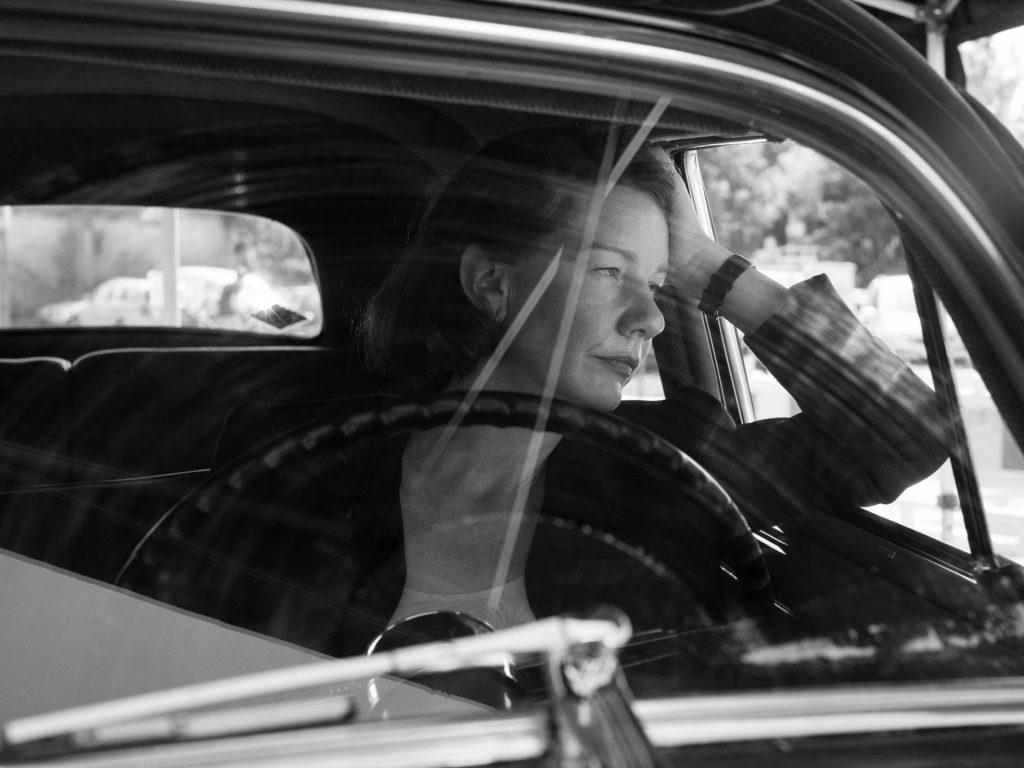

Feelings seem to seep through these films in spite of the director rather than because of him. Hanns Zischler and Sandra Hüller play Thomas Mann and his daughter Erika in postwar Germany and are magnificent. There’s a good chance of award recognition: the only question is of who will be recognised.
Ryusuke Hamaguchi broke into the international scene with Drive My Car in 2021, and his latest, All of a Sudden, is likely to increase his reputation, even if it doesn’t quite have the power of the former, or indeed his last film Evil Does Not Exist, which showed in Venice in 2023. The bum-breaking three-hour-plus running time is largely earned but is likely to put many off.
On the other end of the running-time limit is Quentin Dupieux’s 76-minute Full Phil. Dupieux is one of our most prolific, subversive and entertaining film-makers currently working. There’s no one quite like him, which is OK because he seems to make a film every six months. He has two playing at the festival (so far, he might add another before it’s done).
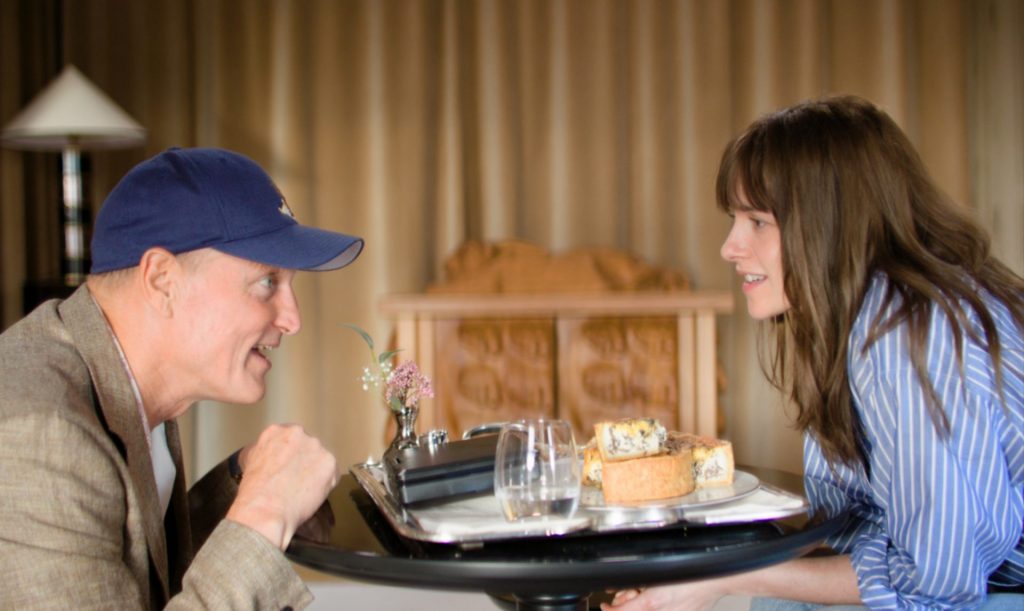
Full Phil tells the story of Woody Harrelson’s Phil Doom, who is in a luxury Paris hotel trying to “reconnect” with his daughter, Kristen Stewart, who is more interested in a film within a film, a cheap 1950s sci-fi monster flick, and gorging herself on the delicious French food. But without the characters realising it, reconnection has apparently happened in a literal way – Phil begins to put on the weight from the calories his daughter is consuming.
Meanwhile, riots rage in the streets. There’s one shot of Harrelson smoking a cigarette while a full-on battle rages that does in one shot what Triangle of Sadness spent an entire two-hour-plus film trying to nail.
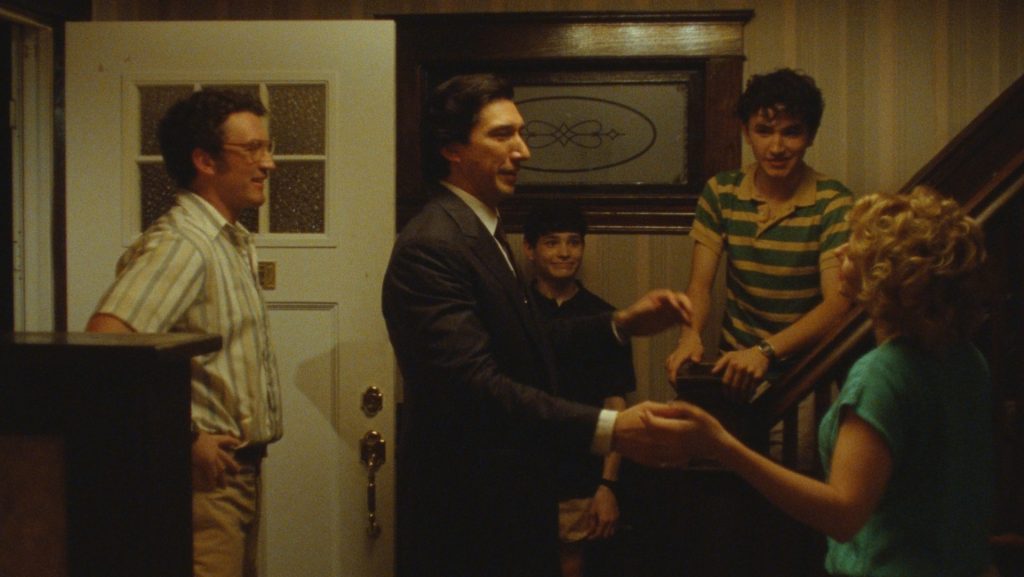
The big American film in competition, James Gray’s Paper Tiger, is a retread of his We Own the Night and The Yards. Gray essentially makes low-stakes crime flicks as if they were Greek tragedies (in fact, this one begins with a quote from Aeschylus’s Agamemnon).
Miles Teller, looking like Sean Penn’s lawyer character in Carlito’s Way, is an ordinary working Joe in the suburbs and his brother, played by Adam Driver, is an ex-cop made good who wants his brother to work with him on a job with the Russians. Everyone is from central casting and there is a plot with no surprises and quite a few plot holes – for a working stiff, Irwin doesn’t seem to actually work – and Scarlett Johansson wears the worst wig since Mrs Slocombe stroked her pussy.
And yet I thoroughly enjoyed the film. There are moments of genuine tension, and Teller and Driver are both excellent.
Japan has a strong presence at Cannes this year. As well as the Hamaguchi, there’s also a new film from Palme d’Or winner Hirokazu Kore-eda. Sheep in the Box explores familiar themes of unconventional family ties, improvised and stress-tested by a capricious fate.
Here we have a couple, Haruka Ayase and Daigo Yamamoto, who have lost their child to what might have been an accident or murder, and are offered the prototype of a “humanoid” replica child who is operated by AI. The initially reluctant father begins to warm to the child even as the mother begins to detect uncanny elements. The child himself discovers a community of similar humanoids preparing to leave their human masters.
It is a film of gentle moments and good-hearted people. Imagine an episode of Black Mirror, but with everything that is cynical and depressing replaced with hope and good vibes: Sparkly Lovely Good Feels Mirror if you will.
The film’s complete immunity to cynicism almost disqualifies it from even contributing to the AI debate. There are no corporations; no capitalism. Just people getting in touch with their feelings. I don’t mean that as a criticism. I just wish I lived in Kore-eda’s world.
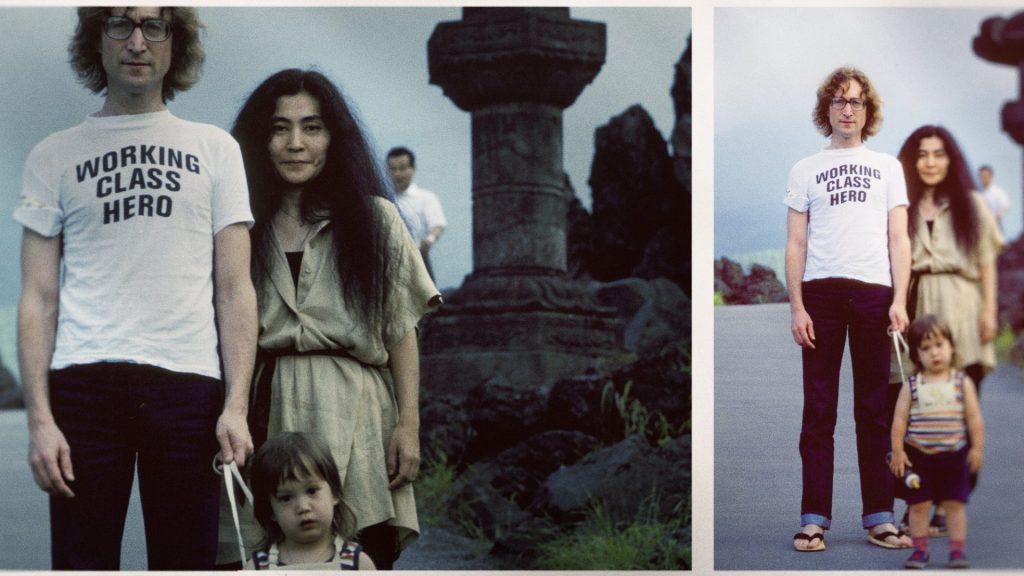
As if to show you just how evil AI is, look no further than how it is used in Steven Soderbergh’s John Lennon: The Last Interview, aka Dad’s Discovered TikTok. The real problem here is that the raw material – audio of the actual interview, given to a San Francisco radio crew a few hours before his murder on December 8, 1980, is astonishing.
Lennon is articulate, honest, self-analytical, self-critical, witty, and fascinating. His love of Yoko and his devotion to Sean, his regrets over his first marriage and the bringing up of Julian – it all comes down to the notion of trying to be an authentic version of himself, and trying to be there for his family and his art, in that order. Over that is a scrapbook of photographs of Lennon, Yoko and Sean, family snaps, often unfamiliar and certainly the best visual component of the film.
Suggested Reading
Soderbergh’s The Christophers underlines Hollywood’s genius problem
The AI aspect is slop, sixth-form psychedelia morphing into overly literal renderings of prompts taken from the interview. “We were like babies in the 60s crying when we didn’t get what we want,” says Lennon and we get a series of babies in bandanas and hippy wigs crying. Cavemen blow kisses; people gaze at the camera, their hair twisting in the non-existent wind. Dust motes linger in the air.
You can recognise the slop by the way, it’s all so cliched. How in the name of Schizopolis did we get to this? Lennon talks about authenticity, and Soderbergh shows us a corporate infomercial, “presented by Meta”.
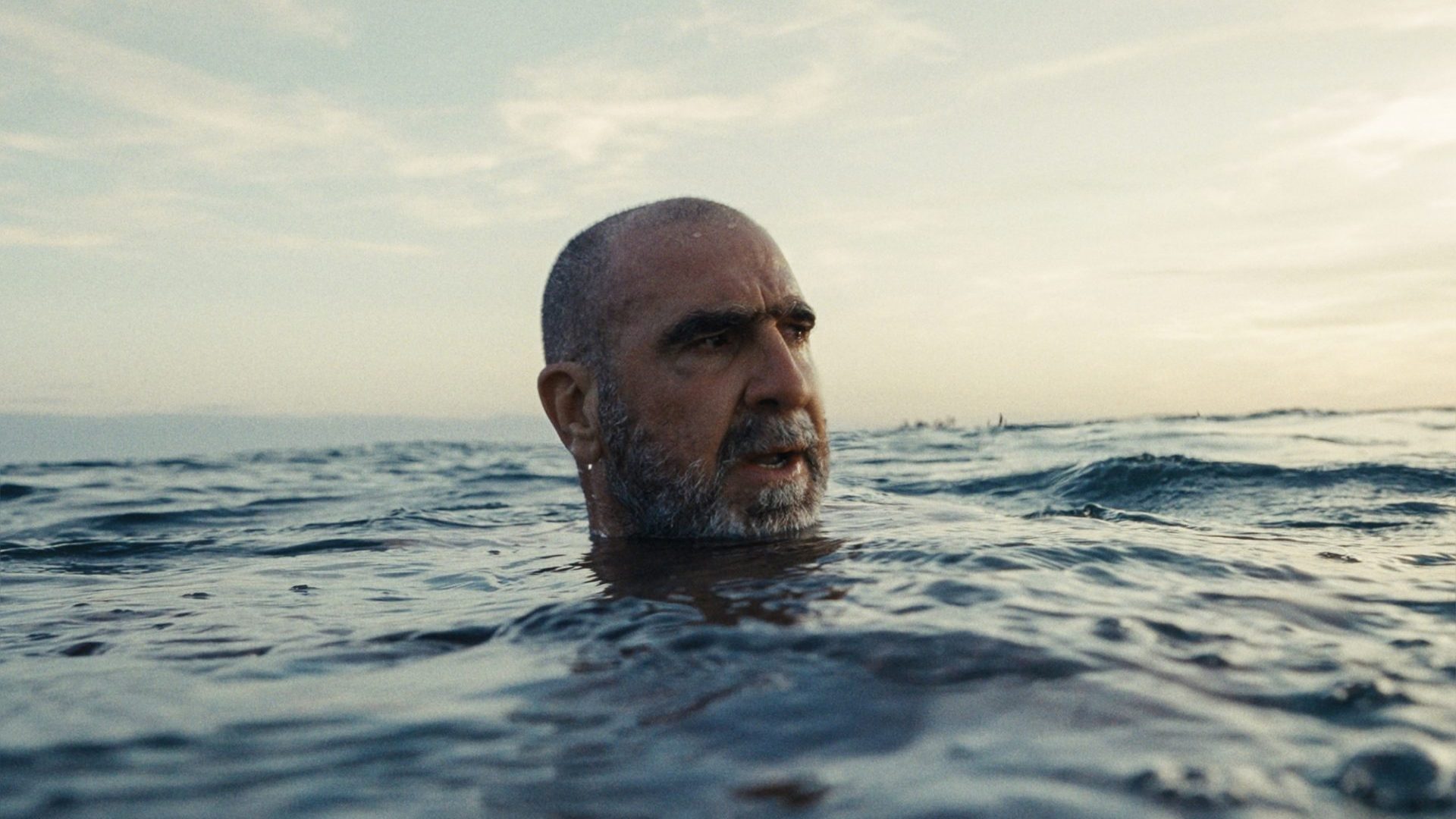
If you’re looking for a documentary, perhaps David Tryhorn and Ben Nicholas’s Cantona will be a better bet. The sports doc has been a bit of a trend in the last few years and now it seems no major footballer can be without one.
But Cantona is a genuine personality as well as having been a unique player, and the testimonials of the likes of David Beckham and Alex Ferguson reveal what it was like to have front-row seats to the enigma.
Trying to get into a screening later in the day, I was waiting in a security line when the man himself, wearing a pork pie hat, ghosted by me within half a yard. I swear to God as he passed I could hear the distant sound of seagulls following a trawler.
C’est vrai, because Cannes is Cannes.
The Cannes Film Festival runs until May 23.
John Bleasdale’s novel Connery is published by Plumeria