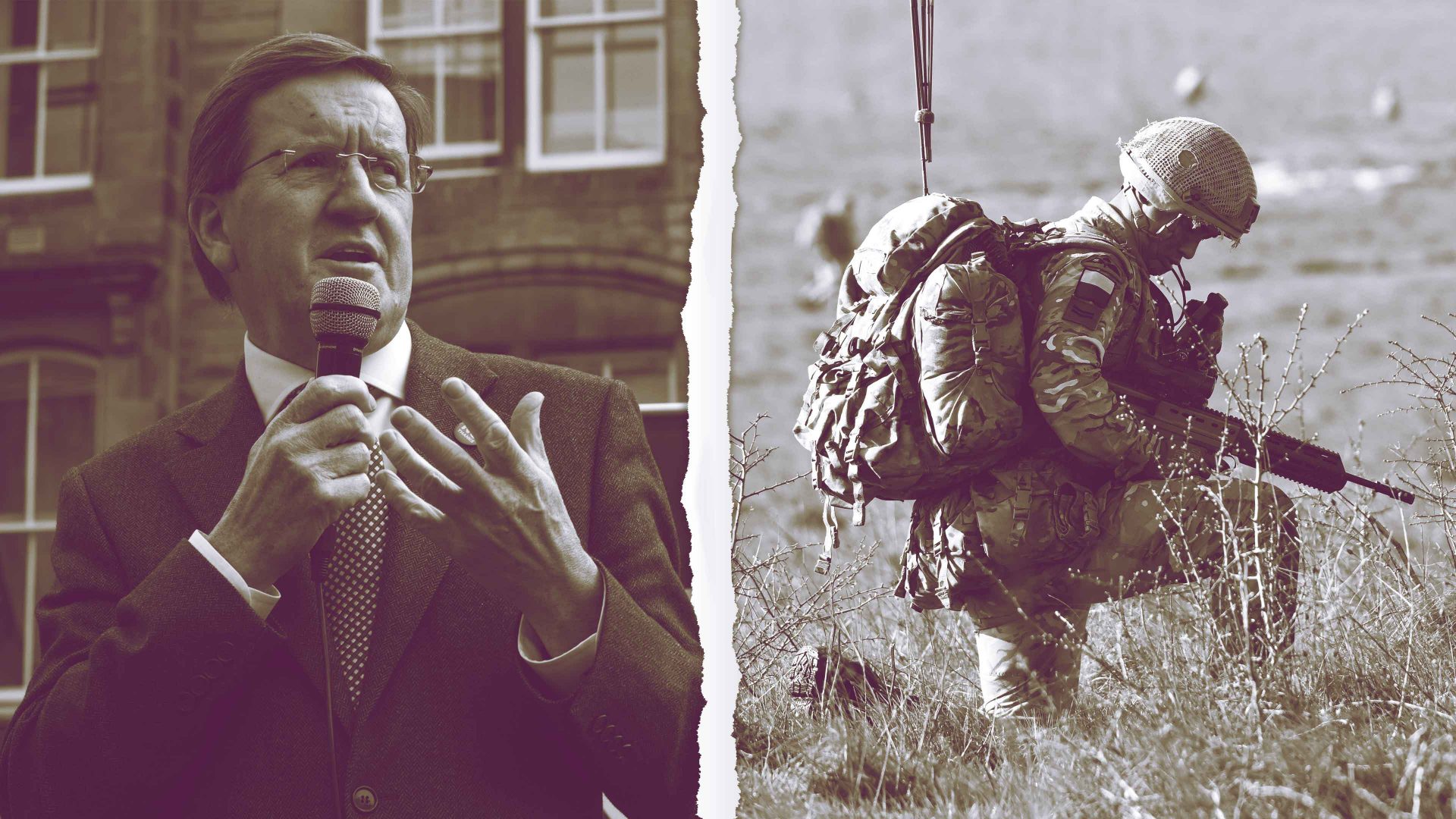
When it comes to the issue of defence, George Robertson – or to address him properly, the Lord Robertson of Port Ellen – is about as serious a figure as they come. Robertson was the first UK defence secretary of the Blair government, before leaving that post to become secretary-general of Nato.
He has been a Labour peer since 2000, and his expertise is clearly valued by the current government: Robertson was chosen to lead the 2024 strategic defence review. He is not one of the everyday rent-a-gobs who line up to take potshots at the government at any opportunity.
Given that, his front-page intervention in the Financial Times on the state of the UK’s defence policy – and how Labour is handling it – grabs the attention. Robertson certainly doesn’t mince his words. He suggests the country has been left “in peril” thanks to the “vandalism” of “non-military experts” in the Treasury.
On this, he certainly has the makings of a point: Labour is keen to sound tough on defence, but once you scratch the surface things are often less than they appear. The government has an aspiration to get defence spending to 3% of GDP, but has little in the way of concrete plans to get there.
A more immediate commitment to hit 2.5% is more concrete, but it often feels like the Treasury is trying to cook up clever tricks to help the government hit that target: there has been a long row over whether military pensions can be counted as defence spending, which would get the government closer to its target.
That’s all well and good for a House of Commons statement, but no major national security threat has ever been tackled with a clever accounting trick.
When it comes to actually building new equipment, modern drones and low-cost missiles, and recruiting and retaining the right personnel to use them, things seem even further behind.
The government’s Defence Investment Plan is delayed, and while retired generals love blaming ministers and the Treasury for the UK’s parlous state, it is also true that UK defence procurement is a farce. Virtually every major defence product in the UK is years (if not decades) late, billions of pounds over budget, and the finished product often doesn’t even work.
Had Robertson stopped there, his intervention would have been both timely and hard to ignore. His diagnosis is difficult to dispute, and his frustration at having to take his message to the public is clear. All too often, it feels like the message from Keir Starmer is that the UK is facing unprecedented global challenges, but they can be tackled without changing anything. The urgency is nowhere to be seen.

Sadly, though Robertson felt the need to contrast the UK’s defence spending with the “welfare” bill – and at a stroke, he turned what could have been a targeted intervention by a subject matter expert into a broader political rant.
Saying the UK needs to spend more on defence, and that it needs to be spent well, is clearly within the realms of expertise for a retired Nato general secretary. Saying where the money should come from is a matter of politics.
There is no shortage of ways extra defence spending could be funded: income tax, VAT, or corporation tax could all be increased. The triple lock on pensions could be cut. It could even come from cuts to the NHS budget, though it’s hard to imagine that happening.
By taking a swipe at welfare, Robertson risked blunting his point – and sounding exactly like the politicians he set out to criticise. Kemi Badenoch says the UK should increase defence spending and that the welfare bill is too high. Nigel Farage says the same. Even this government says the welfare bill is too high, and that it wants to increase defence spending.
Robertson surely set out to try to push the government towards action, but immediately fell into exactly the same framing – and exactly the same trap – as the politicians he is criticising: he wants more money for defence, and he seems to want to avoid any difficult conversation about where that money should come from.
The “welfare bill” is an easy rhetorical punching bag, or so politicians think, because in general voters think it is too high, and that it can be cut without damaging them or anyone they know – until politicians try cutting any specific part of it.
Pensions, the largest component of welfare, are seen as untouchable. Cutting disability benefit is a political nightmare, as the government recently learned once again, and much of the rest of the system has already been stripped to the bone by the last government.
If the UK wants to spend more on defence, or the NHS, or any of its other priorities, someone needs to have an honest conversation with the electorate about paying more tax to fund it.
The current series of global crises gives Keir Starmer an opportunity to do just that, if only he dared to seize the moment. George Robertson’s intervention, though, risked sending the opposite message to the one he intended: if even an 80-year-old retired defence leader won’t level with the public, why should a serving prime minister even dare to attempt it?
 Most popular

My truly deranged encounter with Trump apologist Kellyanne Conway

Suella Braverman’s book has sold only 106 copies. This is why

The moral depravity of Robert Jenrick

Hungary’s lesson to the world: Populism isn’t permanent