For four years in a row, I have spoken at a conference in Leeds that brings together people from private and public sectors across property, real estate and infrastructure. With 16,000 people accredited, UKREiiF has become one of the biggest such events of its kind anywhere in the world, now so big that Leeds hotels can barely cope, so I bumped into attendees who were staying in Harrogate, York, Ilkley, and my native Keighley.
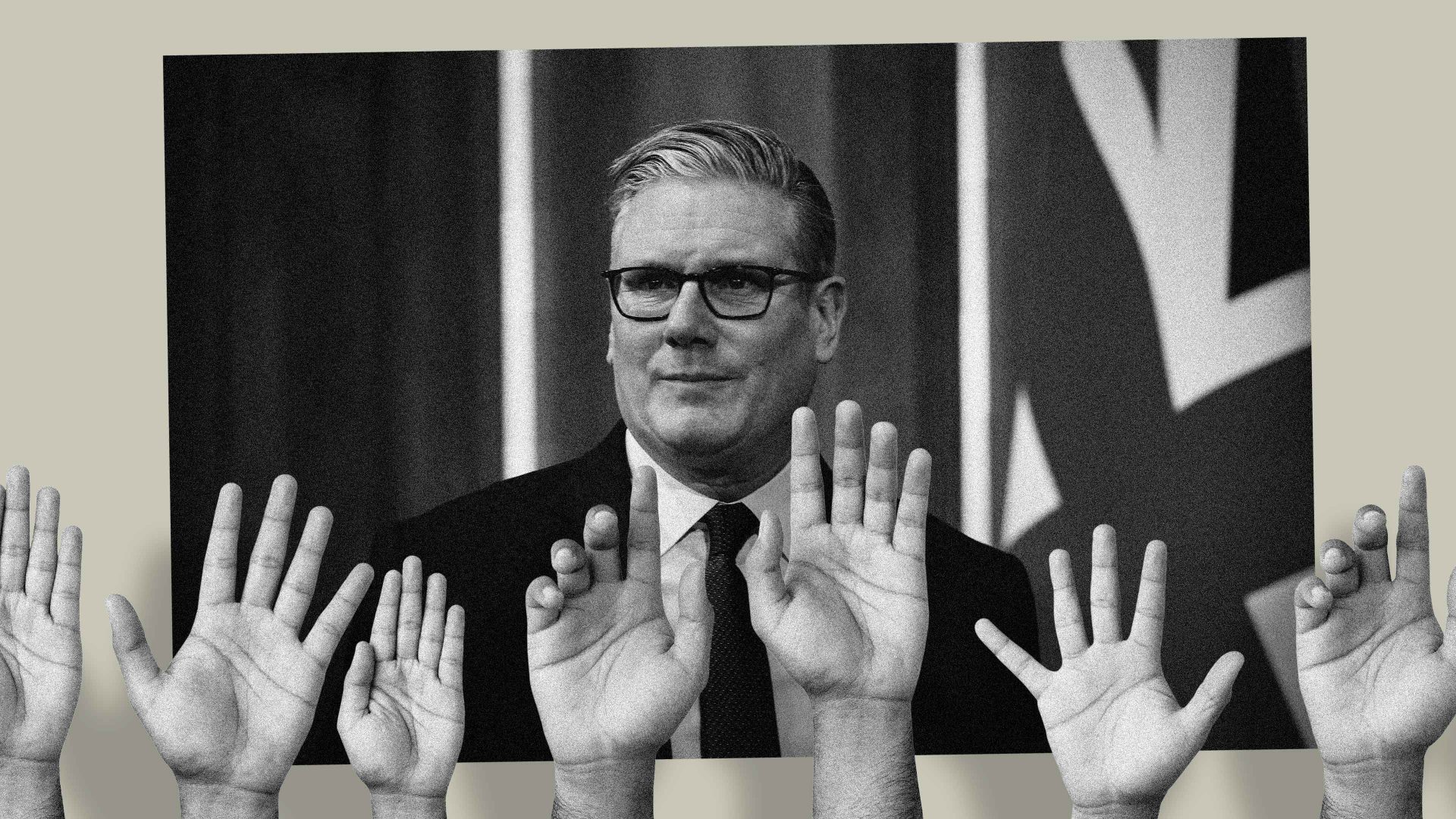
The audiences at my session have become accustomed to my using them for instant polling, with the wonderfully scientific method of… a show of hands. It was here, two years ago, that they told me virtually unanimously that Keir Starmer would be prime minister after the next election.
Last year, I was more interested in where they stood on the question of whether the new Labour government would deliver on its promise to build 1.5m new homes over the current parliamentary term. The fact that my question raised considerable merriment meant I was unsurprised when the hands were raised, or rather not… 0% thought the target was on track.
So this year, having checked they were all still of a mind that the original target would not be reached – they were – I asked whether they felt at least there was progress they could point to. An overwhelming majority said yes.
Inevitably, though, for all the talk of specific real estate and infrastructure issues, there was a lot of chatter about the not insignificant question of who our prime minister might be in the coming weeks.
“Let’s cut to the chase,” I said. “Should Keir Starmer stay, or should he go?”
Go on, before reading on, have a guess at how they responded. I mean, if you listen to the 24/7 media blah factory right now, you’d think it would be a landslide for IN THE NAME OF GOD, GO!
Far from it. I reckon around 85% of the hands were raised for the notion that the prime minister should stay put.
Suggested Reading
I doubted that Burnham had a ruthless streak. Not any more
When I interrogated their views, it boiled down to something they had made clear two years earlier, when seeming remarkably relaxed at the notion of a Labour government coming in, and probably with a decent majority. Stability. They felt that after all the chopping and changing of PMs, chancellors and ministers making decisions across their sector, a decade of solid, stolid, safe, stable government was all they wanted.
And even though they were disappointed at some of the costs piled on to business, there was more sympathy than I have witnessed inside the Labour Party or across the media for the notion that the economy was beginning to pick up, until a Trump-Netanyahu war of choice hit the world so hard.
Back in London, I had dinner with a Labour MP, whose reaction, when I told him of the 85-15 split for Starmer, was this: “That’s the exact opposite of how the parliamentary Labour Party sees it.” Politics – has it ever been tougher?
I was sharing the panel with Tom Goodall, whose firm, Related Argent, has been involved in some of the biggest building projects of modern times, including the regeneration of King’s Cross. He said the industry was proud of the UK’s health and safety record – no one died during the 25-year King’s Cross rebuild.
The only fatality during the enormous construction attached to the 2012 London Olympic Games – not a Related Argent project – was a man who suffered a heart attack. Otherwise, zero deaths. Impressive.
So there is widespread acceptance, he said, that regulation is necessary, and right, especially perhaps in the light of the Grenfell disaster. But…
He pointed to one specific regulation, which stipulates that for all new buildings between 18 and 30 metres high, there must be a second staircase. The modelling behind this change suggests that this would save 0.004 lives per major incident. Over 70 years, Tom explained, this equates to one death prevented every 6,153 years in buildings within that height range.
Place Base, a strategy firm specialising in the housing sector, estimates that 18,000 homes a year are not built because of the second staircase requirement. Over five years, then, we are talking about 90,000 homes, which is roughly the size of Milton Keynes. Unintended consequences? Or the inability to explain trade-offs?
Also on the panel was Tracy Brabin, who is now the mayor of the West Yorkshire Combined Authority. I loved her passion for the place, and for the role to which she has been elected, though since the local elections she has lost an awful lot of Labour councillors in her patch, many of them replaced by Reform UK.
Even despite that, though, she was just so relentlessly positive about progress in West Yorkshire, and about the potential for more devolution.
I reminded the audience that Tracy had stood for Labour in the by-election which followed the murder of Jo Cox 10 years ago in the run-up to the Brexit referendum. This was in answer to a question about why the quality of politicians had fallen in recent times. I said that it was in part because politicians faced so much abuse, that hatred against them was weaponised, and so many people who might have thought about a political career in the past no longer did so.
Suggested Reading

The right wing media are losing their minds over Andy Burnham
Tracy said she didn’t like to talk too much about the abuse and the nastiness, because “if you do that, the haters win”. I get that, and she clearly sees part of her role as encouraging people to believe that no matter how rough it gets, politics is still a noble place, and a place to make a difference.
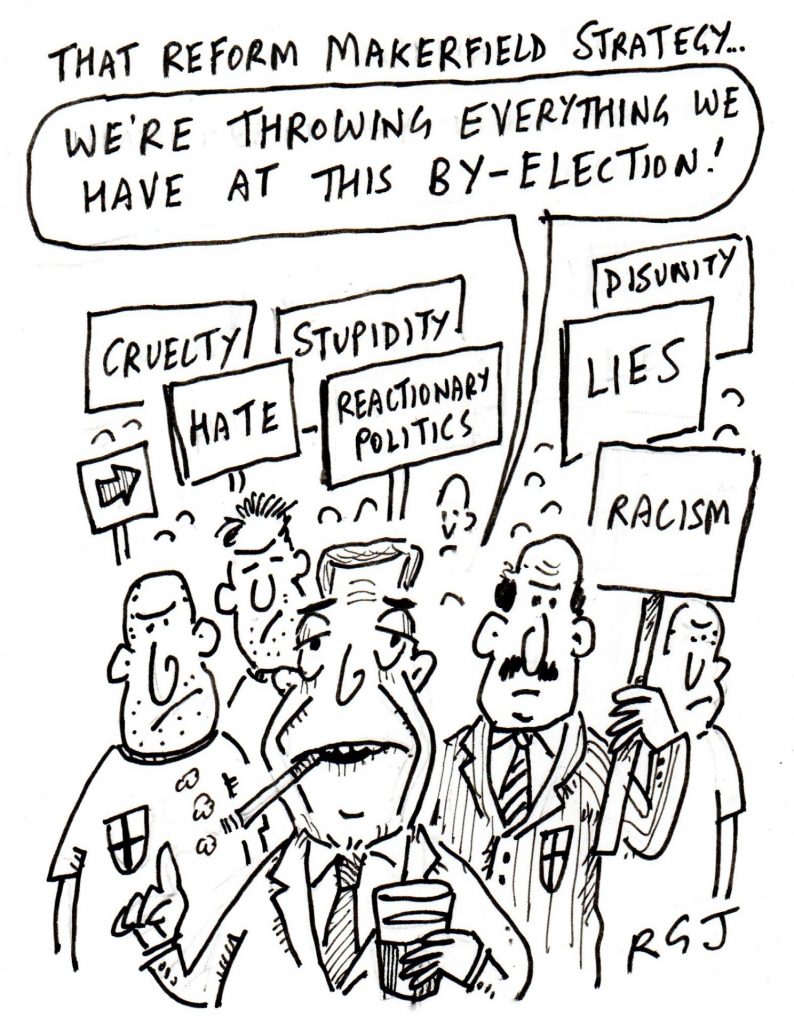
But we do have to remember events such as the murders of Jo, and of Tory MP David Amess. Nigel Farage certainly needs that reminder… the man who said the referendum was won “without a shot being fired,” and now purports to need crypto-millions for his own security because he is “the most attacked politician in the country”. The families and friends of Jo Cox and David Amess might see that as an all too typical and self-serving misrepresentation of reality.
I had another speaking event, in Brighton, at Campaign Magazine’s Media 360 conference on the future of the media, and a stroke of luck on the train there, when football manager Graham Potter stepped into the same carriage. I love discussing football with people who really know what they’re talking about (which excludes most fans, me included).
Potter cut his managerial teeth with Östersund in Sweden, taking them from Division 4 to the top flight, as well as winning the Swedish Cup. After leaving Östersund to manage Swansea, Brighton, Chelsea and West Ham, he was then hired by the Swedish FA to take charge of the national team.
He was going to Brighton for a bit of family time before heading out to the US and Mexico for the World Cup. Thanks to Trump, Fifa president Gianni Infantino and the obscene costs, I don’t think I have ever been less excited about a World Cup, but talking to Graham, and hearing about the way he was preparing his team for it, I did feel the football-loving juices starting to flow again.
Good to hear, too, that Sweden will be one of several countries with a Burnley player in the squad. Hjalmar Ekdal, I put in a good word, and of course, given that I once played with Maradona, I’m sure his gaffer will take my assessment into account when it comes to picking the side to face Tunisia, whose star man, as I am sure you all know, is Hannibal Mejbri, also of Burnley.