At first glance, its scenes of dancing and joy look like they might have been filmed in at a festival in Los Angeles or Lisbon. But then the short video that plays as you enter The Nova Exhibition ends with a warning from the stage, heard by a crowd of more than 4000 people in the southern Israeli desert on October 7, 2023:
“Red alert. There are rockets in the air.”
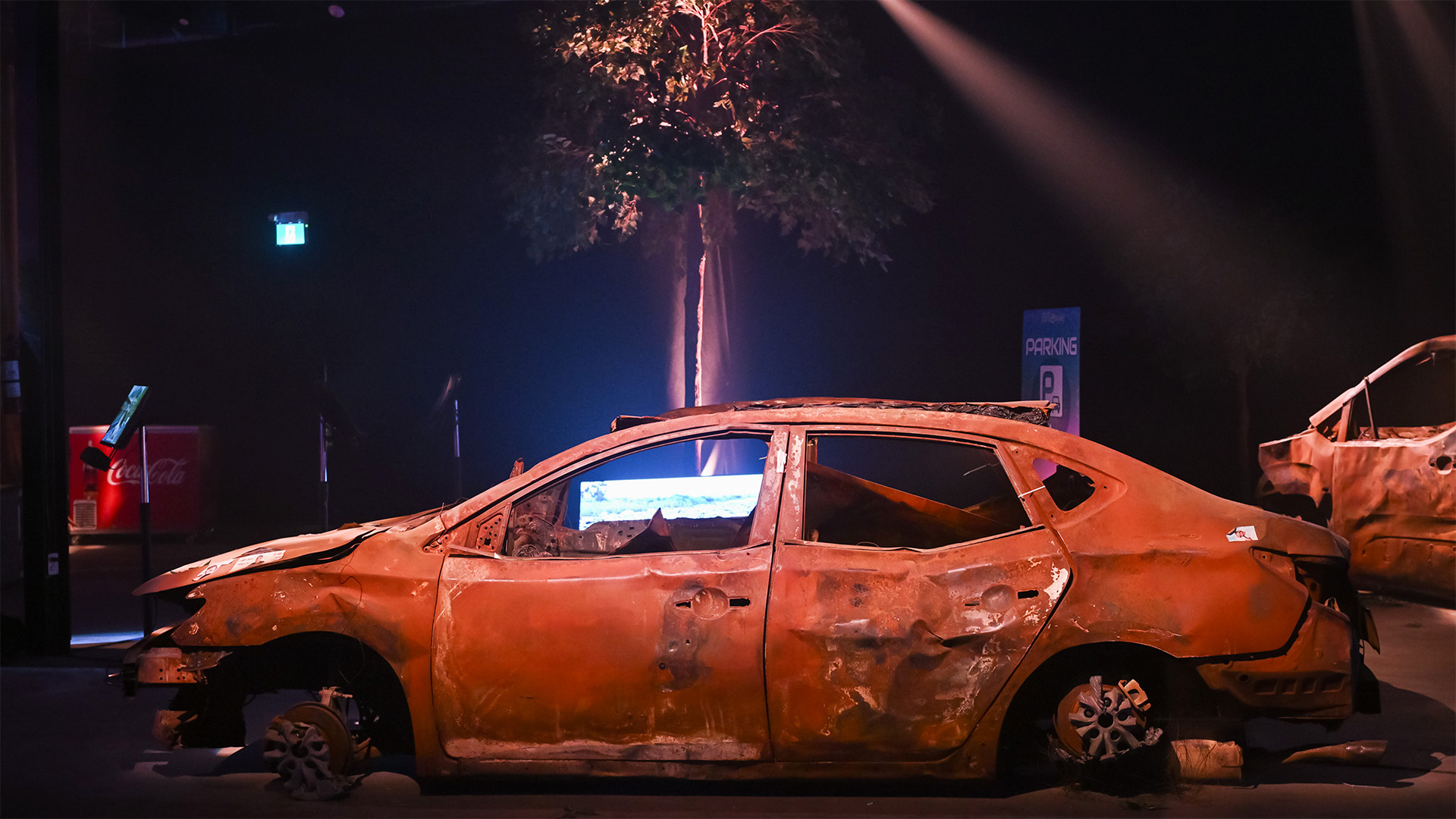
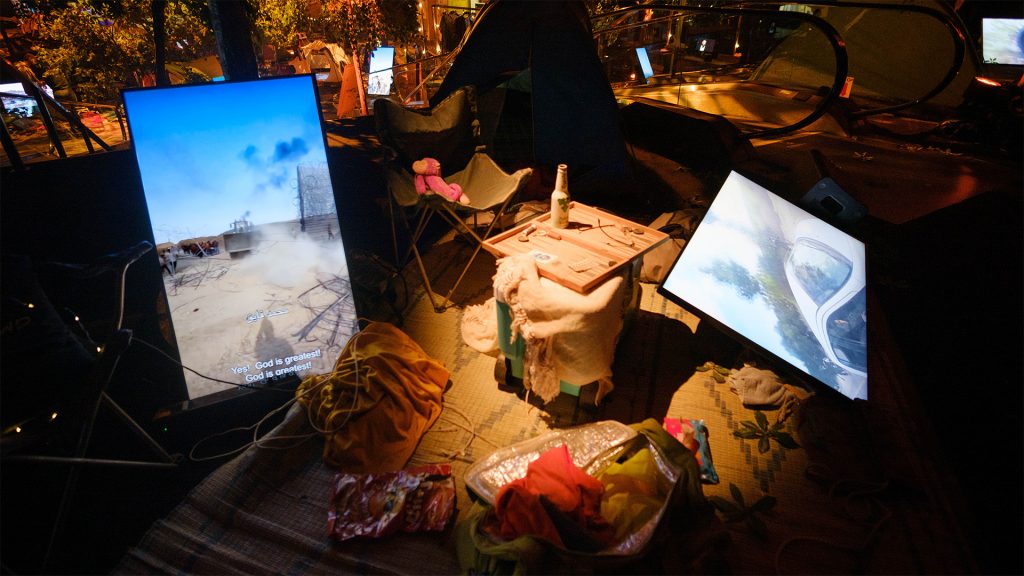
Situated in a large underground space on the fringes of London’s financial district, The Nova Exhibition tells only one story. With its displays of video footage of concertgoers resisting their attackers, the chasses of fire-damaged cars, and the personal ephemera of 411 attendees who were murdered by terrorists, great care has been taken to focus only on the events of a single day.
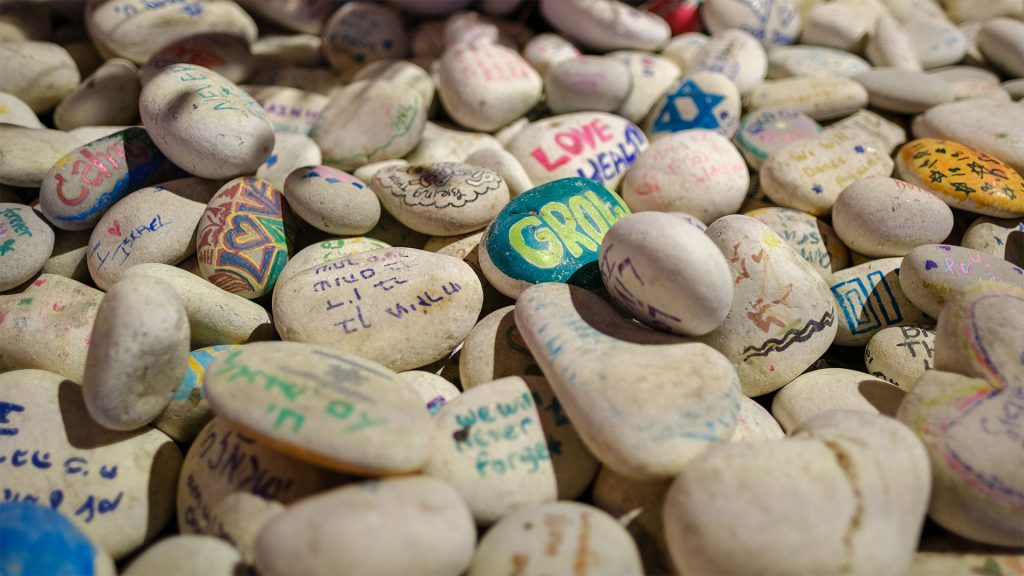
The decision is a wise one. In the wake of the atrocity, an open-and-shut case of right and wrong has been obscured by the retributive violence visited on neighbouring Gaza.
Evidently, the shadow cast by the actions of an Israeli government that is too often used as a metric by which to define an entire race of people has made it difficult for some to speak of Nova without caveat or equivocation. But we must do so.
On October 7, hundreds of young people were murdered simply for attending a music festival. Perusing their pictures on the walls of this subterranean exhibition only emphasises the denial of their right to either endorse or decry what came next.
“I was very surprised that there was so much hate and so much denial about what happened to us,” Ofir Amir, Nova’s co-founder and co-producer, tells me. “People started taking sides about something you should not take sides about. It was a music festival… It’s not about [wider] right or wrong. This should not happen, anywhere.”
On an unseasonably cool Monday morning, visitors to The Nova Exhibition’s press day enter the orbit of people at the sharp end of violence and loss. Recounted in tones shorn of evident emotion, with every turn of the head, survivors and mourners can be heard recounting stories that stain the mind. With assured consistency, the words “good” and “evil” abound.
With a voice that beats a path through the conversational clamour of the main room, Mosha Shapiro speaks of his eldest son, Aner, killed at 22 by an RPG rocket at the mouth of a bomb shelter from which he fought to protect 26 festivalgoers from sustained attack by live hand grenades.
Of this number, four were abducted to Gaza. A further 16 were murdered.
“The first guy who was killed was a Muslim guy,” he says. “The terrorists were indiscriminate. They want to kill everybody. They didn’t care if it was a Muslim or a Jew. They just came to kill.”
Suggested Reading
Why did the Venice Biennale go soft on Russia?
Speaking at a pitch that is difficult to hear, his wife Shira, Aner’s mother, tells me that seeing the exhibition laid out in London has proved “much harder than I imagined… I thought, ‘Oh, okay, I know the facts already. What happened is nothing new for me. But to put the information together in one [place] means that you can really feel the terror. You see all the beautiful faces of the young people who were there, and who are not there anymore. It’s unbearable for me.”
Within the exhibition’s dark walls, the toll of brutality coalesces into a unified voice. Seated in a room bearing framed quotes from survivors – “they turned my brother into a sieve… I have nothing to bury,” read one – a festival organiser speaks of the ardour of readjustment after spending 738 days in the tunnels of Gaza. Today, Elkana Bohbot receives treatment from “professional people” and psychologists. Inevitably, he lives with Post Traumatic Stress Disorder.
“I tell you, it’s not easy,” he says. “But we have to choose the light.”
After enduring two Passovers without daylight, the steely resolve with which Bohbot speaks of Israel’s moral inviolability represents a point of view I’m reluctant to challenge in real time. When asked why his utterance of the word “Palestine” is accompanied by the sight of his fore and middle fingers curving into air-quotes, his air of genial brusqueness gives ground to a mirthless laugh.
“We are Israeli, yes, we got a country… everybody say alright, give them [the Palestinians] a country,” he answers. “But they come and kill people? Come on guys!
“My people absolutely are for peace. And when you say IDF, what is IDF? It’s Israeli Defence Force… The Muslims control Egypt, Saudi, Turkey, Iran, Lebanon, and we don’t have nothing. You understand?”
At the furthest extremes, across the spectrum, hardened arteries trump elemental humanity. On October 10, 2023, for example, a Facebook appeal by the British metal group Desolated for information about their former bandmate Jake Marlowe – murdered at Nova, it transpired – garnered a reply that read, “I’d like to know how this isnt [sic] blantant [sic] colonizer shit”. The message was posted under the correspondent’s own name.
I’m reminded, also, of protests outside the Israeli Embassy, in London, just two days after the massacre. On the evening news, the sight of a clamouring crowd of people unwilling to allow others to grieve was my first inkling that the long-term response to the calamity would be like no other.
“In the lottery of life, if you happen to have been born in Israel, your mere existence is somehow political,” says Adam Sagir, a music industry publicist who has volunteered his expertise in service of The Nova Exhibition. “And anything bad that happens to you can basically be rationalised and justified. That seems to be what’s happened here.”
Suggested Reading

The shots and the shadows
Speaking from his office in Golders Green, Sagir reports that since the autumn of 2023 not one of the scores of bands he’s seen at numerous festivals have spared a single word of solidarity with people who were murdered for exercising the evolutionary instinct to experience music in the company of others. To him, the omission refuses to make sense. How could a community that is normally so quick to “call out injustice” be blinded by what he describes as “selective empathy”?
Instead, in one instance, he witnessed artists speak of Palestine from the stage of a festival owned in part by a nation-state (Saudi Arabia) that is responsible for killing hundreds of thousands of people in Yemen. He watched artists congratulate themselves for having gone viral with clips bearing similar sentiments posted on a social media platform controlled by a country (China) that is committing plausible genocide against its own Uyghur – or Muslim, if you prefer – population.
As a leftist goy living more than 2000 miles from geopolitical turmoil, when confronted by the horror of Nova, my own opinion of the Israeli state seems as puny as the mewl of a kitten. Suffice it to say, though, that the urge to disavow Benjamin Netanyahu and his government does not extend to mitigating the mass murder of music lovers on the basis of birthright alone. Neither does it blind me to discomfiting conclusions when prosecuting the question of why this small country enjoys a monopoly on opprobrium in the eyes of so many of my fellow travellers.
“Why is this the one [issue] where people take a stand?” wonders Adam Sagir. “I’m not saying that people shouldn’t take a stand; I’m just saying that it’s very interesting that this is the place where… all the hatred and the ire is directed. The easiest explanation for me would be to say, ‘Well, it is antisemitism’. I know it’s more complicated than that, but also, it’s not really, is it?
“There seems to be this idea that we’re, I don’t know, the wrong kind of victims,” he adds. “Or that by being in such close proximity to people who are suffering [in Gaza and the West Bank], that the people at Nova, in this case, somehow deserved what happened.”
In lieu of the kind of support that is entirely their due, instead, the survivors of “Black Saturday” minister to each other. Founded in December 2023, to date, the supportive tributaries of the Tribe Of Nova Foundation have brought together 57% of the festival’s attendees for at least five of what are described as “healing sessions”. Alms for bereaved families and survivors stand at close to a million dollars. A quarter of a million people have attended memorial events.
In London, meanwhile, the instinct to repair and renew is represented by an exhibition that speaks to both the fragility of human life and the endless resolution of its spirit. After two hours in the company of tragedy, moments before re-emerging into the chromium-steel shadow of the Square Mile, a mission statement mounted to a wall sent me on my way with a reminder of important things.
It read: “Our actions are our vow, our promise to the world and to ourselves. Despite the pain, loss, and heartbreak – we find the strength to reclaim our identity. We will dance again.”
The Nova Exhibition runs until July 5. For information, visit novaexhibition.com
 Most popular
Sorry Nigel, but the polls show you’ve had it
“We will hope again”: Andy Burnham’s full speech to the 2026 Labour Party Conference
Why is Farage so keen to protect Russia’s right to lie and cheat?
Vigour, passion, purpose: Why Andy Burnham’s bold speech will be talked about for many years to come