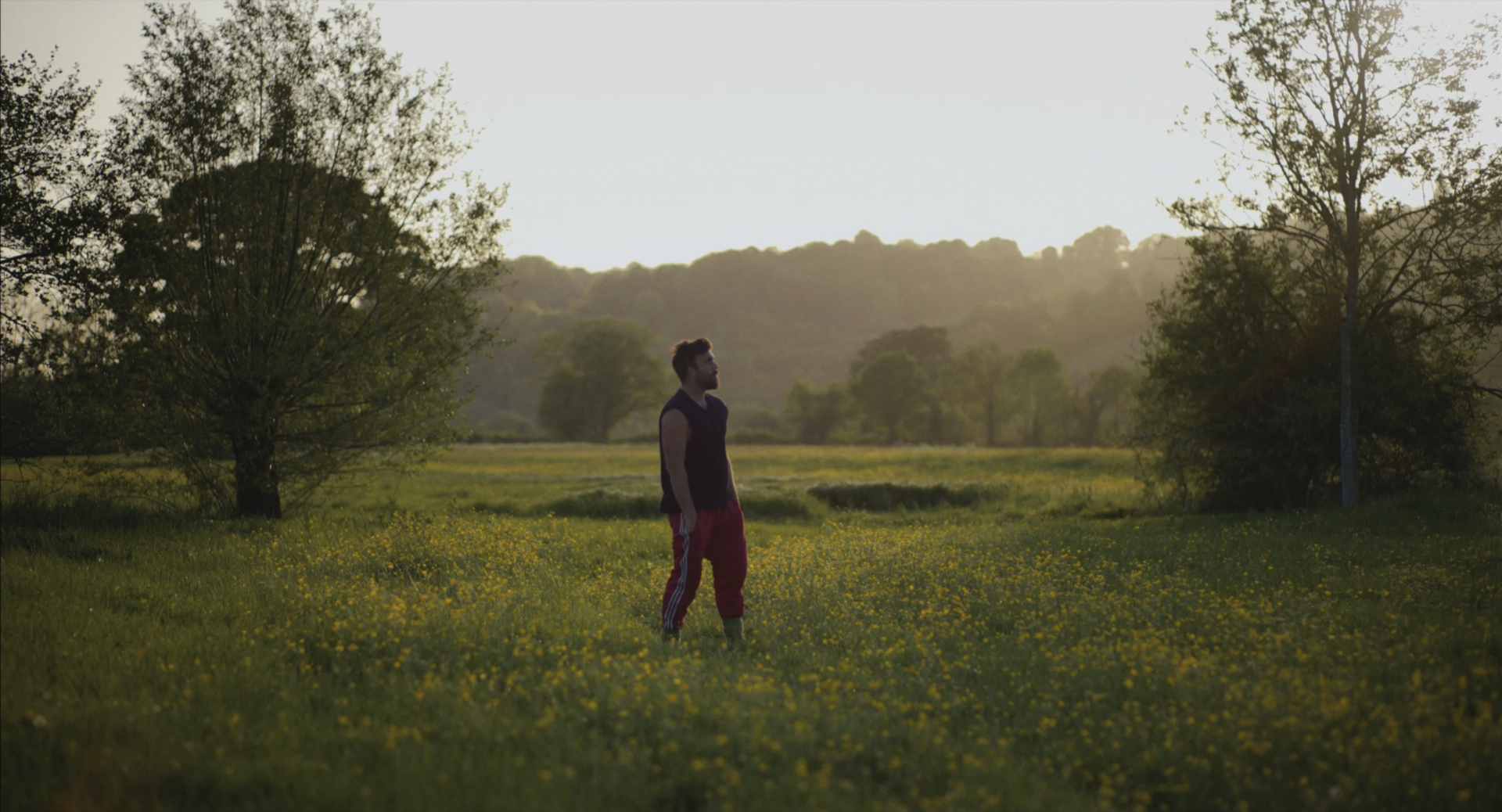
Twenty minutes or so into the documentary feature film Our Land, the viewer is permitted a ride with the owner of Flete Estate, a 5000-acre patch of private land in Mothecombe, Devon. As the wheels of the car slow to a stop at the entrance to a six-quid public car park, John Mildmay-White exchanges a few words with his father-in-law, Rob.
Ignoring the camera pointing at his face, Rob says, “I’m amazed you’re doing this, actually”.
“It’s an interesting debate,” Mildmay-White replies, with the merest touch of defensiveness.
“It’s an interesting debate,” the in-law concedes. “But you know what they [the filmmakers] do. They just end up making you look like an upper-class twit.”
Our Land examines the divide between people who seek free public access to the grounds of the nation’s green and pleasant private estates and the landowners who can either permit or restrict entry. Behind the ‘Do Not Enter’ signs and the barbed wire, great beauty is growing unseen. As a reformer from the campaign group Right To Roam puts it, “One per cent [of the population] owns half of all England… we have the right to roam over just eight per cent of England.”
Suggested Reading
The day David Attenborough changed my life
What unfolds is a humane and nuanced dissection of a question about which invested parties hold differing views: in a moral sense, at least, to whom does the land beneath our feet belong?
“These two sides have never spoken [to each other],” Orban Wallace, the film’s director, tells me. “Ever. They’re just completely different worlds. The Right to Roam [advocates] see these people in high castles, and [the landowners] just see <<them>> as fluffy activists. So, the whole point was to bring these voices together so… they could listen to each other’s points. Because common ground can be found. Dialogue can be made.”
At a time when public discourse too often takes the form of opposing armies screaming at each other in a dialogue of the deaf, without once raising its voice, Our Land presents its case with due respect to everyone onscreen. Thoughtful members of what I suppose I should call “the landed gentry” – Mildmay-White and the exquisitely anguished Hugh Inge-Innes-Lillingston in particular – seem to recognise the need for change. If the film’s sympathies lie with the have-nots, the bias isn’t obvious.
In the red corner, the Right To Roam movement seem like the kind of people who would Hoover your home at the end of a party. Swivel-eyed Trots these are not. Seeking only the right to share the treasury of the land, as one protestor puts it, “The people who own [private estates] can keep on owning them”.
I suppose common ground is easy to find when everyone is standing on it. Here, a shared love of nature is the article of faith to which opposing forces are committed in different ways. As Orban Wallace puts it, “That’s what they’re all trying to get to. And it takes a listening exercise, such as a film, for the two sides to hear each other.”
Suggested Reading
Caroline Lucas: No10 ignored MI5 and MI6 warnings on climate change
Far from presenting landowners as “upper-class twits”, onscreen, only one contributor takes the opportunity to hang himself. As well as being “bloody proud” of being white and English, the compellingly unreconstructed Francis Fulford – owner of the Great Fulford Estate, in Devon, and quite the reality TV star in his own right – is “proud about the British Empire”. When asked about the paucity of people of colour on rural land, he cites “cultural” issues. “They don’t want to come,” he says.
“I actually found [Fulford] quite endearing,” Wallace admits. “It’s quite rare to meet someone who gives as few fucks as he does.”
Overwhelmingly, though, the film’s tone is as tranquil as its bucolic scenery. Making clever use of drone photography, the many overhead shots of sun and snow-kissed landscapes, coasts and woodlands made the countryside seem appealing even to a reporter who doesn’t like venturing further afield than the Camden Road railway bridge. Flowing and lulling with the seasons, Daniel Inzani’s organic score is all but perfect.
Suggested Reading

A Green wave is ready to wash away Labour London – and this is why
Unveiled just a week after hereditary peers were ejected from the House of Lords, in timely fashion, Orban Wallace has trained his cameras on an adjacent frontline of what is a very old-fashioned class war. To no one’s surprise, honking away in a room the size of a hockey arena, Fulford thinks “the general public” are “thick” and “ignorant”. The ingenuity of Our Land, though, lies in locating other privileged people who seem minded to open doors long marked ‘private’.
“If the issue [of land access] always cast as ‘these are the bad guys and these are the good guys, and nature’s in the middle, then nature gets trashed either way,” says John Mildmay-White. “So we’ve lost sight of the things that everyone wants.”
Our Land is in cinemas on 8 May