My grandfather was a coal miner and a devout Christian. Born in 1900, he had a behavioural code that, in addition to the Ten Commandments, told him never to miss work due to a hangover, and never to end a bar-room brawl without inflicting serious injury on his opponent.
He had, in short, a moral philosophy. He knew that strikebreakers were bad, that the coal-owners were worse, and that the first world war was needless and destructive.
But I don’t think he had a theory of evil. As the 1930s darkened, neither he or his socialist contemporaries in Germany, France or Spain correctly anticipated what was to come.
They could imagine a repeat of the great war with more destructive weapons. But they could not imagine the Holocaust. What Hannah Arendt called “radical evil” – inhuman acts perpetrated by men who barely recognised their own humanity – was beyond the comprehension of most working class people.
I’ve been thinking about this problem as I watch the Mandelson scandal unfold, damaging the reputations of senior Labour politicians and advisers.
Suggested Reading
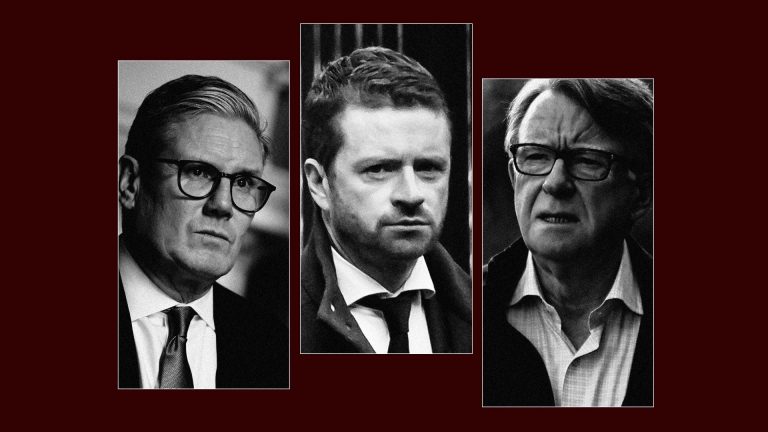

Mandelson, McSweeney and the eternal truth about political failure
Anyone who cared to notice Jeffery Epstein would understand that he was bad. But he seemed barely to intrude into the world of ordinary people: his ranch was secluded, his island unreachable, his New York town house known only to elite socialites (and it turns out his numerous female victims).
Peter Mandelson, however, sought out his company, and remained friends with Epstein after his conviction for “procuring a minor for prostitution”. At the time Mandelson was appointed ambassador to Washington, that problem may have seemed minor compared to fronting up a Putin-linked company, lobbying for a firm linked to China’s People’s Liberation Army, and having resigned office twice for lying.
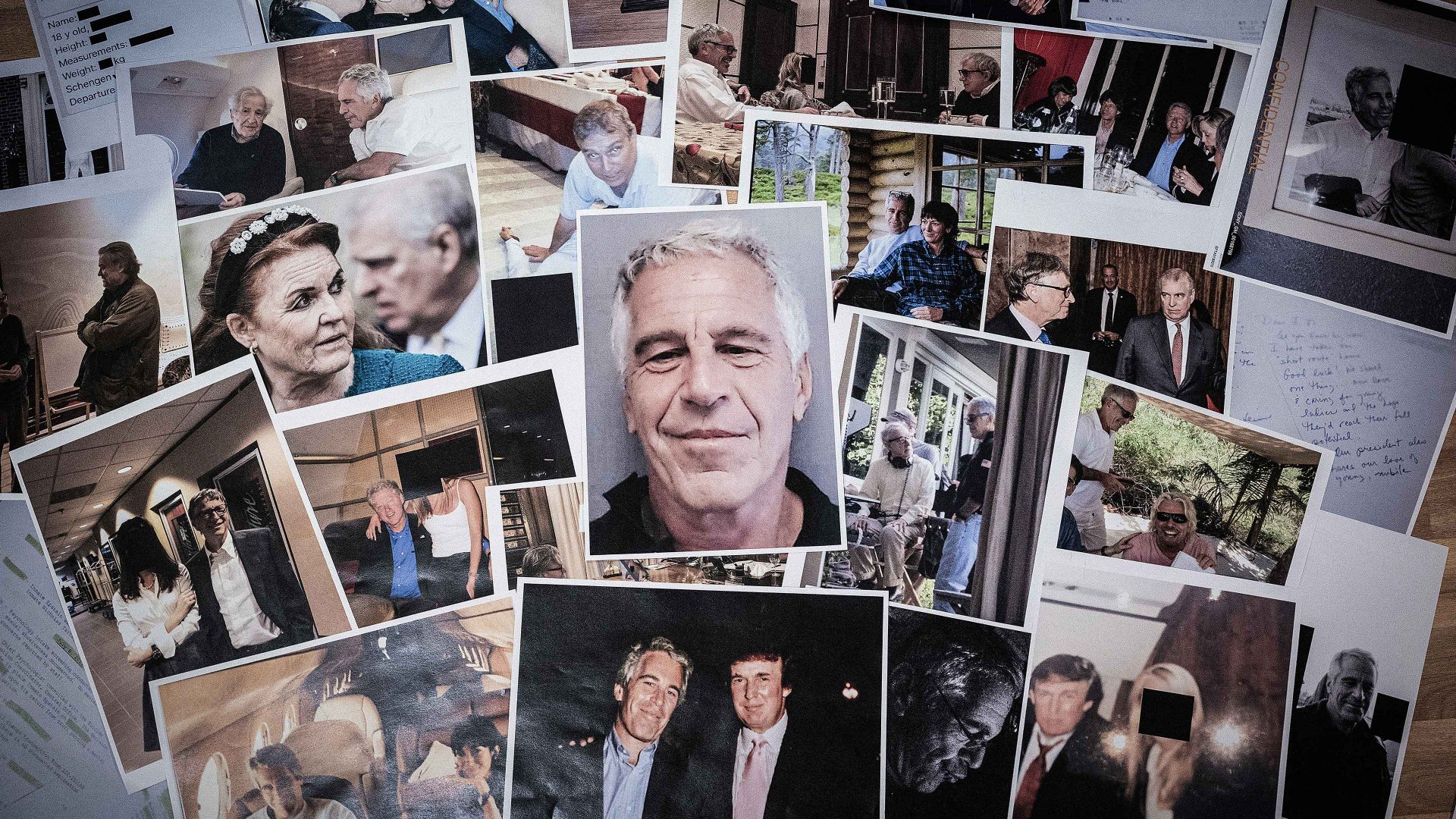
But it turned out that Epstein was not bad but radically evil. We haven’t yet seen the most gruesome photographs, but the ones we have – lines from Nabokov’s Lolita written onto a young female body, the clearly underage girls sitting on Epstein’s knee, and worse – paint a picture of organised and shameless paedophilia.
Until the partial release of the Epstein Files in February, Mandelson’s defence was that he hadn’t noticed the paedophile atmosphere around the Epstein circle because he, himself, is gay. He told Laura Kuenssberg:
“Because I was a gay man in his circle, I was kept separate from what he was doing in the sexual side of his life. I mean, he in a sense had three buckets of people in his life, the business and the financial, the political and the academic, and then what he was doing with young women. It’s possible that some people crossed over, but I didn’t, and I think probably the reason I was separate from the third of those is because I’m gay.”
Given what’s in the files, it is hard to square the “three buckets” theory with reality. Epstein’s home was a shrine to under-age sex. The politicians and the businesspeople and the academics mixed freely within its sleazy confines.
So either Mandelson was deceived – or he deceived himself as to Epstein’s nature. What’s clear, however, is that he did not see the depths of the evil being perpetrated.
In turn, the Labour politicians and advisers who decided to appoint Mandelson chose to look past Mandelson’s record for deception.
Suggested Reading


Westminster is obsessed with the Mandelson scandal. Voters are not
The three questions Morgan McSweeney asked him, concerning his friendship with Epstein, are being held back because sub judice, together with the answers. I have no doubt that when McSweeney found out the answers amounted to a pack of lies it felt, as he told the Commons, like a “knife through my soul”.
But it behoves every one of us to ask ourselves why we thought it was permissible – even if not ideal – to resurrect Mandelson to high office.
It seems to me that, from Jack Mason in the 1930s to today’s Labour technocrats, the social democratic tradition has been very bad at understanding evil.
Arendt, writing in the aftermath of the Holocaust and Stalin’s Great Purge, delineated radical evil from ordinary evil in terms of its senselessness.
Men like Nazi gauleiter Odilo Globochnik, who oversaw the murder of 1.5 million Jews in extermination camps, weren’t even focused on the eradication of Jews as their primary goal. Globochnik was obsessed with starving to death the entire Slavic ethnicity, to be replaced with a network of SS-run German farming colonies.
Arendt wrote of such people: “They do not care if they themselves are alive or dead, if they ever lived or never were born”. Like Epstein, Globochnik killed himself rather than face the boring prospect of justice.
To salvage anything good from the reputation-shredding process of the Epstein/Mandelson scandal we need to learn to anticipate the possibility of deep evil, both among friends and enemies.
Suggested Reading

The truth about Trump’s Iran downfall? The worst is yet to come
We understand that Putin is a genocidally inclined dictator. But has anyone still fully internalised the possibility that he might suddenly declare war on Nato and resort to tactical nukes to cement his next land grab, within a year of ending the current war in Ukraine? That’s what Dutch intelligence just warned us. But are we listening?
As for China, its scientists are working on technologies designed to induce changes in the chemistry of the human brain: bioweapons of the kind that would make world war three a qualitatively different nightmare to the first two? But are we forcing ourselves to think about it?
As for Trump, who has threatened to annexe Greenland, snatched Maduro, and started a forever war with Iran which threatens to plunge the global south into penury: are our minds really prepared to contemplate the worst he could inflict before leaving office in 2029?
Appointing Mandelson was a screw-up, which Keir Starmer will rightly have to go on apologising for. The state failure revealed by the Robbins case – a negative vetting form presented as “borderline” by a senior official and never seen by Robbins himself – is a symptom of the broader moral failure of the policy elite.
We can imagine bad, but we rarely contemplate the possibility of evil. The “good chap” theory of government has failed repeatedly in the face of miscreants – from Jeremy Thorpe to Boris Johnson. But it risks failing absolutely in this time of monsters.
As an atheist, in a secular political culture, I am well aware that my attitude to evil is determined by the Christianity of my upbringing. It is, in our collective mental model, a “lapse from good”, not an equal and opposite force to good.
After reading the Epstein files, and studying historical figures like Globochnik, I am no longer sure of that. The Manichean alternative – that humans are a battleground in the struggle between altruism and a radically inhuman destructiveness – ought at least to be considered.
We are dealing with an out-of-control elite for whom the rest of us don’t matter. For them, we are, to use the far right epithet beloved of Dominic Cummings, “NPCs”: non-playing characters in the computer game of life.
We need, in response, to develop a political morality that is far better equipped to counter the dangers posed by the Epstein class.