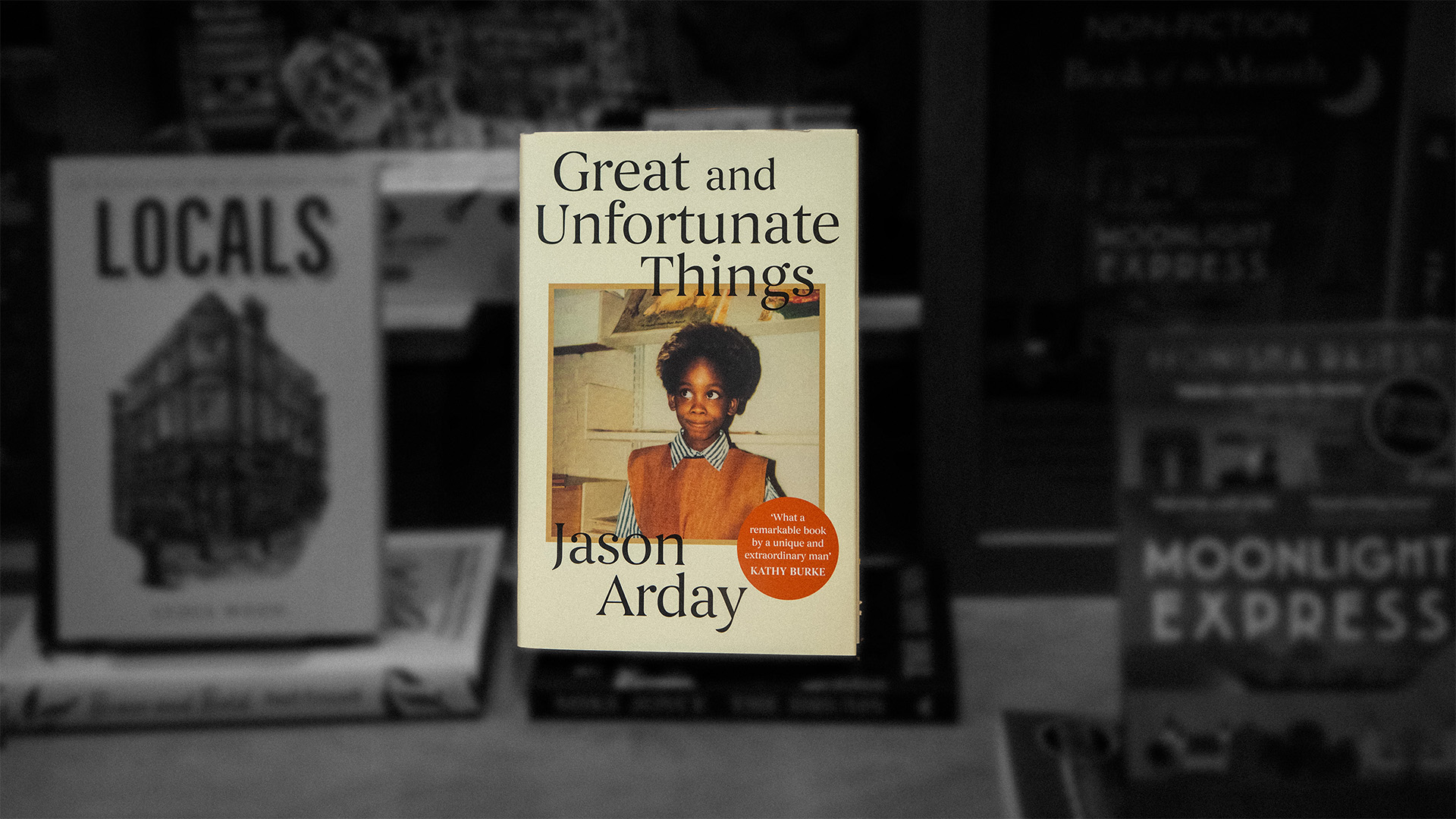
In his recently published memoir Great And Unfortunate Things, the late Jason Arday recalls being taken by his mother to demonstrations in London in honour of the murdered teenager Stephen Lawrence. Recounting one event, in Brixton in 1993, he writes of seeing “placards everywhere, megaphones and boom boxes booming, a wall of noise and waves and waves of people, as far as my eye could see. The air was thick with tension, rage and grief.”
In the grimmest of echoes, last month, a similar vigil was held for Arday himself. In witnessing the speed with which nefarious actors in media and politics used the 41-year-old’s alleged fabulations as a cudgel with which to batter the wider principles of Diversity, Equality and Inclusion, the many thousands of mourners gathered in Trafalgar Square likely recognised the context of the academic’s death as a modern iteration of a story of prejudice stretching back centuries.
All of which makes the postmortem publication of Great And Unfortunate Things a delicate matter. Turning its pages, the reader is constantly aware of the story’s terrible, unwritten end. Prosecuting doubts about the reliability of its narrator feels like an act of bad faith.
Unhelpfully, the book has emerged into a vacuum of silence. Although doubtless concussed by the grotesque onslaught visited on Jason Arday in the final weeks of his life – as Caroline Sanderson correctly noted, in The Bookseller, “mass murderers have attracted less scrutiny” – the refusal of its publisher, Simon & Schuster, to defend their title in the wake of its author’s death has allowed concerns about truthfulness to linger.
Suggested Reading


What happens when the world stops reading books?
I sent two requests for information for this article and received a statement attributed almost entirely to Arday’s family. “To the very end,” it read in part, “Jason was clear that he wanted his memoir to be published and it is only right that we honour his wishes. There has been so much that has been written and said about our beloved brother, son, father, partner and uncle, mostly by people who don’t know the truth of what he experienced, and we experienced as a family, or what an extraordinary person he was.”
It may be, of course, that the revelations contained in Great And Unfortunate Things prove to be reliable – or at least a good deal more reliable than its author’s frenzied detractors would have us believe. Here, I’m reminded of a recent BlueSky thread in which Emma Monk, a forensic and dependable citizen journalist who plies her trade on social media, provided extensive evidence supportive of many of Jason Arday’s widely ridiculed claims about marathon running.
Equally, the decision to edit his Simon & Schuster speaker bio – in which claims about charity work were amended to Arday being part of “several fundraising teams” rather than one man toiling alone – may have been enacted at the behest of the author himself. In all innocence, he might also have instigated late changes to his memoir regarding other charitable endeavours. I don’t know, because no one’s saying.
It should be noted, though, that if a publisher wanted to duck accountability for a title about which it has serious concerns, this is how it would do it. As such, Great And Unfortunate Things finds itself under a cloud of suspicion that may or may not be warranted. In the absence of advocacy for a writer who can no longer answer for himself, a ghost is twisting in the wind.
The matter is complicated further by the industry’s wider shortcomings in identifying falsehoods. Without wishing to suggest that discredited titles such as The Future Of Truth or The Salt Path constitute a crisis in publishing, I’ve long thought that editors can count themselves lucky that the number of egregiously fraudulent books on the shelves of Waterstones isn’t higher than it appears to be. To what extent this good fortune is attributable to the overall honesty of writers or the bald truth that most books pass by largely unexamined – 90% of titles sell fewer than 2,000 copies – I can’t say.
“There has always been trust in the author that you’re commissioning an expert on a given subject, or their life story, and the author, in their contract, agrees to a warranty to tell the truth and that everything is correct and nothing is plagiarised,” an experienced nonfiction editor (who asked to remain anonymous) tells me. “There are elements of fact checking that happen in some copy edits, but it depends on the book. Broadly speaking, in adult nonfiction publishing, factchecking… is not a default part of the process. It’s presumed that the author has done their own factchecking.”
As it so happens that I can speak to this. During the process of whipping my own book, Bodies, into shape, my gratitude to a copyeditor who spotted a mistake in my recollection of the score of a football match between Nottingham Forest and Leeds United was tempered by my surprise at the story’s wider aspect being taken on trust. Confined to a hotel room, I’d watched the game under the guardianship of a Metropolitan Police officer after discovering my father, dead and covered in blood, at the Holiday Inn in Camden Town.
Last month, over drinks at a pub just a short walk from that location, a testy interrogation by three book editors – one of whom happens to be my wife – wary of my motives for writing this piece, led to a tough question. How might I have felt had my publisher, Faber & Faber, requested evidence that I once spent an entire day under suspicion of being a patricidal murderer? To this, I replied that I thought it a dereliction of duty that I wasn’t even asked if my claim was true. The coroner’s report into my dad’s death is in a drawer; I could have proved it in an instant.
The point is this: playing Russian roulette with factual accuracy – with the truth, as distinct from one’s truth – threatens the very idea that books are the gold standard for acquiring knowledge, empathy, and an appreciation of nuance, which is keenly needed in a tiresomely polarised world. A fracturing of the bond of trust between reader and author is a blow to the certainty that immersing oneself in a narrative imparted over hundreds of pages is time well spent.
Suggested Reading
Rachel Cusk’s Natalie Portman problem
As such, the comments made last month by Alexandra Pringle, the former editor-in-chief at Bloomsbury, to the Today programme, that “a memoir is a work of literature that is verging on fiction” simply won’t do. Neither will shovelling the full weight of responsibility for verisimilitude onto writers by means of sanctions for breaches of contractual obligations that are all but guaranteed never to be enforced.
Rather than defending Simon & Schuster’s decision to proceed with the publication of Arday’s book, Pringle’s clumsy intervention served only to cast further doubt on its contents. It would seem that the time for a meaningful, and perhaps largely deserved, acquittal of its author’s reputation has passed.
Great And Unfortunate Things, though, contains truths that are courageous and clear. In the wake of a public interrogation that amounted to a modern-day lynching, Jason Arday’s declaration that “everything I do is scrutinised and challenged in a way that almost never happens to my white colleagues” resonates from the page.
Great And Unfortunate Things by Jason Arday is published by Simon & Schuster