PICK OF THE WEEK
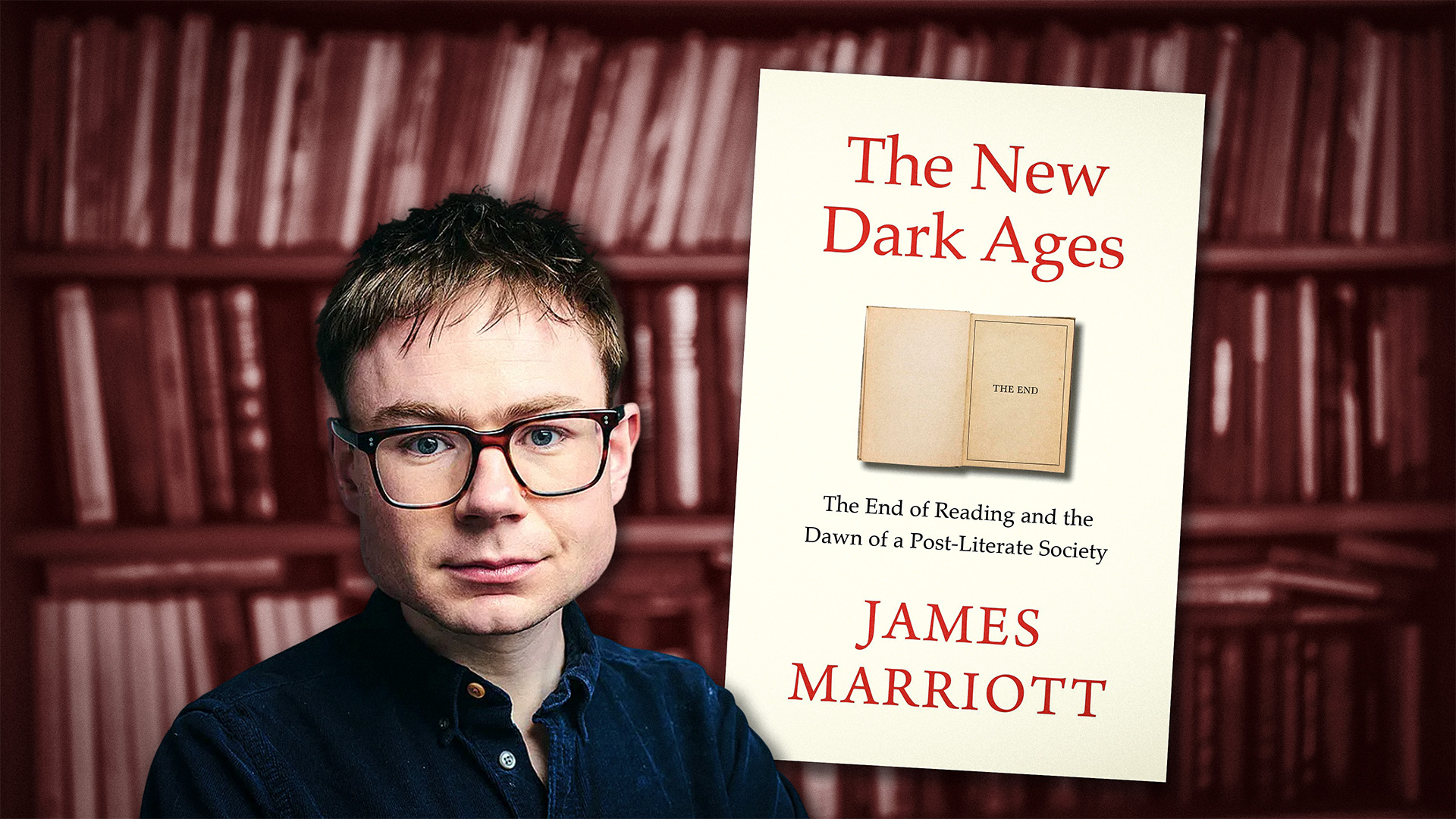
The New Dark Ages: The End of Reading and the Dawn of a Post-Literate Society, by James Marriott (Bodley Head)
“As reading fades,” writes James Marriott, “I believe that we may find ourselves facing a post-literate future that resembles the pre-literate past: mystical, tribal and autocratic.” He’s absolutely right (as TNW readers may have spotted, this is a subject close to my heart).
Yet this excellent book is not a Ciceronian lament (O tempora, o mores!) in the style of, say, Harold Bloom or George Steiner. Those familiar with the author’s Times column will know that he is a commentator of rare erudition, insight and wit and his brisk tract abounds in literary allusion from Montaigne, Voltaire and Dostoevsky to the mighty Robert Darnton, Elizabeth Eisenstein and Jürgen Habermas.
Yet Marriott, who is 33, is sending a wartime despatch from the digital battlefield rather than sneering at the habits of the young (who are operating cognitively “in a hostile environment”). He is all too aware of the addictive power of TikTok videos, doomscrolling, and YouTube clips. In his discussion of our incremental return to an oral culture, he notes that a “rambling conversational style… is once again becoming culturally prominent thanks to podcasts.” Well: as his newspaper’s lead podcast reviewer, he should know.
Commendably, he does not begin his story with the unveiling of the iPhone by Steve Jobs in January 2007, but, drawing upon Neil Postman’s seminal Amusing Ourselves to Death (1985), traces the tyranny of the screen back to the televisual revolution. A diet of spectacle, conflict, and entertainment: the smartphone and its manic algorithms have taken this cultural bequest and driven it to pathological extremes.
I enjoyed his emphasis upon the centrality of literacy to meaningful citizenship and critical thinking – in place of the routine saccharine hymns to “reading for pleasure”. Have the people who run these dreary campaigns ever been on Instagram or clocked the feverish global anticipation surrounding the release of GTA VI on November 19? “[A]s a form of pure amusement,” Marriott reflects, “the book has long been routed.”
The most powerful chapter spells out the probable age of obscurantism towards which the rise of post-literacy is leading. “It may be,” he writes, “that we are facing an unenlightened future that looks like our unenlightened past – one in which power, wealth and knowledge concentrate at the top of society, and an angry, divided and uninformed public lacks the means to understand, analyse, criticise or change what is going on.”
And now we’re at the bone: “Economic crises pass and wars grind to an end, but communications revolutions are permanent.” The best he can offer by way of optimism of the will is the hope that we may yet wake up to the epochal cost of this civilisational rupture: “The smartphone has not shown us that books are obsolete. It has shown us that books are irreplaceable.”
All credit to Marriott for not offering a pat list of “ten steps you can take…” or “life-hacks for literacy.” In the spirit of Goya’s great etching of 1799, his bracing argument should be enough to rouse our collective reason from sleep. An outstanding debut.
Suggested Reading


Pedro Almodóvar exposes the cold heart of art
FILM
The Death of Robin Hood (selected cinemas)
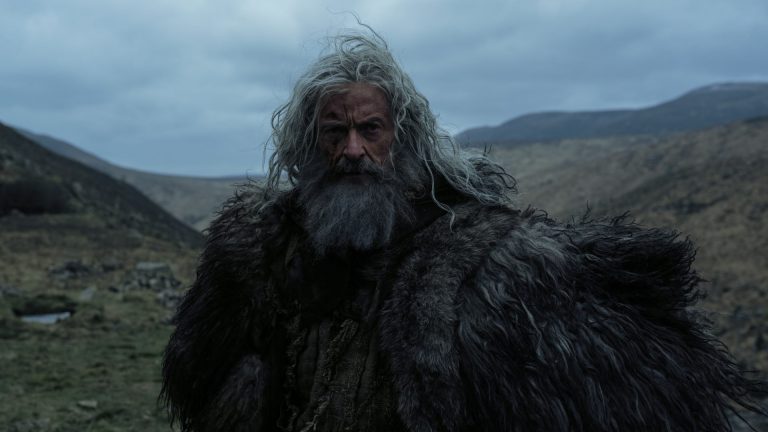
To get you in the mood for the Bayeux Tapestry, here’s a fine medieval movie, starring Hugh Jackman as the eponymous outlaw. Brutal, aesthetically dour and unsparing in its depiction of violence, writer-director Michael Sarnoski’s take on the legend is as contrarian as any since (and perhaps including) Richard Lester’s Robin and Marian (1976).
In 1247 – just over halfway through the reign of the Plantagenet monarch Henry III – Robin is an ageing killer, tired of slaughter and weary of the baseless heroism attributed to him in folklore. “I’ve seen the power in stories,” he says. “They can be used to make men do terrible things.”
Reunited with Little John (Bill Skarsgård), he is soon embroiled in a savage vendetta that leaves him gravely wounded. When he comes round, he is on the island of the Priory of St Clement, where the prioress Brigid (Jodie Comer) has treated him with a course of bloodletting. He tells her that his name is Randolph. She tells him that he asked to be allowed to die: a request she denied.
The tutelary presence of the priory is an unnamed leper (Murray Bartlett), who recruits the convalescing Robin to tend its orchard, regales him with the story of Boethius but does not reveal his true identity until the third act. Meanwhile, Brigid sends him into the forest to trap rabbits. When Little John’s daughter Margaret (Faith Delaney) turns up, orphaned and traumatised, she recognises Robin and, eventually, summons the courage to ask him to make her a bow.
Jackman and Comer are both predictably excellent and their exchanges are the moral core of the film. No less than Robin, the prioress has a past – grieving the loss of her family and steeped in the pre-Christian magical arts. She invokes the atomism of Lucretius’s De rerum natura, speaks of cosmic “balance” and tells him the story of Saul’s conversion on the road to Damascus. By surly stages, Robin edges from the nihilism of a hell-bound brigand to a yearning for redemption.
Though scarcely in the league of Tarkovsky’s Andrei Rublev (1966), The Death of Robin Hood is an absorbing evocation of the medieval religious imagination. Next up in this autumn’s return to the Middle Ages: Andrew Garfield and Jamie Bell in The Uprising (October 9), Paul Greengrass’s epic account of the millenarian Peasants’ Revolt of 1381.
Suggested Reading
Why we will always cling on to Robin Hood
THEATRE
Thelma & Louise (Young Vic, London, until October 24)
The pipeline from big screen to stage musical – sorry, “brand-extension entertainment” – has produced more misses than hits. Happily, Trip Cullman’s new version of Ridley Scott’s classic 1991 tale of female friendship and rebellion belongs in the latter category.
It helps enormously that Callie Khouri has returned to adapt the screenplay that won her an Oscar, and that the music and lyrics are supplied by a songwriter of Neko Case’s distinction.
As Thelma Dickinson and Louise Sawyer, Amy Lennox and Rachel Tucker honour the roles made famous by (respectively) Geena Davis and Susan Sarandon – but are not hidebound by their predecessors’ interpretations. Trevor Dion Nicholas also gives a standout performance as Arkansas state police investigator Hal Slocumb, the part originally played by Harvey Keitel.
When Louise suggests a spur-of-the-moment getaway to her boss’s empty cabin, Thelma decides to defy her husband Darryl (Samuel Edwards) for once and choose spontaneity. But after an attempted rape outside a roadside bar ends with the gunning down of the assailant, the trip turns into a full-blown flight from the law.
What is lost in epic cinematography is more than recouped in theatrical intimacy. In a story grounded in the trauma of sexual assault and the corrosions of the patriarchy, the addition of song and square-dancing could have trivialised the emotional stakes. In practice, the music draws the audience deeper into the women’s oscillation between anxiety and exhilaration (so much so that, at the preview performance I attended, their decisive moments of resistance drew cheers and applause).
Ingenious lighting conveys the exhilarating flight of Louise’s 1966 Thunderbird (which we never see) from smalltown Arkansas, via Oklahoma and New Mexico, to the unforgettable finale at the edge of the Grand Canyon.
In the programme, Khouri reflects with sadness that, since 1991, we “have regressed to a place where women have fewer rights than we had when the film was released” – another reason why the story feels so vivid, unsettling and contemporary. It would be an injustice if this spectacular production does not transfer to the West End and beyond.
BOOKS
The World-Ending Fire, by Wendell Berry (Penguin Books)
If you are not acquainted with the work of Wendell Berry – who died on August 31, aged 92 – then get hold of this terrific 2017 collection of his essays, selected and introduced by Paul Kingsnorth.
A prolific poet, novelist and writer of non-fiction, Berry was a true son of Kentucky whose love of the land and its mysteries naturally drew comparison with Henry David Thoreau. In essays such as “A Native Hill” (1968) and “Think Little” (1970) he warned prophetically of the ecological destruction of American farmland by agribusiness. But it was in The Unsettling of America (1977), perhaps the most significant book on conservation since Rachel Carson’s Silent Spring (1962), that he established his voice in the US public sphere (an excerpt is included in this volume).
For Berry, the continuities of place mattered more than the pressures of the moment; stewardship more than profit; and the local more than the global. His suspicion of technology – immortalised in “Why I am Not Going to Buy a Computer” (1987) – naturally invited the charge of reactionary Luddism: and, in spite of his vigorous environmental activism, the Left was never truly comfortable with his hostility to city life, his devout Christianity or his debt to the tradition of Southern agrarianism which some associated (quite wrongly in Berry’s case) with support for segregation.
Yet his influence upon the American republic of letters was immense: Barbara Kingsolver, Bill McKibben, Michael Pollan and Rod Dreher have all hailed his inspiration. His cycle of Port William tales – the imagined Kentucky town where most of his novels and stories are set – is one of the most rewarding rabbit-holes in contemporary fiction: start with Jayber Crow (2000), followed by Hannah Coulter (2004). For an introduction to his poetry – spare, devotional and freighted with emotion – try The Peace of Wild Things (2018).
In his Southern resistance to modernity, Berry was a spiritual kinsman to Flannery O’Connor and Walker Percy. And in his deep imaginative grasp of what we now call the “politics of place”, his ideas have suddenly acquired a vivid relevance in this country too.
“A human community,” he writes in “The Work of Local Culture” (1988), “if it is to last long, must exert a sort of centripetal force, holding local soil and local memory in place. Practically speaking, human society has no work more important than this.” RIP.
EVENT
Bryan Forbes Centenary (British Film Institute, London)
It was a career highlight for me to persuade one of my cinematic heroes, Bryan Forbes – an iconic figure in the history of British film – to write for The Spectator. To his journalism, he brought precisely the subtlety, humour and intellectual focus that ran like a thread through his 14 movies.
So it is wonderful that,13 years after his death in 2013, the BFI is holding a season to mark the centenary of his birth – coinciding with the publication of an excellent study in the institute’s Film Classics series by Josephine Botting of his masterly debut Whistle Down the Wind (1961).
More than six decades on, the haunting tale of Kathy Bostock (played by the young Hayley Mills) convinced that a fugitive (Alan Bates) she encounters in her family’s Lancashire barn is Jesus Christ, has lost none of its eerie power (and is available to stream on ITVX).
There are performances at BFI Southbank of The L-Shaped Room (1962), for which Leslie Caron was Oscar-nominated, on September 15; of The Wrong Box (1966), introduced by one of its stars and Forbes’s wife for 57 years, Nanette Newman, on September 22; and of King Rat (1966), introduced by his daughter, the journalist and author Sarah Standing, on September 29.
I hope this season will inspire movie lovers to enjoy this great director’s work afresh. Do take a look at The Raging Moon (1971, StudioCanal Presents), in which Malcolm McDowell gives a memorable performance as 24-year-old Bruce Pritchard; Séance on a Wet Afternoon (1964, BFI Player), starring Forbes’s close friend Richard Attenborough; and – of course – The Stepford Wives (1975, Paramount+). Forbes really was one of a kind, a towering figure in postwar British culture and an aristocrat of the creative spirit.