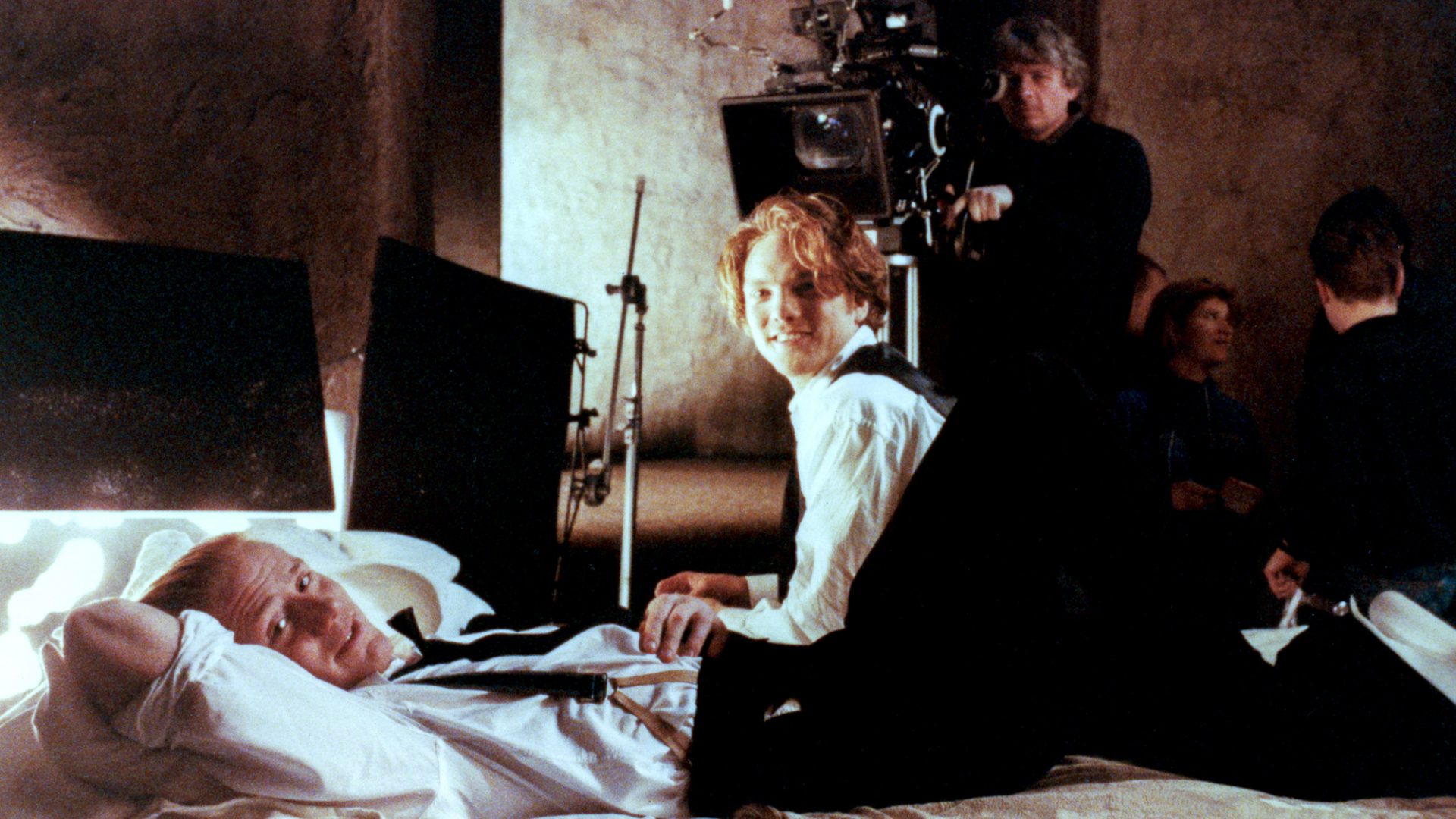
Sculpted from more than 30 hours of long-forgotten Betamax video footage, the behind-the-scenes documentary Queer Edward II graced the Venice Film Festival last week, exactly 35 years after the very film it chronicles swanned on to the Lido.
It stands an excellent chance of prizes, both in Venice and further down the line of awards season, being both inventive and inspirational, blending waspish wit with burning passion. It is also, as a “making-of” movie, quite as original as the 1991 Derek Jarman film on which it is eavesdropping.
Jarman was a hugely influential film-maker and artist who rose to prominence during the British film industry doldrums of the late 1970s and early 80s with films including Sebastiane, Jubilee and Caravaggio. He’s seen here in full flamboyance, leading his troupe into the battle of adapting Christopher Marlowe’s Edward II – a late 16th-century play about the relationship between the king and his childhood “best friend” Piers Gaveston – to take on the politically charged, conservative era of Thatcher’s Britain.
And what a troupe of talents it was: including the regal, imposing actress Tilda Swinton as Queen Isabella, the Oscar-winning costume designer Sandy Powell, make-up doyenne Morag Ross, musician Simon Fisher Turner, as well as being shot by young cinematographer Seamus McGarvey, now one of the world’s leading practitioners of the craft.
Commissioned and given licence to roam by producer Sarah Swords, McGarvey prowls the set – at Bray Studios – getting interviews with actors and visitors and following Jarman into deeply private thoughts and moments, including poignant yet discreet shots of the director taking his cocktail of AIDS medication.
McGarvey’s work never saw the light of day and was stored in the cupboard of a camera equipment company for the ensuing decades. You can just imagine it all, all those ideas and artistry, fizzing away, trying to get out and be seen and heard.
Because McGarvey’s footage captures all the energy and chaos of film-making, all the adrenaline that supercharges the art, much of it funny, or at least it appears that way now, such as when the bussed-in extras demand more money from the cash-strapped producer James Mackay.
As some readers will know, I’m less frequent in these pages now, because I’m embarking on my first film as producer, preparing to shoot A Waiter in Paris amid the streets and restaurants of the French capital next month. So the set of Jarman’s Edward II hit me like a beacon of ideas and haywire brilliance, although the ones seeming to have the least fun were the harried producers, tucked away in an ill-lit shed of a production office, hanging on telephones and stressing about getting sued.
I recall writing, from Cannes last year, about Richard Linklater’s Nouvelle Vague and its depiction of the making of À bout de souffle, and its portrayal of apoplectic producer Georges de Beauregard, the only character not having a Godardian giggle. Note to self: try to enjoy it and don’t be a cliche.
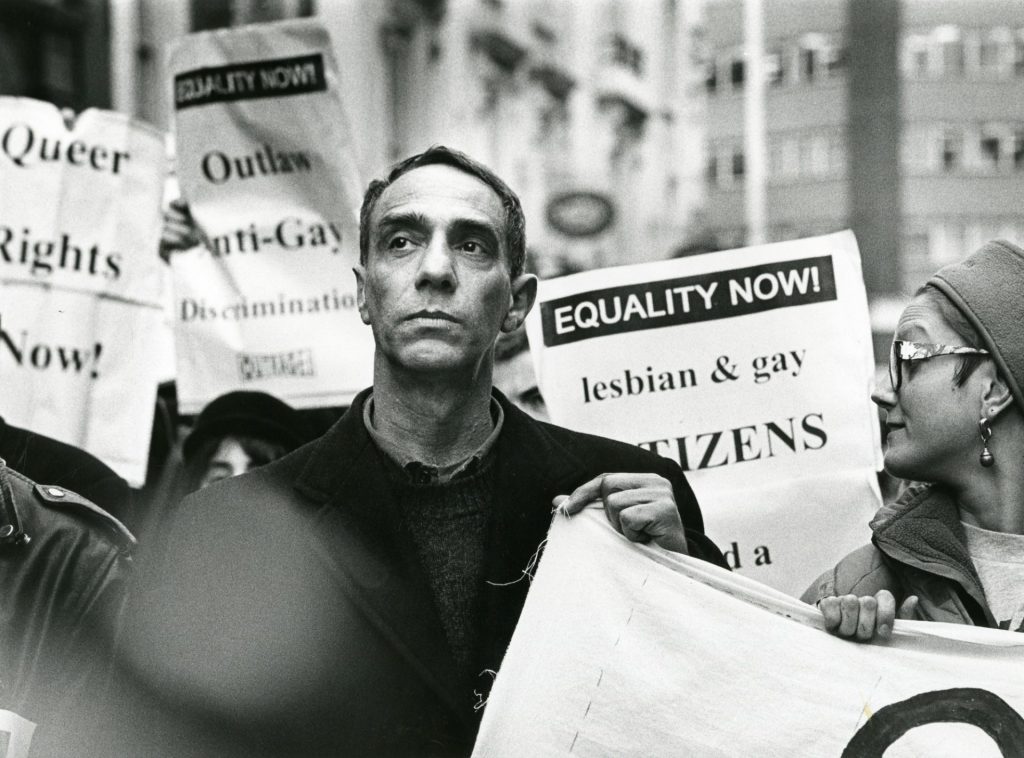
Re-edited and re-tooled for a new generation, Theo Rollason’s documentary puts a queer lens on what was already a paragon of British queer cinema, setting the filming against the backdrop of protest and outrage against the proposed laws of Section 28 and Clause 25, which sought to criminalise homosexuality, raise the age of consent, and outlaw any promotion of homosexuality in public life.
I remember the time vividly, and it must look like a barbaric age to a new generation of viewers, queer or not. Thanks to the sheer brio of Rollason’s approach to assembling the material, it all feels urgent again, and very current, with protests and placards on London streets.
There are some incendiary and almost unsavoury scenes when a delegation from OutRage, hired for some work as extras, get wind that Cliff Richard is rehearsing in an adjacent studio to the Edward II set and decide to storm it and demand the pop star out himself as gay.
One looks back on the practice of “outing” with horror, really, such a bullying, playground tactic that those who championed it should surely be ashamed of their spite. But then the film reminds us of the defamation case brought by Australian actor Jason Donovan brought against The Face magazine for “accusing” him of being gay, and another facet of the struggle re-emerges.
Of course, being openly gay was a battle and a risk, as Jarman knew and as this documentary shows, but it was always a personal choice and one that shaped Jarman’s vision and philosophy, forging a queerness that pushed his art, and that of his acolytes, to ever more inventive, distinctive and subversive heights. Creativity becomes the buzzword here, as Jarman’s approach inspires his team – yes, even the producers – to dig into their creativity at every turn, for every decision.
The doc comes to a rousing, bone-tingling climax on the day Annie Lennox comes to set to sing Every Time We Say Goodbye and McGarvey hones in on her performance, before panning round to capture almost the entire crew assembled to watch in rapt amazement. What a treat, what a movie-making magic that we now all get to share.
So I will take the Jarman pot of inspiration with me to my own set, on a mission to create and cajole a team to be at their best and all be making the same, brilliant movie, with that flame of originality and all that beauty and sexiness.
Suggested Reading
A writer’s obsession with the Alain Delon murder mystery
And I promise to be on the floor admiring the actors and performances as much as possible rather than being back in the production office fielding calls from tabloids or stuffing crumpled cash in the hands of French figurants.
I also wish Queer Edward II, this rough-cut gem of a documentary, the very best on what I foresee as a hugely successful journey. There’s a perverse possibility that it could end up being more successful than many of Jarman’s films themselves.
Success for such a film, as it was for Jarman’s, is hard to measure, but there’s little doubt it will be bringing a new generation of viewers to Jarman’s work and raising its (and his) political and artistic points along the way, all in the name of cinema, what it can do and why we go to see it. Win, win, I’d say.