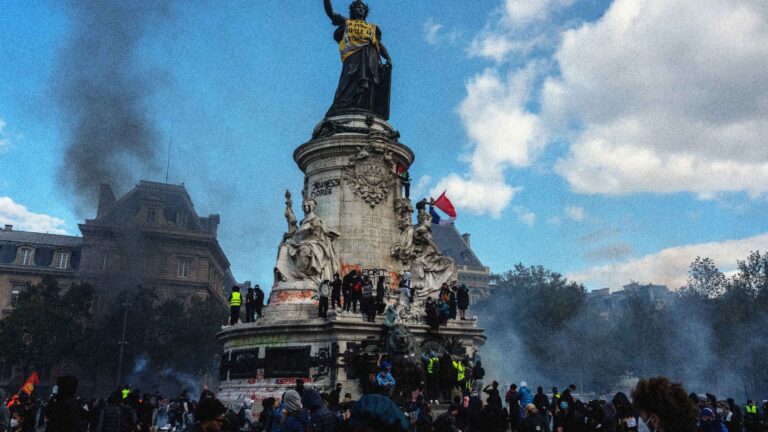
On October 17, hundreds of thousands of protesters took to the streets of France to demonstrate against high living costs and poor funding for schools. Events quickly spiralled out of control.
Limoges town hall was burned to the ground, and in Paris, shops were ransacked and cars set alight. Interior minister Laurent Nuñez announced that 550,000 people had taken part in the demonstrations across the country, and 1,800 people had been arrested once they were overtaken by “opportunistic delinquents who had seen a chance to pillage and loot.”
One of the most notorious incidents took place in the southern city of Saint-Étienne, where a 17-year-old boy’s hand was blown off by a police grenade. The New World spoke to Camille*, a protester who was standing just metres away.
The New World: Why were you protesting?
Camille: I went to support the students who are asking for better educational facilities and opportunities. As an adult, I feel it’s my responsibility to support them.
TNW: What was the plan for the day?
C: The march began at the Place Jean Jaurès in Saint-Étienne. The plan was to walk away from the city centre in an almost straight line up toward Bellevue terminus, where the trams stop. It was a police-approved route.
Suggested Reading

When I think of President Le Pen, I suddenly struggle to breathe
TNW: How was the mood?
C: The protesters were very good-natured, even though there was a fine mist of rain. There were lots of families with kids, and pensioners.
On my way into town, I saw groups of police in full riot gear stopping children, some of whom looked as young as 10. They were saying things like, “You’re going to get your face smashed in.” Meanwhile, groups of young men were milling around the city center, all dressed in black, carrying hammers and backpacks. The police didn’t interfere with them.
TNW: What happened once the march started?
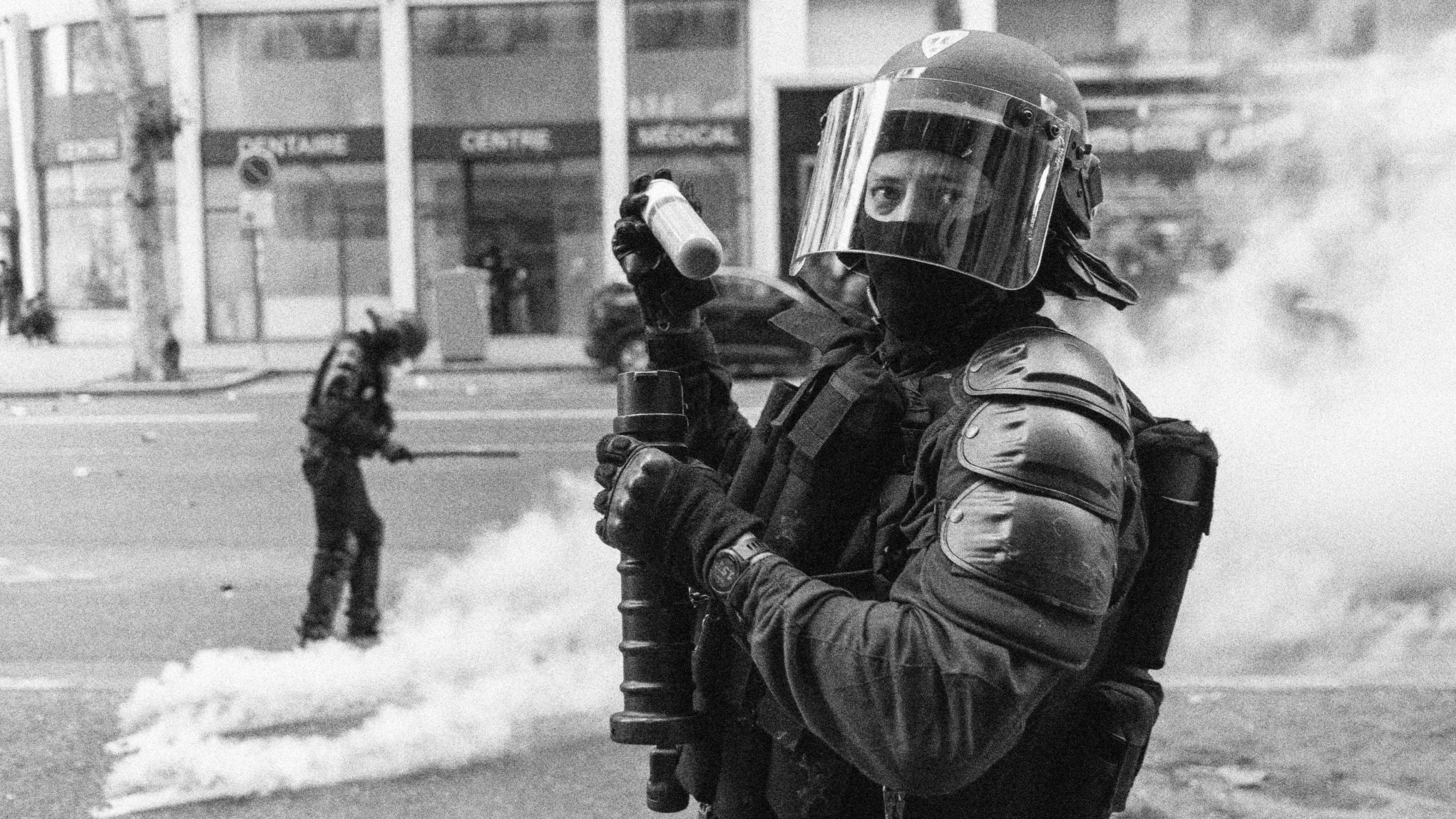
C: We set off at about 2pm. There were thousands of us, so we moved slowly. At about 3pm, at an intersection in front of Centre Deux shopping centre, a huge line of riot police — dozens, if not hundreds of them — stopped us.
Masked undercover cops in the crowd then threw flash balls. Flash balls are like sound grenades; they’re very painful, very disorienting. Immediately after that, they threw CS gas from behind us. They then ran out of the crowd to join the police line. The police let them through immediately.
TNW: How did the protesters respond?
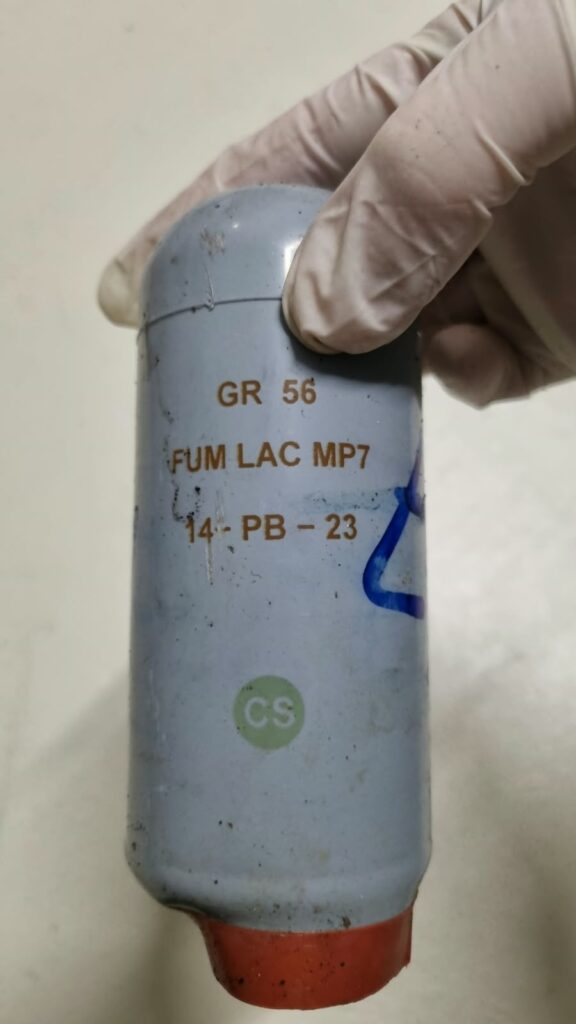
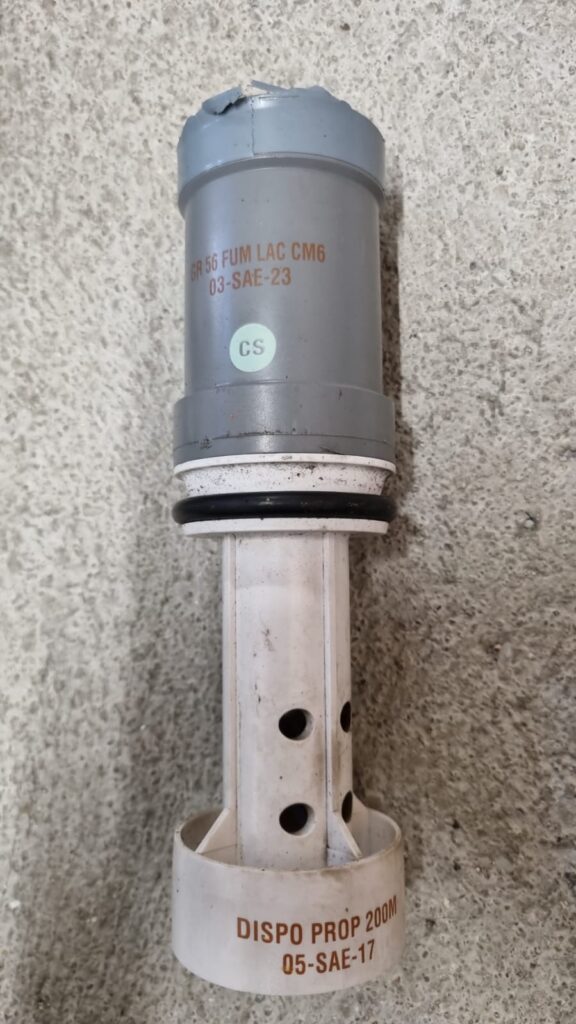
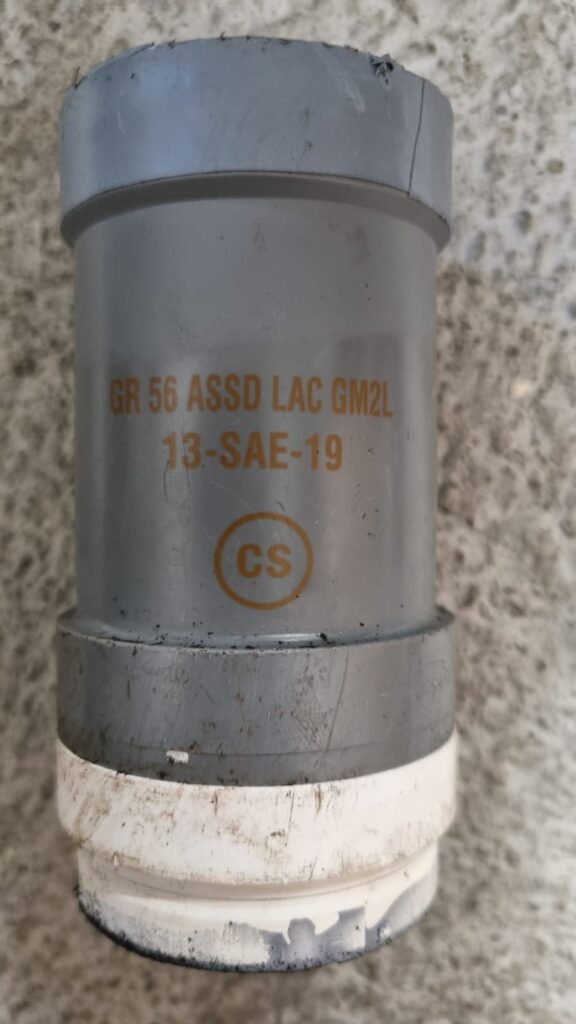
C: We tried to get those carrying infants to safety. The police had kettled us, so the only way to escape the gas was to run forward, into the riot cops. The police line sent more volleys of CS gas. This time, they included explosive 56 MM GM2L CS/explosive grenades. They’re only supposed to be used as a last-ditch defence, not as an offensive weapon.
Kids started picking up CS gas canisters to throw them away, but the explosive grenades look exactly the same, and we couldn’t see properly with the rain and the gas. This poor boy near me picked one up thinking it was a gas canister, and it blew off his hand.
TNW: How did everyone respond? Was anyone able to help him?
C: People were screaming that someone was injured and that he needed an ambulance. A few people managed to drag him away, but there was no access for medics at that point. The police fired more explosives; they gave no quarter whatsoever. I don’t know if they could even hear what happened.
TNW: What did you do?
C: A grenade then went off close to me, so I was very disoriented. It’s like being hit with a mallet. I went into robot mode and tried to ferry people out of the line of fire into a little park off the Rue Onze Novembre. But then the police started rushing the park.
I was bending over to give a pensioner some eye drops for the CS gas, and a policeman hit me in the back of the head with a baton. I obviously posed no danger; for all he knew, I could have been hurt myself. I fell, and someone grabbed my arm and dragged me away.
By that point, people were breaking lawn furniture and grabbing branches from trees, anything to offer some protection against the police. You know when big fish attack schools of little fish, and the little fish swim in circles up to the surface? It was like that — running in circles, trying to escape the beatings and explosives and gas. There was so much gas you couldn’t see properly; everything was a milky, yellowy white.
Suggested Reading

The riots in France are being stoked by Russia and Iran
I ended up helping a student with Down’s syndrome who’d been gassed. None of the police assisted her. They literally walked over elderly people who’d fallen. I saw them hit kids as young as 13 or 14 with batons.
TNW: When did you register how badly you were hurt?
C: Not until I got home, about 9pm. I took a cold shower to get rid of the CS gas. I bent over and fell, and was like, “Wow, I don’t feel so good.” I saw a doctor a few days later, and I have a concussion and a perforated eardrum. I’m currently deaf in that ear.
TNW: What do you think the fallout from this will be? What would you like to see happen next?
This has radicalised a group of young people who will no longer trust the police. They are tomorrow’s lawyers, judges, and doctors, and they’ve seen what authority does when you stand up to it. Late in the day, I saw one group of little kids, 12 or 13, bent over a puddle trying to wash gas out of their eyes. The police did that to them.
There needs to be a general strike. We have to bring the country to a halt until it helps the young people who are its future.
*Interviewee’s name changed to protect their identity.
 Most popular


Nigel Farage’s attack on the RNLI and co is a new low even for this bottom-feeder
I was at Eton with Charles Spencer – this is how it explains his battle with the royals


‘The deep state stole my mini-budget’: An exclusive extract from Liz Truss’s new book


18 things that will absolutely, definitely happen if Trump gets whopped in the midterms