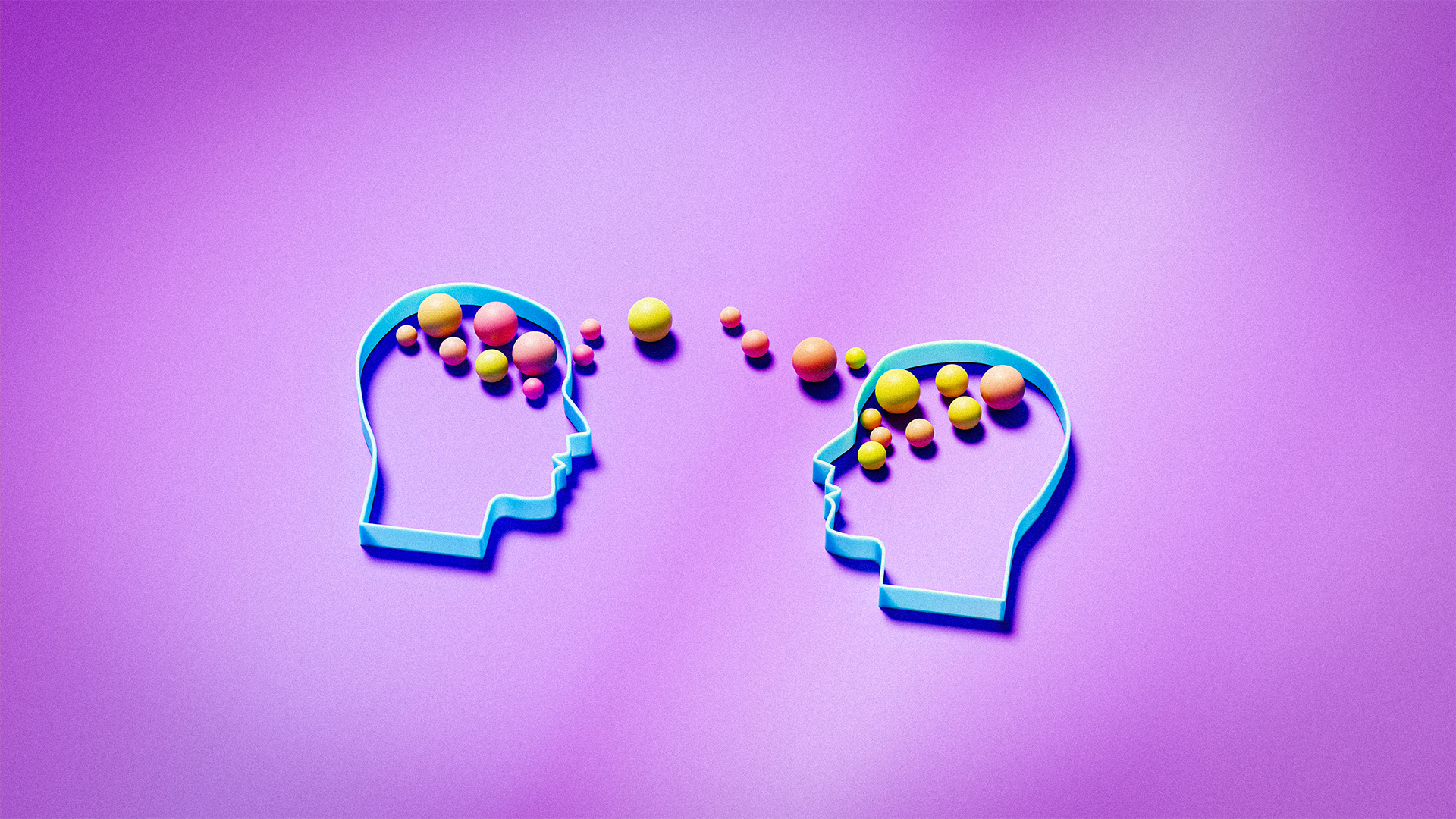
Human intelligence is primary among our defining characteristics. As far back as Ancient Greece, education has been built around acquiring and retaining knowledge. Experts know things, teachers pass those things on, and students are rewarded for remembering them.
In Plato’s Phaedrus, Socrates argued that writing might weaken memory because people would rely on what was written rather than exercise their ability to remember. His concern sounds familiar today. New technology is not just changing what we can do; it is changing the human capabilities we choose to continue practising.
But in recent years, intelligence has evolved from being something held by those we once looked up to, into something else entirely: a product. The world’s largest technology companies are investing hundreds of billions of dollars in increasingly capable systems. Each model is judged on whether it can reason more effectively, write more convincingly or outperform people on another test.
The message from Big Tech is clear. Intelligence is the ultimate measure of value.
There is a commercial logic to this narrative. If intelligence is one of humanity’s most valuable assets, machines capable of reproducing it become extraordinarily valuable products. Yet civilisation did not emerge simply because humans became more intelligent. It emerged because we became exceptionally good at cooperation. Modern society was built as much on trust, compassion, ethics, shared purpose and collective responsibility as it was on knowledge.
Democracies need people to accept shared rules. Economies need confidence between people who may never meet. Scientific progress is the product of collaboration across generations. Communities survive because people contribute to something beyond themselves, while families depend on care for one another. Intelligence may have helped us build these institutions, but it’s our human cooperation that has allowed them to endure.
Suggested Reading

Artificial intelligence and artificial philosophy
As a result of this Big Tech race to commercialise intelligence, AI is changing the economic value of intelligence because sophisticated knowledge is becoming easier to access. Information that once required expensive education or years of professional experience can now be reached through a prompt. That does not make expertise redundant, but it does change the advantage that access to information once provided.
For the first time in human history, intelligence itself is becoming abundant. When something becomes abundant, societies tend to place greater value on what remains scarce. In this age of instant answers, our judgement is becoming more valuable. In a world filled with synthetic content, authenticity also becomes more valuable. When information is everywhere, trust becomes more important than knowledge alone. I believe that new technology will change what society values entirely.
Technology has done this before. Industrial machinery reduced the economic importance of physical strength without removing people from the economy. Computers took over administration while increasing the value of interpretation and problem-solving. As machines take on more writing and information processing, care and relationships may become more valuable.
Klarna offers a useful example. The company became closely associated with AI-powered customer service and the efficiencies created by reducing its reliance on humans.
Suggested Reading


Why are all AI posters so bad?
But customers experiencing financial anxiety were not just looking for information. They wanted reassurance and the sense that somebody understood their circumstances. Years later, Klarna began bringing human customer service back. The lesson was not that AI had failed. It was that an efficient transaction did not create a valuable human experience.
We’ve all encountered a version of this with self-service checkouts. Retailers automated a process many assumed customers wanted to complete more quickly, only to discover that some people missed assistance and interaction.
A checkout worker was never simply moving products across a scanner. They were helping people, noticing difficulties and sometimes providing the only conversation an isolated person might have that day. None of that appeared in the business case because the most human part of the job had never been measured.
A similar shift is appearing in wider culture. Advertising campaigns from Apple and Lego have highlighted practical effects, real performers and physical production. Their behind-the-scenes content provides evidence that people made the work.
Audiences are being invited to value the process as well as the product. People want to see the fingerprints behind what they consume. Human imperfection is adding meaning because it provides evidence of intention and the human experience.
None of this is an argument against new tech. But its greatest contribution may be found not in performing any human activity, but in removing barriers that prevent people from doing more of it.
The technology industry is increasingly selling intelligence as a utility: knowledge, analysis and expertise available instantly and at scale. Yet if intelligence becomes abundant, we may be forced to place greater value on the things that cannot be automated.
Trust, empathy, friendship and judgement. The very qualities that made community and civilisation possible long before machines existed.
The challenge is that we built societies around measuring output rather than meaning, making these qualities easy to overlook, despite their importance. If we embrace this shift, AI could be profoundly good for society. Not because it replaces what humans do, but because it reminds us of what humans are for.
The atoms in your body were forged in ancient stars. In the most literal scientific sense, you are part of the universe becoming aware of itself. No technology, regardless of its intelligence, makes humans less remarkable.
New tech will transform industries, economies and institutions, but it will not alter the significance of friendship, compassion, curiosity, kindness or love. It does not diminish the meaning we create through relationships, nor the responsibility we carry for the world we leave behind.
Big Tech wants to build more intelligence, but civilisation runs on trust. The hopeful possibility is that increasingly capable machines will not diminish the importance of being human. They may finally help us rediscover why it was so important in the first place.
Gethin Nadin is an award-winning psychologist who was named one of the UK’s Most Influential People 2026. His book Heart In The Age Of The Mechanical is out now
 Most popular


Suella Braverman’s book has sold only 106 copies. This is why

The Brexit majority has gone for ever – rejoin now has a majority of 9 million


The mask has slipped – now we can see the real, shameful face of Reform


The riots in France are being stoked by Russia and Iran