Last week, India’s Supreme Court agreed to hear a simple demand made by an opposition politician: let someone independent check the voter list. Rahul Gandhi and nine other opposition leaders want a committee led by a retired judge to audit the names struck off in the first full re-check of India’s electoral rolls in more than two decades. While that goes on, they want the current revision of the voter list to be suspended.
I have spent the past fortnight on Delhi’s streets watching what happens to people who ask the same question without a lawyer.
First, the numbers, because they are at the heart of it: the most significant figure is 130 million. That is how many names were left off draft rolls across India. About 28 million were classed as dead, 30 million were “absent”, 63 million had permanently moved and 10 million were duplicated.
Deaths and duplicates can be checked against records, but “absent” and “moved” – more than 90 million names between them – rest on house-to-house checks by local officials.
But the evidence became clear that something was wrong with the paperwork. In Delhi, 3.3 million people have been told to prove they belong by October 30. Notices have gone out for other discrepancies; a Supreme Court judge called them “in all probability” machine-generated. One of these notices was even sent to the foreign minister.
The commission’s answer to every complaint is that anyone wrongly struck off can apply again. In Delhi that means Form 6, for people “seeking enrolment for the first time”. For a voter who has been on the roll for years, petitioners point out, that is a false declaration – and false declarations carry up to a year in prison. Kafka would have admired this bureaucratic trap.
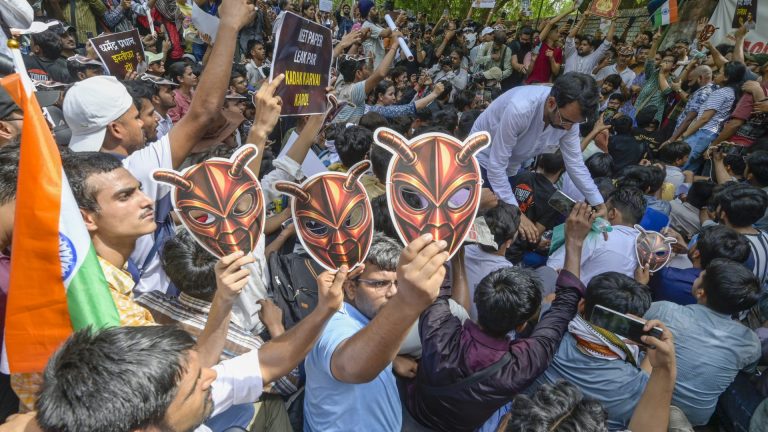
This is why a dispute about a database has become a test of prime minister Narendra Modi’s authority. In July the cockroaches – a Gen Z movement named after a chief justice’s jibe at jobless young people – forced out the education minister over leaked exam papers. But Modi will not give way over an election. His plan is simple: to shrink the electorate, then shut the places where people can complain about it.
Suggested Reading
How Modi became king of India
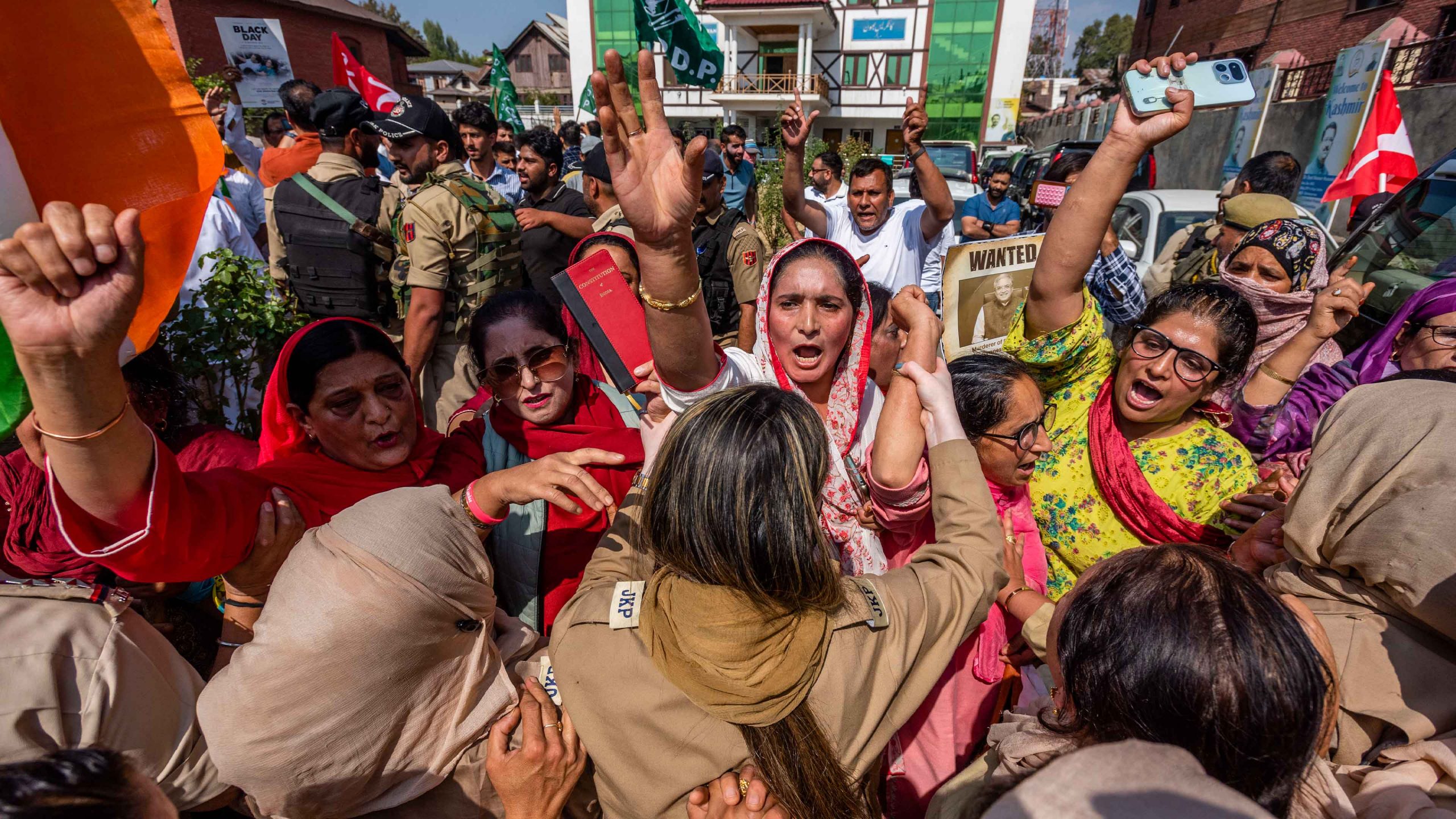
On the night of Friday October 9, police loudspeakers told people to stay at home; I filmed one outside a mosque. At 10pm mobile internet was cut around Raisina Hill, the seat of government – though, the home secretary has stressed, wifi and broadband were spared, which was a comfort to anyone who marches with a router.
On Saturday Jantar Mantar, Delhi’s official protest site for decades, was sealed off. What stays with me is how routine it looked. People who wanted only to keep their vote were lifted off the pavement in groups of seven or eight and put on buses. Reporters were also lifted. Lawyers put the total at about 7,000. When Ratna Singh, who runs the movement’s legal team, asked officers why they were not detaining right wing men attacking women and children, she was told: “We have been given orders to detain you, not them.”
On Sunday afternoon, by the H Block car park in Connaught Place, a few hundred students came past at a jog – backpacks, face masks, a young woman in a hijab, placards. Standing still is how you end up on a bus.
The government’s case is that order comes first: police point to buses damaged in earlier protests, and the government calls the marchers “anarchists”. When the UN’s human rights office asked for the “arbitrarily detained” to be freed, India called it “unacceptable interference”. Britain, which signed a trade deal with India last year, has said nothing in public.
On a corner of Connaught Place stands the Regal, a cinema that closed in 2017. Its posters are still up. One is for Raj Kapoor’s Mera Naam Joker (“My Name Is Joker”) which flopped in 1970, and took India years to recognise as a classic. The young people I have seen being lifted off these pavements do not have years. They have until October 30. The court will not hear their case until the 28th.