I had lunch in the House of Lords with my friend Marvin Rees, the former mayor of Bristol and the first directly elected Black mayor of a major European city. Sitting on the terrace overlooking the Thames, we discussed the challenges facing Britain’s cities.
Migration, he said, has always been with us. People have always moved. He does not believe in open borders; he believes in managing migration. As we left, he introduced me to his next visitor, the former Labour leader of Bradford Council.
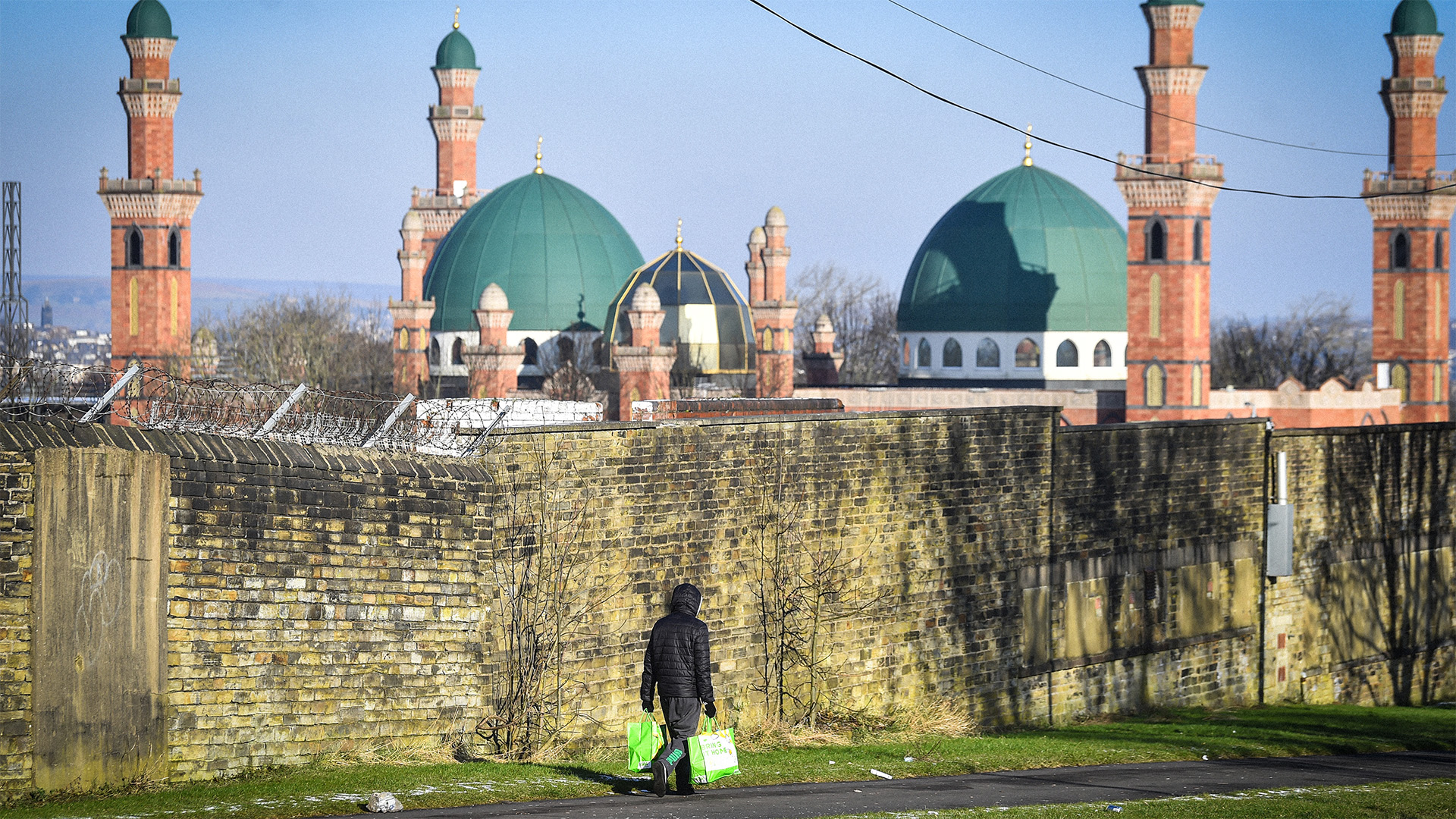
“I’m off to Bradford tomorrow to see whether Bradford has been taken over by Muslims,” I joked. One often hears claims from figures such as Donald Trump and Elon Musk that parts of Britain have been taken over by Muslims and that Sharia law is being imposed.
“That’s nonsense,” she replied. “It’s 65% white. Only 35% Muslim-Asian.”
Only. At current demographic trends, the white population could fall below half by 2050.
“Does it matter if Bradford becomes majority Muslim?” I asked Nizam Uddin, who was born and raised in London and is of Bangladeshi heritage, as we headed north in a rented snazzy black car.
We had agreed to make the journey together as friends acting in good faith, seeking some truth and openly discussing what we saw and heard. Nizam closely follows online political discourse; I do not. I belong to an older generation than him. Yet we are both deeply rooted in Britain, have friends across the political spectrum and from many backgrounds, and are part of international elite networks.
The question made him uncomfortable. We returned to it repeatedly throughout the trip.
Nizam worries that Britain is drifting towards civil conflict. He points to the rise of the far right, attacks on ethnic minorities in Belfast, and growing calls for the “re-migration” of Muslims. I see the Belfast violence as disgraceful criminal behaviour by thugs seeking revenge against immigrants after the stabbing of a local man by a Sudanese migrant.
The marches in London also resonate with us differently. Regarding Unite the Kingdom marches, Nizam focuses on the rhetoric of Stephen Yaxley-Lennon (aka Tommy Robinson), efforts to foster division by mobilising hostility towards Muslims, and foreign funding. I try to look beyond the people who appeared on stage alongside Robinson to the participants who had travelled to London to protest against what they see as a political class that has ignored concerns about immigration, the economy and public services.
Suggested Reading
Gary Stevenson wants a wealth tax. Then what?
We also reflected on the pro-Palestinian marches. Nizam challenges stereotypical portrayals of the protests. He sees diverse groups of participants, angered by the war in Gaza, Britain’s historical role in the region, and continued western support for the current Israeli government.
I see that too. But I am also conscious of an ideological current rooted in anti-western sentiment, of Israel becoming a uniquely powerful symbol of colonial injustice, and of efforts by some political actors to use the conflict to consolidate support. I am equally aware of how besieged many British Jews feel. Jews in Britain are ten times more likely to be victims of hate crimes than Muslims.
Yet both of us agreed that the marches have deepened social divisions, and that foreign actors have an interest in amplifying Britain’s internal tensions.
When we reached Birmingham, Nizam disappeared to a meeting while I spent two hours at Soul Studio Arts with Mohammed Ali, better known as Aerosol Arabic, the “Banksy of Birmingham.” Before we had properly begun talking, he insisted on feeding me shawarma and falafel delivered by Uber Eats.
Over lunch we discussed his art, his work with local communities, and why many white residents had left parts of the city. “White flight” has happened due to a feeling of alienation and loss of community brought on by demographic changes, deindustrialisation and the disappearance of working class jobs.
We reached Bradford just in time for the gala dinner of the Bradford Literature Festival. After a rapid change of clothes, we found ourselves seated at the top table, named in honour of the late David Hockney.
The festival is the creation of Syima Aslam. Born in Pakistan but raised in Yorkshire, she founded the Bradford Literature Festival in 2014 to help revive Bradford by creating an international festival that was both deeply local and confidently global. In an emotional speech, she described how the festival had emerged when Bradford was economically stagnant, facing deep public spending cuts and suffering a reputation for cultural decline.
Once among Britain’s wealthiest cities, Bradford had ceased attracting investment or visitors. Since then, the festival has evolved into a civic institution, contributing to regeneration, shaping national conversations and creating spaces where people from different backgrounds meet. Education, she argued, changes lives, and literacy is its foundation.
The second speaker, a writer of Asian Muslim and Irish heritage, offered a very different message. He spoke of colonialism, the need to shed a western racist mindset, and the importance of celebrating writers from the “global majority.”
Afterwards, I spoke to a Scottish nationalist of Pakistani heritage, who looked dapper in a kilt. “I could tell you didn’t like that speech,” he said. I replied that the speaker had been given an opportunity to say something profound about literature and our shared humanity. Instead, I thought the speech was poorly structured, overlong and reflected views commonplace within identitarian left-wing and Islamist political thought – not in keeping with the inclusive vision of BLF as articulated by Syima.
“Never play poker,” he laughed.
Suggested Reading

How should Burnham treat Trump? Try ignoring him
I also wondered what another guest, Stephen Place, Reform UK’s newly elected leader of Bradford Council, made of the speech. A former police officer, he recently ended more than a decade of Labour control. Reform is now the council’s largest party and is campaigning for Bradford to be included in the national inquiry into Asian grooming gangs and an end to some net-zero policies.
Our visit coincided with the release from prison of 73-year-old Shabir Ahmed, the ringleader of a Rochdale grooming gang. Convicted in 2012 of multiple serious sexual offences against children, there is an uproar that he is not being deported to Pakistan, his country of birth.
Even though he was stripped of his British citizenship at the time of his conviction, the Immigration Act 1971 barred the removal of any Commonwealth citizen who arrived in the UK before 1973 and had been in the country for five years. Nizam agreed that Ahmed should be deported but worried that the case would further strengthen demands for the “re-migration” of Muslims – a euphemism for the forced removal of people with immigrant backgrounds.
Naz Shah, MP for Bradford West, invited us to her office the next morning. Standing before a district map, she explained the social geography of her constituency. Different communities largely lived apart: Kashmiris here, Bangladeshis there, affluent suburbs elsewhere, while many white working-class families had gradually moved out of the centre.
For decades, she noted, marriages between cousins in Pakistan had also served as a route for family migration to Britain. She gave me a copy of her memoir, Honoured, recounting her childhood in poverty, her arranged marriage, her mother’s imprisonment for killing an abusive partner, her political rise, her defeat of George Galloway to win the Labour nomination, and her struggle against the biraderi – the Pakistani kinship networks that are used to mobilise block voting.
Suggested Reading
The American right’s war on Britain
Afterwards, Nizam and I drove through several of the neighbourhoods she had described. The white working-class areas appeared neglected, with untended gardens and tattered St George’s flags flying outside many homes. The predominantly Asian neighbourhoods felt more commercially vibrant, with busy local businesses.
In the city centre stood a grand Grade II listed Victorian building dating back to Bradford’s 19th-century heyday as the “Wool Capital of the World”, and formerly home to the University of Bradford School of Management. Purchased in 2021, it is now Mustafa Mount, an Islamic centre.
Lunch was at MyLahore: dynamite prawns, Lahori chicken karahi, biryani, mango lassi and karak chai. It was delicious. When Nizam briefly disappeared to the bathroom, I attempted to pay the bill. The waiter politely refused, explaining that Nizam had invited me and therefore had to pay. Sorry, Niz!
The hollowing out of the British state has been happening since the 1990s. Many of the associations, clubs and unions that once connected working-class communities have disappeared. Laws which were meant to be liberal have had a negative impact on policing and local communities. And the Church of England has failed to fill the communal and spiritual vacuum.
So how do we move beyond the politics of victimhood and identity, of fantasy economic policies, of making foreign struggles our central purpose? It begins with curiosity: a willingness to understand the depth of Britain’s domestic challenges rather than simply denounce one another.
It requires conversations and debate that can take place without fear of cancellation, and a renewed commitment to building institutions and communities in which people from different backgrounds can flourish together. Ultimately, it means doing the slow, difficult work – in our institutions, our economy and our culture – to become the political authors of our own future.
 Most popular
My truly deranged encounter with Trump apologist Kellyanne Conway
The moral depravity of Robert Jenrick
Is this the real reason Trump keeps falling asleep in public?

Suella Braverman’s book has sold only 106 copies. This is why