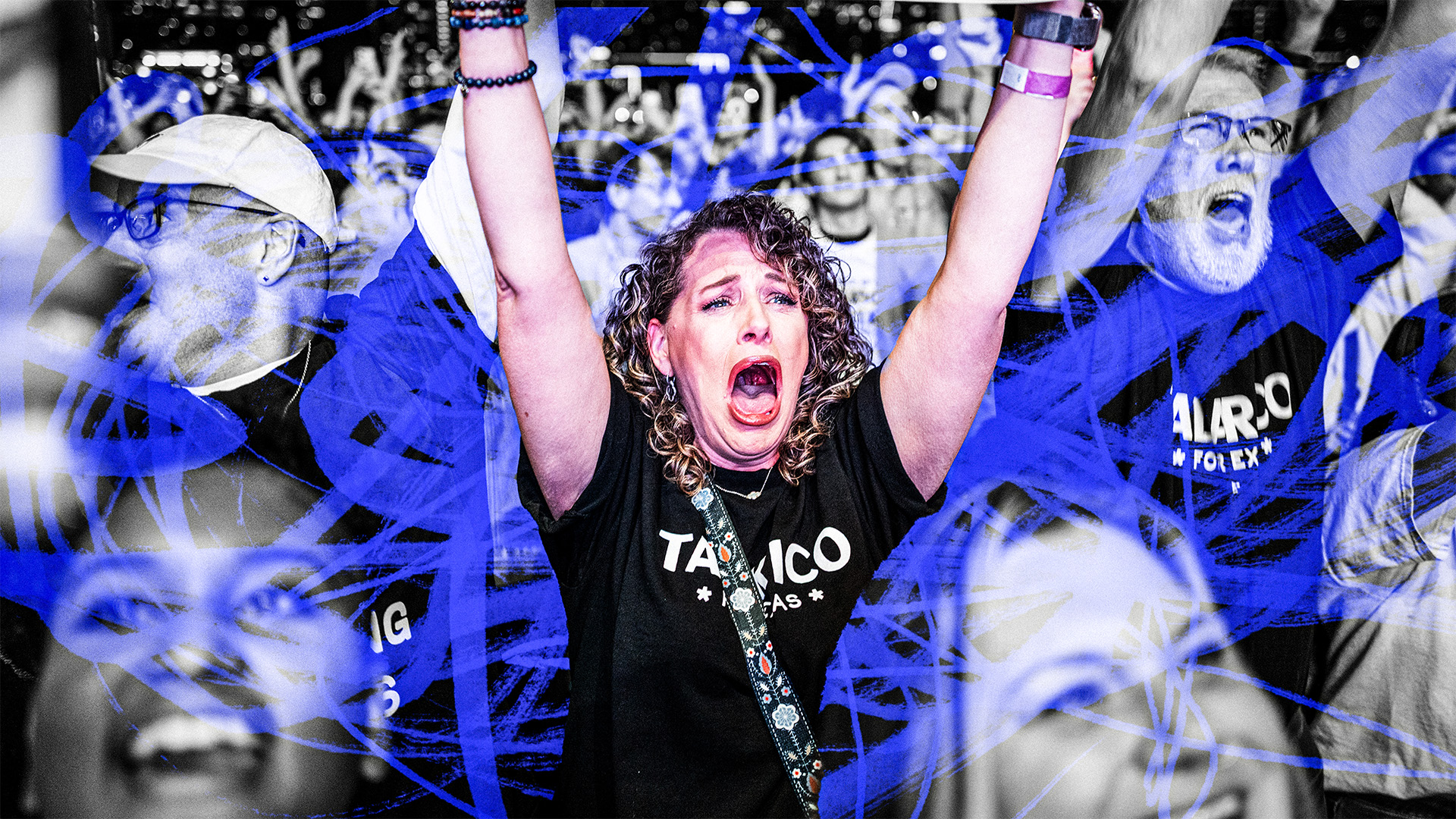
“Shut the fuck up, shut the fuck up… never in my LIFE,” the words suddenly cut through the noise at the Williamson County Democrats watch party in Round Rock, Texas. A group in the corner were watching the Republican Texas governor Greg Abbott, who had just appeared on a muted TV screen behind the bar.
He was, the scrolling text announced, conceding defeat to Gina Hinojosa, the long-shot Democratic candidate. Minutes later, the Texas senate race was called for the Democrat candidate James Talarico, a hometown boy. For many people, this was a first in their lifetime – a Democrat hadn’t won a statewide race in Texas in three decades. Texas had turned blue. No one could quite believe it.
Right up to election day, social media had been a mess of contradictory speculation: massive voter turnout during early voting meant that the Republicans were winning. Or that the Democrats were. Polls had the races leaning towards the Democrats, but they appeared to be within the margin of error. Stung before, Texan Democrat voters fretted that it might be a mirage. That uncertainty made the blue wave on Tuesday afternoon an even greater shock.
The flipping of Texas, in the bitterly contested and exceedingly expensive midterms, has set the tone for a potential post-Trump future. The Republicans poured in vast amounts of money and deployed all the gruesome culture war talking points at their disposal. Over the past decade, that approach has been wildly successful.
But not this time. Instead, it led them down to a calamitous defeat. That failure raises a huge array of questions for the US right, but most pressing of all is whether the defining Trumpian election-winning combination of money and fear has now had its day. If Texas is anything to go by, the answer appears to be “yes”.
On the morning of polling day, I was in Edinburg, a town in Texas Congressional District 15, an elongated stretch that runs from the east of San Antonio all the way down to the Mexican border. Cristelo Mendoza was standing outside a polling station, wearing a well-worn t-shirt bearing the face of Bobby Pulido, the democratic candidate running in that district. Cristelo had picked the winning side, although he wouldn’t know it for a few hours still.
Cristelo was pissed off. “The economy’s a disaster. You can’t even have a cookout,” he told me indignantly. “Meat is $9 a pound, $30 only gets you this much!” He held out his hands, stretched about shoulder width apart. “And when you cook it, is like this!” The distance shrunk by half. The cookout is a central part of community life for Texans of all descriptions; that it had become a luxury was an outrage.
Texas Congressional District 15 turned Republican for the first time in its history back in 2022, when it was won by Monica de la Cruz. It was a major upset, and taken as evidence of a massive rightward swing among Latino voters, as well as a stamp of approval for tough Republican border policies. When she was re-elected in 2024, that change looked permanent.
Suggested Reading
Donald Trump messed with Texas. Now Texas is fighting back
In a bid to keep it that way and to expand Republican control of the Rio Grande Valley, the Texas congressional map was redistricted in 2025, the first aggressive step in the Republicans gerrymandering effort countrywide, forcing De La Cruz to campaign hard in the north-eastern stretches of the district where she was less well known. In the end, she performed well in these counties but faltered in the south, despite frantic last-minute GOP efforts to rally around her.
Mike Johnson, speaker of the House, spent election day morning at locations across the valley in support of De La Cruz and other Republicans running in the area. He laid out the stakes clearly: Republican control of the house relied on south Texan Republicans turning out the vote.
The fact that the speaker felt the need to spend election day campaigning in Texan border districts that had been specifically redrawn to favour the GOP showed that support was crumbling. But this was not to be admitted under any circumstances, and Johnson’s rhetoric remained strident as ever: “They’re over-sampling Democrats and they’re under-sampling Republicans,” he claimed, “because Republicans don’t trust the polls anymore. They don’t want to participate.” By midnight it was clear that it was, in fact, the Democrats who had been under-sampled.
At Lark Community Center in McAllen, I met Gary Groves, the Republican candidate running a state-level campaign for the Texas House of Representatives, District 41. He was camped out with an array of supporters, and sporting a cap with the slogan “RGV First”, a reference to the Rio Grande Valley in which we stood.
Unlike other Republicans in this cycle, Groves did not try to dodge the economic problems people were facing in the region, acknowledging that it had been the biggest issue he’d encountered on the campaign trail.
“Anything we can work out to put money in their pockets, that’s what we need to do. That’s number one,” he told me. He was encouraged by the presence of SpaceX in south Texas, and supported the development of more data centers. Elon Musk had moved his operations to Texas after losing patience with the authorities in California.
“The hardest thing is education,” Roy Sagredo, a first-time voter aged 77 told me. “If we could get people to understand, to have an open mind, they would vote Republican. Believe me, they would.”
He’s particularly appalled by the role social media has played in the campaign, which he sees as having driven voters to the Democrats. People lie, Roy said, to hurt people and the economy. This is not the type of freedom of speech the founding fathers intended, he said, before proposing his solution: “those people need to go to prison.”
Amid the crowd, one woman held a “SOCIALISM SUCKS” sign. She was sporting a MAGA hat and introduced herself as Sylvia Garcia. She arrived in the US in the early 60s, one of the unaccompanied minors flown out of Cuba during Operation Peter Pan. Under that scheme, Cuban parents who were worried by the country’s political direction could send their children to live in the US.
Many people deferred to her when it came to the horrors of socialism, a subject that featured heavily in this local campaign. The reason – Groves’s opponent in the race, Julio Salinas, used similar colours to the ones deployed by Zohran Mamdani in his campaign to become mayor of New York City.
“Julio Salinas is bankrolled by a radical leftist PAC that helped elect socialist NYC Mayor Zohran Mamdani,” Groves’s website stated, alongside a photo of the two men, side by side. “Now that same machine is pushing those policies on Texas. Do not let New York socialists buy this race.”
Voters passed by to thank Groves for his work, assuring him that they would be voting for him. On the curb, a group of young Republicans waved signs at passing cars that honked in support.
Groves lost. Alongside the colossal upsets of results night it was not a headline-grabbing outcome – but wins of this kind will be highly consequential. Texas has acted as a laboratory for state-level conservative political experimentation, which has included giving state police greater powers on immigration and, with the passing of the Texas Heartbeat Act in 2021, enacting a near total ban on abortion.
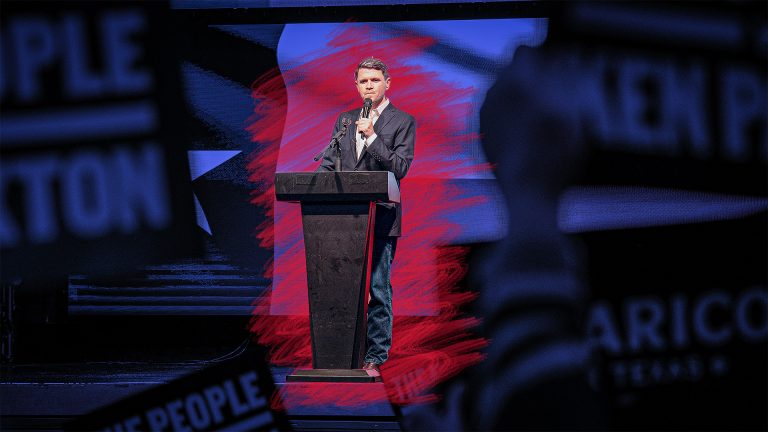
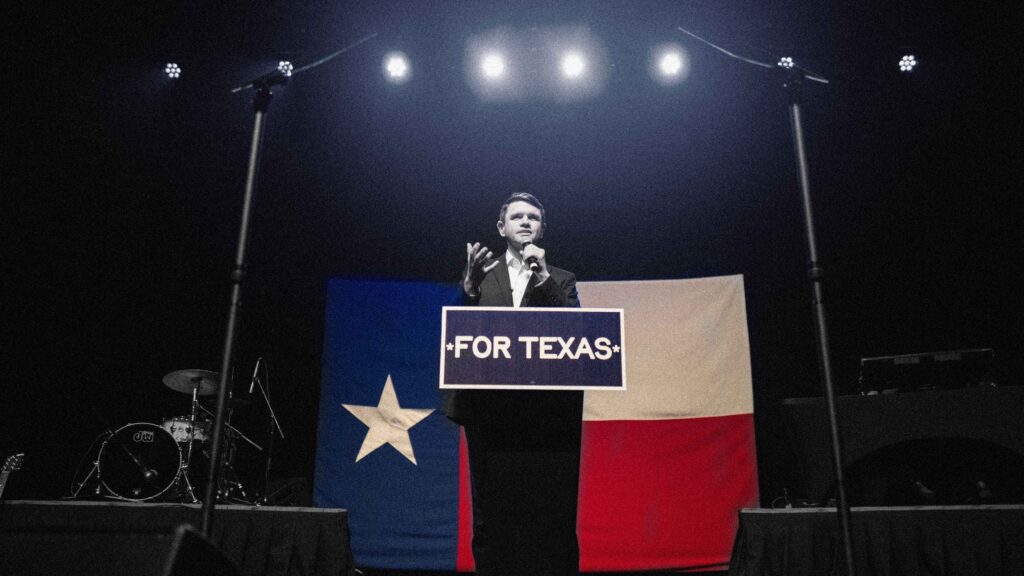
But now there is a new political impetus that upends that relentless conservative push to the right. As James Talarico has put it, “The biggest divide in this country is not left vs. right. It’s top vs. bottom.” Talarico’s Senate campaign materials did away with traditional Democrat blue, and made only muted references to the party. Browsing the campaign website, you’d be forgiven for thinking he was running as an independent.
Suggested Reading

Watching the fall of Trump with New York’s MAGA hardcore
“He’s a new kind of Democrat for Texas,” Nancy Davis, a Dallas resident told me before election day, “and it’s reassuring to people that he might switch parties once in a while.” In other words, they can trust him to do what’s best for Texas, not for the Democrats.
That “candidate-first” approach was replicated in other races: throughout Texas 15, Pulido signs showed the Tejano singer in a cowboy hat superimposed on the Texan flag. His volunteers wore t-shirts with the slogan: “Not Team Red, Not Team Blue, Team You.”
At one polling station, a voter told me that he was supporting Pulido, his former classmate, but that he was not a Democrat. In fact, he supported the Iran war and would not be voting for Talarico on religious grounds, even though Talarico himself is a devout Christian and Presbyterian seminarian.
On the Republican side too, the three-term Texas governor Greg Abbott tried to distance himself from his own party. Throughout the governorship race, Abbott downplayed his attachment not only to Trump but also to the Republican senate candidate, Ken Paxton.
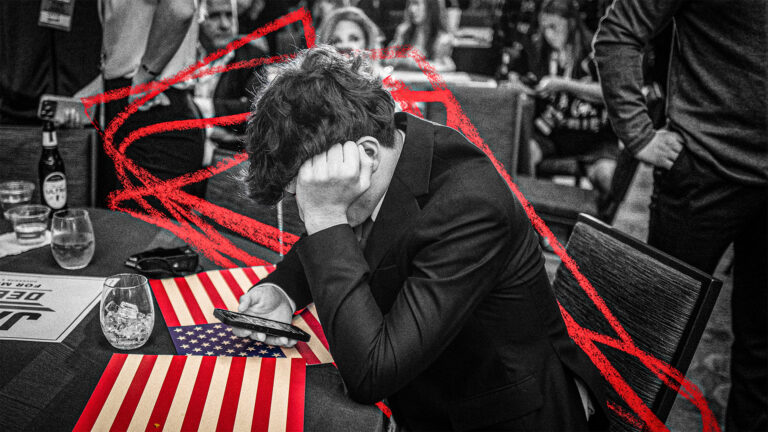
That was understandable – Paxton was a historically bad choice. He was a hardline conservative who built his national profile by suing the Biden administration more than a hundred times and by challenging the 2020 election results. His rise was rubber stamped by Trump in the primaries against the more moderate incumbent John Cornyn. Plagued with corruption allegations, Paxton was impeached as Texas attorney general in 2023 by his own party, and to top it off was hit by a string of allegations of infidelity.
But the margins by which the Democratic candidates swept Texas went beyond any one candidate. Not even the colossal spending spree seemed to have any effect – $550m was pumped into the state, making it the most expensive race in history.
Most of that money came from Elon Musk, and as far as possible without actually appearing in ink, Musk’s name was on the ballot. The world’s richest man and Texas resident, whose companies have gained at least $10bn worth of government contracts in Trump’s second term, stuffed dollars into losing Republican campaigns across the state – something the Talarico campaign seized upon as a badge of pride.
Ads funded by Musk’s millions tried to reheat the culture war successes of a now bygone era, continuing to push anti-trans messaging; voters in South Texas were repeatedly told that Talarico was for “They/Them”.
At one point, a major attack line directed at Talarico from both Paxton, his opponent, and Trump made the spurious claims that the candidate was vegan. “Texas doesn’t like vegans,” Trump said. The campaign replied with a photo of the candidate tucking into a turkey leg.
That exchange in particular was a sign of how, across the country but particularly in Texas, the culture war appears to have been defanged. Voters of all descriptions had bigger fish to fry. Corruption, gas prices, the war in Iran and ICE’s presence on the streets were the real issues on people’s minds. Veganism was not a core voter concern.
Another thing on people’s minds was the vast and growing gulf between the everyday American and the very richest. It was clear from everything Trump said that he never grasped this.
At a rally in Georgia in late October, Trump told supporters: “I can just see the fake headlines: ‘president Trump is talking about all the money they’re making while people are suffering at the pump.’ That’ll be the headline. I said, ‘I don’t give a damn.’ I’m gonna say it: We’re making a freaking fortune.”
Suggested Reading

The end of Trump’s empire of madness
Even in rural areas of Texas, voters abandoned the Republicans, disillusioned by a growing sense that decisions were being made in the interests of the moneyed few. That discontent became focused on data centers, which have sprung up across Texas and become a major issue, so much so that Abbott was forced to u-turn on his past support and put a pause on data centre construction.
But the betrayal of rural voters went far deeper: rural hospitals and schools are widely regarded as being in crisis, and ranchers have been severely affected by Trump’s new tariffs and rising gas prices. Culture war fearmongering was not enough to win back support from people who had been pushed to the brink.
The deluge of campaign money could do nothing to win them back, and even had the perverse effect of reinforcing the impression of the vote as a fight against out of town plutocrats. Back at the Round Rock watch party, as the race was called for Talarico, one of the Williamson County Democratic members called out with unrestrained glee: “Elon Musk just wasted a lot of money,” and summed up the campaign in the traditional, blunt, Texan style: “Guess what motherfucker? Pay taxes!”
 Most popular
Watching the fall of Trump with New York’s MAGA hardcore
The end of Trump’s empire of madness


Sixteen ways to make Bonfire Night great again
If Burnham held a snap election, he’d win – but there’s a catch