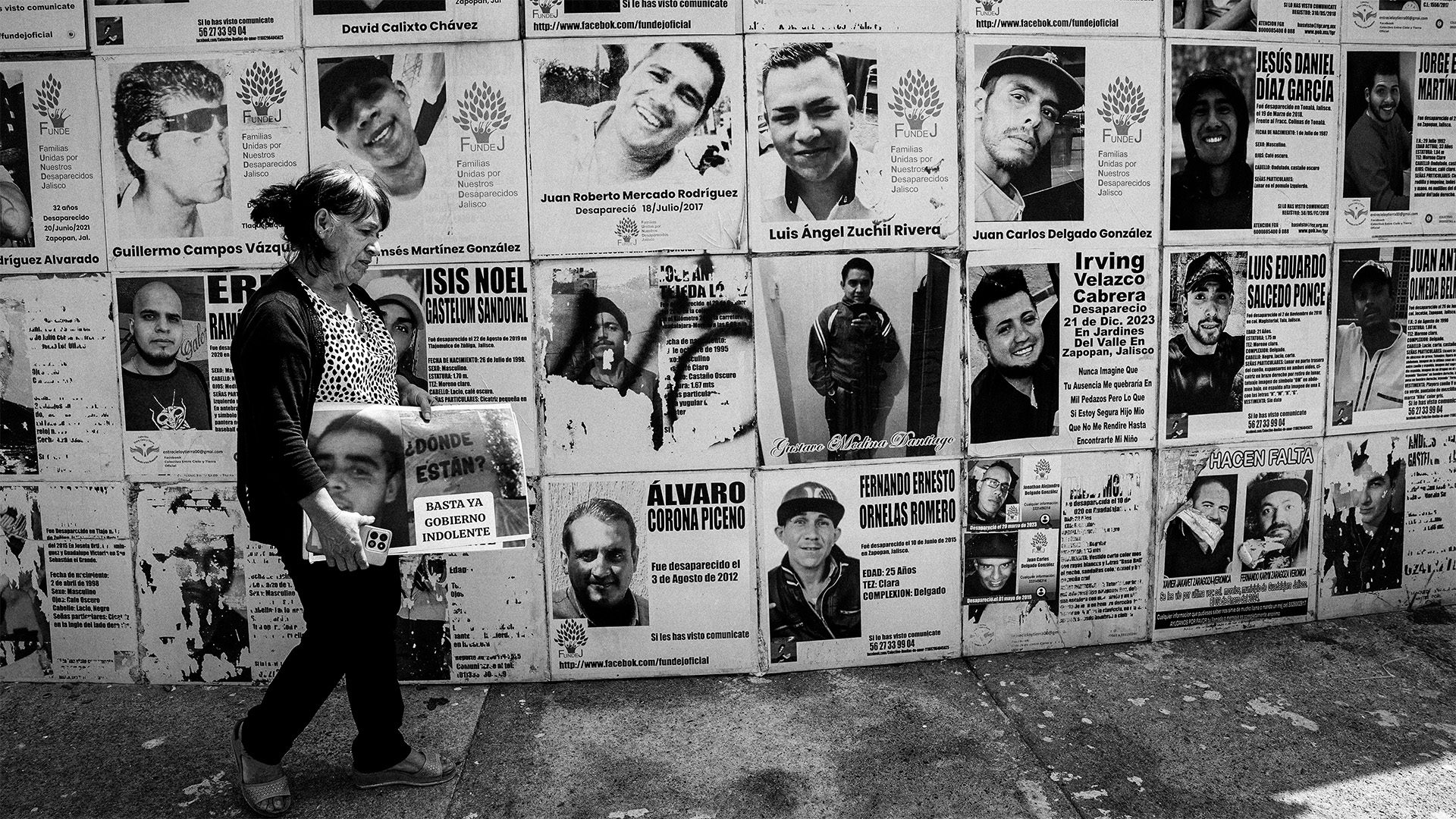
The rains came early to Guadalajara in Mexico this year, beating the World Cup to the city. It’s bad news for a group called Guerreros Buscadores de Jalisco, whose work searching for Mexico’s missing people in Guadalajara becomes ever harder.
The volunteer group was established in 2024 and it operates at high personal risk, trying to locate the country’s 130,000 missing people. They work largely alone, monitoring anonymous tips, arranging search parties, learning basic forensics, and more.
“We’ve found remains in houses, garages, patios, bathrooms, ravines, dumps, rivers, anywhere – even the places you least imagine, we’ve found them,” Jaime Aguilar explains as we talk in a mall café.
When we met, the Guerreros’ search was taking place on the western outskirts of the metropolitan area, with Estadio Akron visible in the background. That was the venue where South Korea played Czechia on Thursday, the first of four World Cup matches in Guadalajara.
Suggested Reading
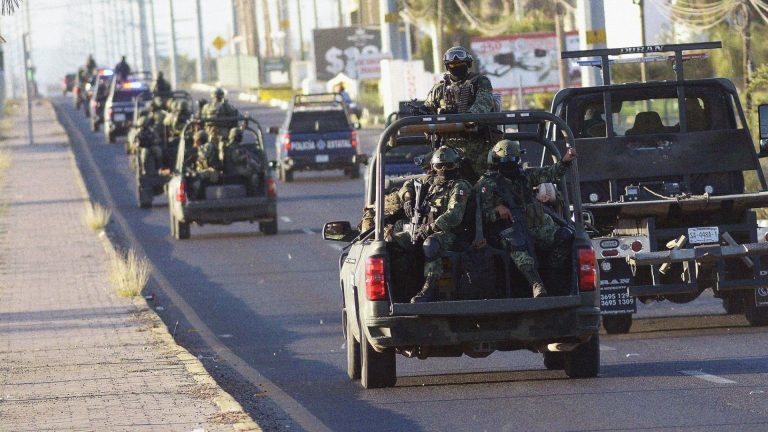
The parallel geography of violence in Mexico
Guadalajara is one of the worst affected regions of the country for forced disappearances. Official state registers for Jalisco show more than 16,000 disappeared people, as of 30th April 2026.
The organisations that take matters into their own hands and go looking for these vanished people are threatened, intimidated, and at severe risk from retaliation from organised crime groups for their work. The problem is not that they are seeking loved ones, but that in the course of their work they are uncovering evidence of violence, crimes, and murder.
Teresa González Murillo, a member of Luz de la Esperanza Desaparecidos Jalisco, was attacked and later died in hospital. A few weeks later, María del Carmen Morales, a member of Guerreros Buscadores, was assassinated in the early morning, alongside her son. She’d been threatened repeatedly and had stopped attending search parties.
The impact was felt deeply, Jaime says. These were women who had already lost a son or brother. Their lives were cut short because they dared to look for them.
Many activist groups are seeking to capitalise on the World Cup, organising protests in the run-up to the tournament and throughout it to bring greater visibility to the issue.
On the other side of the country’s northern border, in the US, many people are similarly concerned by disappearances.
“There’s a parallelism between organised crime and ICE. The actions are very similar,” says Manuel Vincente, a Jalisco native currently living in California, where he works with a migrant rights organisation. “But in the US it’s a federal entity, funded by the government that is terrorising people.”
According to TRAC immigration, around 60,000 people are currently held in ICE detention in the country. Human Rights First, a US-based organisation, contends that, under human rights law, these should be viewed as enforced disappearances.
“A lot of the time, the families don’t even know where to start looking for their loved ones,” says Azael Alvarez of the community organisation, El Movemiento, based in Dallas. The city is set to host nine matches for FIFA’s World Cup.
Official organisations and the police offer little help to people seeking their loved ones, so they turn to El Movimiento’s hotline for legal guidance and advice on how to locate people in the detention system. Meanwhile, deaths in ICE custody are on the rise.
The lack of support from official organisations in the US and the rise of community-run groups to fill the gaps closely echoes the response to disappearances in Mexico.
“We have few resources to do this,” Ceci Patricia Flores Armenta, the founder and president of Madres Buscadores de Sonora. “But we have the love and willpower that the authorities lack.”
Two of her children were disappeared. She has also been the target of attacks, but she persists. “We have no choice but to continue to search.”
Violence has also been used as a tool of intimidation to discourage or silence activists and observers across Mexico. And in Minneapolis, ICE agents shot dead American citizens who were simply watching their work.

“Some members said they no longer felt comfortable even in documenting what was going on for fear of getting murdered on the street,” Azael recalls. “But there were also people who felt the need to do something.”
Players arriving for the tournament also faced hostility from US officials. Teams from Senegal and Uzbekistan were subjected to special security searches, while the Somali referee Omar Artan was denied entry into the country.
The Iraqi player Aymen Hussein was detained and questioned for seven hours before release and the Iranian national team was forced to rush to change plans and move their base for the Cup to Tijuana, despite playing all three group stage games in the US.
Back in Dallas in the run up to the Cup, El Movimiento noticed something unusual: two cars marked, unusually, as ICE vehicles that have not yet been documented as carrying out enforcement activity.
“It’s an intimidation tactic,” Azael says, “and it’s also trying to normalise presence in the community.”
Across the border, Jaime and other activists in Guadalajara are working hard to paste posters of missing people in the cities’ tourist hotspots. He fears reprisals from the local police force, who are alleged to have ripped down or obscured posters that make clear the extent of the disappearances in Mexico.
On both sides of the border, this is a tournament surrounded by disappearances and a terror that cannot be ignored.
“It’s the same,” says Manuel, “it’s the same situation.”
 Most popular


Emily Maitlis’s diary: As I was saying to George Clooney just the other day…


Why Slavoj Žižek probably hates you

There’s only one reason Trump went to Ireland – it wasn’t to meet the Taoiseach

A new film about Elon Musk reveals him as so awful it’s almost tragic. Almost