James Carville, Bill Clinton’s strategist, once famously mused about power. “I used to think that if there was reincarnation, I wanted to come back as the president or the Pope or as a .400 baseball hitter,” said Carville. “But now I would want to come back as the bond market. You can intimidate everybody.”
And he was right. The bond market is one of the most potent forces, if not the most potent force, in global politics. The bond market has destroyed governments, such as that of Liz Truss, and has even mounted speculative attacks against entire nations, as occurred in Argentina in the early 2000s.
And now Andy Burnham has to confront the challenge of the bond market, a huge, global network of investors that are currently happy to finance Britain’s debt pile, which currently stands at a dizzying £2.9 trillion. That is around 95% of the UK’s GDP, a smaller percentage than either the US or France, but then Britain pays a higher interest rate on its debt. That makes the UK especially exposed to the bond market.
Under Keir Starmer, Rachel Reeves managed to keep the bond market happy – but not that happy. In March, the cost of UK government borrowing was at its highest level since 2008 and it’s still more expensive for the UK government to borrow money than Italy. In other words, the bond market has got its eye on Britain.
Burnham didn’t help when he remarked back in September that the UK needs to get “beyond this thing of being in hock to the bond markets”. He has since tried to play down those remarks. But a government cannot simply walk away from its debts. Neither can Britain simply stop borrowing money – doing so would leave the nation with a £100bn hole in its public finances. Britain needs the bond market.
But if the shift to Burnham looks like a move towards higher borrowing and more spending, if the market suspects that UK borrowing is getting out of hand, and if the opinion of that global web of investors suddenly changes, the results could be disastrous. If the bond market doesn’t like political decisions, then it can start to dump your debt. That’s what happened to Liz Truss.
Interest rates jump sharply, which makes mortgages more expensive. The housing market dips. The currency begins to weaken. Government debt interest payments go up (the current annual bill for debt interest alone in the UK is £110bn), which means government has to borrow even more to cover soaring costs. The economic pressure can be politically disastrous.
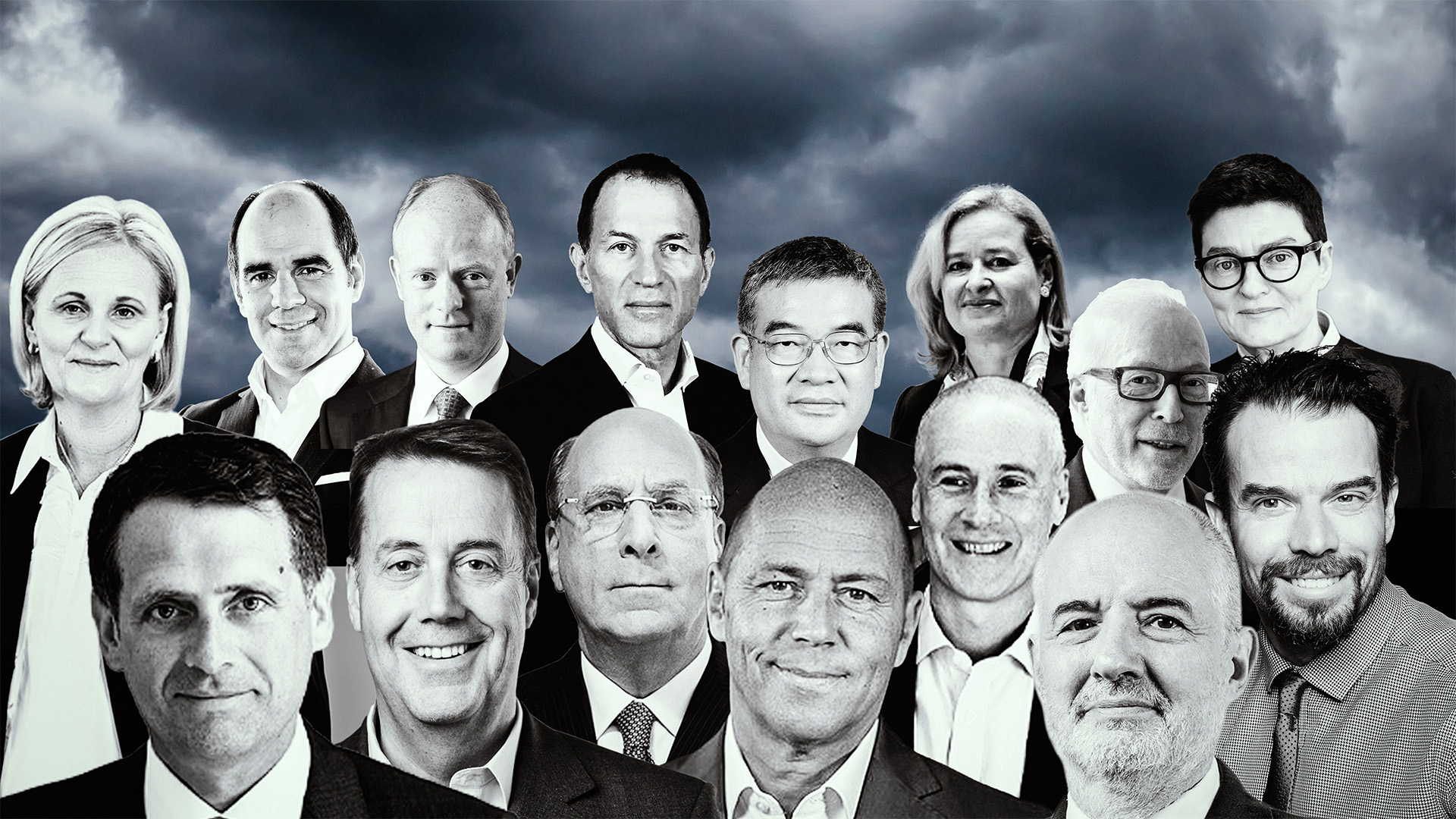
Carville was right – the bond market can intimidate anyone. But the bond market is made up of investors, just like any other market. So who are these people, whose decisions can destroy national leaders in an instant? Who are the individuals who actually control Britain?
Institutions
The most important players in the market for UK government bonds are the pension funds and insurance companies, which make up about a quarter of the entire UK government bond market. Big players here are the insurers such as Legal and General, headed by CEO Antonio Simoes. Then there is Aviva, led by Dame Amanda Blanc and also the Phoenix Group, where the CEO is Andy Briggs.
Suggested Reading


Andy Burnham’s devolution delusion is about to meet economic reality
Royal London is a huge pensions and insurance firm with significant holdings of gilts, headed by Barry O’Dwyer. M&G, the savings and investments company, is also big in the UK bond market, and is led by group chief executive Andrea Rossi.
As well as these, there are the large asset managers – such as the huge American firm BlackRock, headed by Larry Fink. It was Blackrock that, from 2017-21, took on George Osborne as an adviser, reportedly paying him £650,000 a year for one day’s work a week. That means Osborne, the former chancellor, actually worked on both sides of the UK government bond market.
And in the states, PIMCO, the colossal west coast bond fund is another big operator in the UK bond market, under its CEO Emmanuel Roman.
Hot Money
But over the last few years, these more traditional long-term institutions have stepped back from the market, and what might be called “hot money” has stepped up. The key players here are the large hedge funds such as Brevan Howard, which is headed by CEO Aron Landy, and Millenium Management, led by its chairman, Israel Englander.
Other big hedge funds that buy and sell government bonds are Capula, led by CEO Enrico Corsalini, and Rokos, headed by the billionaire Christopher Rokos. Then there is the MAN Group, led by Robyn Grew and Caxton Associates, where the chair, CEO and chief shareholder is Andrew Law.
These sorts of firms, which usually run multiple strategies across different trading teams, are much less likely to buy bonds and hold onto them for long periods of time. Instead they engage in a far more complicated series of short-term trades – often involving borrowed money – to exploit small differences in pricing between different types of UK bond, or between UK bonds and those from other countries.
The UK government bond market is constantly churning, and on any given day, these sorts of “hot money” players tend to do most of the trading. They are the ones who cause the minute-to-minute moves in prices, especially when funds are keen to join a bandwagon.
If prices are rising, this can pull in more traders pushing prices up further. On the other hand, it can offer momentum to downturns. In an ideal world, the politicians would want traders like these to form a smaller part of the market, because they present the biggest political threat to governments. But then borrowers can’t be choosers. The more pressing need is the need to sell bonds, not to worry about who is buying them.
Overseas buyers
Around one third of all UK government bonds are held by overseas residents – many of the hedge funds that are now large players in the UK government bond market are based abroad. That is one of the factors that has driven the foreign ownership share of UK government bonds up from 27% in 2020 to 33% today.
But another important sub-category of overseas investor is what are called “official institutions”. While the UK, like many advanced economies, holds small official reserves of foreign currency there are still countries – notably China, Japan, Taiwan, Switzerland and many Gulf States – that have more significant holdings.
While the precise data is sketchy, China’s State Administration of Foreign Exchange, which is headed by Zhu Hexin, holds a substantial amount of UK government debt. For these sorts of investors, the price of the pound can matter just as much as the value of bonds. A falling currency makes any bonds denominated in that currency less valuable. In this way, the Chinese state is itself part of the bond market.
The seller
And at the very start of this chain is a department of Whitehall known as the Debt Management Office. Once the Treasury has drawn up its overall borrowing plans, the DMO turns them into reality. Jessica Puley, a veteran DMO staffer and former banker, has headed the office since 2024.
Suggested Reading


The 60% problem: Why a hotter climate is a crisis for the UK economy
It is Puley who oversees the sales of all those government bonds. This year, under her watch, the DMO expects to auction £105bn worth of bonds to cover Britain’s annual budget shortfall. The DMO will also have to find another £140bn to cover the cost of bonds that have expired.
The nature of the threat
In 2022 Liz Truss and Kwasi Kwarteng, her chancellor, appeared to go out of their way to unnerve the bond market. It was not just that they planned to increase borrowing by around £30bn to fund tax cuts at a time when global inflation and interest rates were already heading up. It was the whole tone of their approach. Sacking the head of the Treasury didn’t help. In addition, the mini-budget itself was not accompanied by the usual costings and forecasts from the Office of Budget Responsibility. No one had checked the sums.
The bond market took this very badly – it is precisely the kind of irresponsible economic policy most likely to send it into a spin. In the aftermath of the mini-budget, the market immediately started selling bonds. This meant the price of UK debt began to fall, and the interest due on bonds began to rise. The pound fell sharply in value at the same time.
The fall in bond prices then triggered various emergency responses in the pensions industry, which began selling its UK government bonds to cover its losses, which worsened the situation.
The end result was panic in the bond market, a spike in government borrowing costs, a sharp rise in mortgage rates, turmoil in the pensions industry and the end of Liz Truss’s brief premiership.
Even almost four years later, American commentators have been wondering whether “Trump will do a Truss” to his own bond market. The US president hasn’t – not yet anyway. But his decision to launch new attacks on Iran has sent the price of oil sharply upwards, which has in turn caused the cost of government borrowing to spike around the world. The markets won’t put up with political mayhem forever.
And now we face the question of whether Andy Burnham can avoid Truss’s fate. Britain’s borrowing prices are rising – they are currently at their highest point since the 2008 financial crisis. The new PM has set out his policy aims in broad terms, and the question now is whether the bond market, overseen by all those financial CEOs, thinks they are realistic, and affordable. For Burnham’s sake – and ours – we must hope his numbers add up.
 Most popular

My truly deranged encounter with Trump apologist Kellyanne Conway

The moral depravity of Robert Jenrick

Is this the real reason Trump keeps falling asleep in public?

Suella Braverman’s book has sold only 106 copies. This is why