It’s easy to forget how Israel has crashed into British politics in the past. Most spectacularly, Anthony Eden was felled by his disastrous collusion in 1956 with David Ben Gurion’s government. in the invasion of the Suez canal zone. Along with France and Israel, Britain attempted to reverse the nationalisation of the canal by the Egyptian government. It ended in failure. Tony Blair’s premiership was also seriously – perhaps terminally – damaged by his insistence on supporting Israel’s 2006 invasion of Lebanon way after other world leaders had begun to despair of it.
Keir Starmer’s approach to the Israeli-Palestinian conflict was not a trigger of his demise. It played no part in Andy Burnham’s advance towards No 10 after his by-election victory in Makerfield, where the issue was simply not on the agenda. But Burnham cannot ignore the fact that Starmer’s stance on the issue cost him Labour support.
At a time when the need for western intervention in the Israeli-Palestinian conflict has never been more urgent, a new prime minister has a unique opportunity to unite most of Labour behind a more progressive policy than his predecessor.
Suggested Reading
Wherever you stand on Gaza, starving children to death is indefensible
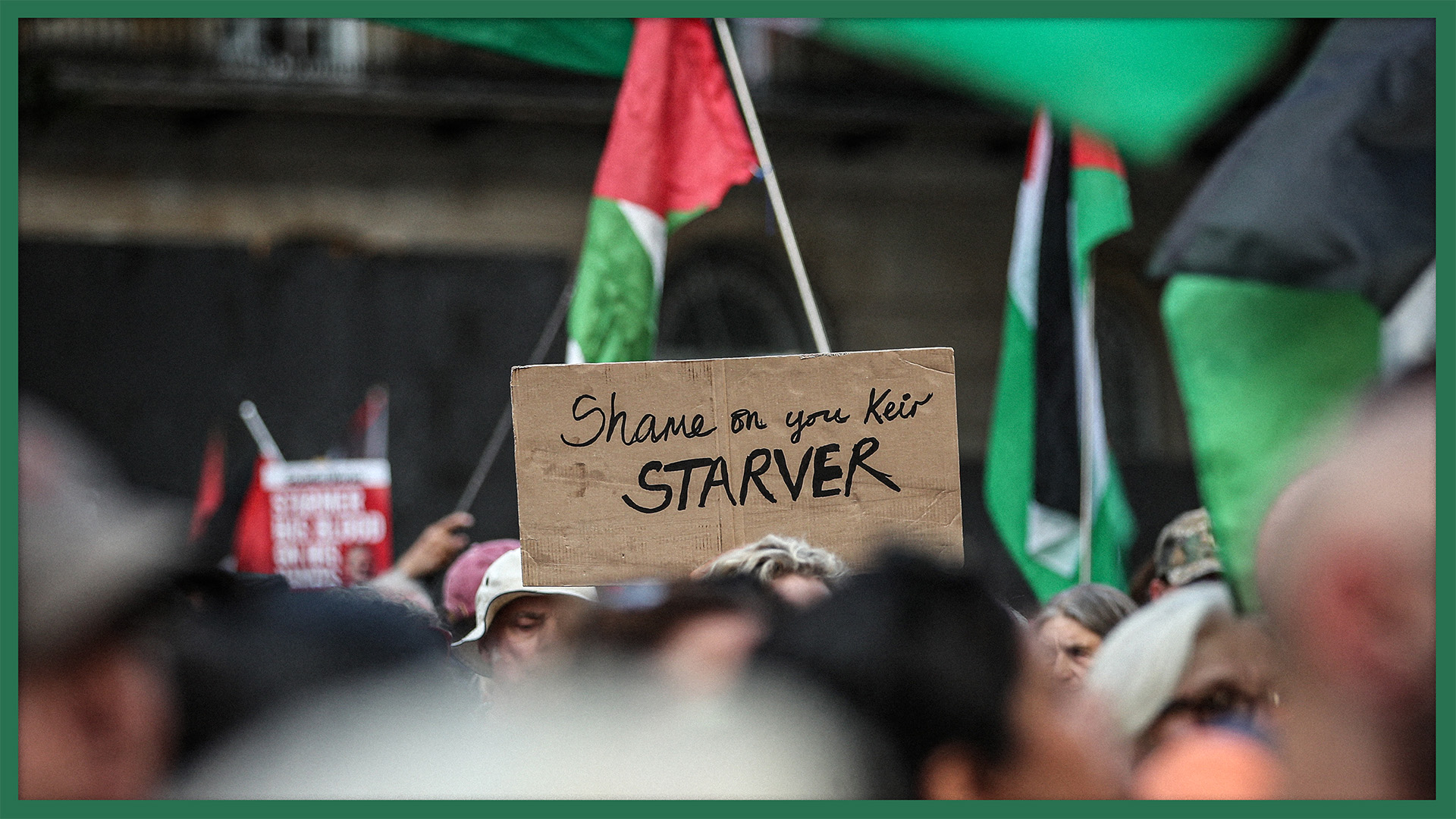
Surefooted as he usually was on foreign affairs, particularly on Ukraine, for a human rights lawyer Starmer often seemed to have a blind spot when it came to Palestinian civilians. He suggested early in the Gaza war that denying its residents power and water was part of Israel’s “right to defend itself”, after Hamas’s brutal October 7 attack. He enforced a three line whip against a motion calling for an immediate ceasefire. He proscribed Palestine Action as a terrorist organisation.
Yes, since taking office, the government has unveiled, along with allies, four packages of sanctions against Israeli individuals and organisations engaged in the violent seizure of Palestinian territory in the occupied West Bank. In September 2024, it suspended 30 out of the 350 export licences for the arms it sells to Israel. And last year Starmer finally agreed, after substantial pressure, to the essentially symbolic recognition of a Palestinian state.
But this did not appease Labour Party members, 62% of whom, according to a Survation poll this month, were “dissatisfied” with Starmer’s handling of Israeli- Palestinian issues, while just 19% approve of it. There are three main reasons for this dissatisfaction.
One is the lingering sense that Starmer had to be dragged unwillingly even into taking these steps. We now have Wes Streeting’s word for it that when he and other ministers were pressing the PM on recognition, they felt they were “hitting against a brick wall”. Streeting has also said that when he circulated to his cabinet colleagues a dossier of the appalling injuries doctors were treating in Gaza, Starmer’s response was to accuse him of sending it round so it could leak. It didn’t.
Suggested Reading


Misan Harriman: A lens on a world in protest
Secondly the government has consistently lagged public opinion. A YouGov poll this month found that 62% of voters opposed Israel’s military actions in Gaza and the West Bank, and 60% its military action in Lebanon. Fifty four percent supported suspending all arms sales to Israel, including the parts for F-35 aircraft which were exempted from the 2024 ban.
Among 2024 Labour voters who told Opinium pollsters they now support the Greens – the loss of such voters was a huge factor in last month’s local election results – 67% said government policy on Gaza was a factor, and 30% that it was a “major” factor.
And thirdly, none of the measures have directly challenged, at least in any practical sense, the legal and moral basis of deliberate Israeli government policy, including the unlawful and increasingly violent de facto annexation of the West Bank, or the war crimes it has committed – and is still committing – in Gaza.
A notable illustration is the government’s continued failure to respond as promised to the International Court of Justice ruling two years ago that the Israeli occupation of the West Bank, East Jerusalem, and Gaza per se was illegal and that “all States” are obliged “not to render aid or assistance” to Israel’s presence in the occupied territories.
Exactly what Richard Hermer, the attorney general, says in the response he is widely understood to have drafted long ago remains unknown. But it is hard to understand what the government’s refusal to ban trade with illegal Israeli settlements in the West Bank does other than offer “aid or assistance” to that presence.
Which is why 140 Labour backbench MPs, including all its Select Committee chairs, called this month for a complete ban on trade with settlements, which is favoured by 87% of party members.
Significantly, 58% of Labour members told Survation that Israel/Palestine matters to their choice of leader. Except that with Streeting now backing Burnham, they look unlikely to have a choice. In a contest, Israeli-Palestinian issues would surely have figured.
Wes Streeting, who campaigned in cabinet for a tougher stance on Gaza and has long wanted action against settlement expansion would have started with an edge on this. Burnham, building on the fact that he joined the call before the 2024 election for a Gaza ceasefire, would have had to respond. And it would have been astonishing if the outcome had not been a tougher British government stance.
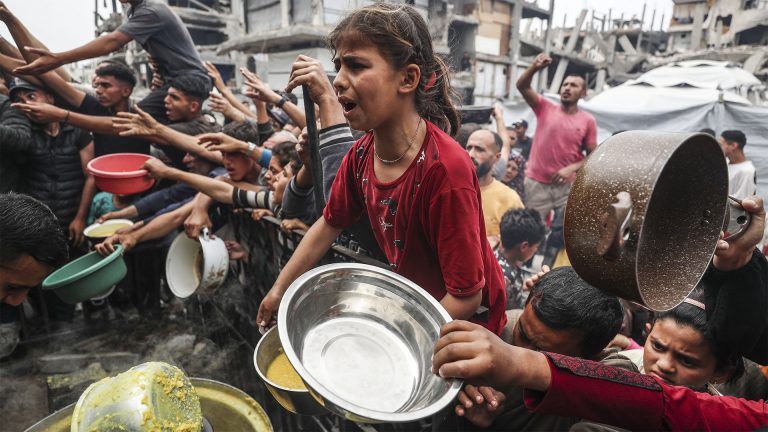
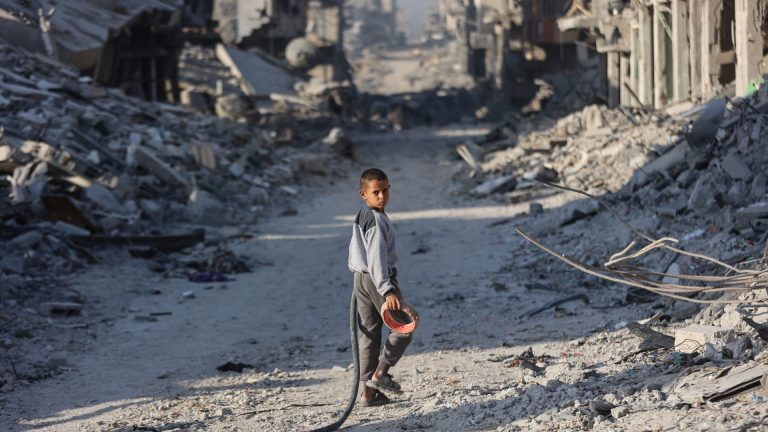
Yet even without a contest, if ever there was a time for such a reset in the British government’s approach to Israel-Gaza, it’s now. In Gaza, where over 1,000 Palestinians have been killed since the so-called ceasefire was instated last October, the population is rapidly being drained of hope.
And in Lebanon (where 3,900 Lebanese have been killed and a million residents displaced) the military resistance by Hezbollah of Israel’s occupation in the country’s south continued to threaten the fragile US-Iran ceasefire without a clear strategic purpose.
Last but hardly least, in the West Bank, Israel’s government is “conducting an organised, systematic, state-funded campaign of ethnic cleansing and crimes against humanity.” These are the words not of some extreme pro-Palestinian activist but of the former centre-right Israeli prime minister Ehud Olmert, writing in the Israeli newspaper, Haaretz.
“Nothing,” Olmert added, “can justify turning a blind eye to what is happening daily in Palestinian villages across the West Bank: pogroms, children and adults injured in and outside their homes, fields and property set ablaze, and large-scale theft – especially of cattle and sheep, the primary source of livelihood for many residents.”
A ban on settlement trade – in services as well as goods and outlawing purchase by British nationals of settlement property – is one way to make last year’s recognition of Palestine finally mean something. The Britain-Palestine Project and the Council of Arab-British Understanding sought to influence the prime ministerial transition by calling for further measures.
This included the suspension of all arms sales to Israel and of the current UK Israel Trade and Partnership agreement, which would have a real world economic impact on Israel. Both measures enjoy big majority support among Labour members.
Suggested Reading
Gaza: the killing continues and the world looks away
European foreign ministers meet next month to discuss an EU wide ban on imports from the settlements. Despite foot-dragging by the European Commission, the proposal is being pushed by France, Sweden, Spain, Belgium, and Ireland. A dismal legacy of Brexit is that the UK government is unable to swell the qualified majority vote needed for the ban to pass. But a UK decision to act unilaterally – as the Netherlands is already committed to doing – would give the EU a powerful lead.
The effectiveness of a settlement trade ban depends on how widely it is drawn. One estimate of the annual value of Europe-wide imports of settlement goods (mainly agricultural products as well as wine) puts it at around only £250m which, though 15 times more than that of imports from Palestinian companies, compares with the £1.2bn Britain alone imports from Israel as a whole.
But more significant would be if the ban extended to corporations like UK (or European) construction companies and banks that were investing in or providing services and goods to Israeli or multinational counterparts serving the settlements. Many advocates of the ban say the ban should cover corporations in this way, given the widely accepted illegality of settlements in international law. If this was done, it would have considerably more economic effect.
Shoring up their far right support ahead of this year’s election, Netanyahu and his two most ultranationalist ministers, Itamar Ben Gvir and Bezalel Smotrich, seem hell bent on making their country a pariah state, as they strive to render any kind of resolution of the conflict impossible.
Britain has a role to play in the long process of seeking justice for the Palestinians and perhaps saving Israel from itself. For the next prime minister, a commitment to banning settlement trade would be a start.
 Most popular

Churchill, the Beatles, St George: All the English heroes who aren’t actually English
The New World at 500: Independence isn’t our marketing slogan. It’s our business model

The problem is they just don’t care about us any more

Sorry Nigel, but the polls show you’ve had it