
Occasionally, I wonder how the next Bond movie is going to handle the awful realisation that the United States is no longer our ally. Felix Leiter, the affable ‘brother from Langley’, was finished off in No Time To Die. That might make the wrench a bit easier. Yet spy fiction has taken the friendship and support of America for granted. Can Bond, who is now in the hands of Amazon MGM, survive Trump? What happens when the old certainties dissolve?
ITV’s new spy thriller Secret Service has a similar problem. A senior British minister appears to be working with Moscow. If they become PM, the consequences could be seismic: one character warns we might end up leaving NATO and allying the UK with Russia. Is it the populist foreign secretary or the ambitious home secretary? Or both?
Tom Bradby’s original novel was written in a simpler world. Russia was our enemy again, and the duty of MI6 was to uncover its mole. Now the most popular party in Britain has put up Matt Goodwin for election, a man who has been taking €10,000 a month from a far-right Hungarian pressure group which is part-funded by Russian oil. The leader of that party is a friend of Donald Trump, who is doing his best to wreck the UK economy.
Suggested Reading

Why is Queen Elizabeth II still beyond criticism?
It is not Bradby’s fault that the threats to Britain have shifted and deepened since he published Secret Service in 2019. The plot has been updated to take in the war in Ukraine. The bigger problem with this series is that we have encountered so many of the tropes and characters before. Nothing feels fresh.
Kate Henderson (Gemma Arterton) is the head of the Russia desk at MI6 and is married to a Guardian journalist (Rafe Spall). The pair hover on the edge of plausibility. “It’s either that, or catch and secure,” she says into her mobile, opening a safe in her living room containing multiple passports and a gun. They have two teenagers who are reliably annoyed at her unexplained work trips and dedication to the job.
On an undercover op in Malta, she meets her contact in a church (for women, it’s nearly always a church). Her clever, edgy assistant is prepared to bend the rules to get the information she needs, including setting up some kind of remote monitoring outpost in his flat.
She and husband Robert live in a slightly messy but gorgeous Victorian terrace and have cosy dinners with the home secretary, who loudly discusses tactics with her special advisor while walking down Whitehall. C (Roger Allam) is a dour and astute operator whose desk sits underneath a huge portrait of a stag. The Russian suspect is on holiday in a villa with an immaculate infinity pool. It all feels terribly familiar, even down to the regular shots of street signs in Westminster.
Arterton acts competently but, loyalty to her staff and informants aside, her character lacks heft: there is none of the depth Tom Hiddleston brought to The Night Manager, nor the veiled menace that makes MI6 operatives compelling on screen.
One of the suspect politicians (played by Mark Stanley) bears a resemblance to Robert Jenrick, and at one point, he hints that he could support a referendum on English independence. His Spad is appalled. The move would have been shocking in 2019 or perhaps even at the beginning of 2025, but now we have watched the previously mainstream Jenrick embrace flag-mania and defect to Reform, it no longer has the power to surprise.
Suggested Reading
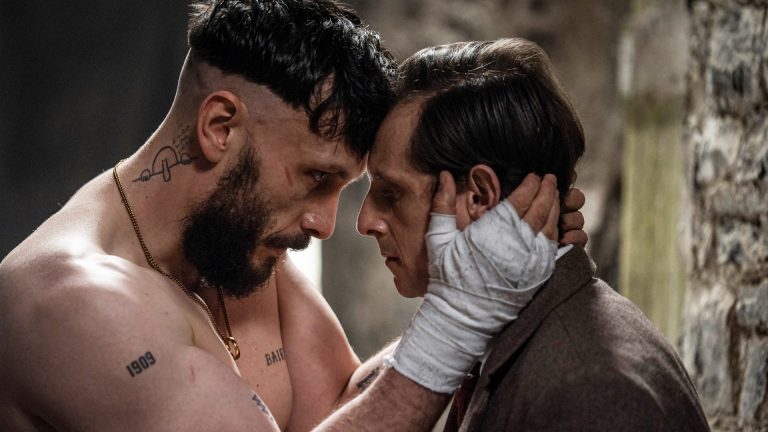

Richard Gadd’s Half Man is brutal, thrilling and unforgettable
And the bigger difficulty is that the spy thriller, a form that thrived in the certainties of the cold war, can no longer speak to us as reassuringly as it once did. Russians are the enemy, again. But their money is not going to prop up the Communist Party of Great Britain or Irish terrorism – it is swirling largely undetected through property laundering and crypto.
The ideologies Russia will fund are quasi-fascist, populist, mutable. Nato is, if not quite a dead letter, an organisation held together by habit rather than confidence. We are a country which appears to be ready to elect a Reform government that, if not exactly pro-Russian, rather admires Putin. Where would that leave MI5, MI6 and the rules they operate under?
Secret Service hints at all this when Stanley’s character warns Kate not to stand in the way of democracy. Nor is the series afraid to point out how deeply oligarchs’ money has penetrated Britain. But without a compelling character at its centre, it feels perfunctory. ITV has done a competent job, but the world has moved on.
Secret Service is on ITV1 and streaming on ITVX