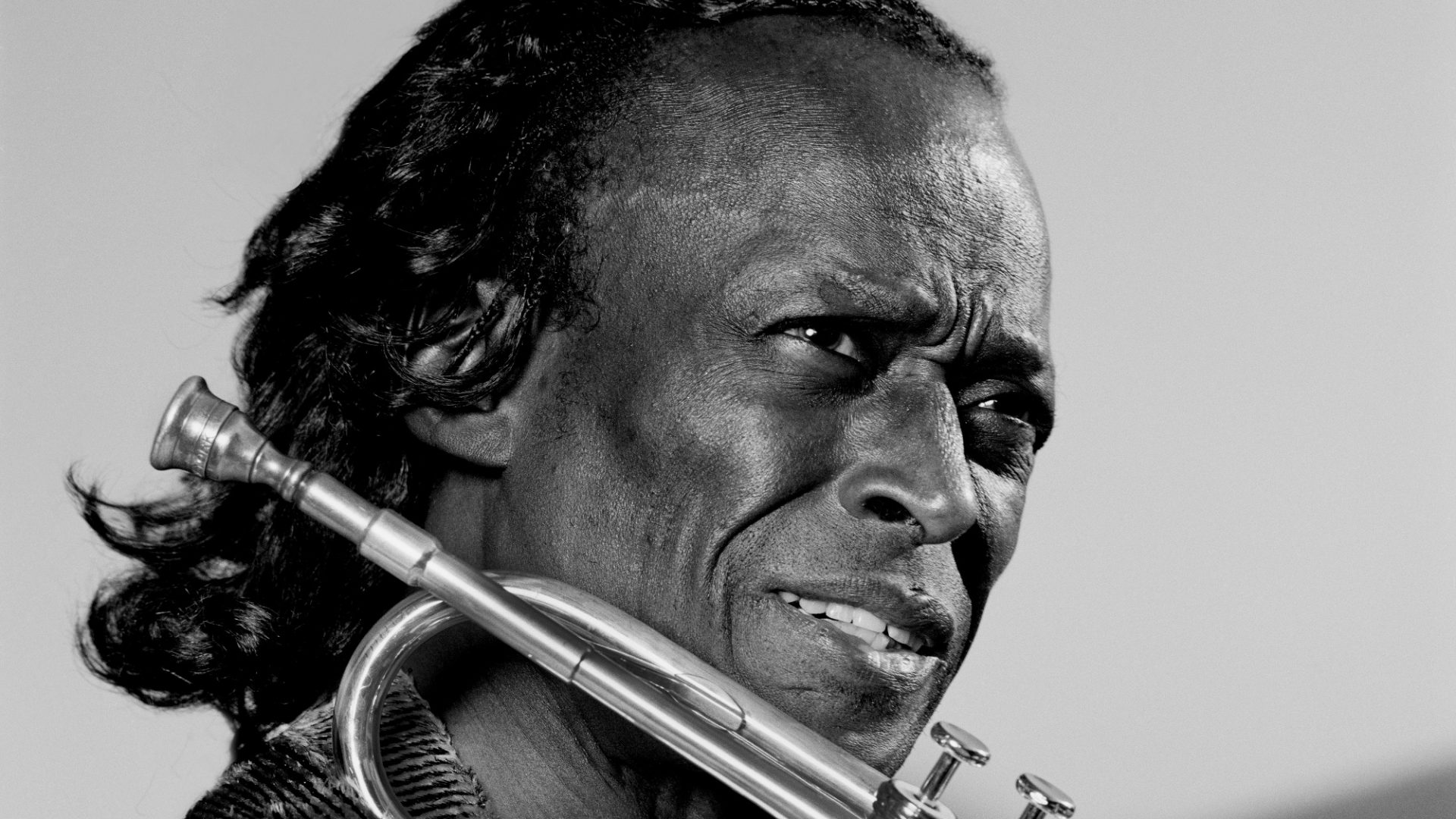
Miles Davis joke: a jazz fan dies and meets St Peter at the Pearly Gates. The saint escorts him to a celestial jazz club, where he spots Lester Young, Billie Holiday, Thelonious Monk, Charlie “Bird” Parker and many other departed stars of jazz.
Thrilled, the man turns to St Peter and says, “This is heaven!” Then he notices a figure sitting at the end of the bar, dressed all in black, his back turned to the rest. “Who’s that?” asks the fan. “Oh,” says St Peter, “that’s God. He thinks he’s Miles Davis.”
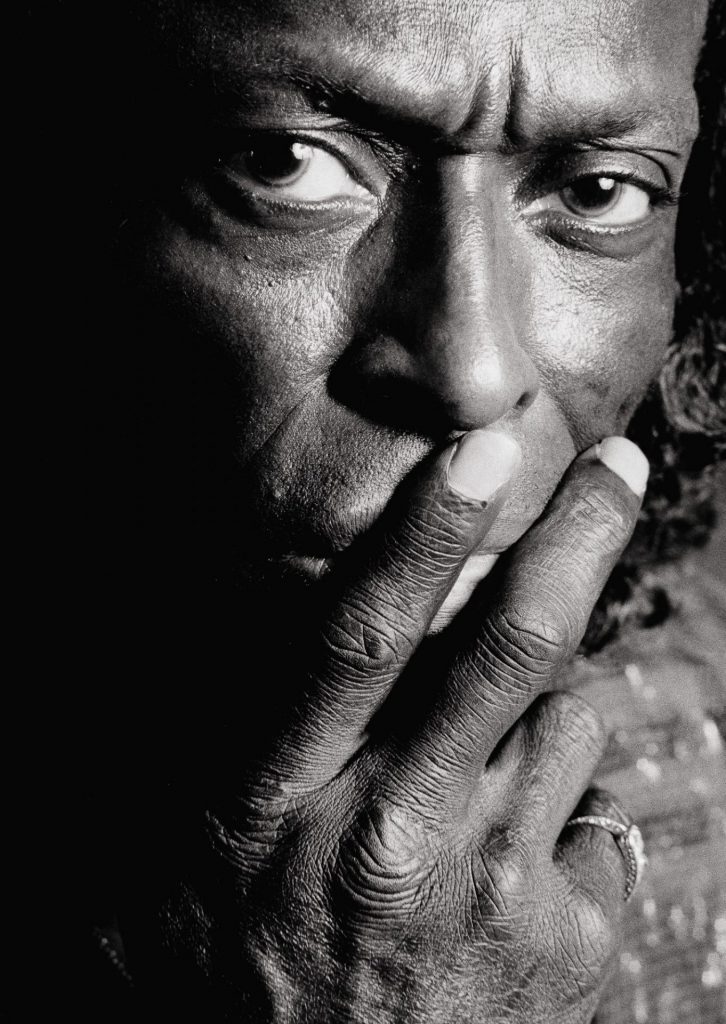
Born a hundred years ago this month, Davis is indeed a god to many – an ambivalent one, whose supernatural powers were not always wielded for good. There was violence towards women, grotesque levels of drug abuse and frequent health emergencies: not for nothing was he known as the Prince of Darkness.
One thing is beyond dispute: when it comes to music, there has never been anyone as hip and fearless. Hip, because he seemed to know everything that could be done with it. Fearless, because he was always trying to do it, unafraid to explore the outer reaches of what could even be thought of as music.
So what, you might say – consciously or unconsciously evoking the opening track of his famous modal jazz masterpiece Kind of Blue (1959) – who cares about hip and fearless? The real question is: why should we still be listening to him a hundred years after his birth? Why has Kind of Blue sold 5m copies in the US alone? It’s still selling: for many jazz fans, the album has been their gateway drug.
In the 1998 fantasy film Pleasantville, the characters – trapped in a black-and-white world of 1950s TV – slowly acquire knowledge and understanding, signalled by a gradual shift into colour. The soundtrack music, meanwhile, is on a similar journey, beginning with the all-white blandness of Pat Boone, through Lawdy Miss Clawdy, to Dave Brubeck’s Take Five, and finally to Davis’s So What. As the characters discover books and realise that there is a world beyond their little town, the scales fall from their eyes. They finally get it. They’re hip. Knowledge is what hipness is.
But music is about communicating emotion, and Miles Davis was able to use his musical voice to wring quite extraordinary depths of feeling from his trumpet. He did it by producing a sweet, soft, clear tone, without vibrato and often with very few notes. One random example is Summer Night from his Quiet Nights album (1963). Davis’s signature sound turns this obscure tune into something almost painfully beautiful, the Harmon mute giving his trumpet a thin, distant, ethereal timbre. It’s a lonely sound, an almost human cry, and it resonated with many who had first heard it in the 1950s, an audience who were searching for something more than consumerism and conformity.
This anniversary year has already been a flurry of Davis-related activity: in March I went to see the play Miles, conceived by the trumpeter Jay Phelps, at London’s Southwark Theatre. “The concept came from touring Kind of Blue with my band,” he explained. “I was touring around the country after having done the Jazz Café for a few years in succession to sold-out audiences. I thought, it seems like people have a taste for this album, and I was wondering whether the story could be told.”
Phelps’s main character (he plays a handful of others) is a musician searching for the inspiration he needs to fulfil a recording contract. He’s visited by the ghost of Davis, played with spine-chilling conviction by British actor Benjamin Akintoyosi, who shows Phelps’s character how to find his own musical voice.
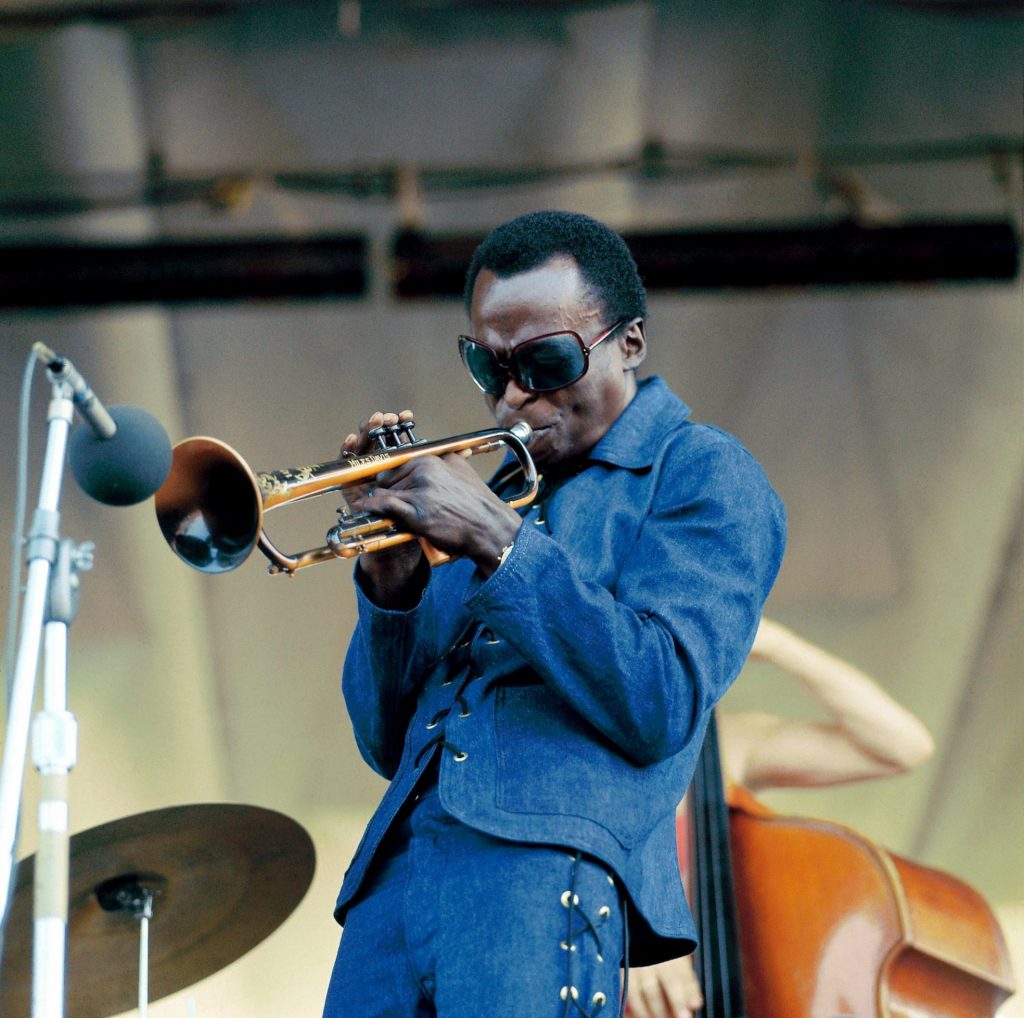
Another contemporary trumpet-player who partly owes his career to Davis is Guy Barker, who staged his Miles Davis Symphonic: “Kind of Blue” at this year’s Cheltenham Jazz Festival. As a young man, Barker went to see Davis play several times in London. Years before, a family friend had given him some records and told him to listen to them every day.
“I remember putting Miles Smiles (1967) on, finding the atmosphere almost scary. But intriguing. And then I heard Kind of Blue. And my thing is, I love all of it. I always have. I think the other thing that’s impressive is that somebody comes along, like Louis Armstrong, and changes the course of music. Charlie Parker, same thing. He changed the way we envisage what music is. Miles did that about five times.”
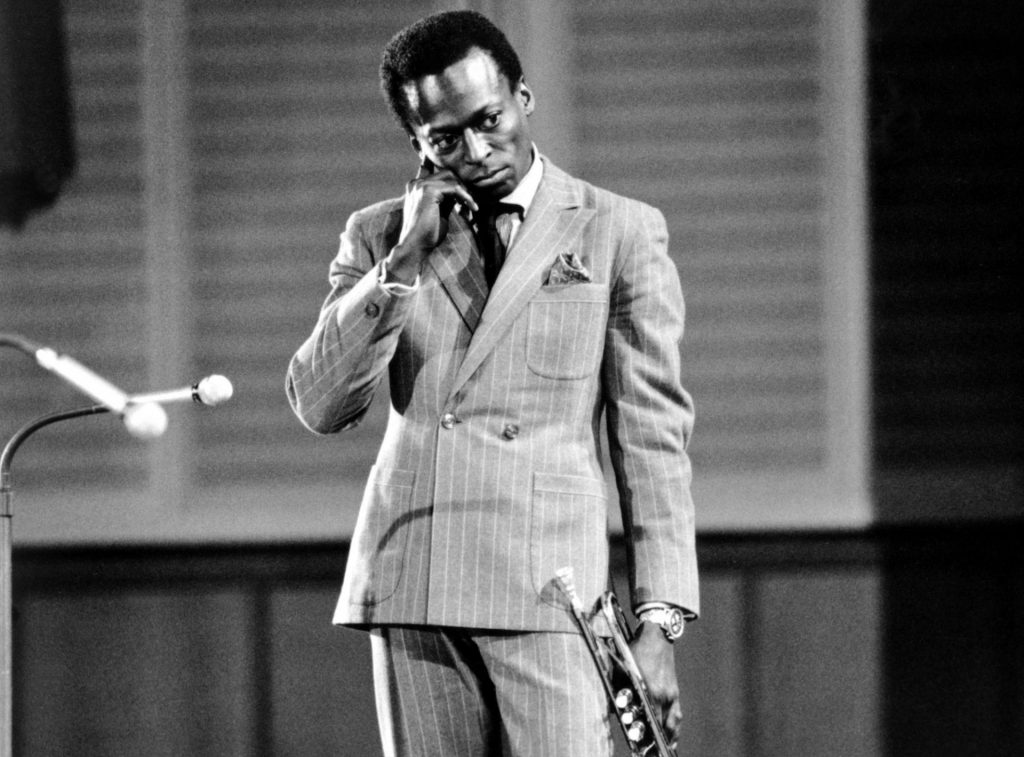
Raised in East St Louis, Illinois, Davis was physically slight, 5ft 6in, weighing less than 70kg, but his Italian-made suits, the boxy cut of his jackets, and his slimline trousers made him seem bigger. Like Duke Ellington, he believed a musician should always be better dressed than his audience. When young, Davis walked with the grace of a dancer, and yes, he often wore shades.
That famous rasping whisper of a voice was the ultimate in cool, but it wasn’t fake – he acquired it after an operation to remove nodules from his throat. At gigs, he would stand motionless as he played, knees flexed, head bent forward, trumpet angled to the floor. He even wore shoes a size too tight because, he said, it helped him stay grounded while he was playing.
Over his 40-year career, Davis made 60 studio albums, plus many more that were recorded live. Stylistically, each one built upon the one before. Duke Ellington described him as “the Picasso of jazz”. Like the painter, he was the leading figure of the 20th century in his chosen art form. And like Picasso, he was responsible for extending the boundaries of what was possible: once a decade or so, he would change the entire course of jazz. In 1953, he even made an album called Blue Period.
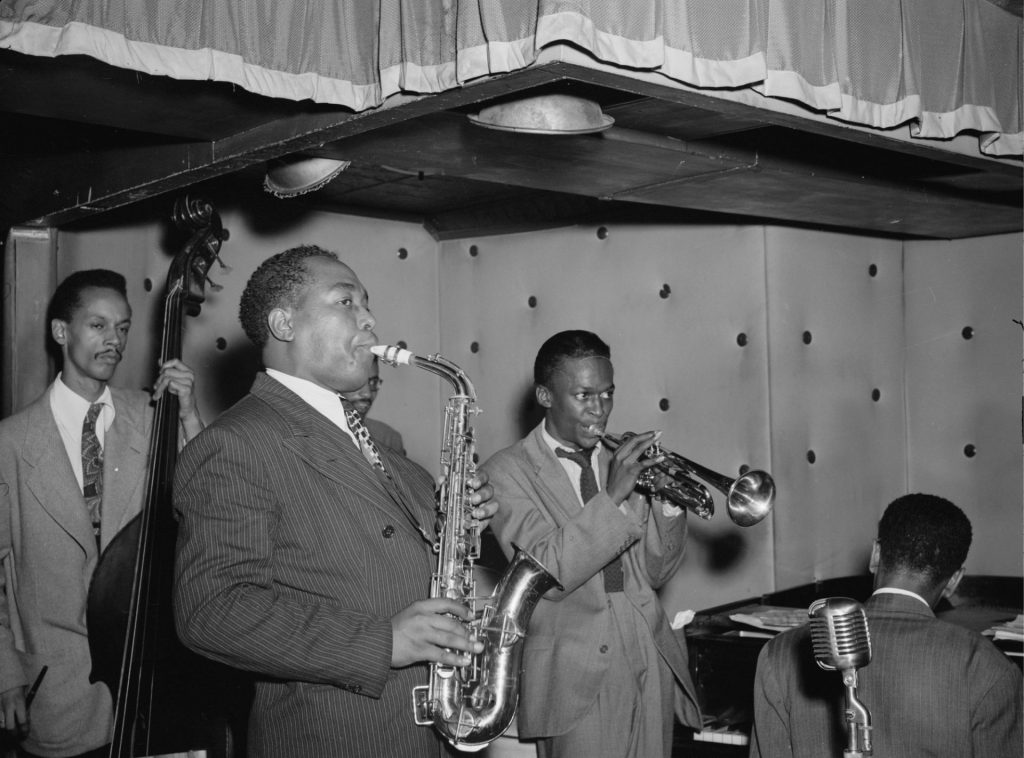
He had first come to public attention as a member of Charlie Parker’s band in the mid-1940s. This was the outfit that invented that mysterious and difficult style known as bebop (Louis Armstrong disparagingly called it “Chinese music”).
At the time, big bands were all the rage – they played music for dancing. But by the beginning of the 1950s the big bands were gradually giving way to smaller groups – and their music was for listening.
Around this time, Davis made a series of recordings that were eventually compiled under the title Birth of the Cool. This was a quieter, more reflective sound that culminated 10 years later in Kind of Blue.
In collaboration with his closest friend, the arranger Gil Evans, he recorded three orchestral jazz masterpieces: Miles Ahead (1957), Porgy and Bess (1959), and Sketches of Spain (1960). These albums approached jazz as modern classical music, incorporating instruments not normally associated with jazz – French horn, oboe and harp.
For me, this music was and is sublime, and there was more to come with albums like E.S.P. (1965) and Nefertiti (1968). But despite the popularity of Davis’s second great quintet (Herbie Hancock, Wayne Shorter, Ron Carter, Tony Williams), rock and pop were killing jazz in the 60s.
Davis realised that his music would have to change radically if he were ever to reach the younger black audience he craved. He planned to work with Jimi Hendrix, until the latter’s untimely death put paid to that idea. He ditched the familiar jazz repertoire, much of which was based on The Great American Songbook and, aided by his long-suffering producer Teo Macero, plunged head first into the unknown.
The result was In a Silent Way (1969). Like Bob Dylan before him, Davis had gone electric, but as the title suggests this album wasn’t raucous but restrained, loose and meditative. With this project, Davis also abandoned the traditional musical structures of beginning, middle and end in favour of long repeated cycles. Instead of the dense chord changes usual in jazz, the tunes were stripped down to the bare bones, with much greater emphasis on rhythm and bass. British guitarist John McLaughlin was brought in and instructed to treat his instrument as if he didn’t know how to play it.
Next came the even more radical Bitches Brew (1970). The recent faux-jazz excursions of rock bands like The Doors and Santana had nothing on this. The title track, in particular, lacked any semblance of coherent melody or harmony, and had little more than a basic rock rhythm. Yet it was so much in the angry, restless spirit of the times that it eventually sold a million copies.
I confess I find some of this music unlistenable. If you want an example, track down the recording, available on YouTube, of Davis’s one and only performance at Ronnie Scott’s in November 1969, as he fell into a deep, dark hole of tunelessness.
But Bitches Brew paved the way for jazz-rock fusion, and fusion was big news in the early 1970s. Many of Davis’s erstwhile collaborators – drummer Tony Williams (Lifetime), McLaughlin (The Mahavishnu Orchestra), Herbie Hancock (Headhunters) and Chick Corea (Return to Forever) – achieved massive success, and were reaching the young black audience that Davis himself was failing to attract.
In 1975, he went home and stayed there for five years. “I became a hermit, hardly ever going outside,” he wrote in his autobiography. He even stopped playing the trumpet. “I would walk by and look at it, then think about trying to play. But after a while I didn’t even do that.” And this from the man who once (1956) had the energy to record four entire albums in two studio sessions.
Suggested Reading

Why Japan fell in love with jazz
His attempt at a comeback from his personal and creative trough is the subject of Don Cheadle’s entertaining but heavily fictionalised 2015 film Miles Ahead. By the time he re-emerged, Davis often seemed to be chasing trends rather than creating them, working with funky rhythm sections, and a lot of guitars and synthesizers, but few memorable tunes.
There were times in the 1980s when he hit some real highs, one of them being Aura, an album he recorded in Copenhagen in 1985 with the Danish composer and trumpeter Palle Mikkelborg, who wrote this strange, ethereal mixture of electronica and modern classical music especially for Davis.
Towards the end of the decade, he made guest appearances on records by Toto and Scritti Politti, and expressed enthusiasm for the work of Phil Collins, Willie Nelson and Kenny Loggins. Musically, he carried on working, often with electric bassist Marcus Miller, who was responsible for most of Tutu (1986).
The album is disliked by jazz purists, but it’s a return to sparkling, funky form, accessible, controlled and melodic, despite all the synthesisers. He greatly admired Prince and wanted to work with him, but as with Hendrix, the plans came to nothing.
Davis hated above all to repeat himself. Many musicians feel indebted to him for his breaking down of genres, the way he embraced funk, soul, rock, pop and hip-hop in his later career.
He not only influenced the directions that jazz would take in the decade that followed, but with his looping, growling, repetitive, rhythm-driven music, he anticipated and laid the groundwork for hip-hop, drum & bass, EDM and many other genres and subgenres of popular music that have emerged since.
Dear Miles: A Love Letter will form part of this November’s London Jazz Festival. It’s the work of trumpet-player and multi-instrumentalist Emma-Jean Thackray. “I’ve got some of my favourite tunes of his, and I’m trying to show them in my own way. So I’m really drawing upon UK dance music culture.
“There’s going to be some jungle in there, some techno, some house. And there’s also just going to be some really freaky funk. It’s just all the things that I love of a really wide array of genres, which I think is very much like me. And I think it’s also very much like Miles, in the way that he didn’t stand still with style.”
Davis was prolific, restless and difficult to deal with. He would start movements that had a profound effect on music, and just when people were getting their heads around it, he would embark on something completely different.
He almost never rehearsed his bands, either live or in the recording studio. There would be no written music. Sometimes he would wander into the studio with two chords scribbled on the back of an envelope. Much of the time, the musicians had no idea what was expected of them, and he was not one to hand out reassurance, because he believed it was in the mistakes and accidents that the real art would be created.
“Do not fear mistakes,” he famously said, “There are none.”
Peter Jones is a jazz musician, journalist and author. His most recent book, Nightfly, is a major biography of Donald Fagen, published in 2022 by Chicago Review Press