The fibreglass arrowhead is 2.5 metres across. Inside: an autopilot, a GPS system and a 50-horsepower engine of the kind you’d find on a small motorcycle. In the nose, 40kg of explosive.
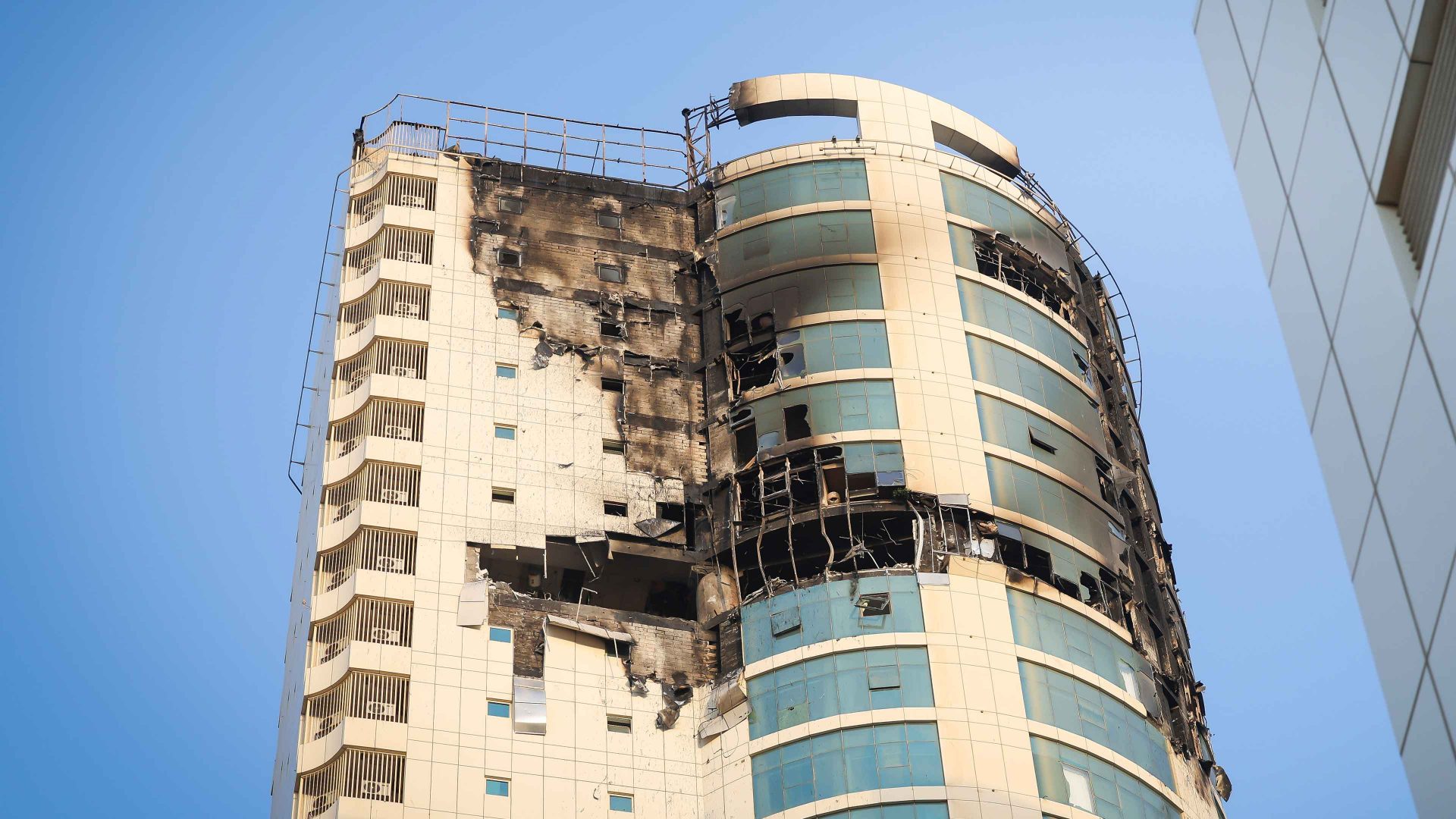
Iran launched one of these drones off a flatbed truck somewhere in western Iran. It climbed a few hundred metres, turned east, and at 185 km/h headed for the Persian Gulf. Two hours later, it struck the side of a hotel at the Palm in Dubai. The upper floors disappeared in flames. The cost of that drone: around $4,000.
Most reporting puts the cost of a Shahed-136 drone at around $35,000, but that figure is for the Russian-built copy. Research by the Iran economy specialist Esfandyar Batmanghelidj has shown that the Iran-built original is closer to $4,000. Iran’s late Revolutionary Guards commander, General Hossein Salami, once said his country could now manufacture weapons “as easy as producing bicycles”.
The drone has changed modern warfare. Vladimir Putin cannot win in Ukraine. Donald Trump cannot finish Iran. The strongman’s central political promise is that he will dominate opponents and deliver victory. That has been quietly stripped away.
Since acquiring the Shahed design from Iran in 2022, Russia has made more than three dozen modifications within three years. It now produces an estimated 24,000 drones a year at a single factory in Tatarstan, where teenagers assemble them in shifts.
Russia has embraced drone war – but it is still losing the actual war. Four years in, Putin holds territory he cannot expand and faces an enemy he cannot defeat. Mastery of the technology has not produced victory in Ukraine. It has produced stalemate.
Trump decided to go to war with Iran in February. The most expensive military on earth pitted itself against a sanctioned state that builds weapons from motorcycle parts.
Within 38 days, the Pentagon had fired more than 1,200 Patriot interceptors, at a cost of $4m each. They used them to shoot down drones that cost one thousandth of the price. The US burned through 1,100 of its long-range stealth cruise missiles, which is close to its entire remaining stockpile.
To keep the war going, the US has expended munitions intended for a possible war with China. The bill for the Iran war so far is around $35bn. The result is stalemate.
Suggested Reading
The US economy cannot escape the Iran war, no matter what Trump says
In Ukraine, drones make up 2% of the military, but account for a third of all enemy targets destroyed. A weapon you can fire from a flatbed truck favours whoever is holding ground, not whoever is trying to take it.
Taiwan understands this. The US Indo-Pacific commander, admiral Samuel Paparo, calls his strategy for the Taiwan Strait a “hellscape”. It’s a 50-mile kill zone of cheap drones and anti-ship missiles designed to make any Chinese amphibious assault prohibitively expensive. A $14bn arms package for Taipei, heavy on drones was recently paid for by, yes, the Trump administration.
The drone is such bad news for the strongman because his whole pitch is based on aggression. That’s why Trump renamed the Department of Defence the Department of War. But drones make defence cheap and military aggression ruinously expensive. The offensive war becomes unwinnable. Back at home, the strongman loses ground.
Last month the Russian celebrity blogger Victoria Bonya posted an “address to Russia’s president” on Instagram. “There is a huge, thick wall between you and us, the ordinary people,” she said. The video drew tens of millions of views. Bonya is no dissident. She is a reality TV star with two million followers.
Suggested Reading

The Iran war has taught Australia a new, brutal truth about itself
Putin’s approval is at its lowest since 2022. Russians are angry about the internet crackdowns. The small business losses. The queues. The satnavs that no longer work. Ukrainian drones can reach the outskirts of Moscow, complicating the planning of Russia’s May 9 military parades. Putin’s own inner circle are losing patience – presidential security has recently been increased.
Armin Papperger, the chief executive of Rheinmetall, Germany’s largest defence contractor, has been dismissive of drones in the past. “Playing with Lego,” is how he described Ukrainian drone manufacturing earlier this year.
In April, he ate his words. Papperger signed a €300m contract with the Bundeswehr, Germany’s armed forces, to deliver 2,500 kamikaze drones. The deal included options to scale that up to €2.4bn and more than 10,000 drones.
With one eye on Putin, Germany is undertaking the largest European rearmament since reunification, worth €189bn a year by 2029. That’s more than France and Britain combined.
Suggested Reading

The truth about Trump’s Iran downfall? The worst is yet to come
Drones mean the small can defeat the mighty. A Yemeni militia can close Suez to western shipping. Iran can fight the Pentagon to a $35bn stalemate. A country a fraction of Russia’s size can pin its president down for four years and counting.
Xi Jinping is supposedly the Iran war’s biggest winner. America distracted, stockpiles drained, Nato frayed, China’s leverage increased without a shot being fired. But Xi has also just watched Iran, armed with drones built in workshops, fight the most powerful military on earth to a standstill.
He has also watched Taiwan order nearly 100,000 drones, explicitly inspired by the tactics of Ukraine and Iran. Xi will be recalculating.
Andy Pemberton is a content expert who edited Q magazine in London and launched Blender magazine in New York