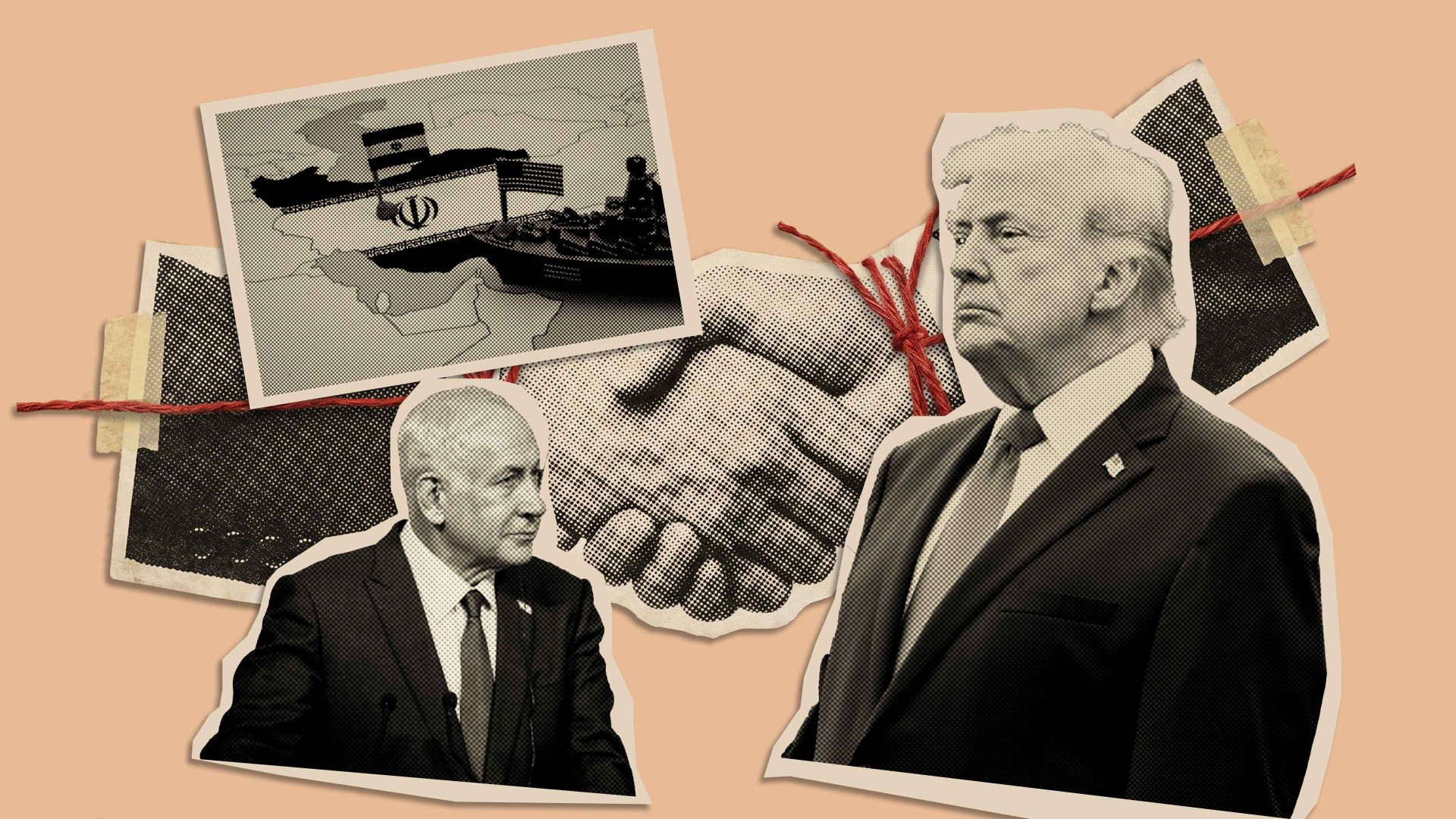
The US and Iran have announced their agreement on a framework deal to end the war, which Pakistan, acting as mediator between the two, says will be signed on Friday in Switzerland.
No doubt this deal will be accompanied by much hyperbole in both Washington and Tehran, despite its initial outcome being a return to ostensibly the same situation as before Trump and Netanyahu launched their disastrous Iran war. The Strait of Hormuz will be open and there will be a hostile, hardline regime in Tehran that will now be feeling emboldened.
This will have come at a cost to the world’s economy, with a disproportionate impact on some of the poorest in the US, Europe, the Middle East and the rest of the world. It will also have severely depleted American stores of munitions and weakened US alliances with Gulf countries. Washington’s global reputation will have taken a hit. It will have also cost the lives of thousands across the region, including US service personnel and Iranian school children.
Despite their framing, recent US wars in the Middle East have not been fought to protect American sovereignty or security. They have been misjudged interventions driven by a combination of confused and often contradictory factors, including attempts to secure economic interests, a pathological desire to project power, attempts to export neocon ideologies and, this time, the hubris of a president who wanted to achieve what his predecessors could not do.
Suggested Reading

Meet the Trump hire who says the president is now out of control
Such wars are not won or lost militarily but through domestic US politics and their economic impact. The initial agreement leaves the most difficult issues to be resolved in talks over the next 60 days, and will perhaps give Trump a chance to make up political ground before the November midterms. It might also ease the economic damage being done by the conflict. But it will not resolve the wider conflicts in the region, or the fears that drive them.
Perhaps the one issue that has the most potential to be resolved is that of the Strait of Hormuz. The US will look to prevent Iran charging service fees that are essentially a toll on vessels passing through the narrow sealane. Iran will want to assert its sovereignty over the strait, but may concede on fees in the knowledge that they can easily re-escalate if the deal does not hold.
Iran has proved that it can control the strait using drones, mines and the threat of attacks on large, slow-moving tankers. If the agreement holds, there will still be mine clearance and infrastructure repairs needed, such as to the Ras Laffan liquified natural gas facilities, before production and exports return to pre-war levels.
An agreement on Iran’s nuclear program will be far more challenging. The US and Israel have demanded that Iran cease its enrichment of uranium and hand over its existing stockpile of fissile material. Iran insists on its sovereign right to enrich uranium.
Whatever Iran says publicly, there will be many regime hardliners more determined to acquire nuclear weapons after this war, pushing for a covert programme of centrifuges housed in deeper, more fortified tunnels.
Netanyhu’s policies towards Iran over decades have been driven by a fear of them getting the bomb. How will any deal alleviate his fears with the current regime, led by Mojtaba Khamenei, whose father, Ayatollah Ali Khamenei, was killed by US and Israeli strikes? He will know that without nuclear weapons Iran’s regime will remain vulnerable.
The deep-seated mutual distrust between Iran, the US and Israel is the biggest remaining challenge. This war began with US and Israeli strikes across Iran on February 28, when the two sides were negotiating. Just weeks before his death, Ali Khamenei stated that negotiations with the US were not “wise” and would not “resolve” the country’s problems, a stance that hardliners have used to criticise this current deal.
Suggested Reading

The trial of Donald Trump
The wider region is as fearful now as at any time in living memory. This fear will continue to drive more destruction. At the time of writing Israel has yet to comment on the proposed US-Iran deal. Netanyahu’s fear of leaving the Iranian regime in place and emboldened may be greater than his fear of Trump’s anger.
This may lead to Israel overtly sabotaging the deal with continued strikes against both Lebanon, a country they still occupy with ground forces, and also Iran. He may take a more covert approach to achieve the same end, leveraging his nation’s highly capable intelligence services. Netanyhu believes this is the historical chance his long career has been building to. He will not go gently into the good night of post-political court battles.
This deal is built on the fragile foundations of mistrust, fear and Trump’s egocentric desire to walk away before more damage is done to him personally. The physical damage done to countless others in the region doesn’t seem to bother him.
As for Gaza, where nearly 1,000 people have been killed since last October’s ceasefire and next to no progress has been made, this framework will allow Trump to claim victory. But at best it may simply delay, rather than resolve, the fundamental structural conflicts.
 Most popular


Emily Maitlis’s diary: As I was saying to George Clooney just the other day…


A new film about Elon Musk reveals him as so awful it’s almost tragic. Almost


Never again? Think again. The far right’s resurgence in Germany should terrify all Europeans
There’s only one reason Trump went to Ireland – it wasn’t to meet the Taoiseach