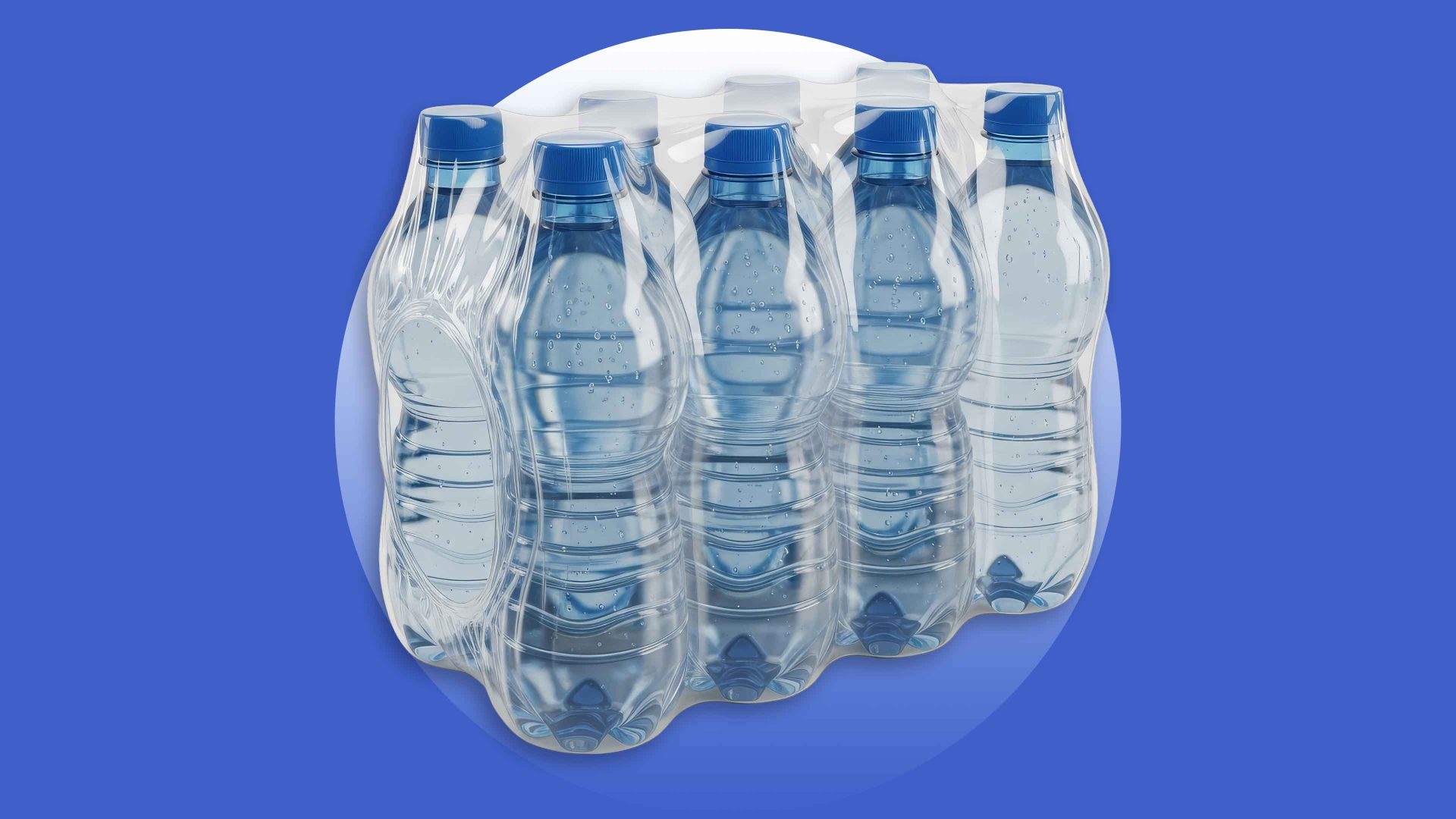
In the heatwave, I feel lucky. I can buy a bottle of chilled water, from brands whose social feeds glisten with images of summer picnics and waterside yoga,
I can get it packaged in plastic or aluminium. I can go upscale and have it poured from luxury glass. I can get it sweetened and flavoured, or infused with anything from electrolytes to fish collagen — and imported from every point on the compass, with a carbon footprint to match.
Water — the basic need to quench our thirst, and all those USPs — is big business. “The bottled water industry is one of the fastest-growing on the planet,” says Georgios Patsiaouras, a marketing professor at Leicester University.
The lion’s share of bottled water is sold in high-income economies. In the UK, we buy around 3.2 billion litres a year. No need to do the Olympic-size swimming pool analogy. You get the picture.
But something else is happening that goes far beyond the habitual PR. We’re hyper aware that water is becoming more scarce, more precious, more desirable.
The World Bank estimates 4 billion people are already at the sharp end. Even in the the UK, hotter and drier summers could result in supply shortfalls of over five billion litres a day by 2050, according to the independent Climate Change Committee.
The scarcer it is, the more commodified. But there’s a glaring paradox.
Access to clean drinking water is a human right, enshrined in international law 16 years ago, on July 28, 2010.
Plenty of global bottled water consumption comes where there’s no safe tap water, in areas of countries like China, Vietnam and India. But not everyone can afford bottled water.
“We drink water from the tap… It’s not good water,” 17-year-old Arifa told charity workers in Pakistan. The teenager lives with her family in the Lodhran district of Punjab province, and says: “With this water, I get rashes and discomfort.”
An audit report published by the Business and Human Rights Centre on Pakistan’s bottled water industry in 2018 puts Arifa’s experience into perspective. It found unjustified profit margins along with billions of litres of water wasted during extraction.
The organisation also reported that a judge said a sample was not found fit for human consumption. But the case was dropped.
Back in the UK, the hype around packaged water really sank in for me last year when I was slumped in my armchair with Covid. We were in the middle of another heatwave, and the paramedic’s warning was ringing in my ears: he’d also been hospitalised with Covid but “flew out” of it again once they’d rehydrated him.
Keep drinking the water, he told me.
My response was to splash out on a crate of Icelandic still mineral water, the one with the label recalling the volcanic landscape. I liked the idea of glugging an old glacier, what Google AI informs me is a “highly ancient, naturally filtered snowmelt and rainfall.”
In the weeks that followed, I developed a bit of a fetish, reading up on the constituent parts of rival brands. High alkaline. Low sodium. Deionized. Purified. Deep artesian wells… the (extensive) list goes on.
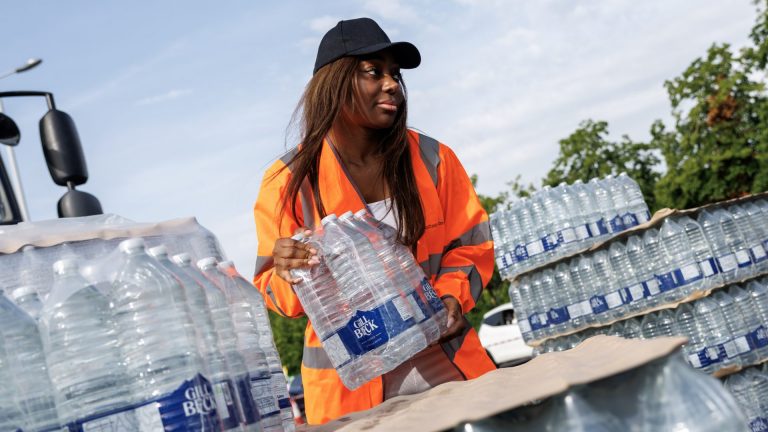
The à la carte water experience can be enjoyed in certain classy establishments. Glance at the curated menu, beckon over the sommelier for advice on minerality and mouthfeel.
The mixologist equivalent to The Knowledge that my London cabbie granddad learned. A water butler’s wet dream.
Yet I still recall my years living in Paris — the gastronome’s gold standard — always requesting “une carafe d’eau” with every meal; always asking them to let the tap run cold.
Much of the sales spiel, it seems, can be swallowed with a pinch of salt.
Pauline Smedley from the British Geological Survey says “none of them” will make much difference in terms of beneficial “nutritional elements”. In his brilliant book Bottled & Sold, the water academic Peter Gleick points to blatant hucksterism in the war on the tap in the developed world.
However, there’s no need to manufacture such concerns in England and Wales. “The growing evidence of PFAS contamination in rivers, groundwater and drinking water sources underscores the need for stronger protections,” says Dr Natalie Sims from the Royal Society of Chemistry.
The Clean Water Bill being expedited “provides a really significant opportunity to strengthen protections against PFAS and other chemicals of concern,” adds Sims.
Just the suspicion our public drinking water is polluted can convert us to the bottle, Patsiaouras says. Consumers think “with a bottle, you know it’s safer. You know what’s in there.”
Do we though?
As has been widely reported in France, one consumer rights group is taking legal action in Paris against two market leaders: Nestlé and Sources Alma, which produces Cristaline, the best-selling bottled water in France.
Foodwatch alleges Nestlé disinfected contaminated mineral water using methods such as UV or carbon filters, and sold it as natural mineral water. The group claims these processes are “illegal” and believes they pose a potential risk to health.
The group also alleges Sources Alma added iron sulphate to get rid of arsenic contamination, and carbon dioxide to its ‘naturally carbonated’ waters without saying so, both of which the rights group insists are prohibited treatments.
A Nestlé Waters spokesperson told The New World: “We continue to cooperate with ongoing investigations in France. We cannot comment further, other than to reaffirm that the food safety and quality of our natural mineral waters has always been guaranteed and remains our key priority.”
The New World contacted Sources Alma’s press representatives, Kingcom, but did not receive a response.
Past incidents have left a bad taste in the mouth, and the odd hulking skeleton. In 2004, the botched launch of Dasani UK saw Coca-Cola recalling half a million bottles after levels of bromate — a chemical linked to an increased risk of cancer — were found, never to reappear on UK shelves.
Gleick records the recall of another well-known brand found to contain diluted cleaning solution. What would the water butler say?
Arguably the greatest fear now is staking your claim to the supply of the future. Not surprisingly, it’s a vastly uneven contest.
“As multinational corporations race to securitise their water supplies – often at the expense of local water security – what’s needed is hyper-transparency via mandatory disclosure,” says Dr Nick Hepworth, CEO of Water Witness.
Suggested Reading
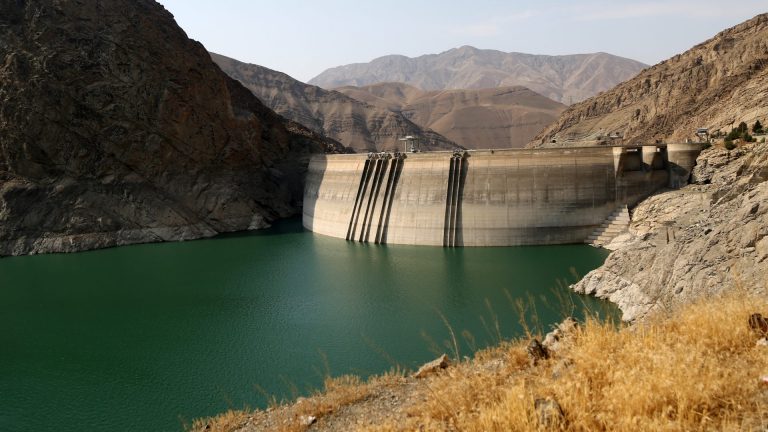

The science is clear – the world is heading for water catastrophe
The problem stretches far beyond beverage companies to the heart of how we now live.
“For a laptop or any technologically advanced product, we need thousands of litres for its production,” says Patsiaouras, “which isn’t recycled.”
A family of four in the UK will typically consume 77 bathtubs of water from other countries every day via food, clothes, and goods. The impact hardly bears thinking about, but Hepworth spells it out. “Polluting and draining aquifers and rivers and pushing communities, ecosystems and economies into extreme vulnerability,” he says.
With fresh water under pressure as never before, it’s the worst indictment of capitalism for some.
Listening to what climate scientist Johan Rockstrom is saying on the website of the Global Commission on the Economics of Water — as its co-chair — makes sense:
We’re deep in a water crisis. Heatwaves are causing evaporation. Deforestation, changes in vapour flow.
Recognising the water cycle as a “common good” could help us restore it. Redefining atmospheric rivers as transnational waterways, shedding as precipitation and rainfall across borders. Storing green water in soils.
We’re all interconnected by water, and all water connects us. That’s something to think about, next time you or I take a sip.
 Most popular


Emily Maitlis’s diary: As I was saying to George Clooney just the other day…

A new film about Elon Musk reveals him as so awful it’s almost tragic. Almost


The strange case of the Lib Dem writer who fell for Farage


The right wing media hounded Jason Arday and ignored James Orr. It’s obvious why