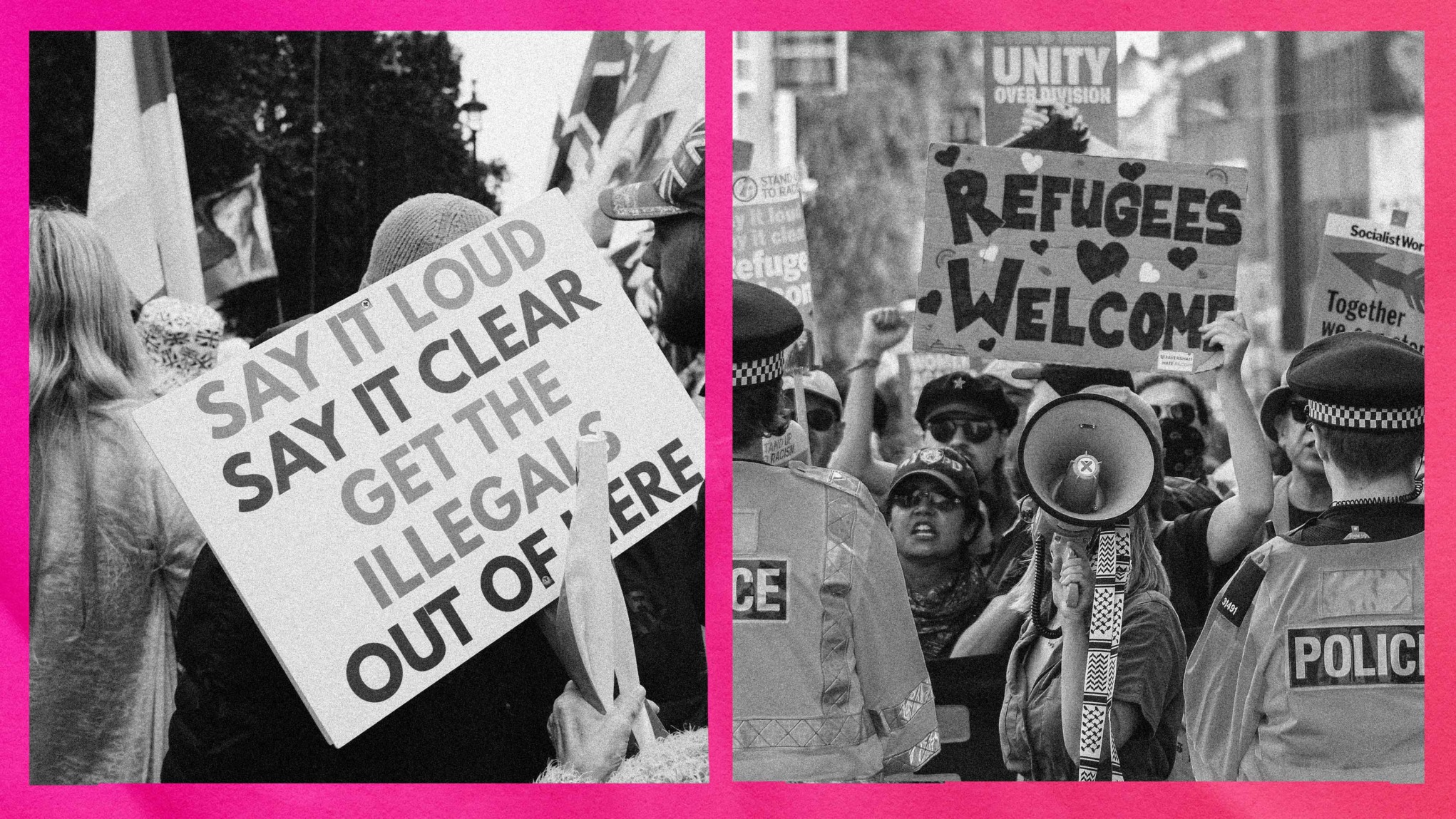

Britain’s anti-migrant right has developed a bit of a Goldilocks problem. The anti-immigrant right isn’t racist, you understand. It’s just that the arrangements for asylum seekers have never been quite right.
In the space of a year, the case against providing housing for asylum seekers has been made in three different ways about three different kinds of building: too comfortable, too crowded, too close. The people making it don’t seem to have noticed that the argument keeps changing, almost as if it was never about the buildings at all.
The current numbers ought to be a moment of celebration for anyone who believed the system was out of control. Net migration has fallen near-vertically. In September of this year, small boat arrivals reached their lowest level since 2021 – 40% below their peak in September 2025.
The protesters, in other words, have got much of what they demanded. Never mind the lost tax receipts or the labour shortages in critical industries, numbers are coming down. So this ought to be a moment of vindication.
Or not. Instead, the goalposts have moved. Because, for the anti-migrant right, there will always be a respectable-sounding concern with which to launder its racism. Take the phenomenon of the asylum hotel. For protesters, it was ostensibly a question of fair play. A hotel is where you go on holiday, for a wedding, for a weekend away.
After an asylum seeker at the Bell Hotel in Epping sexually assaulted a 14-year-old girl last year, hotels also became a byword for danger – and the protests spread. For campaigners who had decided that people crossing the Channel were “illegal” – ergo, criminal – the hotel was an affront because of what it represented: rule-breakers enjoying a treat that plenty of British families can’t afford. It was a matter of value for money, but also of fair play and justice.
Suggested Reading

Burnham must make the case for fairness
So the government heard these “legitimate concerns”, and changed tack. Now, 44 asylum hotels have closed this year; fewer than 160 remain, down from more than 400 at the height of the Conservatives’ sprawl. Instead, they moved to “basic accommodation”, in former military sites and houses of multiple occupation (HMOs).
Funnily enough, the objections then changed shape again. The HMO issue revived one of the oldest myths in British politics: that asylum seekers jump the council house queue. They don’t. They are not eligible for social housing. But in a country in the middle of a housing crisis, the stranger next door has become an intruder in a stolen home.
The barracks are more revealing still. In Crowborough, East Sussex, protesters have marched on most Sundays this year over the Home Office’s plans to accommodate more than 500 men at a former army camp. If hotels were too comfortable, the barracks are too concentrated, a garrison of “fighting-age men”, isolated and pent-up, on the edge of a small town.
Suggested Reading

Net migration is over. Now what?
It’s notable that in 2021 the same camp housed Afghan families who had been evacuated from Kabul, without weekly marches. This is what ministers keep missing; if the objection had been the building, there could be a building that satisfied it. There isn’t, because the objection is to the people.
As the numbers have fallen, anti-migration campaigners’ demands have become more extreme. Reform UK has moved on from clamping down on irregular crossings to punishing legal settlement entirely. The party now proposes to scrap indefinite leave to remain, establish a “UK Deportation Command” modelled on Trump’s ICE, and introduce a target of “net negative immigration”.
It’s a movement that claims to be worried about a country that is too full of people and in which resources are too stretched, but which never celebrates a fall in the numbers. Because for the movement’s loudest voices, one asylum seeker will always be one too many. Their job is to keep piling up the grievances, preventing their followers from realising that they’ve already got what they asked for.
It’s no surprise, then, that reality doesn’t cut through. When net migration was revealed to have nearly halved, almost half the public still thought it had risen. Among people considering voting Reform, two-thirds believed it had increased. Rather than a serious debate about arithmetic, the taxpayer or fair play, migration policy is increasingly designed on fear, misinformation and, too often, plain bigotry.
None of this means the hotels should have stayed open. As a cross-party committee of MPs rightly concluded, they were “failed, chaotic and expensive”. Weaponised by the far right, they had become targets, dangerous powder kegs, designed to contain their inhabitants rather than integrate them. But Labour’s wager that looking tough, closing the hotels and slashing the numbers will take the heat out of the issue rests on a fundamental misdiagnosis of the problem.
So go on, Labour. Close every hotel, empty every barracks, cut the numbers to next to nothing. Someone will still be standing outside with a flag, explaining that it isn’t quite right.