
Forget grappling hooks and shimmying down air vents. Skip John le Carré, too – because Leipzig/Halle airport has become Germany’s new spying location.
You can even take a tour. For €40 – “snacks included” – anyone can book the “night tour 2026” of the airport, which shows how a working air hub operates.
It also takes you straight into the security zone, where the Bundeswehr, Nato, DHL, Ukrainian Antonov aircraft and assorted arms manufacturers quietly go about their business.
But last week the business that goes on in the security zone became rather public, courtesy of a heroic bus driver.
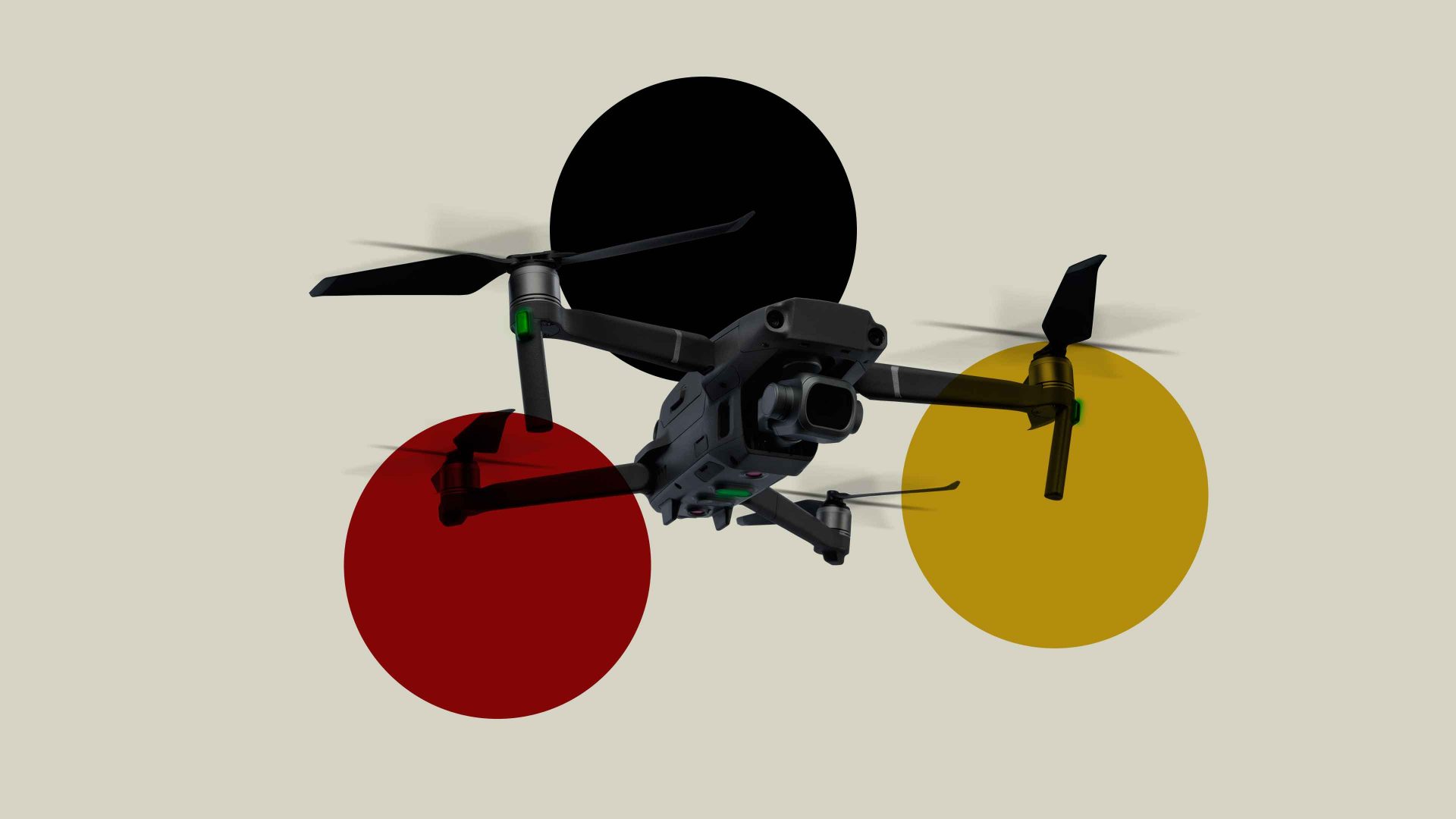
Ironically, the driver was on shift for the guided airport tour, when, shortly before midnight, he spotted something hovering in the vicinity of four Ukrainian Antonov transport aircraft. From his point of view, it shouldn’t have been there. So he got out of the bus and kicked it to the ground.
It turned out to have been a drone that had gone undetected for hours. And having booted it, the driver then guarded it until the control centre sent help and shut the airport down.
What he didn’t know at that point: the bomb disposal unit’s X-ray revealed explosives and a detonator, which had apparently broken off beforehand, sparing everyone the bang.
While the device was being defused, a DHL cargo plane on final landing approach had to abort and climb again. At an altitude of 400 metres, just around 6km away, the aircraft collided with an unidentified object, presumably the second drone detected by airport security.
Suggested Reading


Germany – where political rebellion has become fashionable again
We don’t and we may never know who sent them. The Wall Street Journal and CNN, citing officials familiar with intelligence assessments, reported that Washington concluded that the drone came from a Russian intelligence service.
Russia (“zis attak only serrrves aims of Kiev and Eurrropejan miljitarrristic class”), unsurprisingly, is appalled by the mere suggestion that it was involved, warning of “a new wave of anti-Rrrrussian hysteria in Germany”. As if.
Chancellor Merz and his cabinet so far blame “foreign powers” and do not name Moscow. One reason may be three upcoming state elections in eastern Germany, where the AfD can rely on undeterred pro-Russian sympathies. Until Vladimir Putin personally confesses, it could always have been the Ukrainians, couldn’t it?
The gist of the incident is this: German drone defence is still outsourced to alert bus drivers – in other words, to chance.
The bulk of western arms deliveries to Ukraine run through Germany. There’s a long list of prior drone sightings at German and European airports. There’s even been a parcel from Vilnius containing an incendiary device, bursting into flames at Leipzig airport’s DHL hub in 2024, minutes before being loaded into a (delayed) cargo plane. And yet, Germany still isn’t anywhere near to where it should be on protecting its critical infrastructure.
Suggested Reading

Germansplaining: How do we get rid of the Nazi day-trippers?
“We’ve been talking about this for years, and really, nothing has happened,” says terrorism expert Peter Neumann from King’s College London. More work is needed on drone defence systems, drone detection, “on the ongoing tangle of overlapping responsibilities,” and on a unified legal framework.
The technical fixes exist – radar, frequency monitoring, thermal imaging and acoustic sensors – and combined, they could build a reliable picture of what’s overhead. However, former army chief Alfons Mais says he’s yet to see a defence system that remains effective for longer than six weeks before the next drone generation renders it obsolete.
Germany’s defence industry, meanwhile, insists it is well equipped. What the country lacks – as ever – is speed: Leipzig airport was apparently still waiting for equipment promised by the Interior Ministry. But the night tour, mercifully, remains fully bookable – for anyone enjoying a spot of reconnaissance. Snacks included.