In August 2023, I met Ibtissame Lachgar, a psychologist and feminist activist more commonly known as Betty, for breakfast in Rabat’s ancient Medina. In August this year, she will have spent a year in detention in her home country for insulting Islam.
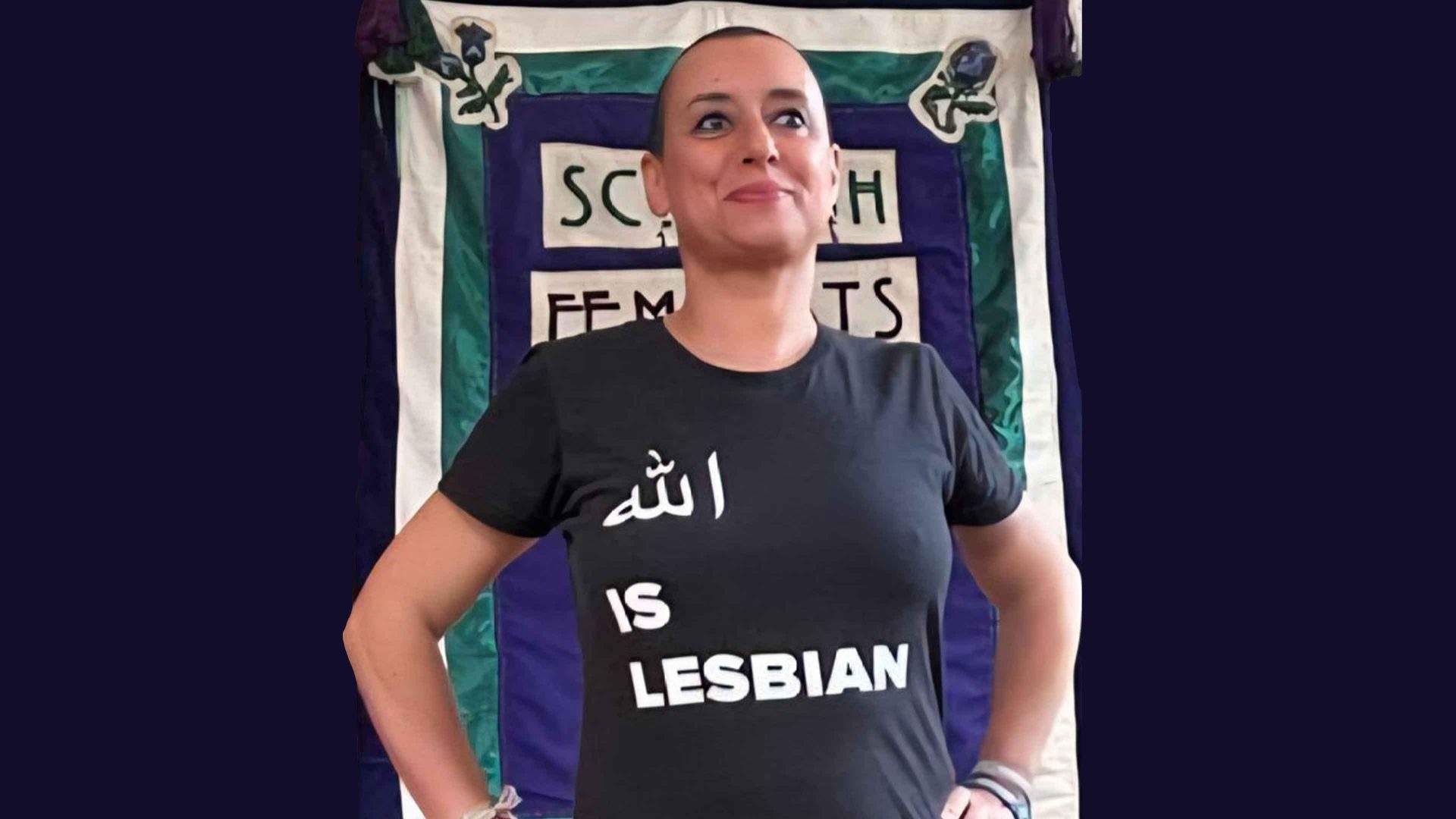
She had posted a photo, taken long before in London, wearing a shirt with the slogan “Allah is a lesbian,” a play on the phrase popularised in the 1990s “God is a lesbian”. The photo was accompanied by a caption, in French, reading: “Islam, like any religious ideology, is fascist, phallocentric and misogynistic.”
The photo, posted on July 31, was reposted by outraged viewers and widely criticised. Betty received death threats and threats of sexual violence. Prominent political figures called for her arrest. She was eventually arrested on August 10.
“Betty,” her lawyer Ghizlane Mamouni told me over the phone last week, “is the first woman in the history of Morocco to be incarcerated for an act of feminist activism.”
She was sentenced in September 2025 to 30 months of imprisonment and a 50,000 dirham fine (around £4,000) under an article of the Moroccan Penal Code introduced in 2018 that criminalises offence to the monarchy, Islam or challenges to Moroccan territorial integrity.
The case was a harbinger of an intensifying crackdown on freedom of expression in Morocco that has long been limited; the last few months have seen a series of high-profile arrests, including the journalist Ali Lmrabet and various activists involved in last autumn’s Gen Z 212 protests.
Suggested Reading
If you’re Kenyan, watch out – Vladimir Putin wants your soul
The sudden detention of Betty, a provocative activist who had spent decades fighting for women’s and LGBTQ+ rights, over a social media post set this roadmap.
Although I met her only briefly, Betty left a lasting impression. Shorter than I’d imagined, but with a steely resolve and somewhat hardened demeanour – presumably a result of decades as the recipient of vitriolic attacks for her activism – she commanded attention.
At the time, the Moudawana, the family law code that governs women’s rights in the country, was undergoing reform. For many, it was a moment of optimism. Not so much for Betty, a self-declared atheist, who refused to stay quiet on the touchier subjects, from abortion to secularism.
“I find it sad,” Betty told me when we met, “when feminists say ‘oh no, you can’t say that’. What is your feminism if I must hide myself and submit to the patriarchy because it’s not acceptable for a woman to say that I’ve had sexual relations outside marriage or that I’ve had an abortion?”
We were sitting in a popular cafe on the edge of the Rabat medina, just a 10-minute walk from the parliament building. Her willingness to speak so openly, so forcefully, while in public took me aback. Her reputation as one of the country’s most outspoken and radical feminists certainly felt deserved.
Still, as we walked through the streets, she was warmly greeted by many of the people we passed. I had anticipated her being a pariah.
“When I run into women in the street, they thank me all the time; thank you for what you do for women, what you do for us,” she had told me that morning, pushing over the bread and olive oil. “Ultimately, it’s because I take a lot of risks. A lot, a lot of risks.”
Most people in the country knew her for the outward public-facing risks and her intentionally shocking protest tactics. But, as we visited her home, she also told me about quieter, behind-the-scenes action caring for women in impossible situations.
Last year those risks caught up with her. Now, nearing a year since her incarceration, her health is reportedly deteriorating severely; she is a cancer survivor with specialist care needs. But few are paying attention.
When Mehdi Black Wind, a Moroccan rapper based in Marseille, was apprehended under Article 179 of the Penal Code restricting criticism of the monarchy in July of this year, the reaction was immediate. Protests took place in Morocco and in European capitals, and thousands signed a petition for his release. He is currently out on bail awaiting trial.
Betty has been repeatedly denied bail and support for her case remains subdued, with many fearful of expressing support for a woman perceived to be dangerous or extreme.
“But freedom of expression,” Mamouni argues, “isn’t just about defending people you agree with. It’s about defending freedom of expression, full stop.”